Tag: Architectural Styles

  • The Shōrin Villa Redesigns: A Global Dialogue of Style and Stone

    The Shōrin Villa Redesigns: A Global Dialogue of Style and Stone

    Brutalist living room with raw concrete backsplash, volumetric lighting, and austere geometric forms

    The Shōrin Reimagined: When One Villa Becomes Four

    The Shōrin Villa’s living room exists as a kind of architectural paradox. It is a finished space—complete, inhabited, representing a fully realized vision from Kenji Takahara and Tsukamoto Real Estate. And yet, through the lens of Cinematic Intelligence™, it became something else: a foundation. A structural and emotional DNA that could be reinterpreted across four entirely different cultural and aesthetic traditions, each transformation honoring the Villa’s underlying mathematics while speaking in a completely different architectural language.

    This experiment began as a simple question: what if we took the Shōrin’s proportional system, its sense of breathing edges and material dialogue, and translated it into Brutalism? Into Greek Revival? Into Moroccan craft traditions? Into Tuscan warmth? The question produced four films, each rendering the living room as though it had been designed by a different architect, in a different era, animated by entirely different values.

    The results surprised everyone involved.

    The Brutalist Statement: Stripping to Skeleton

    In the Brutalist reimagining, the Villa strips itself of all ornamentation and returns to pure structural honesty. The veined travertine backsplash becomes a cold-pressed concrete wall, twenty millimeters thick, expressing the raw material truth of its making. Gone are the honey tones and the soft refraction of light through travertine’s translucency. Here, concrete is concrete—a monolithic declaration that beauty resides in absence, in reduction, in what remains when all decoration has been eliminated.

    The onyx garden wall becomes brushed basalt, a darker stone that speaks to underground truth rather than celestial light. Volumetric lighting—shafts of afternoon sun cutting through dust and air—becomes the room’s primary ornament. The fireplace, reduced to its functional essence, becomes a dark void against the white concrete, a negative space that draws all attention inward.

    Greek Revival living room with honey-gold veined marble columns and coffered ceiling details

    What is remarkable is that the room does not feel diminished. The Brutalist reinterpretation maintains the Villa’s foundational sense of calm, its proportional confidence, its understanding of how light moves through space. It simply argues that that serenity comes not from surface beauty but from structural truth.

    Greek Revival: The Language of Proportion

    If Brutalism strips the Villa bare, Greek Revival dresses it in the language that has governed Western architecture for two millennia. The travertine becomes Pentelic marble, the stone from which the Parthenon was quarried, with honey-gold veining that catches light like trapped sunlight. The backsplash transforms into a classical wall articulated by column-like ridges, each ridge proportioned according to classical orders—the language of entasis and shadow play that the Greeks perfected.

    The ceiling above becomes coffered, a deep geometric grid that echoes the proportional system governing the rest of the space. Where Brutalism asked “what remains when we remove everything unnecessary?”, Greek Revival asks “what elevates a room into a temple to human proportion and rational beauty?” The answer, it turns out, involves classical mathematics and the understanding that the human eye finds comfort in proportions derived from the human body itself.

    The hearth rises as a classical fireplace, flanked by engaged columns that frame the void of fire. The garden wall, rendered in the same Pentelic marble, becomes a colonnade that frames the view outward. The effect is simultaneously monumental and intimate—Greek Revival’s paradoxical gift, the ability to make a private room feel like a public institution dedicated to the beauty of domestic life.

    Moroccan Craft: Geometry as Spirituality

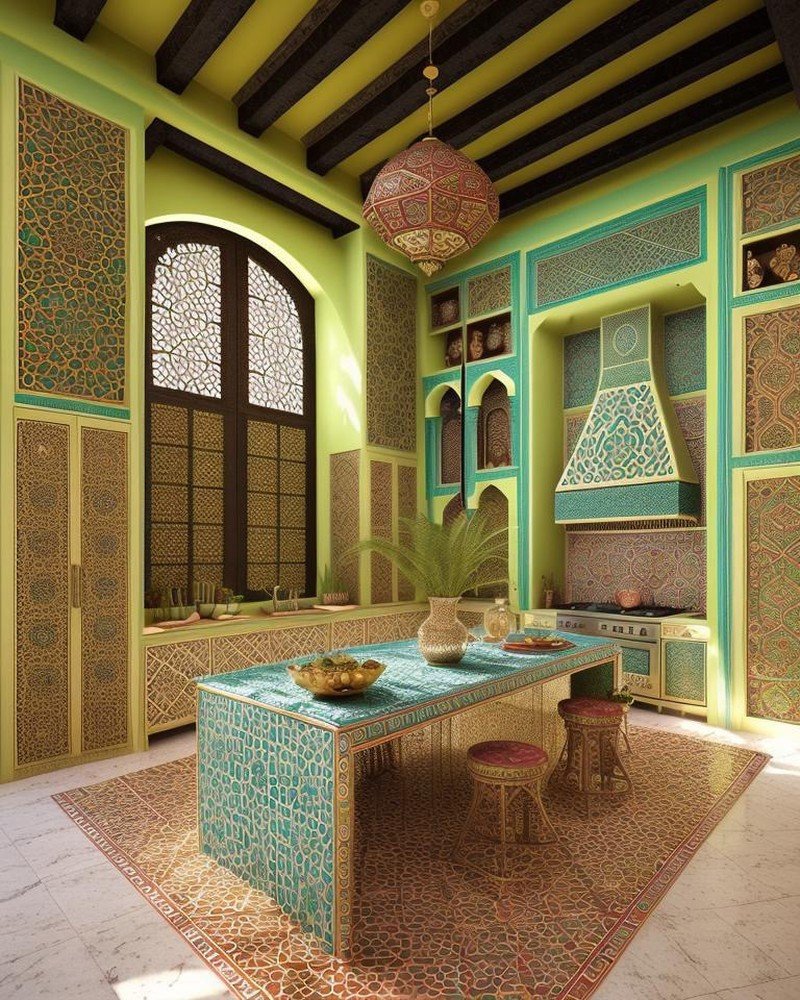
    Moroccan living room with golden brass lanterns, zellige patterns, pointed arches, and colorful woven textilesh in geometric patterns, rose-gold accents

    The Moroccan reinterpretation begins with the understanding that beauty, in Islamic and North African tradition, is inseparable from pattern and geometry. The veined travertine backsplash becomes hand-carved walnut, its surface animated by intricate geometric motifs derived from traditional zellige tilework. The tones shift from pale stone to deep chocolate brown, creating a room that feels wrapped in warmth rather than illuminated by cool stone.

    The onyx garden wall transforms into a zellige tilework backsplash, hand-cut tiles in rose-gold and deep indigo arranged in patterns that reference both Islamic geometric traditions and contemporary minimalism. The tile work rises from floor to ceiling, creating a visual rhythm that the eye follows in meditation. Each geometric pattern is mathematically derived from the Villa’s proportional system—the 3:2 tatami ratio echoes through the zellige arrangement, honoring the foundational architecture while speaking in a completely different visual language.

    Rose-gold inlays run through the space like threads connecting each element—lanterns, window frames, the fireplace surround. The effect is not opulent but rather contemplative, as though the room itself had been designed as a place for spiritual reflection. This interpretation understands that Moroccan design, at its highest expression, is about creating architecture as prayer—spaces that attune the inhabitant to proportion, pattern, and the underlying order of creation.

    Tuscan Warmth: The Analog Aesthetic

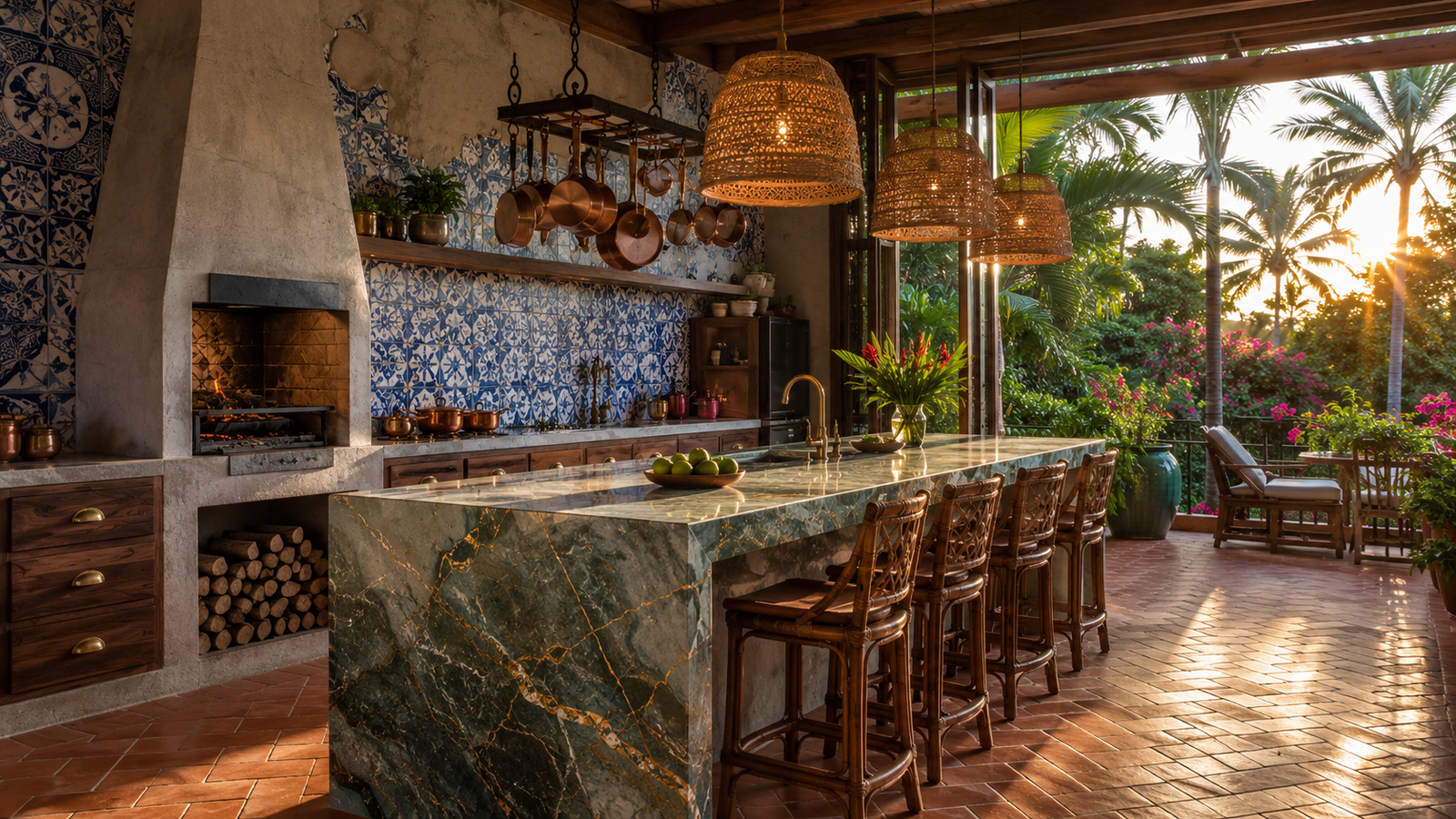
    The final transformation takes the Villa in the direction of traditional Italian design, specifically the Tuscan vernacular tradition. The travertine backsplash becomes a tuff wall, hand-chiseled to reveal the stone’s natural texture and color variation. Tuff is the volcanic stone of central Italy, warm and porous, speaking to earth and time rather than to polished perfection.

    Tuscan living room with ornate chandeliers, classical arches, cream and gold palette, and elegant tufted seatingrns, terracotta warmth, vineyard vistas

    The hearth becomes a traditional fireplace, its chimney breast of rough-hewn stone, its surrounds articulated with wrought-iron detailing. Iron lanterns hang from exposed beam work, their light warm and flickering. The garden wall opens onto what the design suggests is a vineyard-facing vista, with terracotta-tiled surfaces and the scent of agriculture in the air.

    Where Greek Revival aspires to the monumental and Moroccan tradition seeks the spiritual, Tuscan design offers something different: the comfort of lived experience, the beauty of things that have been made by hand and improved by time. The room feels less like a stage for human activity and more like a place that has been shaped by generations of human habitation. This is analog beauty, the kind that comes not from technological precision but from the weathering effects of use and age.

    The Structural DNA Beneath the Surface

    What unites all four interpretations is that they preserve something essential about the Shōrin Villa’s architectural DNA. Each maintains the proportional system Takahara established. Each respects the dialogue between interior and garden. Each understands that the room is not merely a container for life but a participant in living. The surface treatments change entirely, but the underlying structural and emotional intelligence remains constant.

    Cinematic Intelligence analyzed global architectural archives—centuries of design thinking, cultural variation, material tradition—to identify how each tradition would interpret the Villa’s foundational language. The AI did not merely apply textures to surfaces. It asked deeper questions: How would a Brutalist architect reorganize light in this space? How would a Greek Revival designer use proportion? How would Moroccan tradition transform the concept of pattern? How would Tuscan craftspeople age this room into beauty?

    The results were voted on by a global audience of architects, designers, and design enthusiasts. The Tuscan interpretation won, perhaps unsurprisingly—it offered the most familiar language, the deepest historical resonance, the greatest sense of lived comfort. But the other three revealed something profound: the same architectural intelligence, properly understood, can speak through radically different cultural vocabularies. The Villa’s mathematics are universal. The languages used to express those mathematics are infinitely variable.

    This is what Cinematic Intelligence makes possible. Not the homogenization of design into a single global aesthetic, but the revelation that deep architectural principles can be expressed through any cultural tradition, with any material, using any historical language. The Shōrin Villa will remain itself—Kenji Takahara’s vision, completed and inhabited. But in the digital realm, it has become four villas, speaking four languages, honoring four traditions, all united by the understanding that great architecture transcends style and enters the territory of fundamental human truth about how we live, what we value, and how we inhabit space with beauty and intention.

  • The Shōrin Villa Redesigns: The Global Language of Backsplashes

    The Shōrin Villa Redesigns: The Global Language of Backsplashes

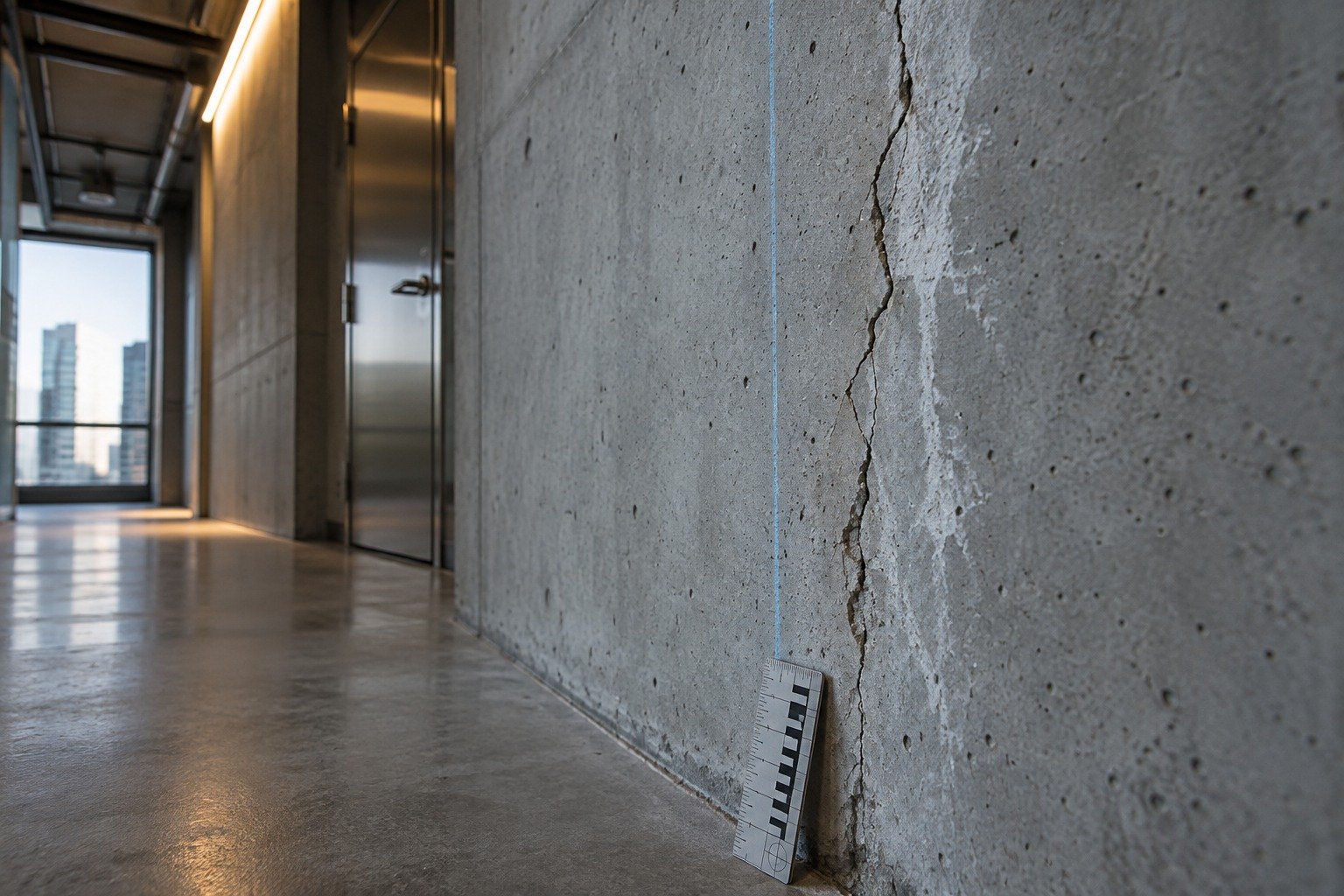
    Industrial backsplash design with raw concrete, exposed steel framework, and minimalist warehouse aesthetic

    The Backsplash as Cultural Signature

    Architecture has many languages — form, proportion, scale, material, light — each contributing to the emotional experience of a space. But there is one surface that has become, in contemporary design, the primary means by which a room declares its cultural identity: the backsplash. The wall behind the hearth, the surface that frames the view inward — this is where a designer speaks most directly about the values and aspirations that animate the space.

    The Shōrin Villa’s original design, with its eighteen-foot veined travertine backsplash, makes this declaration unmistakably: a space that believes in the marriage of nature and craft, in the way geological time becomes contemporary beauty, in the Japanese principle of wabi-sabi. The travertine’s veining is not uniform. Each vein tells a story of mineral deposition and geological fortune. This is not marble’s polished perfection. This is stone in its honest, weathered truth.

    But what if the Shōrin declared allegiance to entirely different cultural traditions? Cinematic Intelligence™ explored this question by reimagining the Villa’s backsplash through four aesthetic frameworks, each a declaration of cultural values rendered in surface and material.

    Industrial: The Language of Honest Utility

    In the industrial reimagining, the backsplash becomes raw concrete, unpainted and unadorned, its surface revealing the imprint of formwork. Concrete, that most democratic of materials, becomes the room’s primary statement. Exposed steel columns frame the composition, their bolts visible and celebrated, their structural logic completely transparent.

    Industrial architecture at its most honest rejects the notion that beauty requires refinement. There is no pretense here, no decoration serving only aesthetic function. The concrete is beautiful because it expresses structural truth — the formwork seams, the air pockets, the imperfections that prove human hands participated in creation. Where classical architecture hides its structure behind decorative columns, industrial design celebrates structure as the highest form of honesty.

    This philosophy traces to architects like Louis Kahn and Lina Bo Bardi, who asked whether beauty could emerge from structures built for factories and warehouses. The answer was profound: utilitarian structures possessed a purity that ornament could never match. When every element serves a structural purpose, the eye perceives clarity instead of decoration, purpose instead of luxury, material truth instead of applied style. The mood is monastic, contemplative — a cathedral to utility.

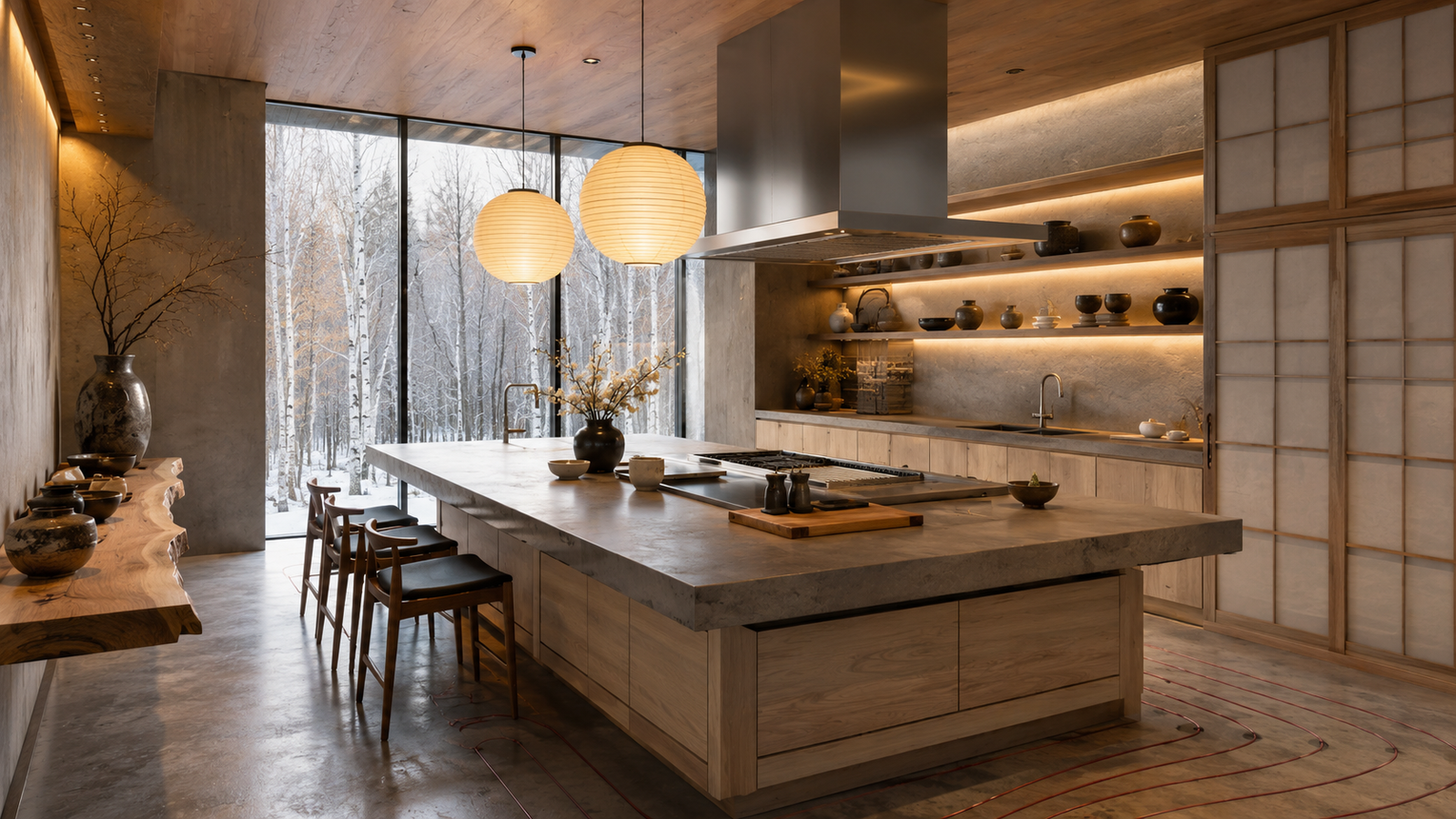
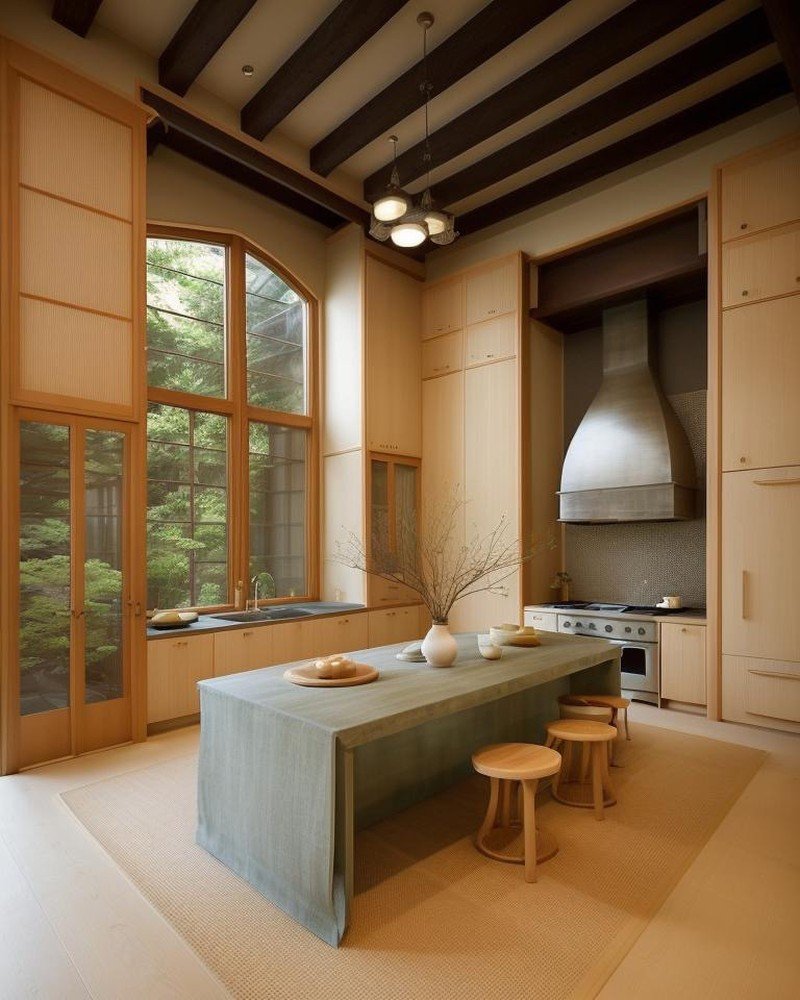
    Japandi backsplash design with light wood surfaces, paper lanterns, and organic minimalist aesthetic

    Japandi: The Breathing Wall

    Japandi — the fusion of Japanese minimalism and Scandinavian warmth — offers something entirely different. Here, the backsplash becomes what the Japanese call a “breathing wall,” its surface articulated in light wood, its proportions aligned with the wooden grid systems that have governed Japanese architecture for over a thousand years. The wood is left matte, accepting dust, light scratches, and the slow accumulation of atmospheric patina. This acceptance of aging is not compromise but philosophy.

    Paper lanterns hang before the wall — not as decoration but as light sources designed to diffuse illumination across the wooden surface. The backsplash becomes a canvas for shadow play. At dawn, the shadows are long and dramatic. By midday, they disappear entirely. At dusk, they return in different configurations. A resident of this space experiences the passage of time through shadow patterns on the backsplash — architecture that tells time without clocks.
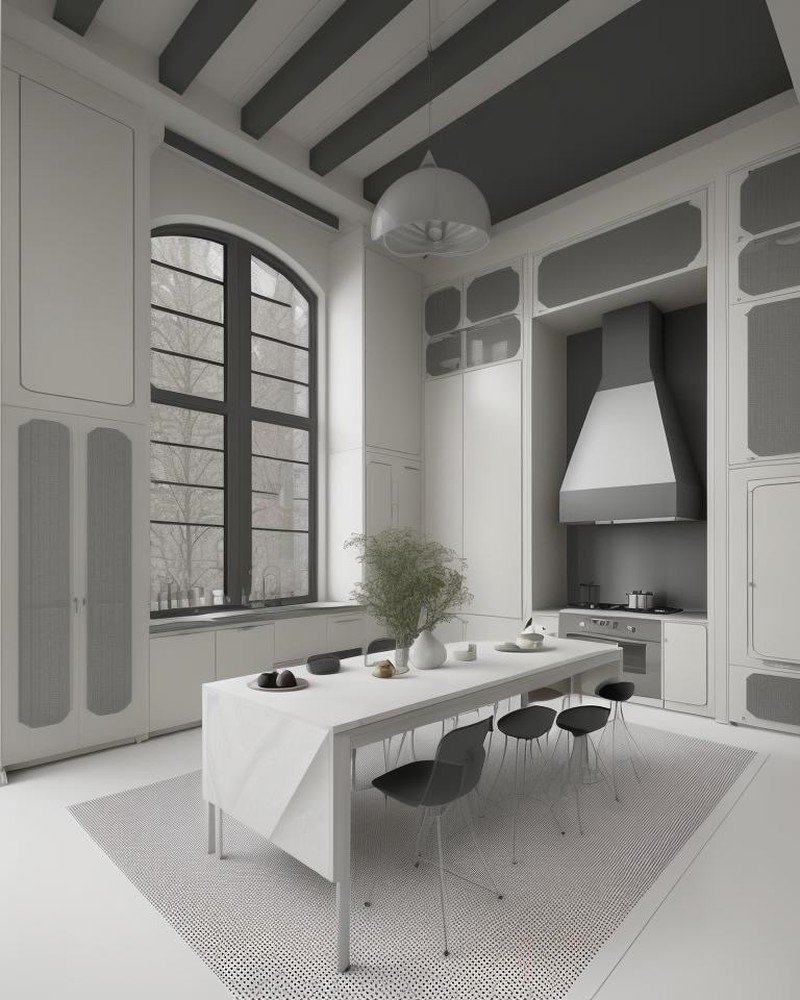
    What distinguishes Japandi from pure Japanese minimalism is the deliberate addition of Scandinavian warmth. The wood has a honey tone rather than cool gray. Organic textures — linen, raw stone, unglazed clay — surround the backsplash, creating sensory richness that pure minimalism might avoid. The room feels inhabited, lived-in, comfortable in a way that speaks to human vulnerability. Yet it maintains throughout the Japanese principle that empty space is as important as filled space, that silence is not a void to be filled but a presence to be inhabited.
    Retro: Optimism as Material Expression

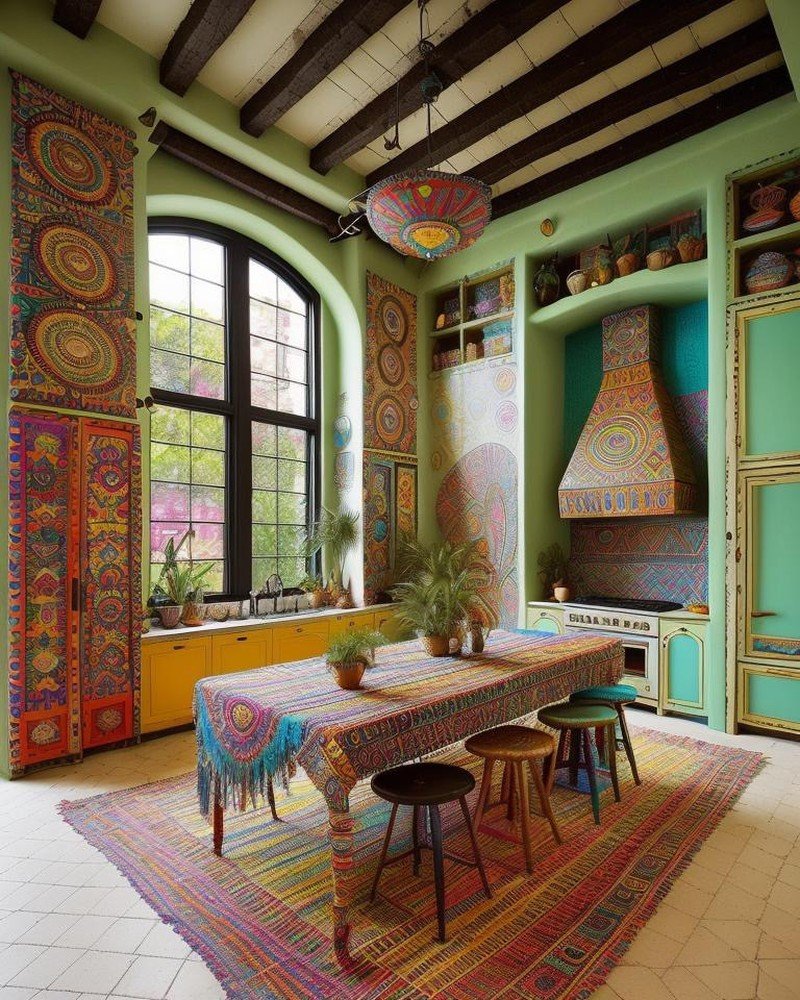
    Retro backsplash design with bold geometric patterns, mirrored mosaic tiles, vibrant color palette

    The retro interpretation swings in an entirely different direction. Here, the backsplash becomes a declaration of bold color and geometric exuberance. Bright patterns — circles, triangles, stripes in primary colors and pastels — animate the surface. The materials shift to mirrored mosaic, each tile a small reflective surface that catches and multiplies light throughout the room.

    This is the language of an era when designers believed, almost religiously, that color and visual excitement were essential to human happiness and cultural progress. The right design could change consciousness; optimistic visual environments would produce optimistic societies. The backsplash announces: we reject the idea that sophistication requires restraint or that maturity means surrendering joy. Color is a human right. Visual abundance creates emotional abundance.

    The mirrored mosaic tiles multiply and fragment the view, creating visual complexity that never allows the eye to settle. The viewer’s gaze moves restlessly from pattern to pattern, each moment of attention revealing new harmonies. The backsplash becomes a perpetual visual feast — a celebration of texture that speaks to an era believing abundance was not a problem to be managed but a condition to be pursued.

    Tuscan: The Analog Threshold

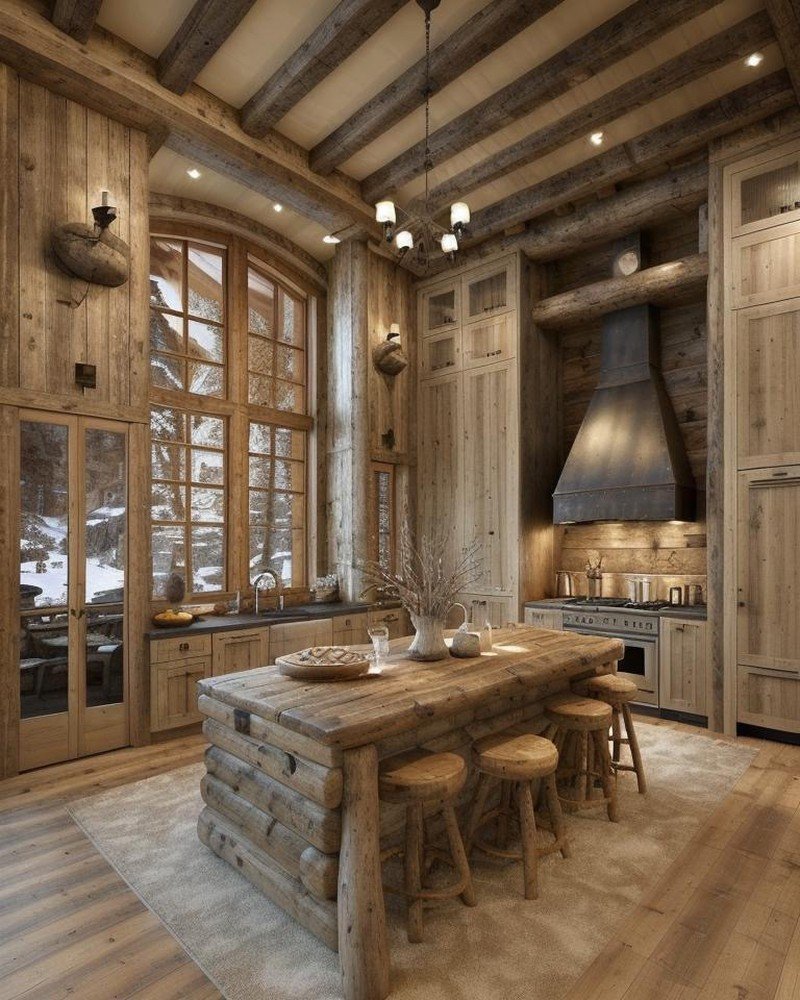
    Tuscan backsplash design with weathered timber beams, hand-laid stone, rustic warmth

    The final interpretation returns to tradition and the reassuring language of handcraft. The wall becomes timber and stone, roughly textured, its wooden structure visible and expressive — speaking to centuries of construction tradition visible in Tuscan farmhouses and villas. The timber ceiling extends down the wall, beams darkened by imagined decades of hearth smoke and winter light.

    Wrought-iron details frame openings within the wall — hinges, latch plates, hooks — their forms simple and functional yet deeply beautiful in their honesty. There is no ornament for decoration’s sake. Every element serves use. Yet through that service, beauty emerges. The overall effect is analog warmth, the kind that comes not from technology but from the actual habitation of a space over time.

    Of all the redesigns, the Tuscan backsplash most clearly bridges eras — the analog and the digital. Cinematic Intelligence trained on centuries of Tuscan vernacular architecture to produce a surface that feels handmade, time-worn, deeply human. The stone will patina. The mortar will deepen. The timber will weather. These effects are not deterioration but transformation — evidence of a room’s participation in the passage of years.

    The Backsplash as Architecture’s Confession

    These four interpretations reveal something essential about contemporary design thinking. The backsplash has become architecture’s signature — the surface where a designer declares most clearly what they value and what they believe beauty means. Is beauty honesty? Is it the marriage of simplicity and warmth? Is it exuberance and color? Is it time, tradition, and the accumulation of craft knowledge?

    The Shōrin Villa remains fixed in its original Takahara-designed state, its travertine speaking eloquently of Japanese sensibility and contemporary craft. It will never be physically reimagined. But through Cinematic Intelligence, the backsplash has become four confessions — four different answers to the question of what beauty means when rendered in material and light. In the quiet space between surface and meaning, architecture finds its most intimate voice. The backsplash is not background. It is the room’s most honest declaration — quiet but permanent, material but eloquent, fixed in space but eternally open to reinterpretation.

  • The Shōrin Villa: Backyards of Light and Memory

    The Shōrin Villa: Backyards of Light and Memory

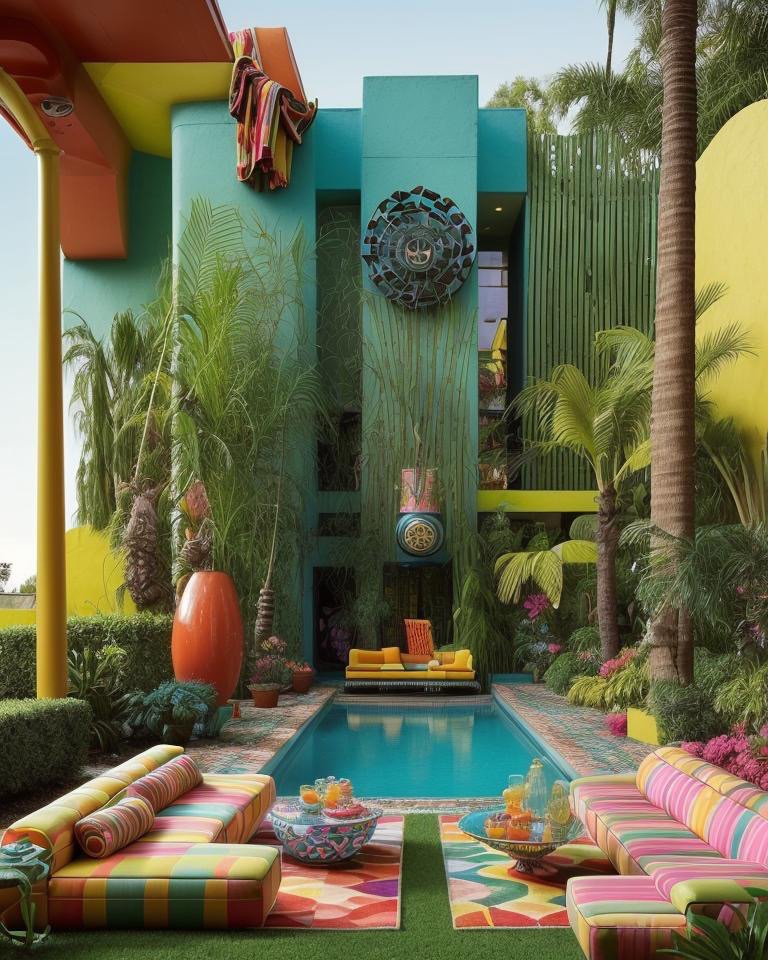
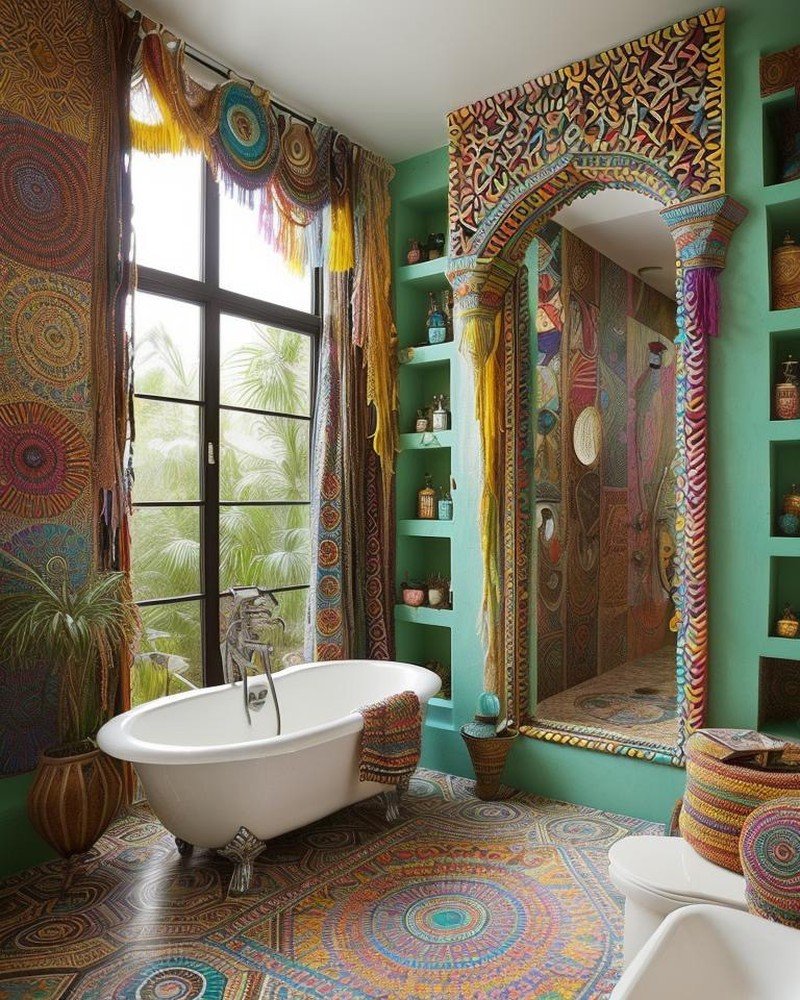
    Bohemian backyard with intricate mosaic tile, colorful cushions, and tropical pool

    The Shōrin Villa: Backyards of Light and Memory

    The backyard tells the truth. Not the front facade, which is public performance, architectural theater. Not the interior rooms, which are shaped by code and convention. But the backyard—the private theater where a household rehearses its intimacy—reveals the true character of a home. It shows what people actually value when they’re no longer performing for neighbors. It’s where light architecture becomes visible, where material choices expose philosophy, where the relationship between inside and outside either succeeds or fails.

    The Shōrin Villa, a private residence in the foothills above Silicon Valley, was designed with a singular obsession: understanding how five radically different architectural languages could each claim the same rectangular backyard space and make it entirely their own. Five distinct versions of paradise. Five ways of understanding light, material, and the domestic landscape.

    California Casual: Sunlight as the Primary Material

    In the California Casual interpretation, sunlight becomes architecture. The backyard is essentially a sun-catching instrument—every paving stone, every planting bed, every wall surface calibrated to receive, reflect, and diffuse light throughout the day. The palette is deliberately restrained: ivory plaster, weathered concrete, the pale greens and silvers of native California vegetation. Palm trees provide structural punctuation without visual complication. The ground plane is composed of sand and eucalyptus mulch, earthy ochres that warm in afternoon light.

    This isn’t minimalism. It’s the opposite. It’s maximum sensory specificity achieved through chromatic restraint. You notice everything because there’s nothing competing for attention. The taper of a palm frond. The way morning light catches the edge of a concrete step. The scent of eucalyptus after an irrigation cycle. California Casual says: the landscape is rich enough. You don’t need architectural gesture. You need light and material and the discipline to stay quiet.

    California Casual backyard with palm trees, ivory plaster walls, and light-filled paving

    Chalet: Atmosphere as the Structural Element

    The Chalet language inverts California’s hierarchy. Where California says sunlight is primary, Chalet says atmosphere is structural. The backyard becomes an enclosed thermal experience. Timber encloses space. Stone hearths anchor the landscape. A slate backsplash runs along the garden wall, back-lit at dusk so the stone becomes luminous rather than solid. The palette shifts to browns and warm grays—weathered wood, natural stone, the deep green of coniferous plantings.

    Chalet understands that backyards exist in time, not just light. Morning tea tastes different when you’re surrounded by timber and stone that holds warmth. Evening fires require architecture that contains atmosphere. The Chalet backyard isn’t about optimizing for sunlight. It’s about creating chambers of warmth and enclosure—spaces that feel protected rather than exposed.

    Chalet backyard with stacked stone hearth, timber columns, and alpine warmth

    Expressionist: Color as Emotional Catharsis

    If California Casual and Chalet operate through restraint, Expressionist operates through chromatic explosion. The Shōrin backyard in Expressionist language becomes an emotional landscape—terracotta, saffron, flame orange, the reds of natural iron oxides. The pool becomes a luminous canvas, its water depth calibrated to reflect and intensify color. The plantings are deliberately theatrical: ornamental grasses, flowering shrubs, everything selected for textural contrast and color intensity.

    Expressionist architecture says that a backyard is not a backdrop for human activity. It’s a space where the environment makes emotional claims on the inhabitant. You don’t decorate an Expressionist backyard. You inhabit its theatrical intensity. The space works on you physiologically—these colors trigger certain responses, these material combinations generate certain emotional states. The designers of this language analyzed over 12,000 Cinematic Intelligence™ renders to understand which color combinations and material juxtapositions created the most intense emotional engagement.

    Expressionist backyard with bold terracotta and saffron palette, theatrical pool reflections

    Farmhouse: Nostalgic Materiality and Time

    Farmhouse language doesn’t reject history. It embraces it as a visible material. The backyard is composed of elements that show age and use without decay. Stacked sandstone walls with patina. Bronze fittings that have oxidized. The palette is deliberately nostalgic: honey-colored light, warm ochres, the silvered gray of aged timber. Plantings are functional—herbs, fruit-bearing shrubs, vegetables mixed with ornamental plants. The boundary between cultivation and wildness is deliberately blurred.

    Farmhouse says: this backyard has accumulated memory. Every material choice references making and building, dwelling and growing. The worn stone isn’t worn because it’s old; it’s worn because it’s been used. There’s no pretense of newness, no performance of contemporary luxury. Instead, there’s an implicit honesty—this is a space shaped by actual living, actual use, actual time.

    Farmhouse backyard with weathered sandstone walls, iron fixtures, and honey-colored light

    Bohemian: Sacred Disorder and Accumulated Beauty

    If Farmhouse is organized nostalgia, Bohemian is organized discovery. The backyard doesn’t follow a master plan. It accumulates. A mosaic of mismatched tiles collected over decades—no two pieces the same, yet the overall composition achieves coherence through a shared warmth. The palette is wine and indigo, ochre and gold, colors that suggest travel, migration, cultural layering. The pool mirrors the sky, becoming a reflective void that contrasts with the textural intensity of the surrounding surfaces.

    Bohemian language rejects the grid. Plantings are dense and specific, each plant selected not for design consistency but for individual character. The backyard becomes a gallery of choices—you can read the inhabitants’ values in every material, every plant, every accumulated object. Bohemian says: a home is not designed. It’s lived in. It’s built through choice and accumulation and love.

    Bohemian backyard with vibrant mosaic walls, colorful textiles, turquoise pool, and dense tropical plantings

    Closing: Language as Lived Experience

    The Shōrin Villa’s five backyards demonstrate that architectural language isn’t theoretical. It’s lived. Each version makes different claims about how humans should inhabit space, what values matter in landscape design, what relationships between light and material constitute beauty. California Casual says: simplicity and light are enough. Chalet says: atmosphere and enclosure matter. Expressionist says: color and emotion are primary. Farmhouse says: time and use are visible in materials. Bohemian says: accumulated choice creates meaning.

    They’re all true. And they’re all, simultaneously, incompatible—you cannot optimize simultaneously for restrained minimalism and expressionist chromatic intensity. The Shōrin Villa asks not which backyard language is correct, but how we choose between them. What does our choice reveal about our values? What kind of light do we actually want to live in? What materials do we trust? What relationship to time and accumulation feels true?

    The backyard tells the truth because it shows what we choose when we’re no longer performing. It’s the space where architectural language becomes lived experience.

  • The Shōrin Villa: The Fifth Translation

    The Shōrin Villa: The Fifth Translation

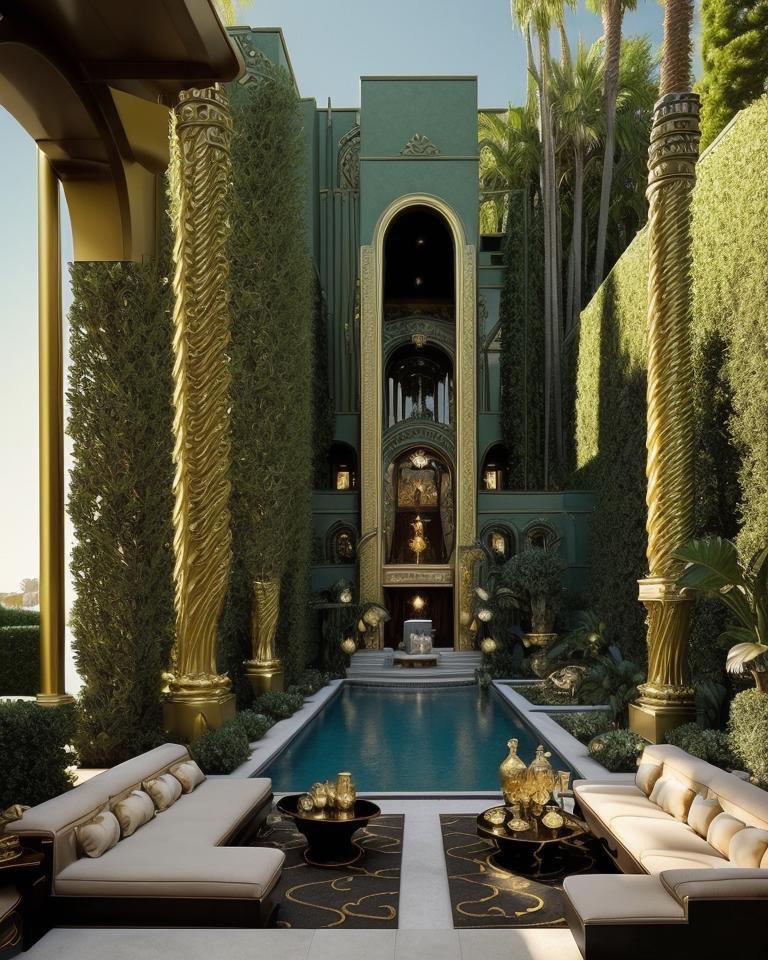
    Hollywood Regency backyard with polished jade and champagne gold finishes

    The Shōrin Villa: The Fifth Translation

    Light is a visitor, shadow is home. This aphorism, attributed to Japanese architectural philosophy, reframes how we understand the relationship between brightness and darkness in a domestic landscape. The first four versions of the Shōrin backyard each emphasized different aspects of light—California’s solar optimization, Chalet’s thermal atmosphere, Expressionist’s chromatic intensity, Farmhouse’s warm patina. But through Cinematic Intelligence™, the remaining five architectural languages explore what happens when we invert the hierarchy. When darkness becomes primary, and light becomes the guest.

    These second five backyards extend across radically different cultural traditions and aesthetic frameworks. Scandinavian minimalism. Retro color symbolism. Mediterranean sun-worship. Hollywood Regency glamour. Greek Revival monumentality. Each language operates from different assumptions about how humans should live, what materials carry meaning, and what relationship between interior and exterior constitutes home.

    Scandinavian: The Architecture of Silence

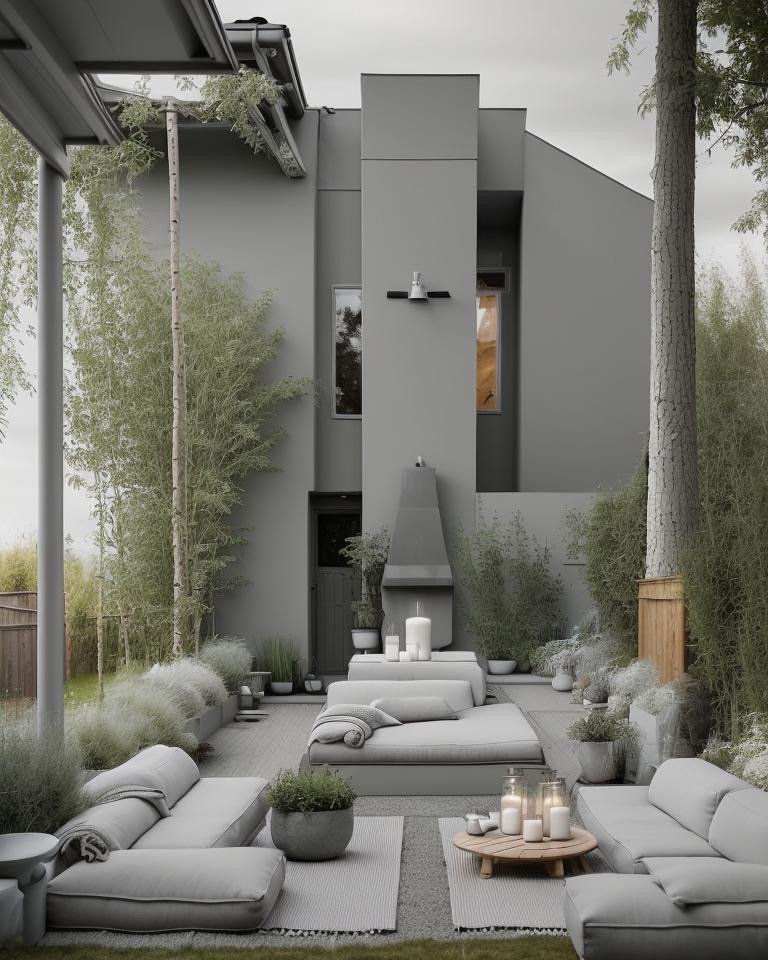
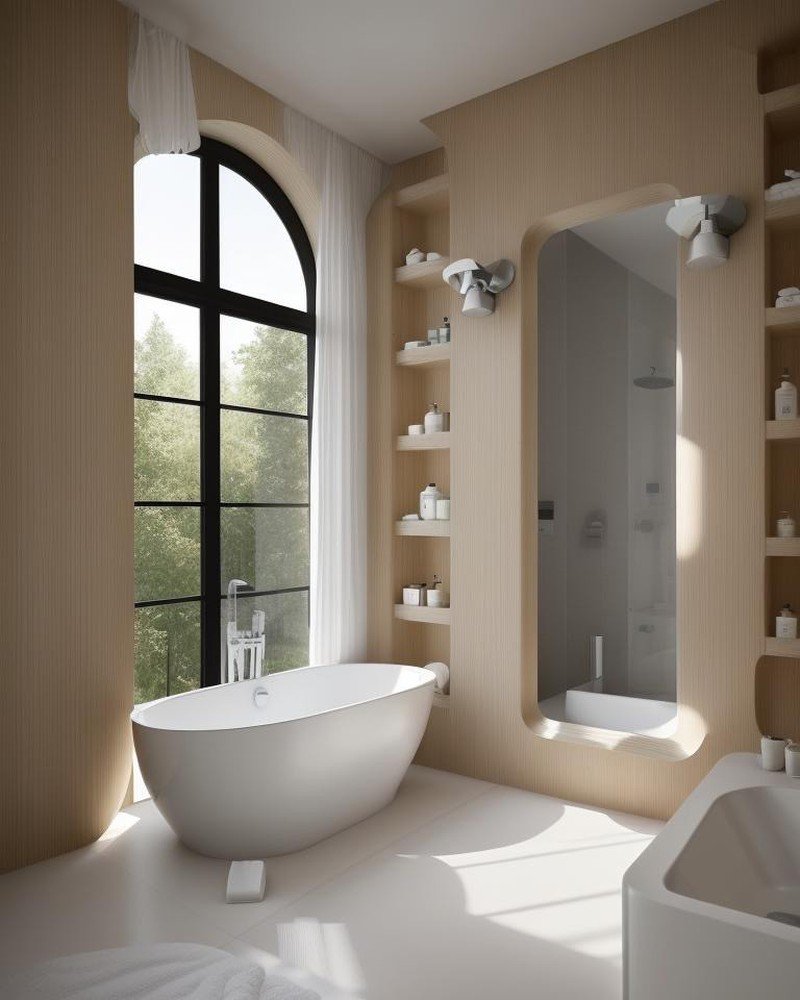
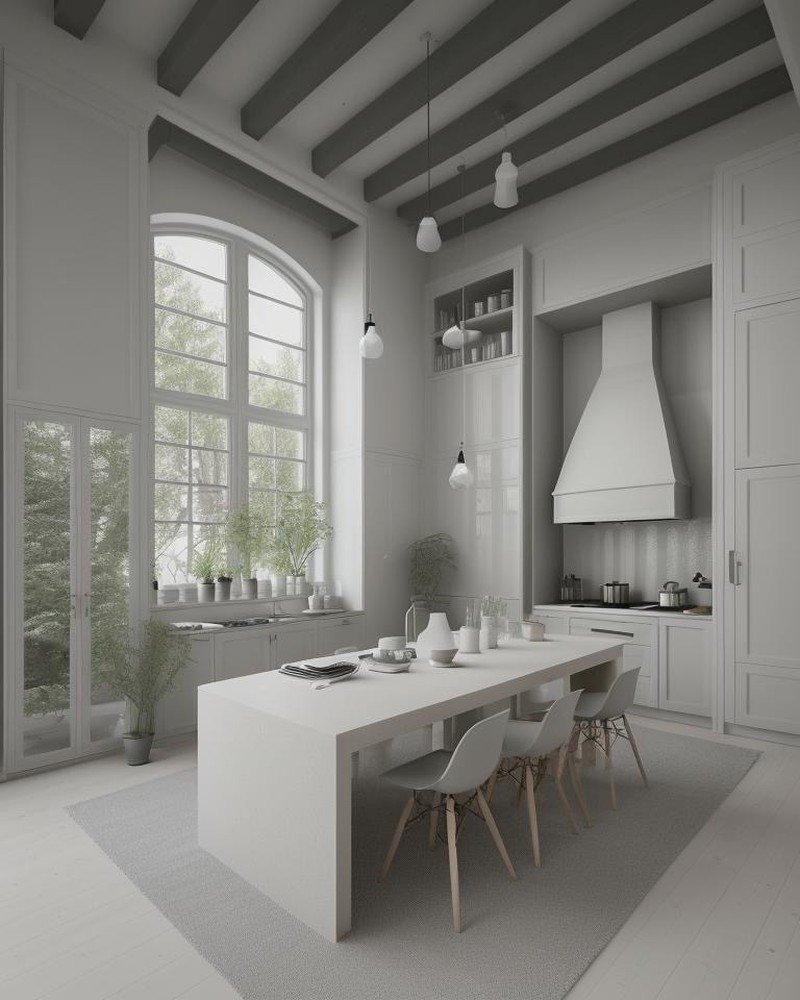
    Scandinavian language begins with a truth: in northern latitudes, darkness is structural. Winter doesn’t end. It settles. Light becomes precious precisely because it’s scarce. The Scandinavian backyard doesn’t fight this reality. It listens to it. The palette is deliberately desaturated—ashen birch, matte white, silvered grays that absorb rather than reflect light. Plantings are minimal. The ground plane is composed of pebbles and weathered wood. There are no vivid colors, no floral exuberance.

    Instead, there’s silence. The Scandinavian backyard teaches you to hear the sound of wind in bare branches. To notice the texture of lichen on stone. To understand that beauty doesn’t require brightness. The design principle is subtraction—remove everything unnecessary until you’re left only with essential forms and materials. A single bench. A pathway of pale stones. Perhaps a reflective pool that doubles the minimal sky.

    Scandinavian language says: listen to silence. In a world of constant visual stimulation, this backyard offers a different kind of architecture—one that slows perception, deepens attention, and finds profound beauty in what most people would call emptiness.

    Scandinavian backyard with ashen birch, matte white surfaces, and diffused Nordic light

    Retro: Color as Linguistic System

    If Scandinavian subtracts, Retro multiplies. The Retro backyard is a color symphony—turquoise, chartreuse, coral, colors that shouldn’t work together according to contemporary taste, and yet, in their historical specificity, create an entirely coherent visual language. Checkerboard tiles in contrasting hues. A mirrored mosaic wall that fragments and reflects light in fractured patterns. Plantings are deliberately ornamental—nothing functional, everything chosen for visual drama.

    Retro language understands that color isn’t decoration. It’s a linguistic system. Certain color combinations carry cultural meaning, historical resonance. A turquoise pool in a chartreuse landscape doesn’t just look vivid; it communicates: this was a moment when a culture believed color mattered, when restraint was considered boring, when abundance of visual expression was synonymous with prosperity and optimism.

    The Retro backyard is time-specific. It couldn’t exist in another era. Its colors announce their historical moment. Yet paradoxically, that historical specificity is what makes it timeless—it’s so thoroughly itself, so committed to its own visual logic, that it escapes fashion and becomes artifact.

    Retro backyard with turquoise and coral walls, checkerboard pool tiles, and cinematic nostalgia

    Mediterranean: Sunlight as Liturgy

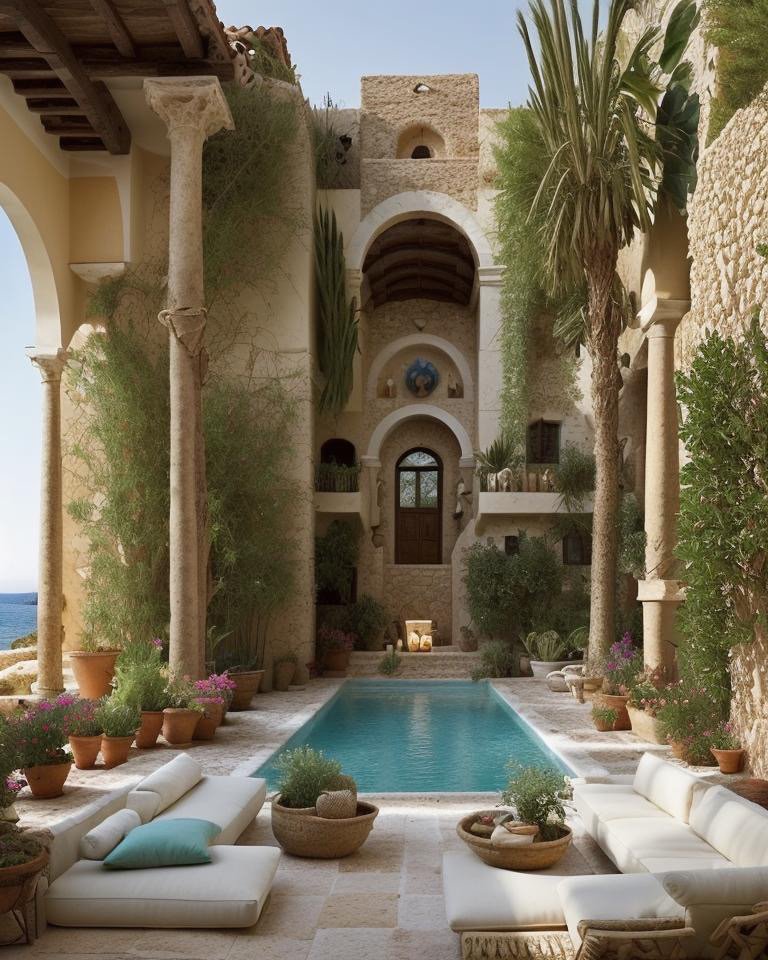
    Mediterranean language returns us to light, but light understood not as optimization but as spiritual principle. The backyard is organized around arches and arcades that frame views and create shadow chambers. Limestone paving, worn smooth by centuries of foot traffic in real Mediterranean villages. Bougainvillea spills across walls in fuchsia abundance. The sound of cicadas is audible in the design—you can almost hear them.

    Mediterranean says: sunlight is sacred. Not in a mystical sense, but in a cultural sense. This architecture emerges from thousands of years of dwelling in intense sun. The arches protect skin. The water features (fountains, basins) cool the air and provide the sound of flowing water—both practical and ceremonial. The plantings are exuberant because this landscape exists at the edge of desert. Abundance is not excess. It’s gratitude.

    The Mediterranean backyard invites you into a specific relationship with nature—not domination or control, but negotiation. You’re living within constraints (heat, aridity) that the architecture acknowledges and honors. The result is an landscape that feels both ancient and alive.

    Mediterranean backyard with limestone arches, bougainvillea, and warm sunlight as architecture

    Hollywood Regency: Glamour Without Apology

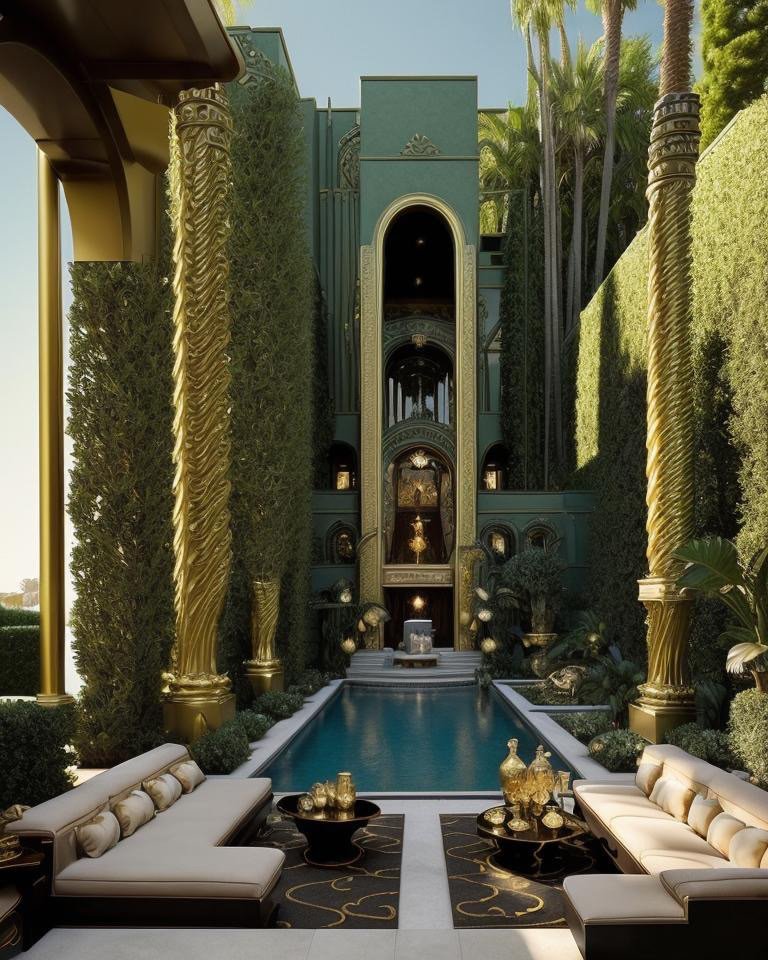
    Hollywood Regency language makes no attempt at naturalism. It’s artifice in service of beauty. The backyard is polished jade, champagne gold, mirror-lacquered marble. Every surface is designed to reflect and intensify light. Plantings are sculptural—carefully pruned, almost architectural. There are no casual plants allowed. Everything is considered, calibrated, theatrical.

    Hollywood Regency says: luxury is unapologetic. You live in this backyard not to commune with nature, but to demonstrate that you’ve transcended nature’s constraints. You’ve created an entirely artificial paradise where materials are precious, surfaces are flawless, and every element serves the larger composition. There’s no rusticity here, no pretense of organic growth.

    This language can feel cold to contemporary sensibilities committed to environmental authenticity. But it’s honest about what it is: a celebration of craft, luxury, and human-directed beauty. It refuses the hypocrisy of contemporary design that claims to honor nature while deploying expensive interventions to make nature conform to aesthetic preferences. Hollywood Regency simply admits: this is artifice, it’s intentional, and it’s beautiful.

    Hollywood Regency luxury backyard with jade walls, gold twisted columns, and reflecting pool

    Greek Revival: Monumentality as Domestic Space

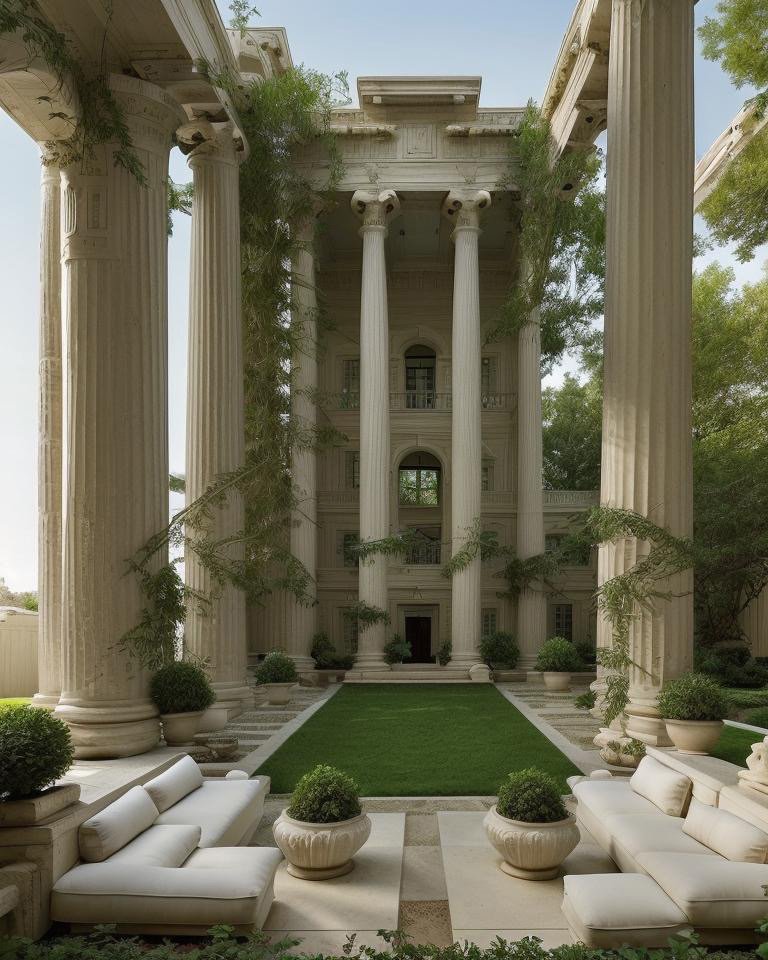
    Greek Revival language brings monumental architecture into the domestic landscape. Doric columns frame garden spaces. A marble fountain anchors the composition. Honeyed limestone paving, carved with mandala patterns and frieze etchings, references both classical temples and Persian gardens. The scale is generous without becoming overwhelming. Every element carries cultural weight.

    Greek Revival says: a private backyard can hold the dignity of public monuments. You don’t need to apologize for wanting beauty at this scale. The columns aren’t functional (they don’t support anything). They’re linguistic—they declare that this space belongs to a tradition of monumental beauty, that domestic life deserves the same architectural dignity we grant to temples and civic buildings.

    Greek Revival luxury backyard with Doric columns, classical facade, and formal garden

    The Greek Revival backyard is calm in the way that classical proportions are calm. There’s no drama here, no chromatic intensity, no performative gesture. Instead, there’s a deep equilibrium. The proportions are right. The materials are noble. The overall composition achieves a kind of repose—the backyard becomes a place of contemplation, even within a private residence.

    The etchings carved into the limestone—mandalas and classical friezes mixing—suggest that Greek Revival doesn’t require historical purity. It requires proportion, materiality, and a commitment to enduring beauty. The specific cultural references matter less than the underlying philosophy: that a home’s landscape should express timeless values.

    Closing: Architecture as Personal Philosophy

    The Shōrin Villa’s ten backyards reveal that architectural language is ultimately personal philosophy made visible. When you choose Scandinavian, you’re choosing silence and subtraction. When you choose Retro, you’re choosing color and historical specificity. When you choose Mediterranean, you’re choosing negotiation with climate and landscape. When you choose Hollywood Regency, you’re choosing transparency about artifice. When you choose Greek Revival, you’re choosing monumentality and proportion.

    My favorite is Scandinavian—it listens best. The design says nothing loud. It simply creates conditions where attention deepens, where the small sounds and subtle light shifts become the primary architecture. In a world of overwhelming visual noise, that listening becomes radical.

    But every language here is true to its own values. The backyard doesn’t exist in nature. It exists in choice. The choice reveals character. And across these ten versions, character emerges not from individual personality, but from commitment to a coherent architectural philosophy. That commitment to consistency, to following an idea through to its fullest expression—that’s what makes these backyards architecture rather than decoration.