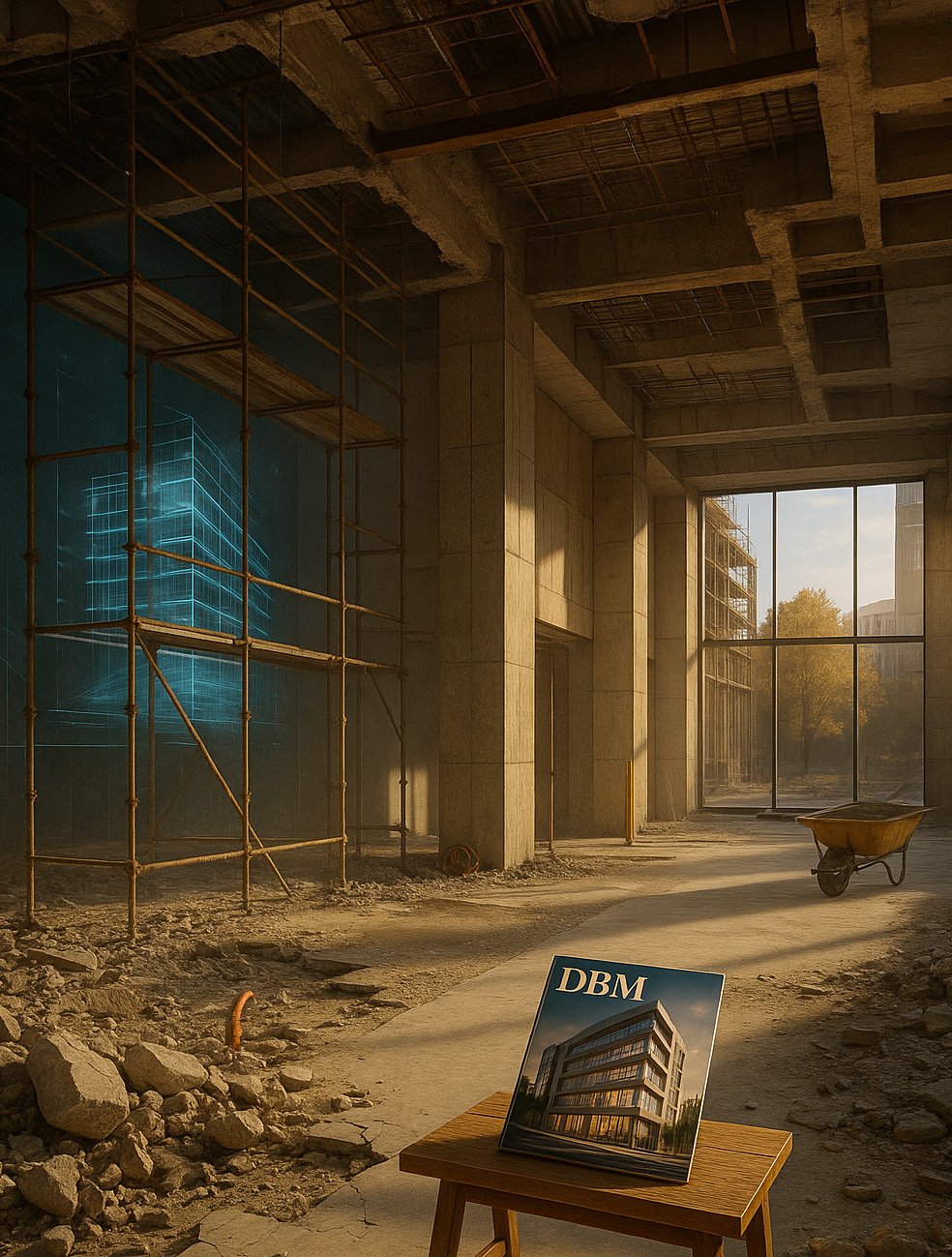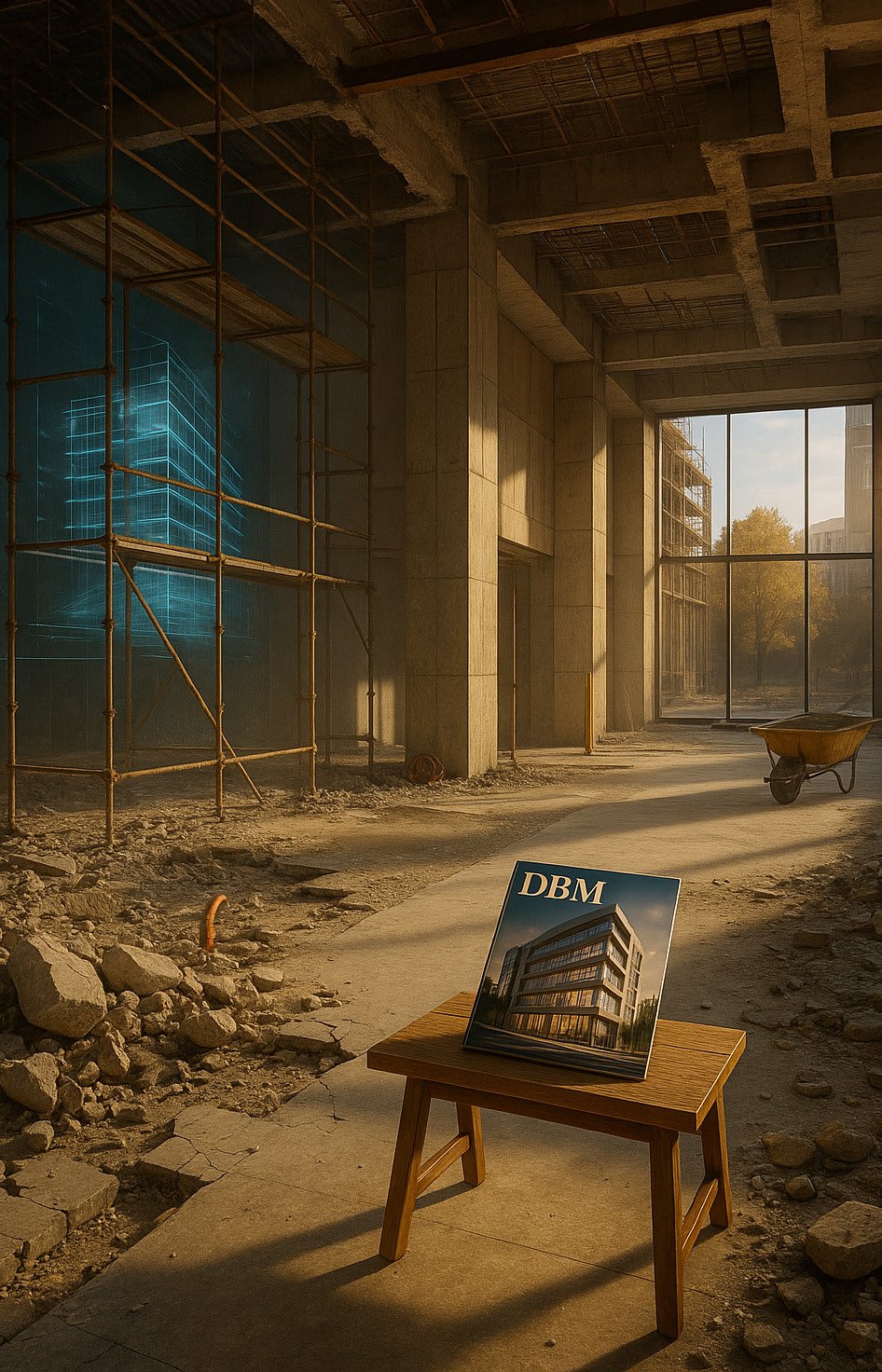
There is a particular kind of change that does not announce itself. It does not arrive with declarations or disruption headlines. It moves instead through meeting rooms, inboxes, procurement workflows, and approvals—noticed only after outcomes begin to differ.
That is how the visualization economy has shifted.
Over the past several years, architectural visualization has undergone a metamorphosis so profound it borders on invisible. What began as a representational tool—a means of explaining an idea—has evolved into something far more consequential: a decision-making instrument. The image is no longer confirmation. It has become persuasion, arbitration, and increasingly, valuation.
Industry analysts now estimate that more than $200 billion in global real estate value flows through projects where advanced visualization plays a decisive role—long before construction begins. This figure is not speculative. It is the combined weight of capital allocation, entitlement acceleration, pre-sales confidence, and institutional approval that visualization now quietly influences. It is the price of clarity in an economy increasingly resistant to ambiguity.
The shift is not aesthetic. It is structural. It is a reorganization of how authority moves through design.
When Seeing Becomes Deciding
In traditional architectural practice, visualization followed design. The sequence was linear, hierarchical: concept, schematic drawings, developed design, construction documents, and finally—rendering. The image was a byproduct, a finishing decoration applied to confirm what had already been decided.
That temporal logic has inverted.
Today, high-fidelity visualization often enters a project before schematic design is finalized. Sometimes, it precedes land acquisition entirely. Developers test feasibility through simulated environments. Investors assess risk by experiencing space rather than interpreting abstracted orthographic projections. Planning boards increasingly respond not to the geometry of intent but to the clarity of lived experience. The rendering has become the document itself.
Visualization functions now as the language of alignment—and alignment, in capital markets, moves money. When stakeholders can perceive the same future with clarity, consistency, and temporal immediacy, decision-making compresses. Friction evaporates. Institutional confidence rises. In markets responsive to cross-border investment, this clarity now directly affects project valuation, sometimes by millions before a single trade occurs.
The implication is vast: visualization has graduated from communication tool to economic instrument.
The Structural Drivers Behind Acceleration
The market does not reward complexity for its own sake, yet complexity has become the architectural condition. Contemporary projects must respond simultaneously to environmental constraints, cultural sensitivities, mixed-use programming, evolving work patterns, climate adaptation, and increasingly volatile financing conditions. Sequential decision-making—the old model—becomes a liability.
Visualization allows these variables to be explored in concert rather than sequence. A single environment can test material performance against daylight modeling against acoustic strategy against cost implications. The trade-offs become visible before they become irreversible.
Second, timelines have contracted. When construction costs fluctuate and capital markets shift monthly, decision velocity becomes competitive advantage. Visualization compresses deliberation by replacing speculation with experience. A two-week deliberation becomes two days when stakeholders can inhabit the space rather than imagine it.
Third, distance has collapsed. Global development teams now operate across continents and time zones. The project site exists in one place; decision-makers exist in many others. Visualization becomes the shared ground where decisions are made without physical presence—a kind of spatial lingua franca that transcends geography.
Together, these forces have elevated visualization from a support discipline into strategic infrastructure.

The Emergence of Design Intelligence
What distinguishes the current moment from earlier visualization booms is not resolution, realism, or raw computational horsepower. It is intelligence—systems that do not merely produce images but interpret spatial logic with consistency and coherence across iterations.
Cinematic Intelligence™ systems preserve architectural intent across multiple design variations. They allow environments to be explored across parallel design languages without fragmentation. A material change, a lighting adjustment, a spatial manipulation can be tested systematically, revealing consequences before they become expensive.
This fundamentally changes how decisions are made and defended. Instead of committing to a single visual direction early and defending it through approvals, teams can evaluate genuine alternatives. Material strategies, lighting behaviors, spatial atmospheres can be tested comparatively. The trade-offs become legible. Risk becomes quantifiable.
The value proposition is not image abundance. It is control. It is authorship that remains coherent through iteration. It is the ability to explore what if without losing what is.
A Quiet Reorganization of Workflow
Firms that have integrated design intelligence into their operational workflows have begun to move differently through approvals and entitlements. They arrive at presentations not with a singular vision to defend but with options to contextualize. They do not ask stakeholders to imagine. They show.
This approach produces measurable downstream effects: fewer revision cycles, stabilized approvals, protected design integrity combined with enhanced adaptability. The design authorship becomes stronger, not weaker, because its reasoning is visible.
The friction that traditionally slowed projects—the back-and-forth between design intent and stakeholder comprehension—diminishes. What emerges is a faster path to institutional confidence, which in capital-intensive industries is the path to realization.
The Repricing of Visualization
The $200 billion figure does not represent rendering budgets. It represents downstream economic influence across multiple vectors: pre-leasing and off-plan sales, capital stack confidence and institutional appetite, entitlement and zoning outcomes, brand positioning and market differentiation in competitive landscapes.
Visualization now shapes perception before the first shovel enters earth. In real estate, perception carries measurable financial weight. Perception determines whether a project attracts institutional capital or pedestrian financing. It determines whether land entitlements accelerate or stall. It determines whether cultural acceptance enables development or resistance forestalls it.
For the first time in the discipline’s history, visualization is being directly valued as part of project economics, not relegated to the presentation budget.
An Industry in Adjustment
Not every practice has adapted at the same velocity. Some continue to treat visualization as presentation polish—a quality-of-life enhancement applied after decisions have been made. Others are experimenting with new tools but without the operational infrastructure to preserve coherence across iteration cycles.
What is becoming increasingly apparent is that visualization without intelligence creates noise. Visualization with intelligence creates direction. The difference is beginning to manifest in project outcomes—in approval timelines, in capital attraction, in market differentiation.
The gap between practices that have integrated design intelligence and those that remain in traditional workflows is widening. It is visible not in aesthetics but in economics.
A Lasting Recalibration of Authority
This is not a moment of replacement. Architects, designers, and planners remain essential to cultural and spatial innovation. What is shifting is the medium through which their thinking is tested, communicated, and trusted by stakeholders whose decisions control capital allocation.
Design intelligence does not replace authorship. It amplifies it. It allows intention to persist through iteration. It makes reasoning visible to those who fund it.
As this shift continues—and it is not a future condition but a present one—the industry will gradually stop asking who designed the space and begin asking how clearly was it understood. Understanding becomes the measure of design excellence, not form alone. Clarity becomes a market advantage, not a luxury.
The $200 billion visualization shift is not awaiting consensus or industry-wide validation. It is already embedded in how decisions are being made, in which projects move forward, in which practices attract institutional capital.
Most industries recognize structural shifts only after they have passed, when historians note the moment of inflection in retrospect. Architecture is in one now—still unfolding, still comprehensible in real time for those attending closely. The question is not whether visualization will reorder the discipline. It already has. The question is how deeply practices will integrate design intelligence into their operational DNA, and how quickly.