The Quiet Economics of Intellectual Property
A structural shift is occurring in the design industry, and it is largely unnoticed by those still trading in billable hours. The migration is quiet but absolute: from labor to leverage, from the sale of time to the monetization of intellectual property, from one project yielding one payment to one project generating five distinct revenue streams.
This transformation is not driven by technology alone, though technology enables it. It is driven by economic reality. Traditional renovation budgets have contracted. Digital demand has accelerated. The market has split between those who can afford bespoke design and those who want design-quality aesthetics at digital price points. The design firms winning in this environment are not the ones who worked harder. They are the ones who rearchitected their business model.
The question facing contemporary design practices is no longer “How do I complete this project?” It is “How do I extract maximum leverage from this project?” One room, one rendering cycle, one architectural concept becomes the foundation for multiple revenue streams. The highest-earning design teams in 2026 operate with this principle as their business infrastructure.
Stream One: Concept Packs and Visual Clarity
The first revenue stream is often the most obvious and least optimized. When a designer completes rendering work for a client, that work has value only to that client—unless the designer captures and repackages it. Concept packs transform design work into sellable intellectual property.
A concept pack is a $200 to $2,500 visual product containing five to twelve detailed renderings with supporting design logic: lighting ideas, material palettes, layout option variations, and style interpretation overlays. The same rendering infrastructure that produced the original client deliverable becomes the production engine for these products. The incremental cost approaches zero.
Consider a designer who created three style interpretations for a residential kitchen renovation. The client selected one. Two remain as intellectual property. These two interpretations, packaged with lighting specifications, material sourcing links, and contractor guidance, become a concept pack. Within weeks, this product can be distributed through design marketplaces, sold on the designer’s website, or licensed to furniture brands for showroom inspiration.
The market for concept packs is real and growing. Homeowners purchasing design on a budget. Architects seeking inspiration. Real estate developers building speculation models. Interior designers licensing others’ work. The revenue per pack is modest. The volume potential is substantial.
Stream Two: Licensing Revenue and Design as Image
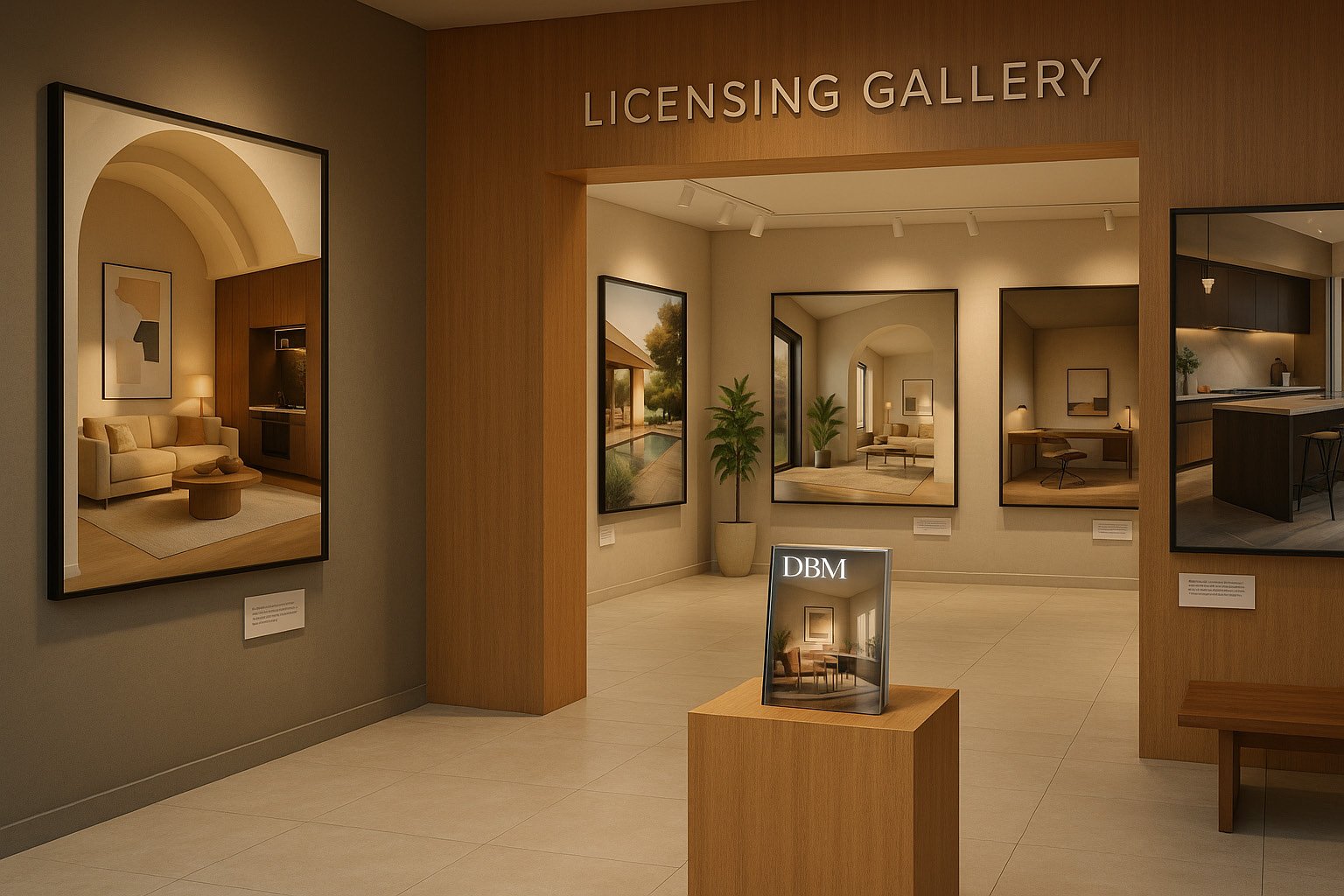
The second stream is where leverage multiplies. Once a design is rendered and conceptualized, it becomes licensable intellectual property. The design industry is beginning to operate like stock photography: one image, hundreds of licenses.
Hotels license the aesthetic. Developers license the approach for spec units. Furniture brands license the looks for product placement. Magazines license the images for editorial. Each license is independent. Each generates revenue. A single kitchen design can be licensed fifty times over, each licensee paying per use.
The licensing model shifts the designer’s value proposition. You are no longer selling a service. You are selling a licensable aesthetic. The design becomes a product. The Cinematic Intelligence™ rendering engine accelerates this shift—each render becomes a distinct asset, fully realized and immediately deployable across contexts.
This stream requires infrastructure: terms of use, licensing tiers, contract templates, delivery systems. But the operational complexity is a one-time investment. Once established, marginal revenue per license approaches pure profit.
Stream Three: Digital Retainers and Recurring Revenue
The third stream addresses the design industry’s perpetual problem: unpredictable income. Retainer models create predictability. Digital retainers are concept retainers delivered through digital infrastructure.
A digital retainer ($99 to $399 per month) commits the designer to producing periodic visualizations: seasonal styling variations, palette refreshes, periodic re-renderings of client spaces with new product integrations, quarterly design reinterpretations. The client receives predictable design input. The designer receives predictable revenue.
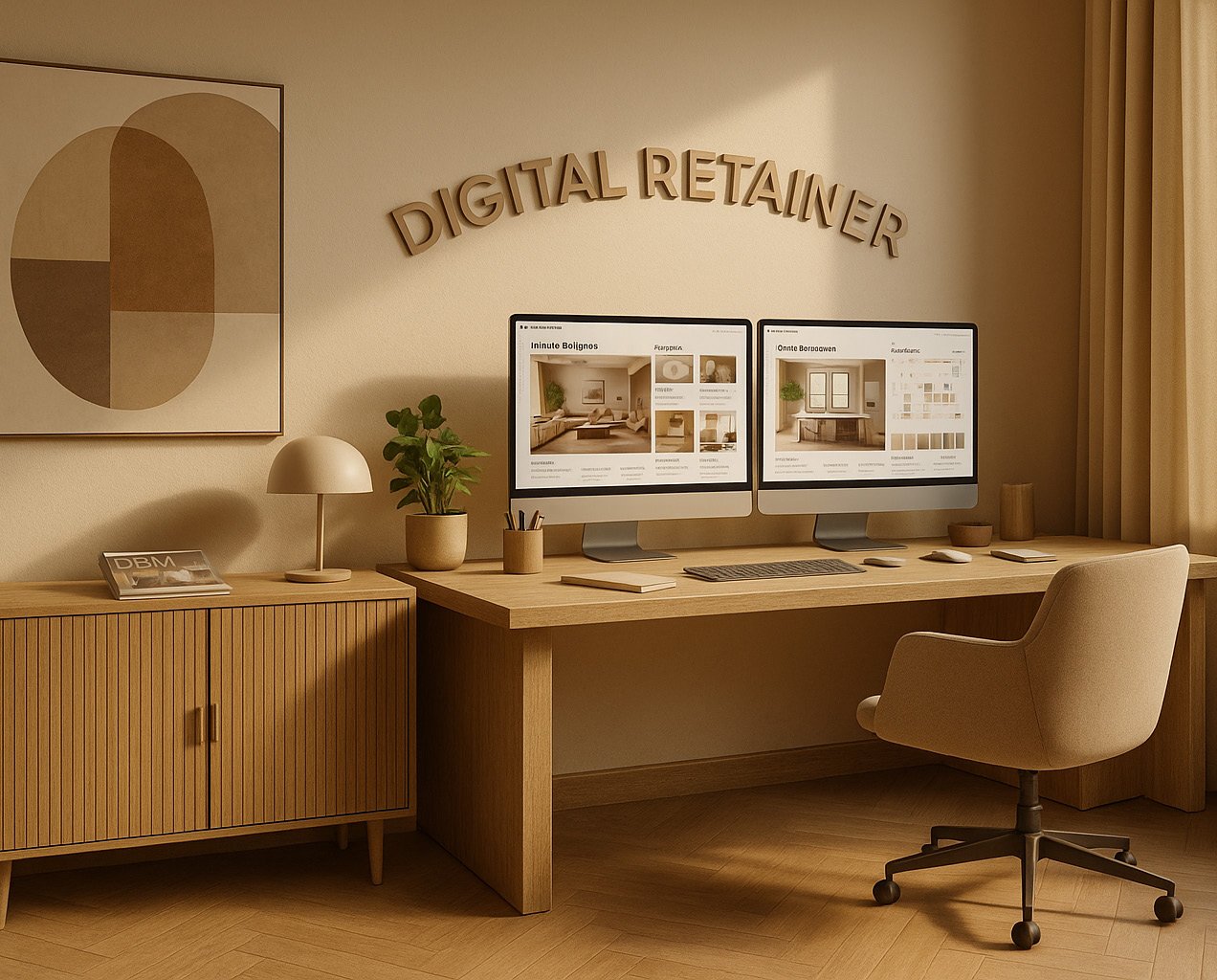
The economics here are favorable to the designer. A retainer client requires approximately 3-5 rendering hours per month. At a $200 monthly retainer, that yields $40 per hour of pure rendering time—below traditional billing rates but with zero project acquisition cost, zero proposal time, and zero client onboarding overhead. At scale (20-30 retainer clients), this becomes substantial recurring income.
Retainer clients are also the most loyal. They develop design dependency. They resist switching providers. The churn rate is negligible compared to project-based work. For design firms seeking revenue stability, retainer models are a strategic foundation.
Stream Four: Cinematic Visual Bundles for Real Estate and Investment
The fourth stream is the highest-volume, fastest-growing revenue source in contemporary design: selling visualization bundles to real estate professionals, short-term rental operators, and investment firms.
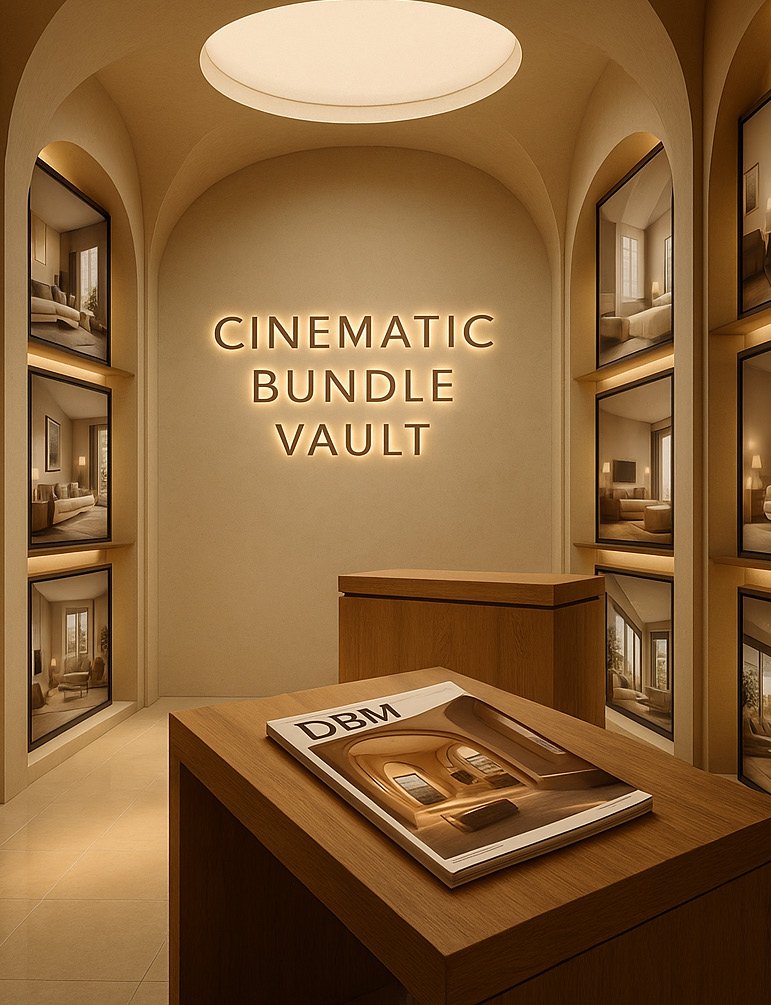
A Cinematic Visual Bundle ($99 to $999 depending on scope) is a complete rendering package for a property: real estate listing enhancement, Airbnb property visualization, investor pitch deck imagery, speculative development support. A designer who renders one residential property can generate 5-7 distinct bundle variations: “Modern Contemporary,” “Warm Transitional,” “Luxury Minimalist,” each styled and rendered as a distinct product.
Real estate agents sell dozens of properties annually. Each property, visualized in multiple styles, becomes more rentable, more investable, more saleable. Agents generate higher commissions. Properties move faster. Investors receive clearer projections of finished potential. Designers, scaling this model, can process hundreds of properties annually with modular rendering workflows.
The critical insight: real estate professionals will pay premium rates for professional visualization. A $500 bundle that increases a property’s sale price by $25,000 yields an ROI of 5000%. The market is price-inelastic. Demand exceeds supply. A designer who builds this workflow can operate at substantial scale with minimal client acquisition cost (agents are repeat purchasers, referrals compound).
Successful designers report selling hundreds of bundles annually. At an average of $300 per bundle, that represents $90,000 in recurring revenue from a process that requires 2-3 hours per property.
Stream Five: Educational Products and Systematic Knowledge Transfer
The fifth stream converts experience into scalable educational intellectual property. Educational products ($20 to $249) include micro-courses, rendering tutorials, material specification guides, lighting theory masterclasses, all created once and sold indefinitely.
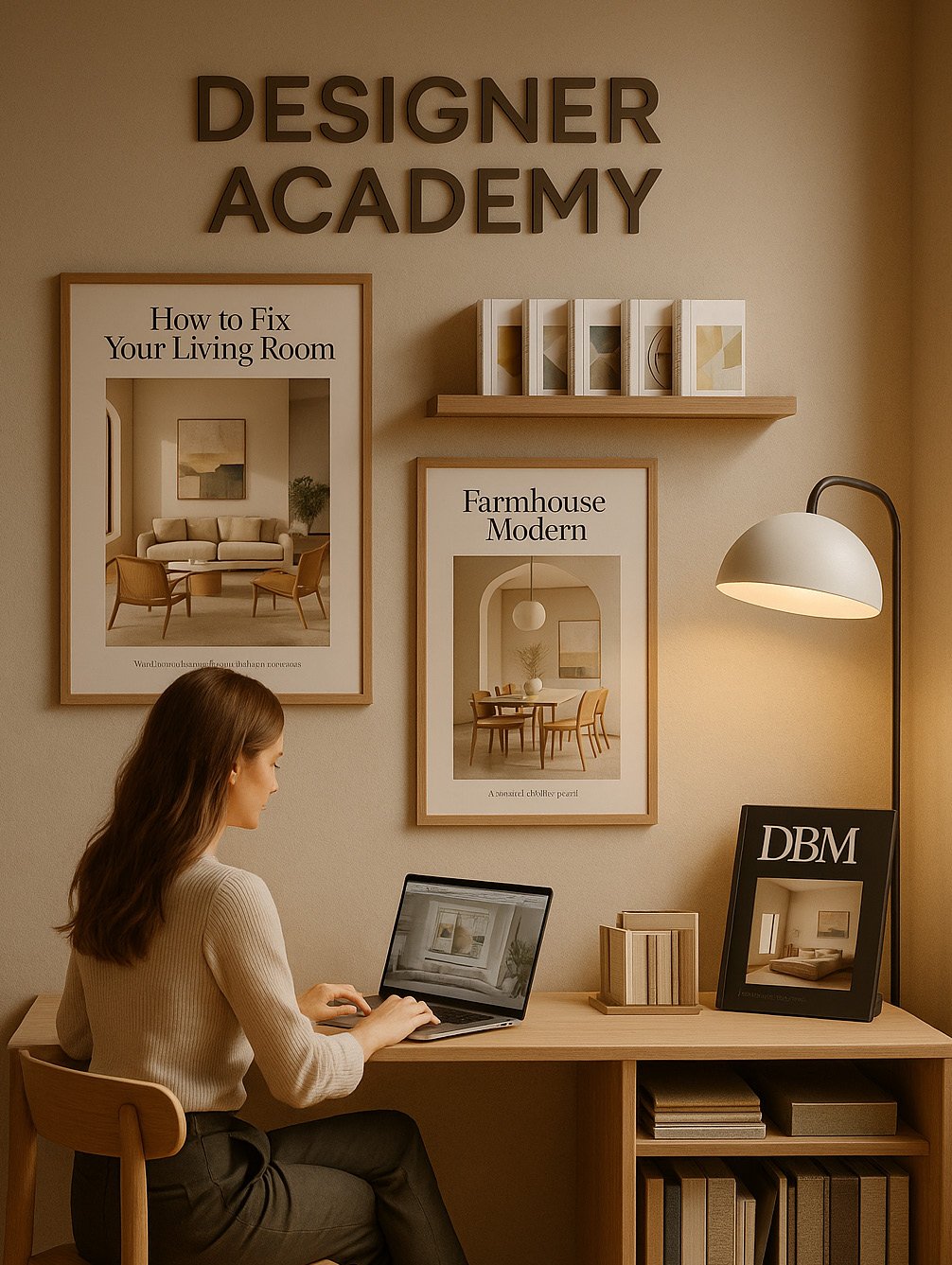
A designer who has mastered rendering technique can productize that knowledge. A $79 micro-course on “Lighting Theory for Residential Spaces” requires 12-15 hours of creation. Once created, it can be sold to thousands of students with zero marginal cost. At 100 students per month, the course generates $7,900 monthly income from the initial creation investment.
Educational products have an additional advantage: they position the designer as authority. Students become potential clients. Customers become referral sources. The educational Spaces become lead generation engines with zero sales overhead.
The most sophisticated design practices now operate hybrid models: premium project work for flagship clients, licensing revenue for standardized concepts, retainer work for reliable income, visualization bundles for real estate scale, and educational products for thought leadership positioning. One designer effectively operates five distinct business lines from a single rendering infrastructure.
The Insider Truth: One Room Equals Five Incomes
The design professionals earning six and seven figures annually share a common business structure. They no longer view a single project as a discrete engagement. Every project is simultaneously a licensing opportunity, a concept pack candidate, a retainer seed, a visualization bundle factory, and educational content source.
A designer who renders a residential kitchen renovation invests 40 billable hours. The traditional model yields one payment: $8,000 to $15,000 depending on market rates. The leverage model yields multiple streams: concept packs ($300-$500), licensing revenue ($2,000-$5,000 over 12 months), retainer relationship ($200-$400 monthly recurring), visualization bundles for the agent/investor market ($300-$500 per variation), and educational content positioning the designer as authority.
The same 40 hours of work, recontextualized through infrastructure, generates 3-5x the revenue. The difference is not in working harder. It is in architecting the business model to extract maximum value from intellectual property creation.
The design industry’s migration from service-based to ownership-based economics mirrors every creative revolution. Photographers stopped selling sessions and started selling images. Musicians stopped selling concerts and started selling recordings. Writers stopped selling per-article and started selling books and subscriptions. Design is following the same trajectory. Those who recognize this shift early, and rebuild their business infrastructure accordingly, are capturing extraordinary value in the process.
The highest achievers in contemporary design understand something fundamental: your rooms tell stories. Stories have value beyond the walls they describe. Stories can be licensed, packaged, distributed, and monetized across contexts. The designer’s role has expanded. You are no longer designing spaces. You are creating IP—intellectual capital that compounds over time.