The Bathroom as Cultural Anthology
The bathroom occupies a paradoxical position in Western architectural consciousness. It is one of the most intimate spaces in the home—where the body is most vulnerable, where ritual practices of cleansing and care unfold—yet it is often designed with minimal attention to cultural meaning or psychological significance. The bathroom is frequently treated as a utility space, a problem to be solved efficiently rather than a ritual room worthy of cultural expression.
This represents a profound misunderstanding of what bathing means across human cultures. In Japanese tradition, the bath is a place of spiritual cleansing and daily restoration. In Moroccan culture, the hammam is a social and sensory experience, a space of community gathering and elaborate ritual. In Scandinavian practice, the sauna embodies contemplative solitude and thermal wellness. In Islamic tradition, ablution spaces are designed with specific attention to the ritual purity required for prayer.
The bathroom is not culturally neutral. It is a repository of different meanings, different rituals, different understandings of what the body requires in its encounter with water. When architects design bathrooms with attention to these cultural dimensions—when the spatial logic, material choices, and sensory properties are calibrated to honor the ritualistic traditions that give bathing meaning—the result is a domestic space of extraordinary power.
Scandinavian Retreat: Stillness Through Clarity
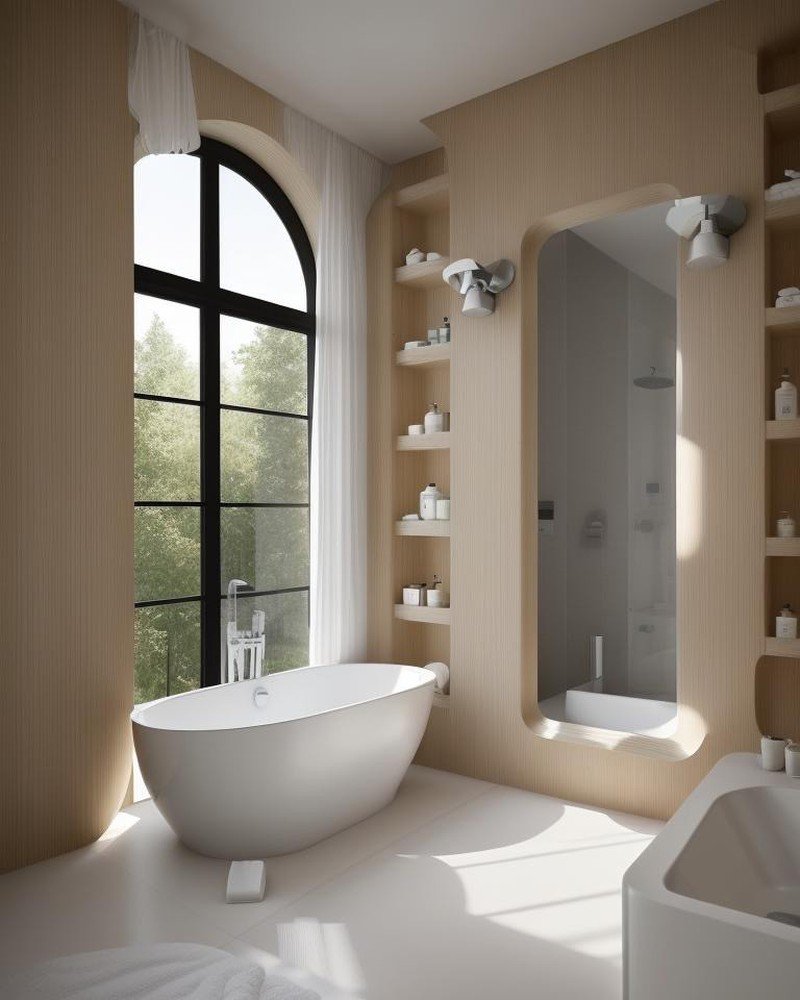
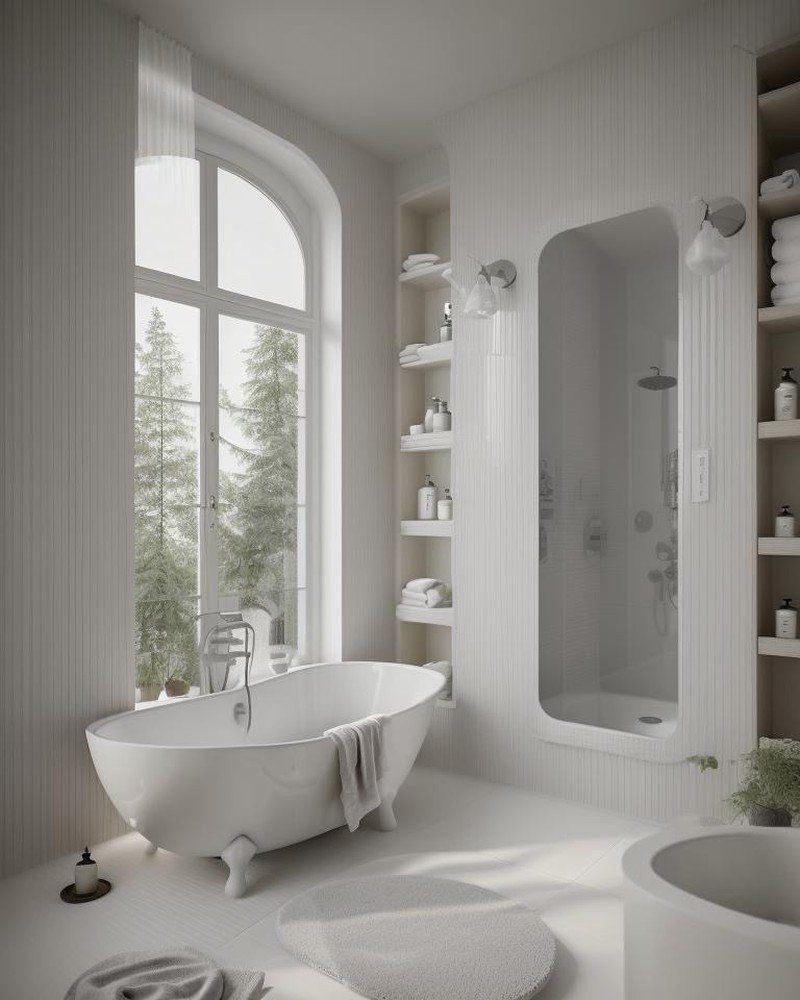
The Scandinavian bathroom prioritizes light, clarity, and thermal comfort. Large windows or skylights flood the space with natural illumination, or carefully designed artificial light mimics daylight color temperature. Materials are natural and minimally processed: light wood finishes, white tile or stone, possibly concrete surfaces. The color palette is restrained: whites, light grays, warm wood tones. Fixtures are contemporary and minimal, integrated seamlessly into the architecture.
The ritual embedded in this expression is contemplative simplicity. The sauna tradition—not strictly a bathroom but foundational to Scandinavian bathing culture—emphasizes thermal contrast and meditative solitude. Even if a sauna is not included, the Scandinavian bathroom’s spare aesthetic, clear sightlines, and minimal ornament create an environment conducive to stillness, to the mind’s quieting in the body’s encounter with water and warmth.
Japandi: The Meeting of Zen and Minimalist Elegance
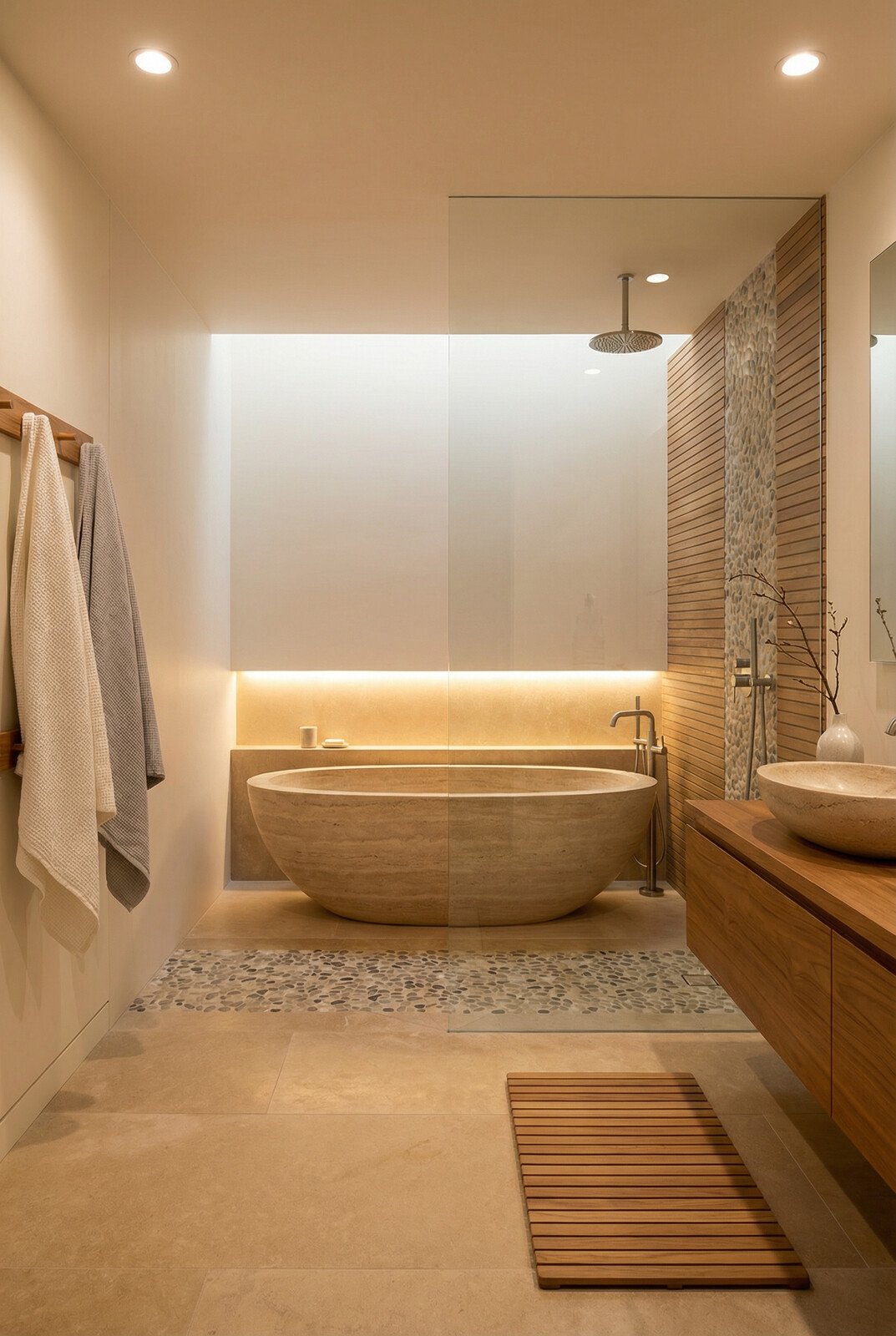
Japandi synthesizes Japanese and Scandinavian design logics, creating a space of serene minimalism informed by both traditions. The soaking tub becomes central—a sculptural form, possibly sunken or platform-mounted, in natural wood or stone. Materials are carefully curated: hinoki wood, river stone, possibly concrete. The color palette is monochromatic or near-monochromatic: blacks, grays, warm neutrals. Lighting is soft and controlled, possibly through shoji screens or diffused fixtures. Every element is essential. Nothing is decorative.
The Japandi bathroom speaks to the intersection of Japanese and Northern European philosophical understanding: the pursuit of beauty through restraint, of clarity through elimination, of calm through geometric precision and material honesty.
Greek Revival: Neoclassical Luxury and Thermal Tradition
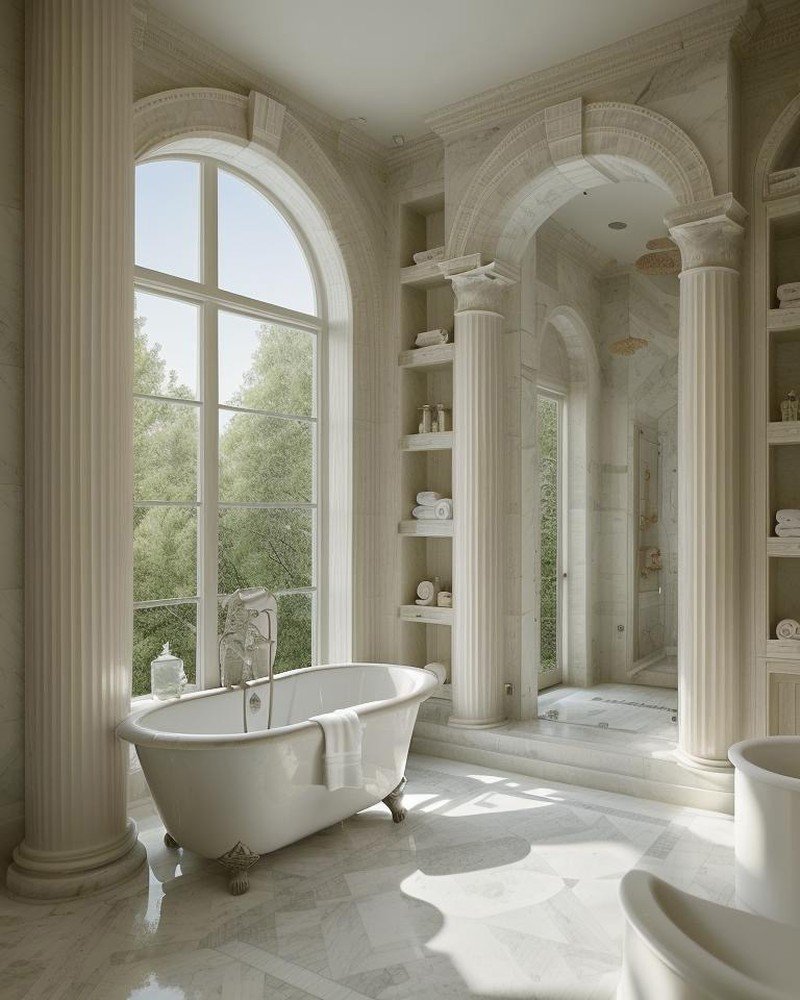
Greek Revival draws on historical bathing traditions, translating them into contemporary domestic space. Marble becomes primary material—perhaps polished surfaces or subtle veining. Columns or pilasters, simplified from classical orders, provide structural and visual organization. The bathtub might feature classical proportions or period-appropriate hardware. Lighting could include sconces inspired by historical forms, or a statement fixture with neoclassical geometry. The color palette is restrained but luxurious: whites, soft grays, possibly pale blues reminiscent of Mediterranean tradition.
This approach honors the historical understanding that bathing is not merely hygienic but ceremonial, worthy of architectural grandeur. The Greek and Roman spa traditions understood the bath as a luxurious and spiritually significant practice. Revival of these traditions asserts that contemporary domestic bathing need not abandon elegance or historical reference in pursuit of modern minimalism.
Chalet: Alpine Vernacular and Warmth
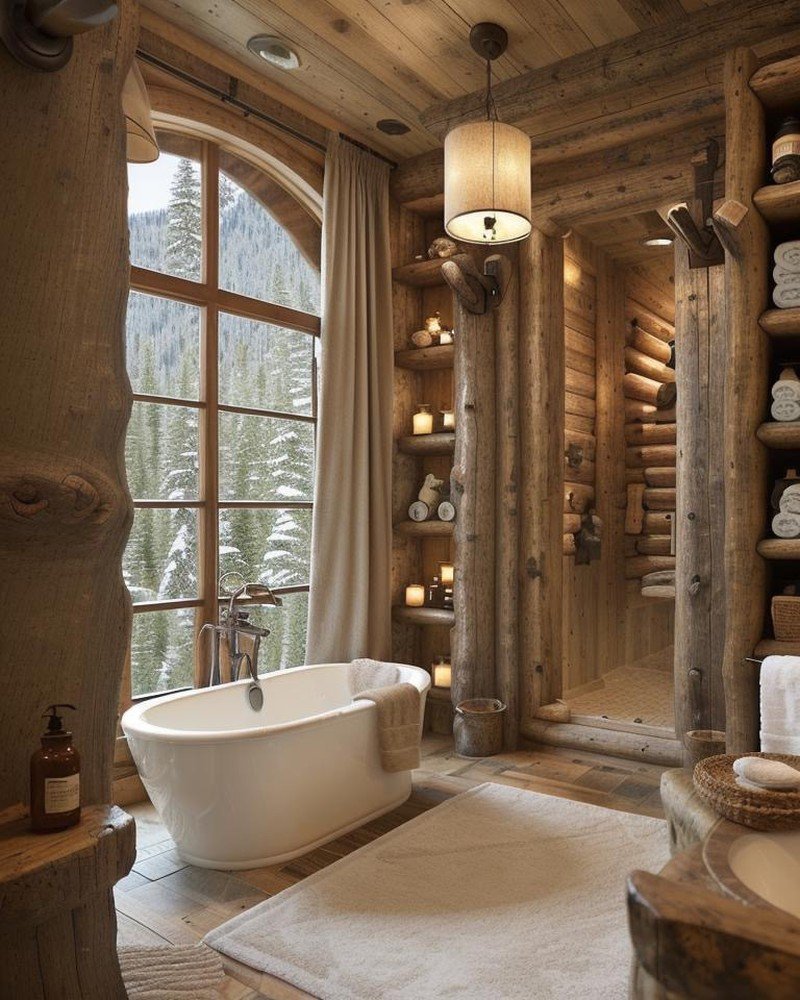
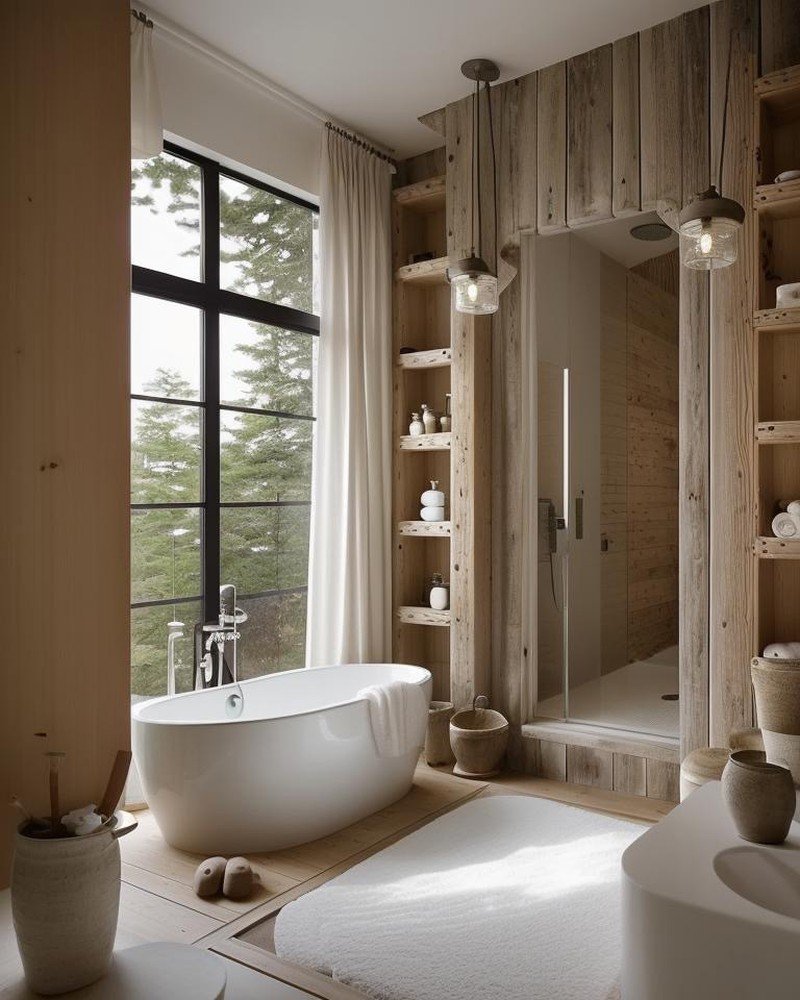
The Chalet bathroom emphasizes natural materials and the sensory warmth of Alpine vernacular. Heavy timber elements—possibly visible in structural beams or cabinetry—establish a grounded base. Stone—perhaps local or locally inspired—covers walls or floors. Materials are often left in natural finish or stained to enhance grain. Lighting is warm and layered, possibly including candles or creating shadow play on rough surfaces. The color palette is earthy: browns, warm grays, possibly warm stone tones.
The Chalet aesthetic asserts that bathrooms need not be cold or clinical. The use of natural, substantial materials creates an environment of comfort and security. The emphasis on warmth—through materials, lighting, and thermal considerations—positions the bathroom as a refuge, a place where the body is supported and cared for through authentic materials and careful environmental control.
Bohemian: Personal Expression and Layered Meaning
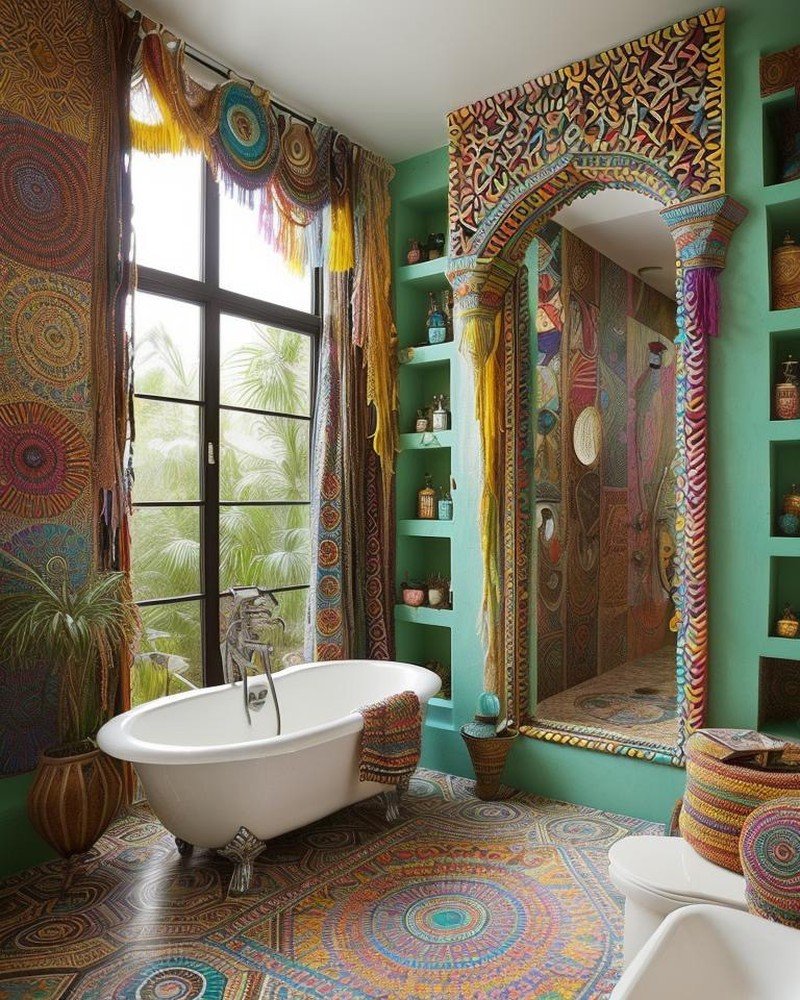
The Bohemian bathroom celebrates individuality and the eclectic accumulation of objects chosen for emotional resonance. Walls might feature wallpaper in bold patterns, painted colors, or mixed finishes. Vintage mirrors and fixtures sit alongside contemporary elements. Shelving displays collected ceramics, textiles, or found objects. Lighting is non-uniform, possibly including vintage chandeliers, string lights, or unconventional fixtures. The color palette is rich and varied: earth tones, jewel tones, possibly bold accent colors.
This approach abandons the standardized bathroom aesthetic in favor of personal narrative. Every object is meaningful. The space tells the story of the inhabitant’s travels, experiences, and aesthetic values. The bathroom becomes a private gallery, a room filled with meaning-bearing elements that transform bathing from functional necessity into a ritual immersed in personal history and expression.
Bauhaus: Functional Elegance and Democratic Design
The Bauhaus bathroom applies fundamental design principles—form follows function, beauty emerges from material honesty and clear proportion—to the bathing space. Fixtures are contemporary and minimalist, selected for functional excellence. Materials are primary: possibly concrete, polished metal, natural wood veneer, or high-quality tile. The color palette is restrained: whites, grays, possibly one accent tone. Hardware and fixtures are integrated seamlessly. Every element serves a clear purpose.
The Bauhaus approach reflects a democratic ideal: that excellent design need not be exclusive or expensive, that beauty emerges from clarity of thinking and precision of proportion rather than ornamental richness. The result is a bathroom that is both functionally superior and aesthetically refined.
Moroccan Hammam: Sensory Immersion and Social Bathing
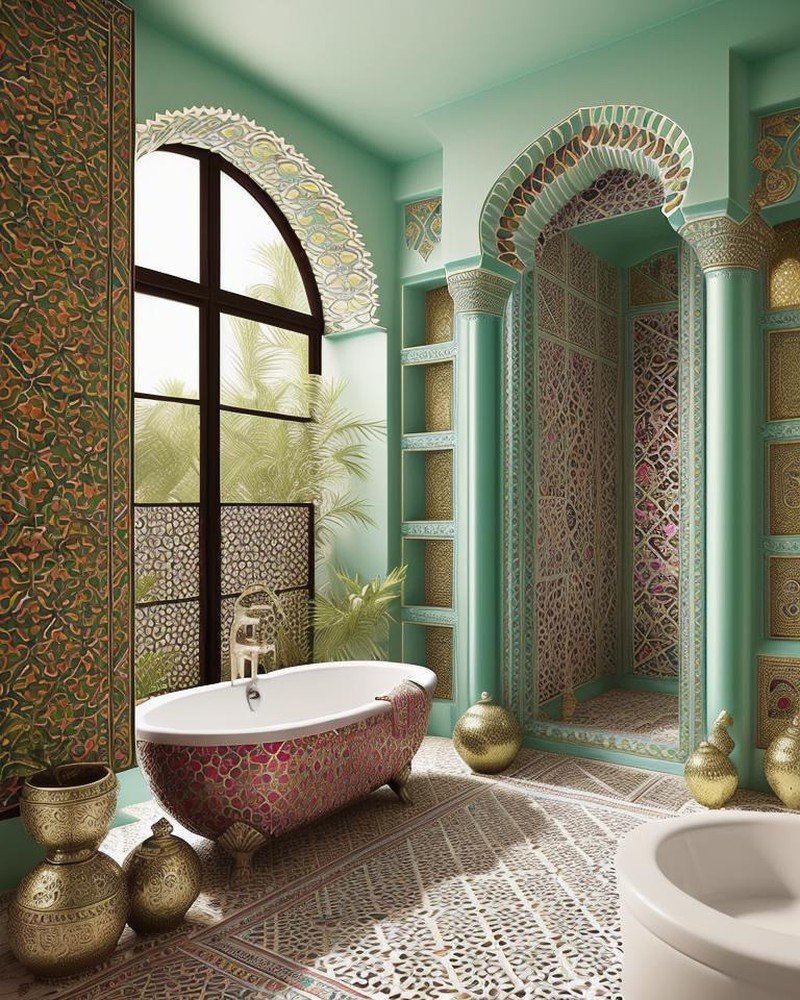
The Moroccan Hammam draws on centuries of North African bathing tradition—a practice understood not as private hygiene but as social ritual, sensory experience, and community gathering. Zellige tilework—hand-cut geometric patterns in jewel tones—covers walls and floors, creating visual richness and sensory stimulation. A central soaking or rinsing area might feature running water, creating ambient sound. Brass or copper fixtures are ornate, catching and reflecting light. Arches or niches carved into walls create visual complexity and spatial layering.
The ritual embedded here is profound: the hammam is traditionally a women’s space, a place of gathering, social bonding, and elaborate preparation rituals. The architectural richness—the zellige patterns, the ornate fixtures, the sensory abundance—asserts that the bathing ritual is worthy of celebration, that the body’s preparation and care merit elaborate spatial and material expression. Contemporary adaptations translate this social function into private domestic space, while preserving the sensory richness and ceremonial quality.
Rococo: Ornamental Abundance and Luxury
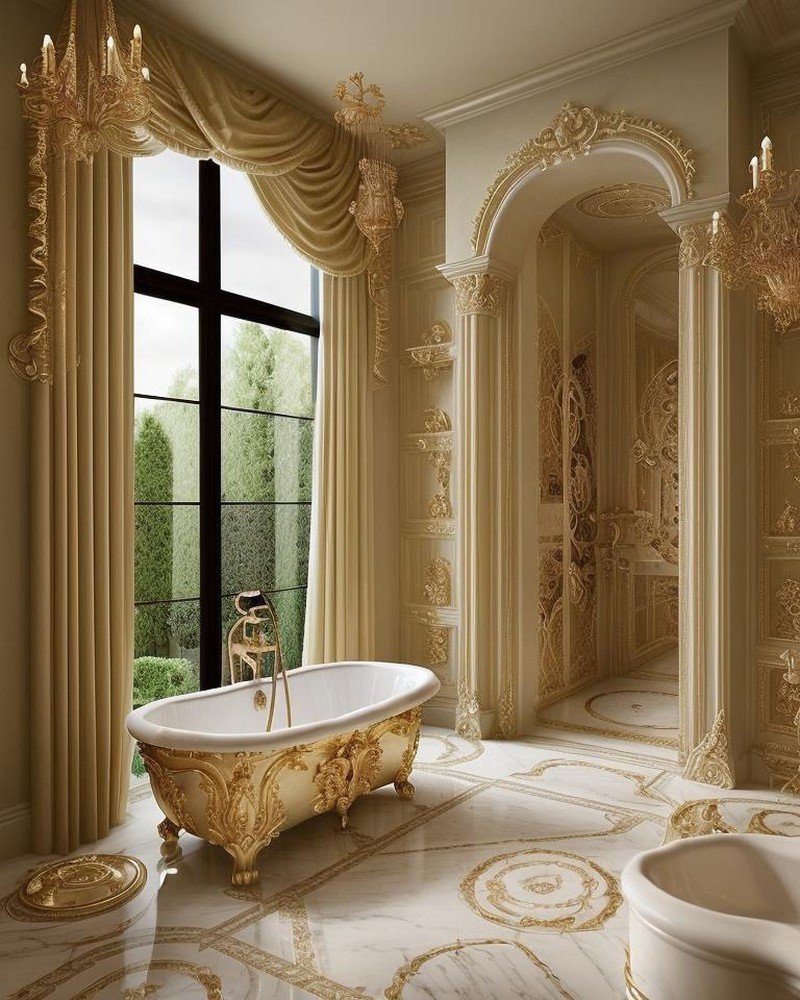
Rococo celebrates ornamental opulence and curved forms. The bathroom features elaborate mirror frames, possibly gilded or decorated with carved details. The bathtub is a sculptural statement, possibly featuring curved pedestal supports or integrated within a tiled surround with rococo-inspired ornamentation. Walls might showcase delicate wallpaper or tilework featuring rococo motifs. Lighting arrives via ornate fixtures—possibly a statement chandelier or decorative wall sconces. The color palette is soft and warm: creams, pale blues, rose tones, with gold accents.
This approach unapologetically asserts that bathing is an occasion, that the body’s comfort and the eye’s pleasure are valid architectural concerns. Ornament is not superficial decoration but rather the primary language through which the space communicates its purpose: the celebration of luxury, beauty, and self-care.
AI Translating Cultural Bathing Traditions
What artificial intelligence enables in these bathroom transformations is precisely what traditional design methodology cannot easily accomplish: the simultaneous iteration and rendering of multiple cultural bathing traditions with sufficient fidelity that the spatial logic, material character, and psychological effect of each approach becomes legible.
Cinematic Intelligence™ modeling allows architects to understand how light will actually behave in a Japandi bathroom’s refined minimalism, how the ornate zellige patterns will animate a Moroccan hammam, how marble surfaces will respond to water and humidity in a Greek Revival interpretation. This is not superficial visualization. It is the capacity to render spaces with sufficient precision that designers and clients can imaginatively inhabit each expression, understanding not merely how it looks but how it will feel—the thermal qualities, the acoustic properties, the sensory and psychological dimensions of the space.
The Bathroom as Witness to Human Culture
The Vervaine Estate’s bathroom transformations demonstrate a fundamental principle: domestic architecture at its most powerful honors the deeper dimensions of human ritual and cultural identity. The bathroom—that most intimate space—need not be generic or utilitarian. When designed with attention to cultural meaning, when the spatial logic and material character honor the traditions that give bathing significance, the bathroom becomes a repository of cultural expression, a daily reminder of belonging to particular traditions and ways of understanding the body, water, and care.
Across nine design languages, the Vervaine bathrooms articulate different answers to fundamental questions: What does bathing mean? What does the body require? What does ritual significance look like in architectural form? The diversity of answers—from the austere clarity of Japandi to the ornamental abundance of Rococo, from the social warmth of Moroccan tradition to the contemplative simplicity of Scandinavian restraint—reveals that there is no single correct bathroom, no single ideal. Rather, there are many bathrooms, each authentic, each complete, each a distinct articulation of what it means to care for the body and honor the ritual of bathing within a particular cultural and aesthetic framework.