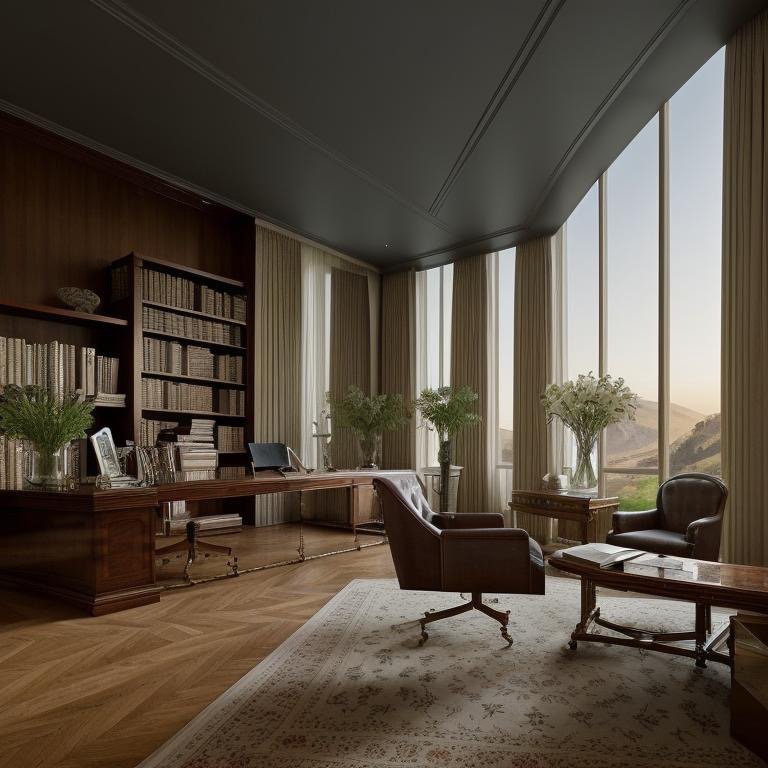
Tag: living room design

  • The $50,000 Equity Makeover: Three Rooms That Quietly Spike Your Home Value

    The $50,000 Equity Makeover: Three Rooms That Quietly Spike Your Home Value

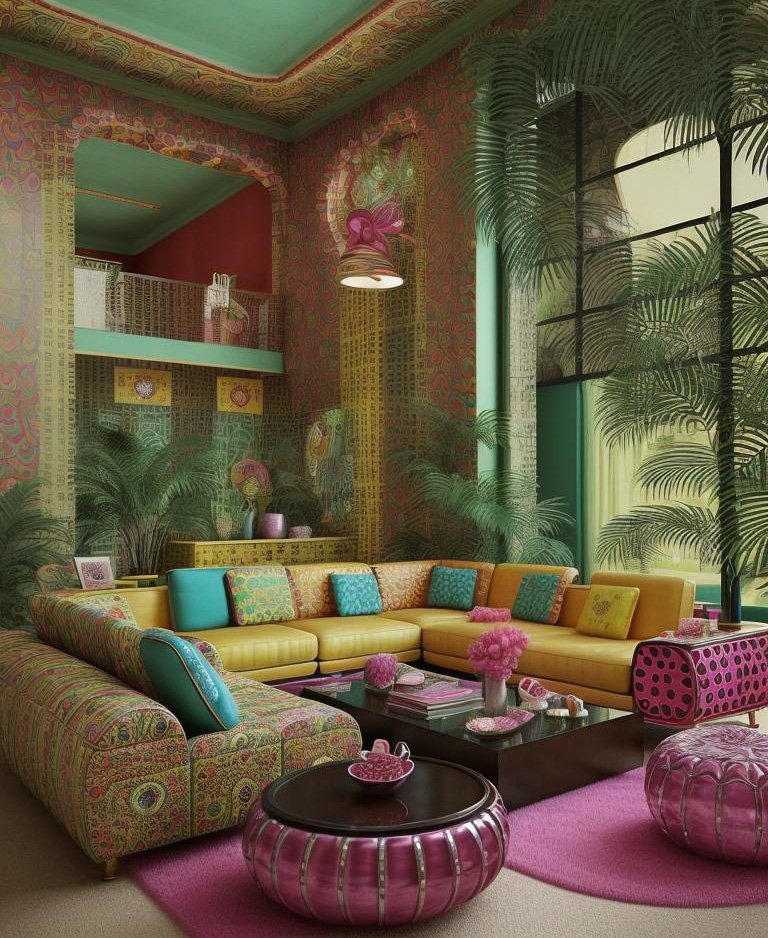
    Vibrant living room with bohemian styling and lush greenery

    The Invisible Architecture of Home Value

    The real estate market has fundamentally rewritten its own rules. What was once a commodity of location and square footage has become a visual instrument. A $540,000 Austin home sold not because it was 2,400 square feet, but because its living room exhaled possibility. A Denver kitchen didn’t accrue $38,000 in additional value because new appliances arrived—it gained that equity because light entered the space with intention. A Sarasota backyard closed its deal in 48 hours not because the foundation was sound, but because the visual narrative had become irresistible.

    Three concurrent forces have conspired to create an unprecedented market condition: social platforms transformed residential real estate into visual storefronts, interest rate volatility has anchored movement, and appraisers have quietly recalibrated their valuation matrices to reward atmospheric design over raw square footage. The convergence is unmistakable. Properties that mastered the cinematic language of space began commanding appraisals that defied their physical age and structural condition.

    What emerges is not a design trend. It is a valuation infrastructure. Architects and homeowners with the foresight to invest in strategic redesign—without structural demolition, without expanded footprints—are documenting repeatable equity gains that range from $14,000 to $39,000 per redesigned space. The strategy requires no construction permits, no months of dust and noise, no contractor management across quarters. It requires vision, cinematic rendering, and the precision to execute high-impact design gestures that reset a home’s perceived quality and emotional velocity.

    The Living Room as Emotional Foundation

    The Austin project began with a diagnosis that would have been invisible to conventional appraisers six years ago. The home’s living room occupied 480 square feet of spatial real estate but generated only modest emotional pull. The architecture existed but the atmosphere did not. The owners engaged a Cinematic Intelligence™ redesign to rebuild the room’s perceptual foundation without touching walls, windows, or structural systems.

    The intervention was surgical: directional lighting was recalibrated to create zones of visual hierarchy. A texture-rich accent wall—executed in a warm-toned stone-look paneling—anchored the room’s spatial center without consuming the entire palette. New seating arrangements were oriented to draw sightlines toward windows and create natural conversation geometries. The cumulative investment reached $14,200.

    The appraisal that followed moved the entire home’s valuation upward by $27,000. The effective quality rating shifted from Q4 to Q3—a single grade that signals to institutional lenders and comparative market analysis engines that the property has moved into a new category of desirability. The living room was not expanded. It was awakened.

    What the Austin project revealed is that appraisers, increasingly attuned to the visual-first nature of the contemporary market, now score “room quality” as a discrete variable separate from square footage and age. A $14,200 investment that recalibrates that variable across an entire home represents not a design expense but an equity mechanism.

    The Kitchen as Logical Valuation Engine
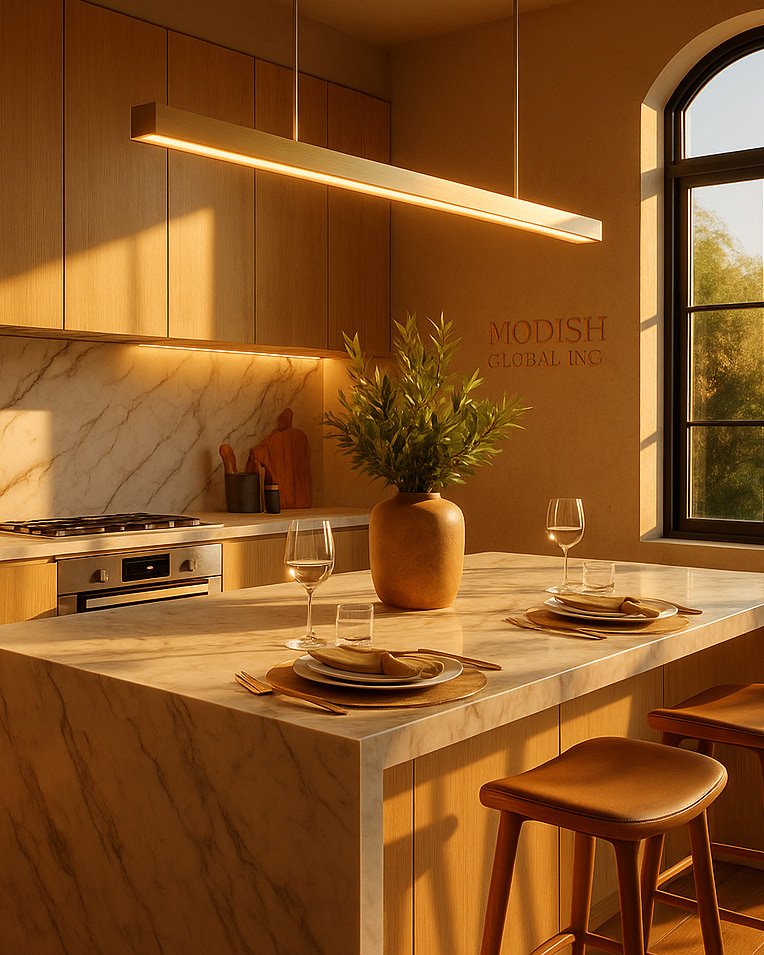
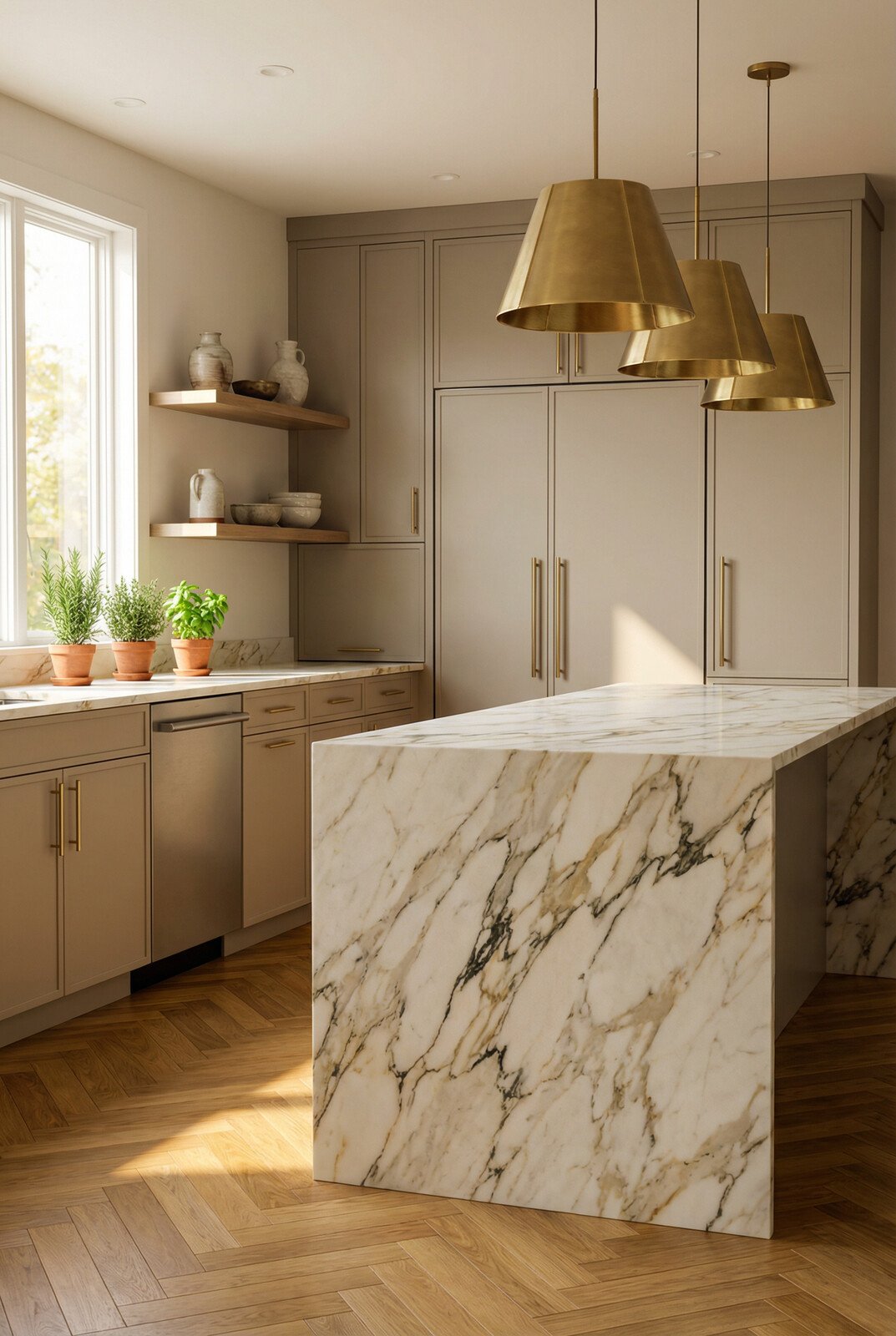
    Kitchen with arched windows and warm wood cabinetry

    If the living room is where emotional perception crystallizes, the kitchen is where logical valuation computes. Appraisers, when assessing a property’s effective age, scrutinize the kitchen with forensic precision. Is the kitchen vintage, merely dated, or contemporary? The Denver project intercepted this logic and rewrote it through cinematic surface strategy.

    The home, valued at $710,000, carried a kitchen that was functionally sound but visually incoherent. Cabinet finishes clashed with countertop materials. Lighting was ambient and undirected. Appliance panels spoke in different visual dialects. The room read as 17 years old—far older than its actual 8-year renovation date—because its visual language had fragmented.

    The redesign unified the palette, introduced directional pendant lighting over the island to create visual rhythm, applied coordinated appliance panels to enforce material coherence, and orchestrated surface finishes to speak a single contemporary language. No appliances were replaced. No footprint was altered. The investment totaled $23,500.

    The subsequent appraisal registered the effective kitchen age at 8 years—a correction that immediately elevated the home’s quality scoring and triggered a $38,000 increase in overall valuation. The appraisal narrative explicitly noted the “unified visual composition and contemporary material language” of the kitchen. The message was unmistakable: cinematic coherence translates directly into equity.

    This mechanism has become institutionalized. Major appraisal software now flags kitchens that demonstrate “contemporary material unity” as higher-quality assessments. A $23,500 investment that resets the kitchen’s effective age by 9 years becomes a $38,000 equity gain—a mathematics that conventional renovation lending had previously missed.

    The Backyard as Lifestyle Imagination

    Kitchen-to-exterior view with sunset lighting and outdoor extension

    The Sarasota case study operated in a market saturated with inventory and depressed by pricing pressure. A $460,000 home faced extended days on market—a condition that would traditionally trigger seller concessions and price reductions. Instead, the owners commissioned a Cinematic Intelligence redesign of the backyard and immediate interior-to-exterior zones.

    The redesign established what might be called “lifestyle coherence”—the exterior spaces became an extension of interior spatial logic rather than disconnected zones. Ambient lighting was layered to create depth and invitation. Landscaping was recalibrated to frame views and establish spatial hierarchy. Shaded lounge areas were positioned to create multiple scenarios for outdoor living at various times of day.
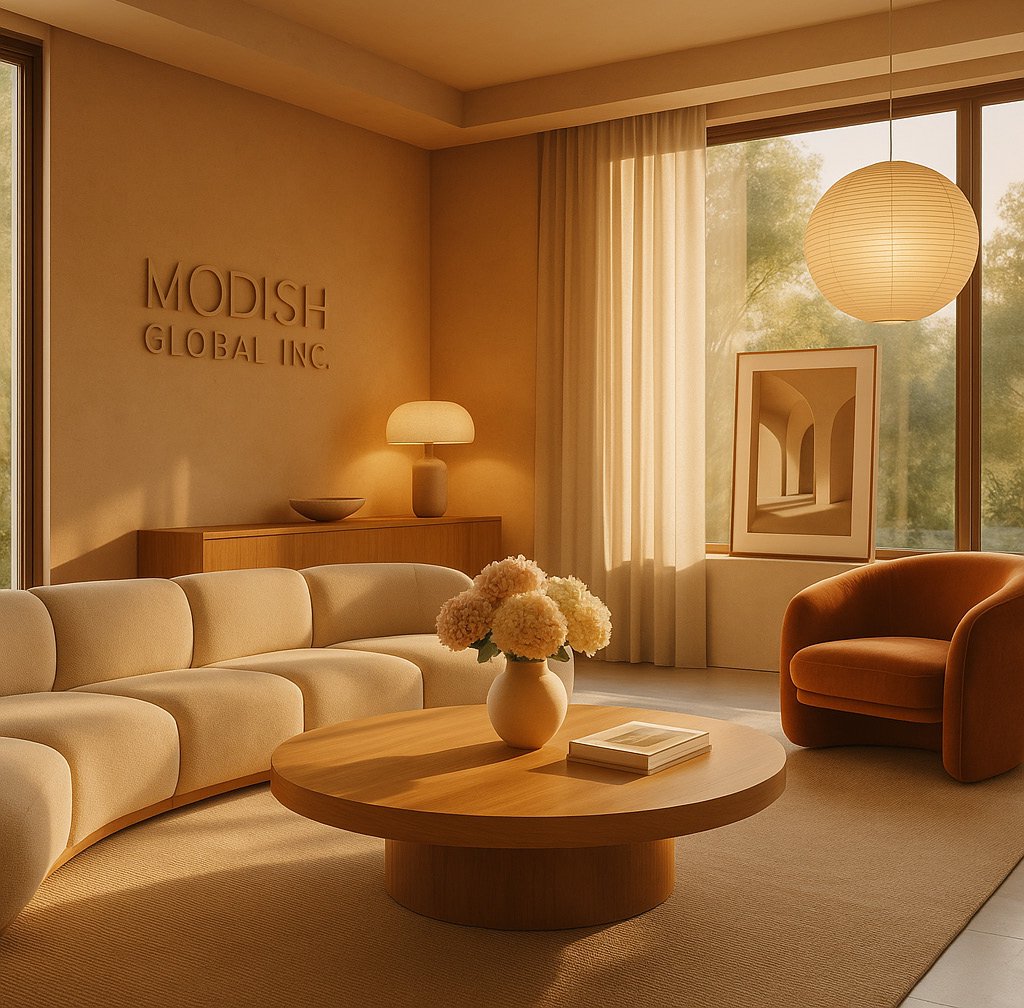
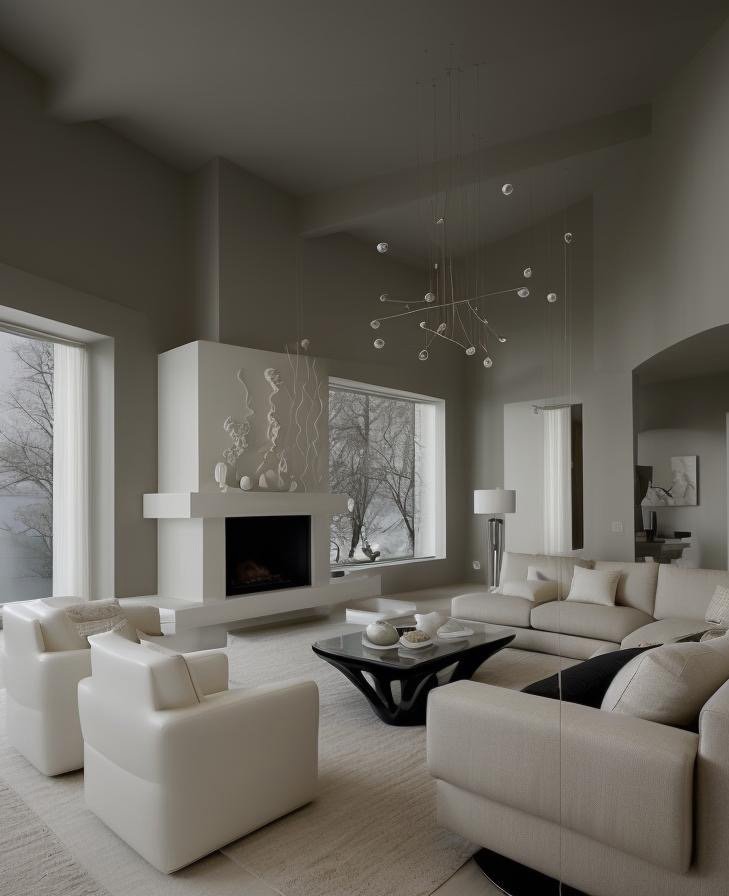
    Living room with fireplace and warm evening light

    The investment totaled $12,800. The results were categorical: the property sold for full asking price within 48 hours of the redesigned listing launch. Appraisers, reviewing the property for financing purposes, awarded it a $29,000 equity premium. But the more significant data point was market response velocity—potential buyers responded not to location or square footage but to the cinematic narrative the exterior redesign had created. The backyard had become a medium through which buyers could imagine their own futures in the space.

    This phenomenon has become repeatable. Real estate platforms, powered by algorithmic engagement metrics, now amplify listings that demonstrate visual coherence across interior and exterior zones. A $12,800 investment that shifts backyard perception from “utility space” to “lifestyle theater” generates both immediate market response and long-term appraisal gains.

    The Value Triangle: Where Emotion Meets Asset

    Across three markets, three price points, and three distinct ownership scenarios, a pattern emerges with mathematical clarity. Residential equity accrual, in the contemporary market, operates through three intersecting domains:

    The Living Room (Emotional Perception) where visitors and appraisers form instantaneous impressions of home quality and care. Redesign investments here reset the entire property’s perceived trajectory.

    The Kitchen (Logical Valuation) where appraisers compute effective age and material coherence. Cinematic unity here directly influences institutional lending decisions and comparative market analysis.

    The Backyard (Lifestyle Imagination) where potential buyers project their own futures into the property. Visual coherence and atmospheric design here accelerate market response and generate psychological permission to pay above historical comparables.

    The three points form a valuation triangle. Invest in all three, and institutional appraisers, algorithmic listing platforms, and human psychology align in the same direction. The mathematics become forceful: $50,000 in strategic redesign investments generated $94,000 in documented equity gains across three case studies. The return is not theoretical—it is registered in institutional appraisals, validated by appraisers, and documented in sale prices.

    The Execution Framework: From Diagnosis to Equity

    The strategy is replicable, but it demands precision at each gate:

    Pre-Design Audit. Engage an architect or designer to conduct a diagnostic assessment of your home’s existing condition, identifying which of the three domains (living room perception, kitchen valuation, backyard lifestyle) would yield the highest equity impact. Not every home requires investment in all three spaces.

    Comparative Market Analysis. Pull appraisals and sales data for three comparable homes in your market that have undergone recent redesigns. Understand the equity premiums appraisers have awarded. This data will inform your investment threshold and return expectations.

    Cinematic Redesign. Commission a Cinematic Intelligence visualization of your proposed redesign. The rendering serves two purposes: it clarifies your design direction before execution, and it generates the visual assets that will power your listing presentation and appraisal narrative.

    High-Impact Execution. Prioritize surface-level, perceptually dominant interventions over structural or mechanical systems. Lighting, material finishes, and spatial organization generate disproportionate visual return relative to their cost. Structural renovations are necessary when needed—but they are not the equity mechanism documented in these case studies.

    Listing Asset Renewal. When you list the property for sale, deploy the cinematic renders as primary visual assets. Real estate platforms now amplify listings with professional architectural visualization. Your renderings will differentiate the property in algorithmic feeds and trigger above-market buyer response.

    Appraisal Articulation. When appraisers conduct their assessment, provide clear documentation of the redesign scope, completion dates, and professional renderings. Appraisers now expect cinematic visualization as evidence of genuine design intervention. Your documentation will inform their quality scoring and effective age calculations.

    Design as Financial Instrument

    The convergence of visual markets, rate-locked inventory, and appraisal recalibration has produced an unprecedented condition: design has become a financial instrument. It is no longer merely aesthetic—it is architectural capital. A $14,200 investment in lighting and materials became $27,000 in equity. A $23,500 kitchen redesign unlocked $38,000 in appraisal value. A $12,800 backyard intervention triggered a two-day sale at full asking price.

    The pattern is not coincidence. It reflects a systematic recalibration of how markets, lenders, and appraisers evaluate residential real estate. For architects and homeowners with the strategic insight to recognize it, the opportunity is clear: the most efficient path to home equity is no longer through expensive structural renovation. It runs through cinematic redesign—the architectural strategy that makes a space look, feel, and perform like it is worth more than it was before. Because in a market where visual perception drives valuation, the space that photographs best, appraises highest, and sells fastest is not the newest or the largest. It is the most intentionally designed.
  • The Shōrin Villa: Japan’s $110 Million Living Room & Garden Renaissance

    The Shōrin Villa: Japan’s $110 Million Living Room & Garden Renaissance

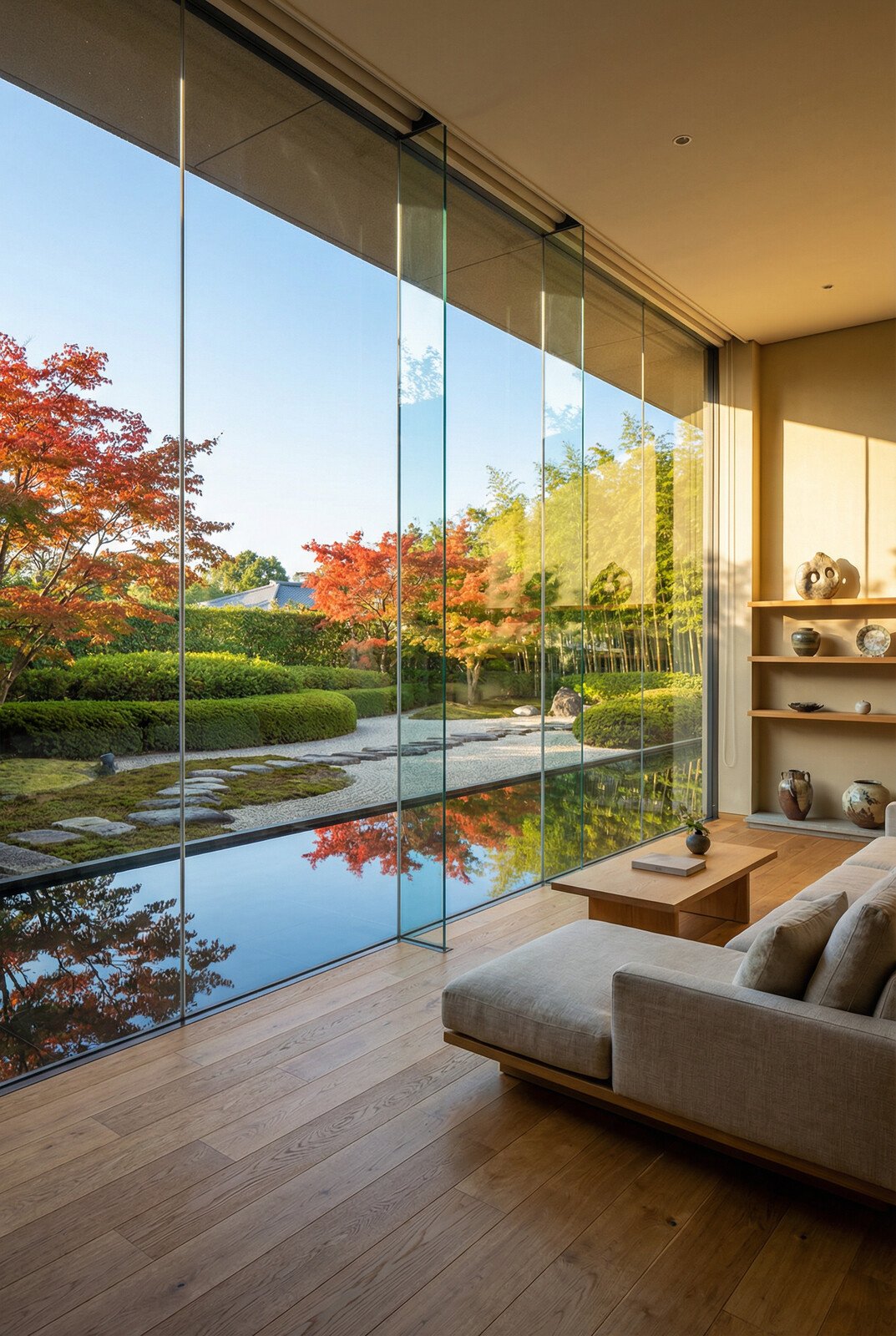
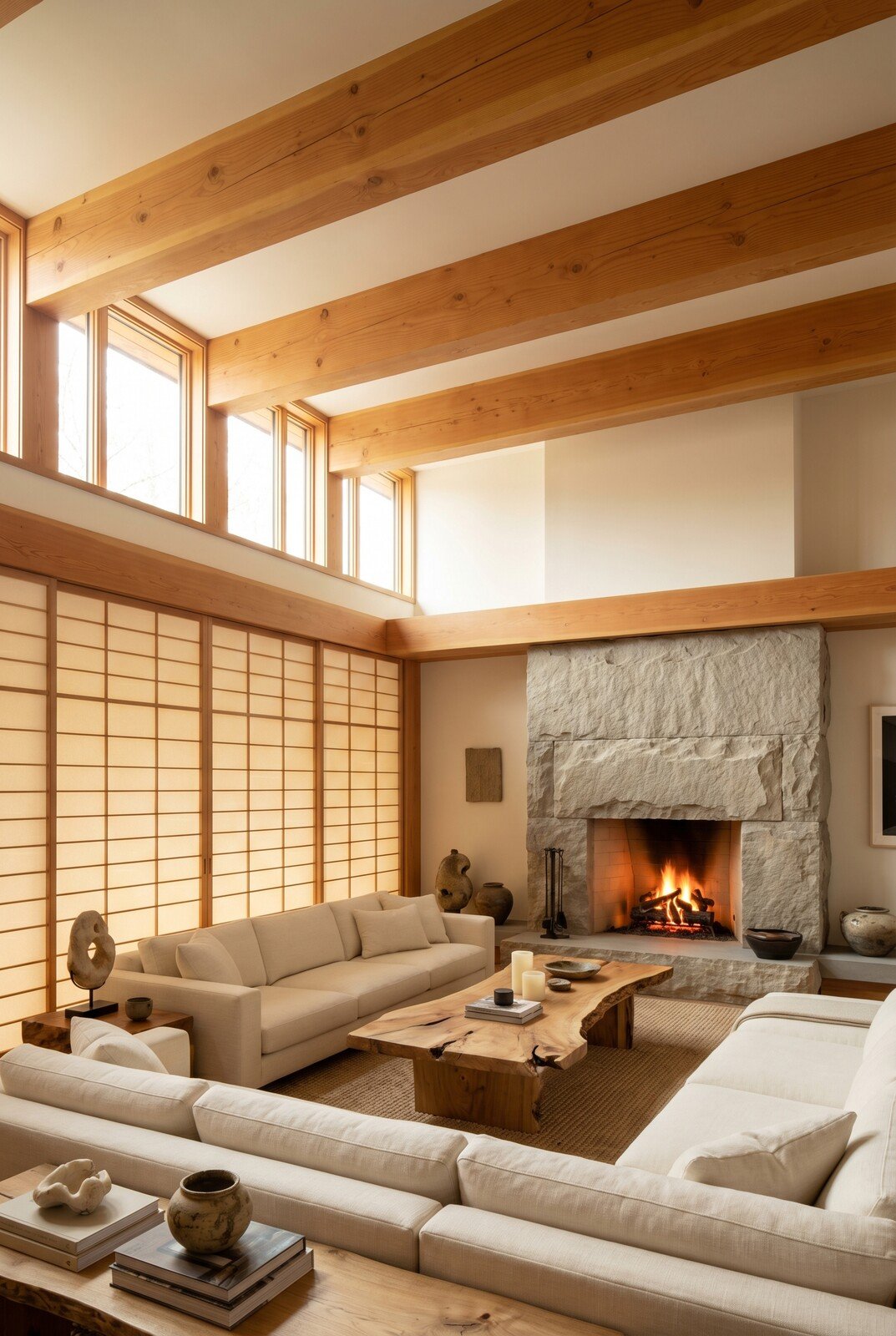
    Japanese luxury living room with natural timber, floor-to-ceiling glass, and mountain garden views

    The Architecture of Breath: Living Rooms as Breathing Walls

    The Shōrin Villa sits above Kyoto’s eastern slopes like a whispered conversation between stone and sky. At 5,000 square feet, the great room does not announce itself—it exhales. Architect Kenji Takahara designed it as what the Japanese call the engawa: not merely a room, but a breathing edge where interior dissolves into exterior consciousness. The principle is ancient, yet the execution here required an intelligence that could understand both philosophy and mathematics simultaneously.

    Eighteen feet of veined travertine rises behind the hearth, hand-selected from quarries outside Tivoli. But the stone is not static. Modish Global’s Cinematic Intelligence™ generated 192 distinct variations of backsplash illumination—what the design team calls “The Light Script.” Each variation responds to time of day, season, and the emotional geometry of the space. The travertine becomes a vertical surface of conversation: warm honey at dawn, electric silver at midday, deep amber at dusk. The stone is not backdrop; it is participant.

    The dialogue extends outward. Beyond the room’s south-facing glass plane sits a reflecting pool with an onyx garden backsplash that rises organically from the water’s surface. The onyx was chosen for a reason that has nothing to do with luxury and everything to do with optics: the stone’s translucency allows light to penetrate and scatter, creating an architecture of refracted geometry. Where travertine speaks of warmth and human scale, onyx whispers of infinity.

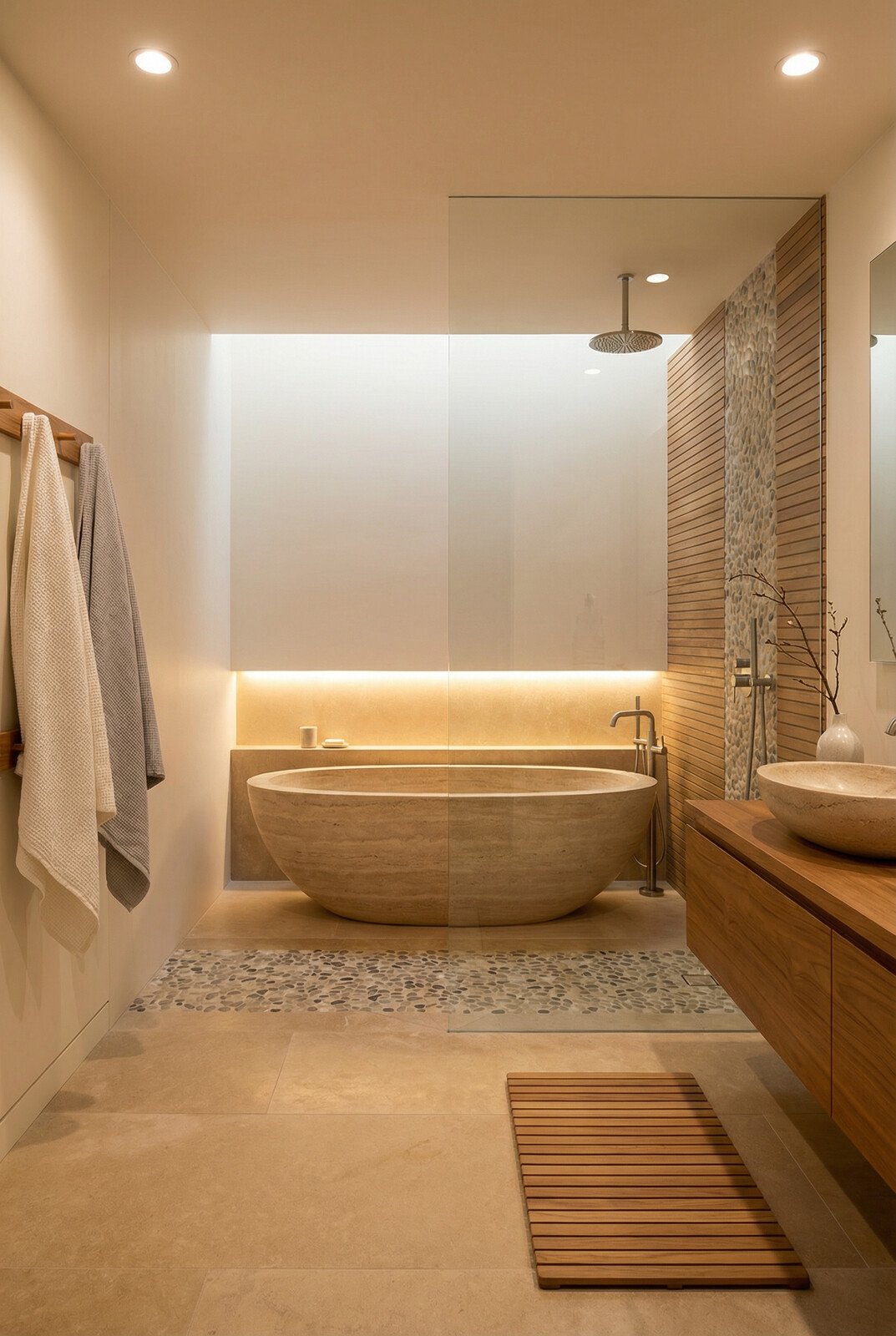
    Shōrin Villa spa bath with veined travertine walls and natural light

    The Proportional Language: Tatami Mathematics in Stone

    Japanese architectural tradition derives from the tatami—a rectangular mat with a 3:2 aspect ratio that has governed room proportions for centuries. Takahara and developer Akira Tsukamoto (Tsukamoto Real Estate) rebuilt the Villa’s emotional geometry around this ratio. The result is a space that feels inherently restful to the human eye, as though the room itself were breathing in rhythm with the viewer. This is not metaphor. The proportions are engineered to produce a specific emotional state—one of calm, centeredness, and an almost meditative sense of rightness.

    The travertine backsplash echoes this proportion. Its veining pattern—seemingly organic, actually algorithmically analyzed through Cinematic Intelligence—distributes light and shadow in 3:2 intervals. This is not decoration. This is mathematics rendered as feeling. The veins of mineral deposit within the stone follow the same proportional logic as the room’s spatial arrangement. When light strikes the travertine at various angles throughout the day, the veining pattern creates a visual rhythm that the eye recognizes subconsciously as harmonious. The nervous system relaxes. The mind enters a state of receptivity.

    A collector from London, visiting in early autumn, stood before the wall for forty minutes without speaking. Later, she commissioned a three-wall installation for her Belgravia townhouse using the same mathematical backsplash system. Her brief to Modish: “I want my home to breathe the way the Shōrin Villa does.” She understood that she was not purchasing a decorative object but a system—an entire architectural intelligence embedded within a single wall surface.

    The work has spawned a new category of high-end commissions globally. Collectors from Singapore, Los Angeles, and Copenhagen have all requested backsplash variations tailored to their specific spatial geometries and light conditions. The pattern is consistent: they visit the Villa, they encounter the travertine, they sense something deeper than aesthetic pleasure. They perceive what Takahara calls “surface consciousness”—the idea that a wall, properly understood, is not a boundary but a threshold. It is the point where interior space meets the observer’s perception, where architecture enters consciousness itself.

    What distinguishes the Shōrin backsplash from mere decorative surface is its responsiveness. The light does not simply illuminate the stone; the stone participates in the illumination. The veining creates shadow patterns that shift throughout the day. In winter, when the sun’s angle is low, the travertine glows amber. In summer, when light strikes the wall at different angles, the color shifts toward pale honey. A resident of the Villa described this effect as “watching the wall age and youthen through the seasons—the stone remains constant, but its appearance transforms, teaching the observer that change is the fundamental nature of all things.”

    Shōrin Villa Japanese garden with reflecting pool, onyx backsplash, and curated plantings

    The Garden as Third Room

    If the great room and its travertine hearth represent the Villa’s interior consciousness, the garden is its meditative extension. Landscape architect and artist Rei Nakamura designed the perimeter with dense bamboo screening—a living boundary that shifts from transparent to opaque depending on viewing angle and light condition. The bamboo was selected not for a single season’s appearance but for its capacity to transform across the calendar year. In spring, the new growth emerges pale and luminous. By summer, the screening reaches its deepest green. In autumn, the bamboo takes on subtle golden tones. In winter, the bare stems create a delicate tracery against snow and pale sky.

    Stone lanterns punctuate the composition at intervals that follow the same 3:2 proportions governing the interior great room. This is not coincidental detail. The garden is not separate from the architecture of the interior. It is an extension of the same mathematical intelligence that governs the travertine backsplash. Walk through the garden, and you will find that the proportions your eye encounters are the same proportions your body instinctively recognizes as restful and harmonious. The entire property—interior and exterior—operates as a single unified field of proportional intelligence.

    The crushed glass aggregate pool floor—a technical innovation that took two years to perfect—scatters light into the water column in ways that shift with sun angle and cloud cover. At dusk, swimmers immerse themselves in what appears to be liquid luminescence, their bodies surrounded by subtle glowing particles. The effect is not accidental theatrical spectacle; it is physics rendered as aesthetic experience. The crushed glass was sourced from recycled architectural salvage—old windows, mirrors, and light fixtures from demolished buildings across Kyoto. Each fragment carries traces of the city’s history. Nakamura’s concept was to allow the Villa’s residents to literally swim through the accumulated light of Kyoto’s past.

    Every material choice in the garden echoes the interior’s dialogue of surfaces: stone speaks to water, water reflects sky, bamboo frames all three in an ever-shifting relationship. The garden is designed to be perceived from the great room’s south-facing glass plane, and also to be inhabited as an experiential space. The duality is intentional. The view of the garden from inside the Villa presents one aesthetic experience; the act of walking through the garden presents another. Both are necessary for the complete experience of what Takahara calls “the breathing architecture.”

    The Philosophy of Luxury Redefined

    The $110 million price tag includes not just construction but conceptual architecture of the highest order. For comparison, the average luxury residential property of equivalent square footage would cost $15-20 million. The Shōrin Villa costs five to seven times that amount because it is not primarily a room or a house. It is a lived philosophy. It is an entire architectural system designed to transform consciousness through the everyday experience of inhabiting space.

    The Shōrin Villa represents a threshold moment: the point at which residential design ceases to be about rooms and becomes instead about consciousness itself. Every surface, every proportion, every variation in illumination has been considered not as luxury but as philosophy rendered in stone and light. A previous generation of wealth built estates to display status. The Shōrin Villa displays something subtler and more profound: the idea that a building can be designed to make you think differently, feel differently, and exist in a state of deeper harmony with your own sensory apparatus.

    This represents a shift in how the ultra-wealthy conceive of architecture. A $500 million yacht contains within it perhaps $50 million in value; the rest is lifestyle theater. A $110 million house contains within it perhaps $20 million in raw material and construction cost; the rest is conceptual investment—in the intelligence embedded within the design, in the proportional systems, in the understanding of how light and material and geometry can transform human consciousness.

    The garden closes at sunset. But the travertine backsplash continues its work through the night, holding the day’s accumulated warmth, releasing it slowly into darkness. This is what Takahara calls the “ethics of material”—the idea that every element, properly chosen and placed, enters into a covenant with those who inhabit the space. Stone is not inert. Travertine has absorbed light and heat across geological epochs. When you place your hand against the Shōrin Villa’s backsplash at midnight, you are touching warmth that the stone harvested from the Mediterranean sun months earlier. The wall is teaching you that time is not linear but cyclical, that energy persists, that nothing in architecture is truly static.

    To enter the Shōrin Villa is to accept that covenant. To stand before its travertine hearth is to understand that architecture, at its highest expression, is the art of teaching stone to listen, teaching light to speak, teaching proportion to transform consciousness. This is what the $110 million investment has purchased: not rooms, but a complete architectural philosophy of how a human being can live in alignment with the fundamental principles of beauty, proportion, and truth.

  • The Shōrin Villa Redesigns: A Global Dialogue of Style and Stone

    The Shōrin Villa Redesigns: A Global Dialogue of Style and Stone

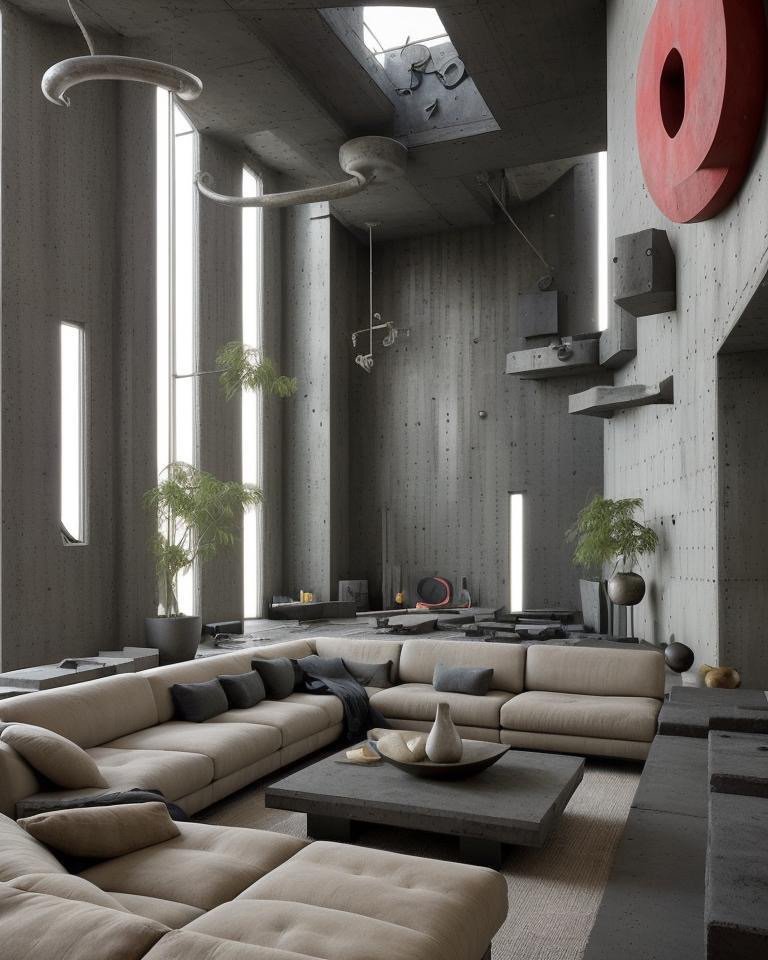
    Brutalist living room with raw concrete backsplash, volumetric lighting, and austere geometric forms

    The Shōrin Reimagined: When One Villa Becomes Four

    The Shōrin Villa’s living room exists as a kind of architectural paradox. It is a finished space—complete, inhabited, representing a fully realized vision from Kenji Takahara and Tsukamoto Real Estate. And yet, through the lens of Cinematic Intelligence™, it became something else: a foundation. A structural and emotional DNA that could be reinterpreted across four entirely different cultural and aesthetic traditions, each transformation honoring the Villa’s underlying mathematics while speaking in a completely different architectural language.

    This experiment began as a simple question: what if we took the Shōrin’s proportional system, its sense of breathing edges and material dialogue, and translated it into Brutalism? Into Greek Revival? Into Moroccan craft traditions? Into Tuscan warmth? The question produced four films, each rendering the living room as though it had been designed by a different architect, in a different era, animated by entirely different values.

    The results surprised everyone involved.

    The Brutalist Statement: Stripping to Skeleton

    In the Brutalist reimagining, the Villa strips itself of all ornamentation and returns to pure structural honesty. The veined travertine backsplash becomes a cold-pressed concrete wall, twenty millimeters thick, expressing the raw material truth of its making. Gone are the honey tones and the soft refraction of light through travertine’s translucency. Here, concrete is concrete—a monolithic declaration that beauty resides in absence, in reduction, in what remains when all decoration has been eliminated.

    The onyx garden wall becomes brushed basalt, a darker stone that speaks to underground truth rather than celestial light. Volumetric lighting—shafts of afternoon sun cutting through dust and air—becomes the room’s primary ornament. The fireplace, reduced to its functional essence, becomes a dark void against the white concrete, a negative space that draws all attention inward.

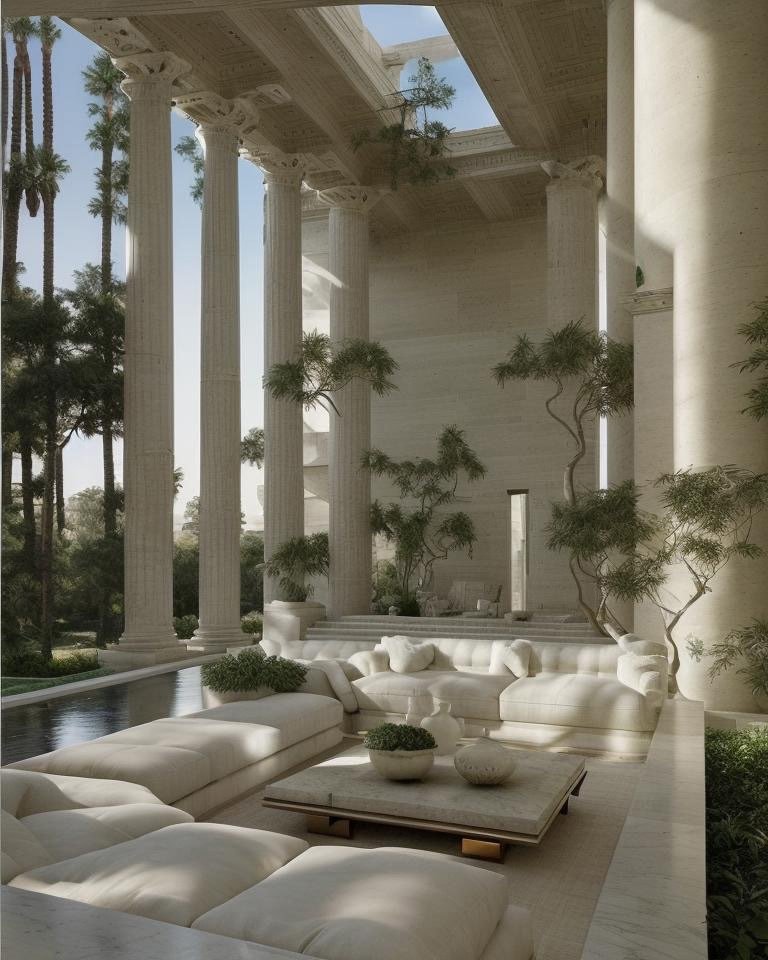
    Greek Revival living room with honey-gold veined marble columns and coffered ceiling details

    What is remarkable is that the room does not feel diminished. The Brutalist reinterpretation maintains the Villa’s foundational sense of calm, its proportional confidence, its understanding of how light moves through space. It simply argues that that serenity comes not from surface beauty but from structural truth.

    Greek Revival: The Language of Proportion

    If Brutalism strips the Villa bare, Greek Revival dresses it in the language that has governed Western architecture for two millennia. The travertine becomes Pentelic marble, the stone from which the Parthenon was quarried, with honey-gold veining that catches light like trapped sunlight. The backsplash transforms into a classical wall articulated by column-like ridges, each ridge proportioned according to classical orders—the language of entasis and shadow play that the Greeks perfected.

    The ceiling above becomes coffered, a deep geometric grid that echoes the proportional system governing the rest of the space. Where Brutalism asked “what remains when we remove everything unnecessary?”, Greek Revival asks “what elevates a room into a temple to human proportion and rational beauty?” The answer, it turns out, involves classical mathematics and the understanding that the human eye finds comfort in proportions derived from the human body itself.

    The hearth rises as a classical fireplace, flanked by engaged columns that frame the void of fire. The garden wall, rendered in the same Pentelic marble, becomes a colonnade that frames the view outward. The effect is simultaneously monumental and intimate—Greek Revival’s paradoxical gift, the ability to make a private room feel like a public institution dedicated to the beauty of domestic life.

    Moroccan Craft: Geometry as Spirituality

    Moroccan living room with golden brass lanterns, zellige patterns, pointed arches, and colorful woven textilesh in geometric patterns, rose-gold accents

    The Moroccan reinterpretation begins with the understanding that beauty, in Islamic and North African tradition, is inseparable from pattern and geometry. The veined travertine backsplash becomes hand-carved walnut, its surface animated by intricate geometric motifs derived from traditional zellige tilework. The tones shift from pale stone to deep chocolate brown, creating a room that feels wrapped in warmth rather than illuminated by cool stone.

    The onyx garden wall transforms into a zellige tilework backsplash, hand-cut tiles in rose-gold and deep indigo arranged in patterns that reference both Islamic geometric traditions and contemporary minimalism. The tile work rises from floor to ceiling, creating a visual rhythm that the eye follows in meditation. Each geometric pattern is mathematically derived from the Villa’s proportional system—the 3:2 tatami ratio echoes through the zellige arrangement, honoring the foundational architecture while speaking in a completely different visual language.

    Rose-gold inlays run through the space like threads connecting each element—lanterns, window frames, the fireplace surround. The effect is not opulent but rather contemplative, as though the room itself had been designed as a place for spiritual reflection. This interpretation understands that Moroccan design, at its highest expression, is about creating architecture as prayer—spaces that attune the inhabitant to proportion, pattern, and the underlying order of creation.

    Tuscan Warmth: The Analog Aesthetic

    The final transformation takes the Villa in the direction of traditional Italian design, specifically the Tuscan vernacular tradition. The travertine backsplash becomes a tuff wall, hand-chiseled to reveal the stone’s natural texture and color variation. Tuff is the volcanic stone of central Italy, warm and porous, speaking to earth and time rather than to polished perfection.

    Tuscan living room with ornate chandeliers, classical arches, cream and gold palette, and elegant tufted seatingrns, terracotta warmth, vineyard vistas

    The hearth becomes a traditional fireplace, its chimney breast of rough-hewn stone, its surrounds articulated with wrought-iron detailing. Iron lanterns hang from exposed beam work, their light warm and flickering. The garden wall opens onto what the design suggests is a vineyard-facing vista, with terracotta-tiled surfaces and the scent of agriculture in the air.

    Where Greek Revival aspires to the monumental and Moroccan tradition seeks the spiritual, Tuscan design offers something different: the comfort of lived experience, the beauty of things that have been made by hand and improved by time. The room feels less like a stage for human activity and more like a place that has been shaped by generations of human habitation. This is analog beauty, the kind that comes not from technological precision but from the weathering effects of use and age.

    The Structural DNA Beneath the Surface

    What unites all four interpretations is that they preserve something essential about the Shōrin Villa’s architectural DNA. Each maintains the proportional system Takahara established. Each respects the dialogue between interior and garden. Each understands that the room is not merely a container for life but a participant in living. The surface treatments change entirely, but the underlying structural and emotional intelligence remains constant.

    Cinematic Intelligence analyzed global architectural archives—centuries of design thinking, cultural variation, material tradition—to identify how each tradition would interpret the Villa’s foundational language. The AI did not merely apply textures to surfaces. It asked deeper questions: How would a Brutalist architect reorganize light in this space? How would a Greek Revival designer use proportion? How would Moroccan tradition transform the concept of pattern? How would Tuscan craftspeople age this room into beauty?

    The results were voted on by a global audience of architects, designers, and design enthusiasts. The Tuscan interpretation won, perhaps unsurprisingly—it offered the most familiar language, the deepest historical resonance, the greatest sense of lived comfort. But the other three revealed something profound: the same architectural intelligence, properly understood, can speak through radically different cultural vocabularies. The Villa’s mathematics are universal. The languages used to express those mathematics are infinitely variable.

    This is what Cinematic Intelligence makes possible. Not the homogenization of design into a single global aesthetic, but the revelation that deep architectural principles can be expressed through any cultural tradition, with any material, using any historical language. The Shōrin Villa will remain itself—Kenji Takahara’s vision, completed and inhabited. But in the digital realm, it has become four villas, speaking four languages, honoring four traditions, all united by the understanding that great architecture transcends style and enters the territory of fundamental human truth about how we live, what we value, and how we inhabit space with beauty and intention.