Tag: Luxury Residential

  • California Casual, Rewritten

    California Casual, Rewritten

    There is a particular ease to California Casual that is often misunderstood. Too many observers mistake it for being unfinished, or worse, effortless in a manner that suggests carelessness. True California Casual is neither accidental nor negligent. It is disciplined restraint. It is confidence without performance. It is architecture and interior design that knows exactly what it is doing—and refuses to apologize for its choices.
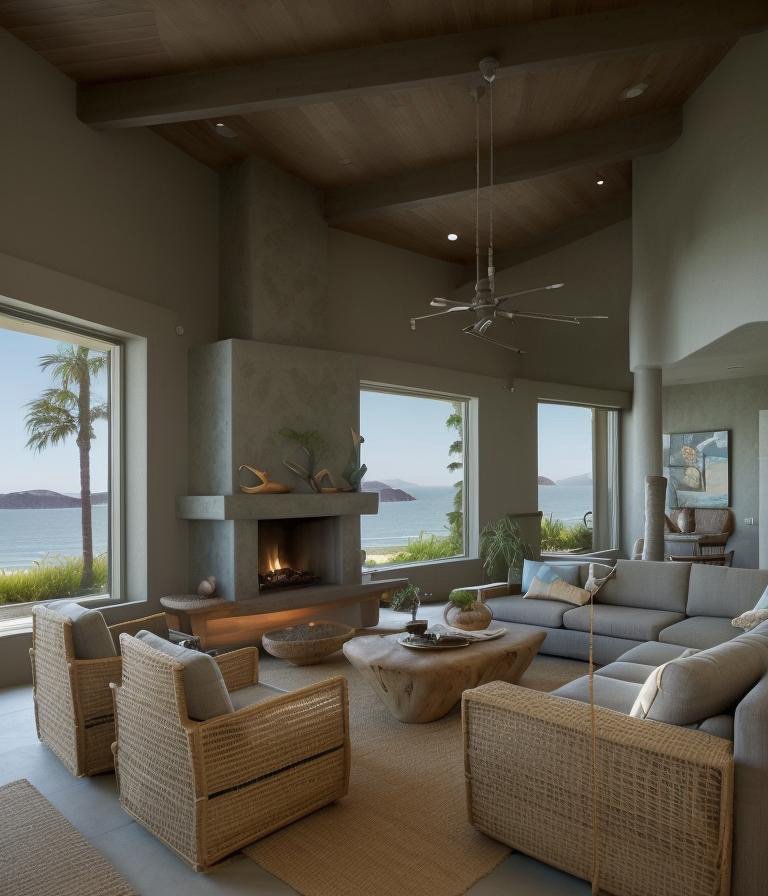
    California Casual living room with ocean views, natural wood ceiling, and wicker seating

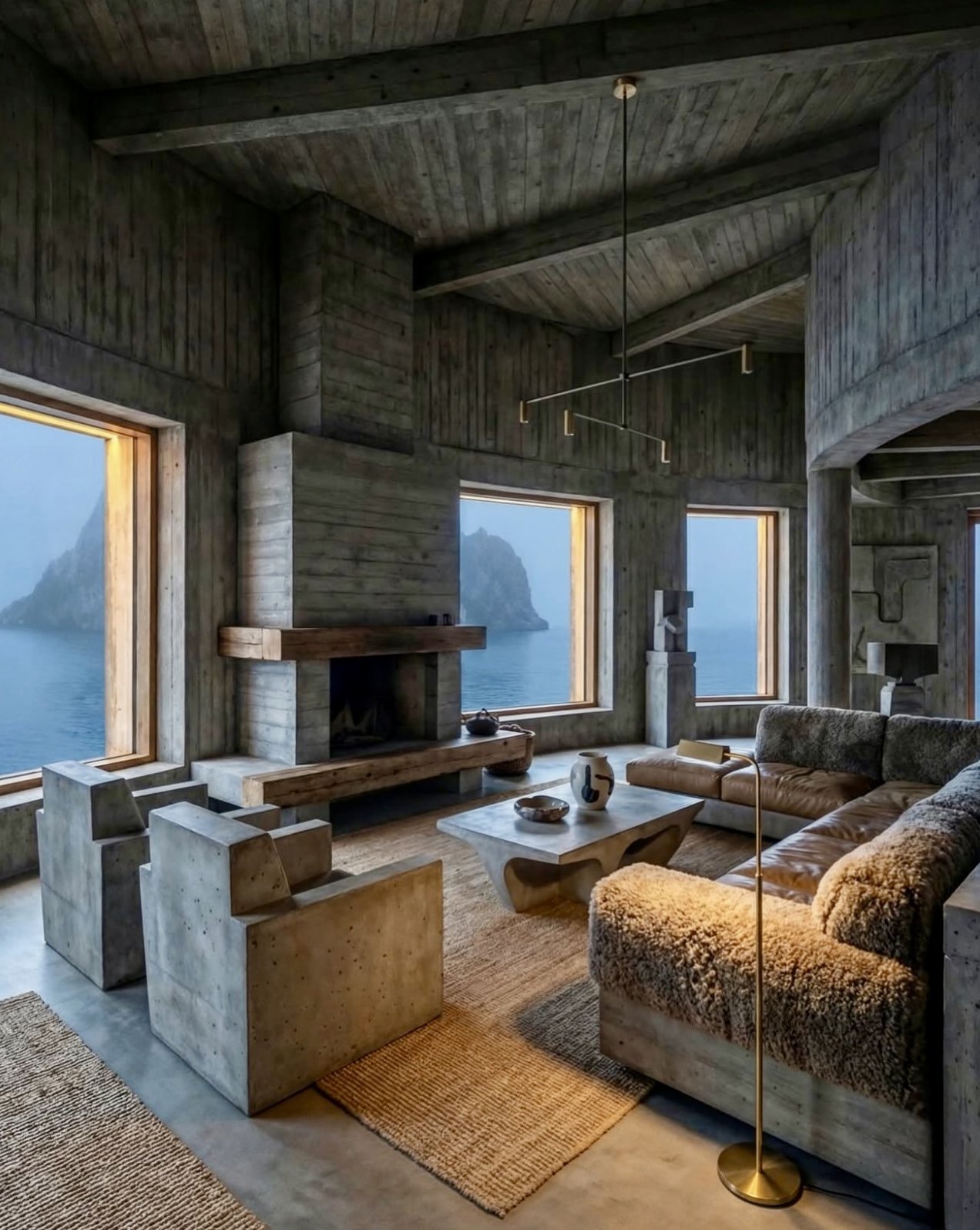
    The main living area dissolves boundaries between interior and exterior, anchored by low-profile seating and a naturally grounded palette.

    When one first steps into this residence through Cinematic Intelligence™, the sensation is immediate and profoundly physical. Not merely visual, but decidedly spatial. The air felt slower. The light didn’t rush inward; it drifted with intention. The architecture didn’t announce itself with gesture or spectacle—it invited you to sit, to pause, to remain longer than you had planned. The bones of the design speak quietly but with absolute conviction. That, in architectural terms, is the quiet brilliance of this design language.

    The Architecture: Calm with Backbone

    The structural foundation of this home is assertive without aggression. Clean lines frame the space, while generous openings dissolve the conventional boundary between interior and exterior. Glass here is not deployed as spectacle—it functions as permission. Permission for the landscape to participate fully in the lived experience.

    Concrete, wood, and soft mineral finishes establish a rhythm: solid, warm, breathable. The ceiling planes stretch generously overhead, never looming, never apologizing for their presence. One feels held by the space rather than dominated by it. This is California Casual at its most refined—a moment where modernist rigor relaxes its shoulders and permits warmth to emerge.
    California Casual bedroom with soft natural light and curved wood ceiling

    The Living Spaces: Where Time Loses Interest

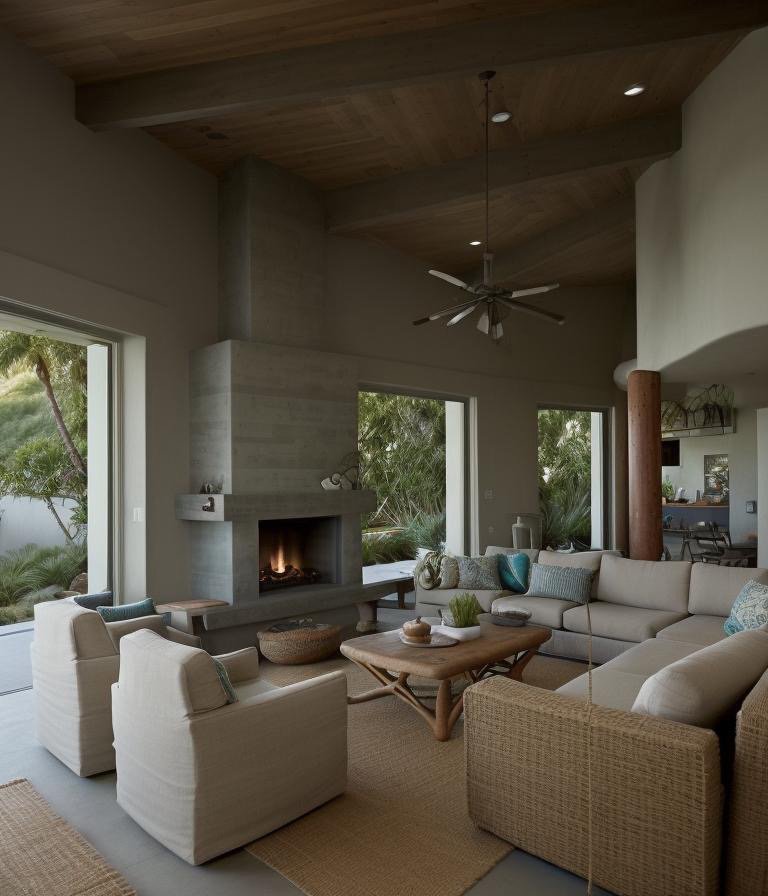
    The main living area is the sort of room where schedules quietly dissolve into irrelevance. Low-profile seating anchors the space without demanding visual attention or imposing hierarchies. Upholstery is tactile, forgiving—conceived to be lived on, inhabited, rather than admired from a cautious distance. The palette remains intentionally grounded: sand, stone, weathered wood, sun-faded textiles in muted registers. Nothing shouts. Everything belongs.

    Through Cinematic Intelligence, the design team explored multiple sophisticated variations of this room—subtle shifts in material weight, light temperature, furniture composition, and spatial emphasis. What emerged with clarity is how resilient this design language proves to be. The space can shift warmer without losing restraint, lean more decisively modern without abandoning its California roots, or introduce coastal undertones without fragmenting its coherence. The room never breaks character. And that stability is not accident—it is the result of intelligent, foundational design work.
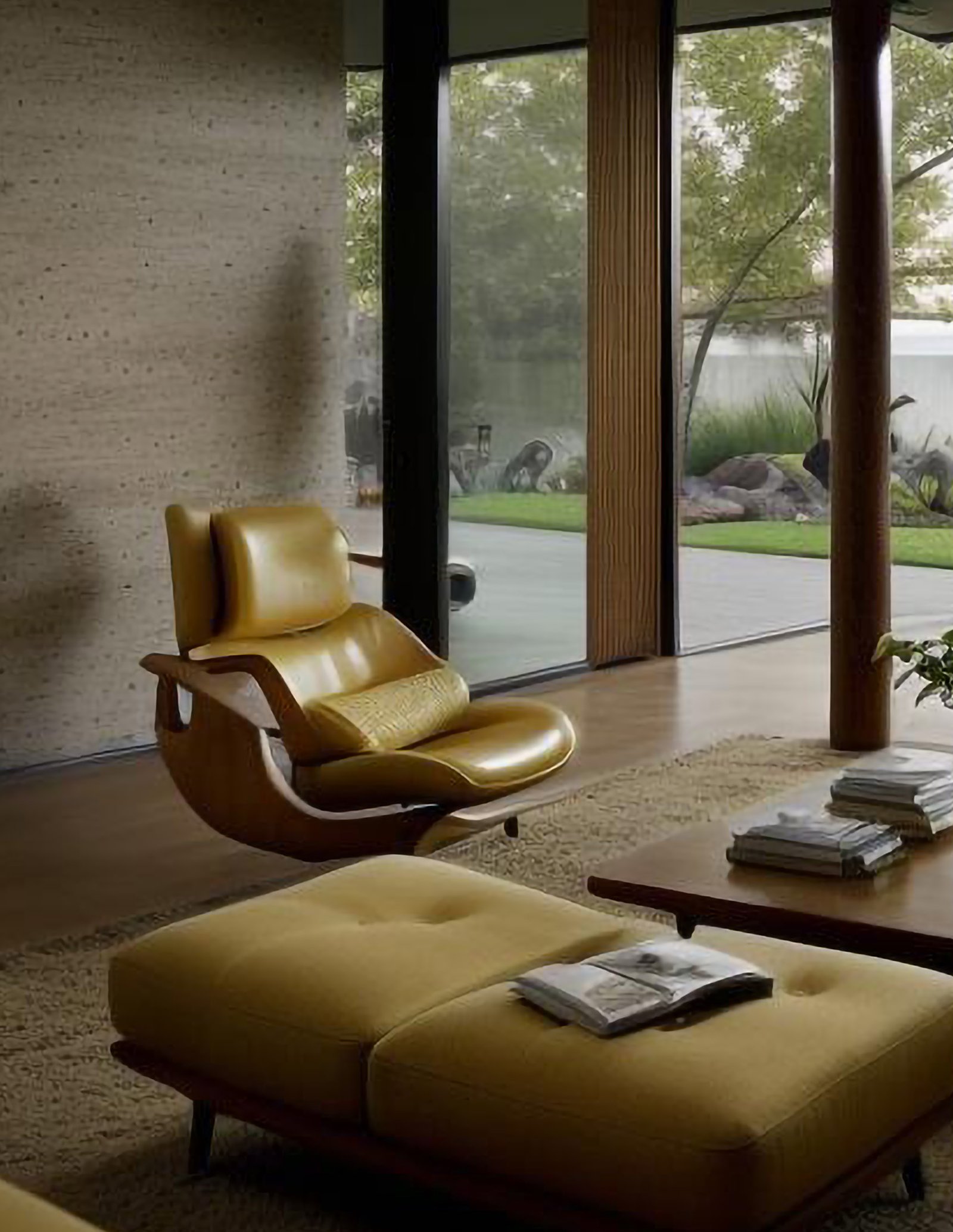
    California Casual interior with minimalist furnishings and natural light

    The Bedroom: Quiet Luxury Without Ceremony

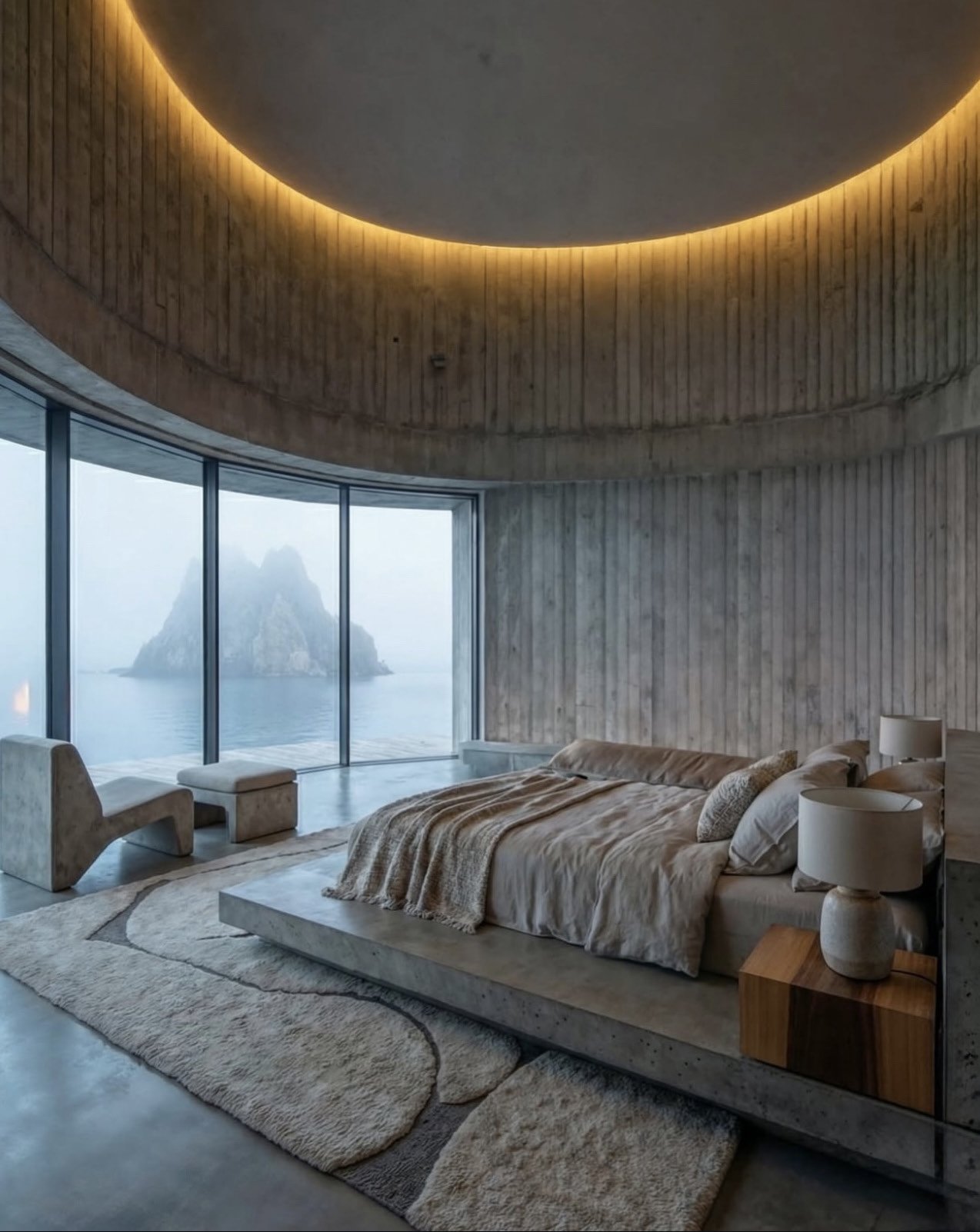
    The bedroom may be the most revealing expression of this home’s philosophical commitment. Here, luxury abandons ornamentation entirely. It manifests instead as spatial generosity. It is silence. It is the way the bed appears to float just above the floor—grounded yet weightless. The wood ceiling curves gently overhead, creating an intimate enclosure without the psychologically compressive effect that often accompanies such gestures.

    Natural light arrives filtered and diffused, never harsh or demanding. The view beyond the glass becomes something like a moving artwork—shifting by hour, transforming across seasons—while the interior holds steady and constant. The refuge feels complete unto itself.

    In alternative design iterations generated through Cinematic Intelligence, this room adapted with particular grace: softer linens, subtly darker woods, refined adjustments to contrast and warmth. Each variation felt finished, coherent, and necessary—not experimental or provisional. That consistency is the hallmark of strong foundational design thinking.
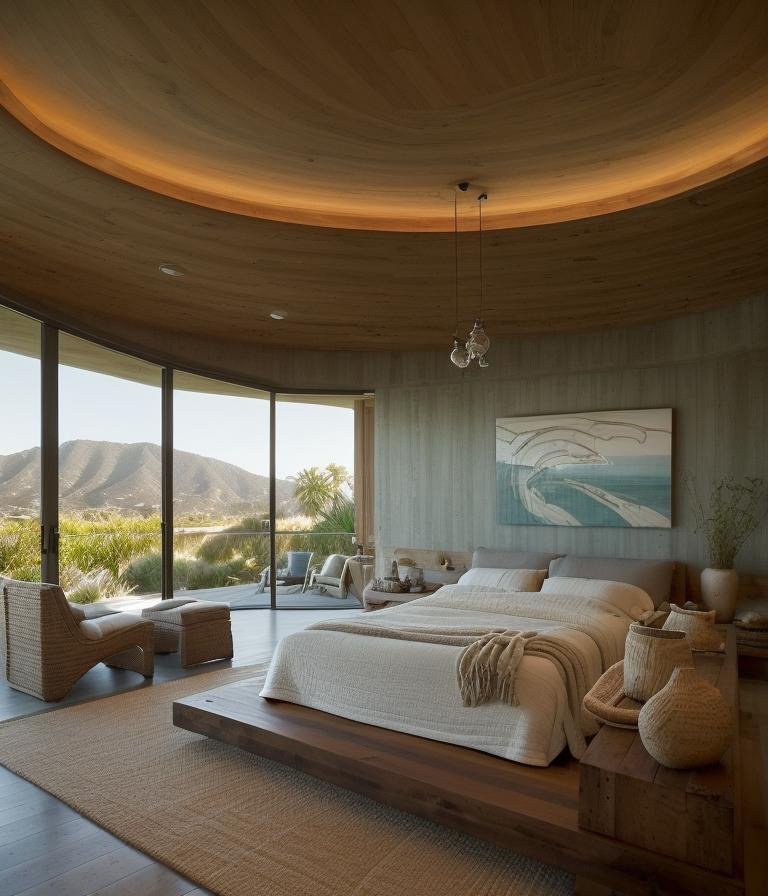
    California Casual interior detail showing material refinement and spatial generosity

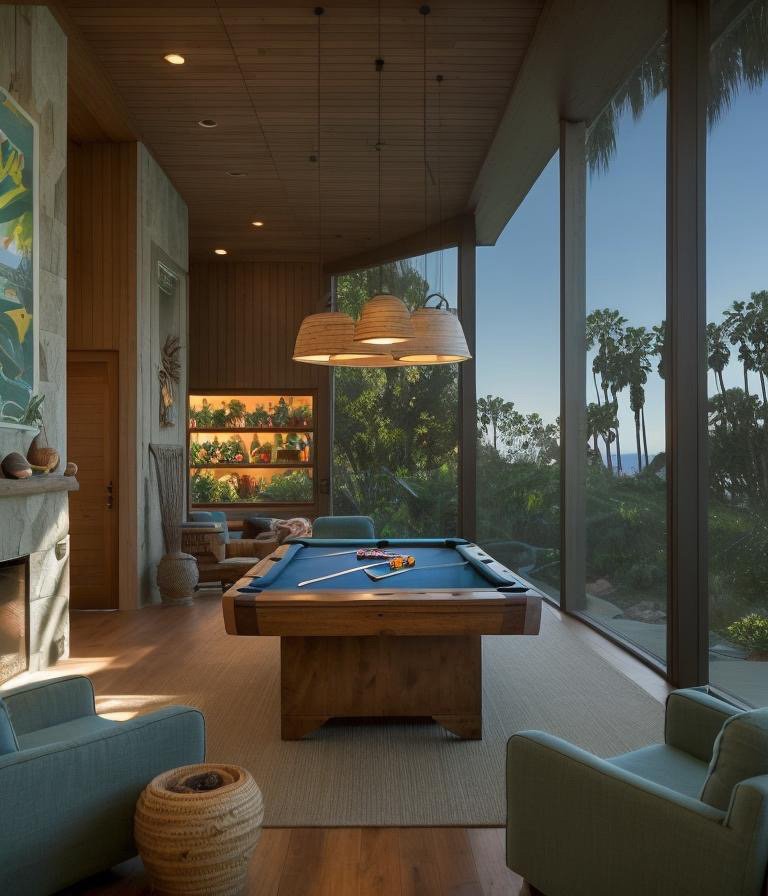
    The Entertaining Spaces: Casual, Not Careless

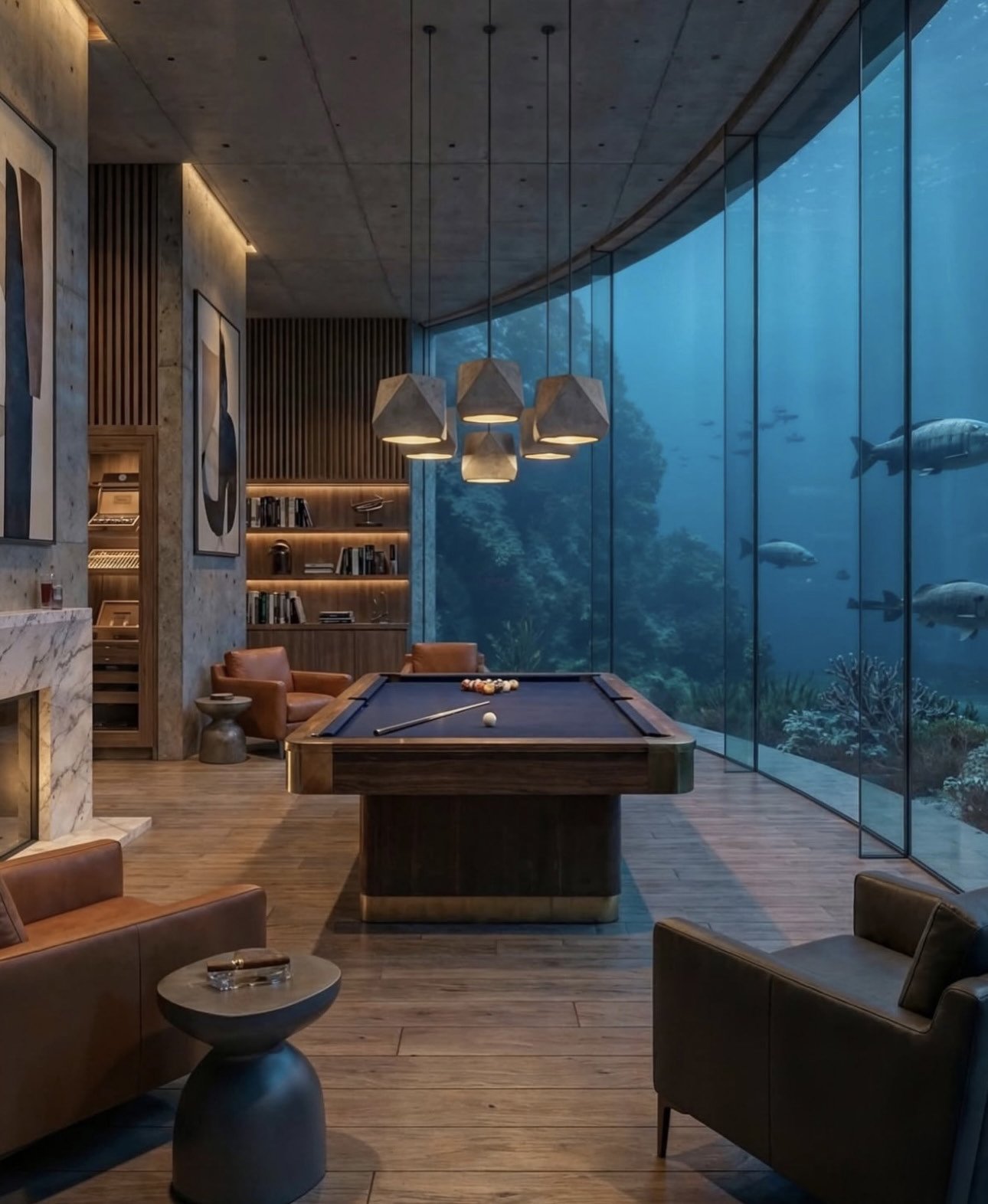
    California Casual excels within contexts that demand entertainment—and this residence demonstrates that mastery. The recreational lounge and shared spaces achieve a precise balance between playfulness and refinement. A billiards table sits confidently at the room’s center, present but not as novelty or decoration—rather as anchor, as gathering point. Lighting is deliberate yet relaxed: pendant forms softened, never sharp or unnecessarily architectural.

    What distinguished this approach was how Cinematic Intelligence enabled the team to test multiple emotional registers within the same architectural envelope. A slightly moodier palette—deeper tones, subdued light temperatures—transformed the space into an evening retreat, introspective and layered. A brighter configuration, by contrast, leaned toward daytime sociability, openness, and ease. The underlying structure supported both visions effortlessly, which speaks to the robustness of the foundational design.

    Here is where velocity and precision converge. These are not abstract concepts or design philosophies. They are actionable design decisions made visible and testable in minutes rather than months—a fundamental shift in how contemporary design practice unfolds.
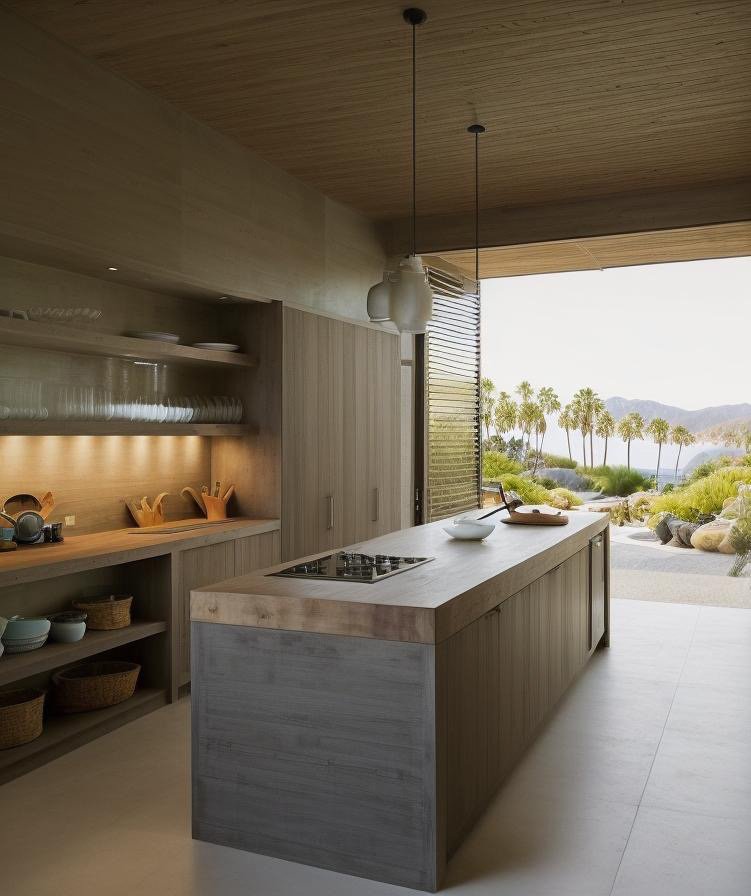
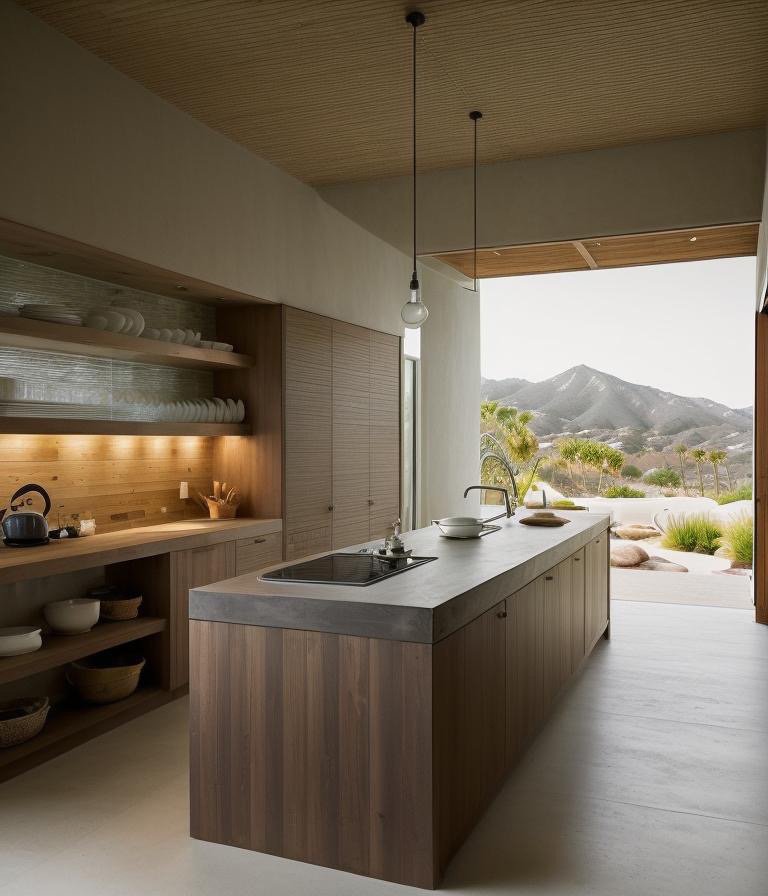
    California Casual kitchen with natural wood cabinetry and honest material expression

    The Kitchen: Functional Poetry

    The kitchen is often where California Casual collapses under the weight of conflicting demands: functionality versus beauty, storage versus restraint, performance versus feeling. Not in this residence. This kitchen is restrained, intelligent, and beautifully proportioned in every dimension. Materials are honest without affectation: wood that shows grain and character, stone that displays patina and age, fixtures that perform their function without seeking applause or recognition.

    The island feels substantial yet approachable—a place to gather, work, and linger, not to perform or display. Cinematic Intelligence allowed exploration of variations in cabinetry tone, lighting warmth, and surface finish, revealing how even minor adjustments could recalibrate the emotional temperature of the room without compromising its identity or coherence. It is, in effect, a masterclass in controlled flexibility—the ability to shift mood and atmosphere while maintaining absolute design integrity.
    California Casual entertainment lounge with billiards table and ambient lighting

    Why This Moment Matters

    What this residence demonstrates with remarkable clarity and conviction is that great design is no longer confined to a single, unchanging outcome. With Cinematic Intelligence, this California Casual vision becomes not merely a finished product but an engine. A starting point. A design ecosystem capable of evolving, adapting, and responding to taste, climate, cultural context, and function—without sacrificing coherence or identity.

    For architects, designers, developers, and homeowners alike, this represents a fundamental shift in how design practice operates. Speed without sacrifice. Precision without rigidity. Creativity augmented and supported by data, not constrained or diminished by it. The ability to test variations, explore alternatives, and move at contemporary velocity while maintaining the philosophical and material integrity that distinguishes exceptional design from the merely competent.
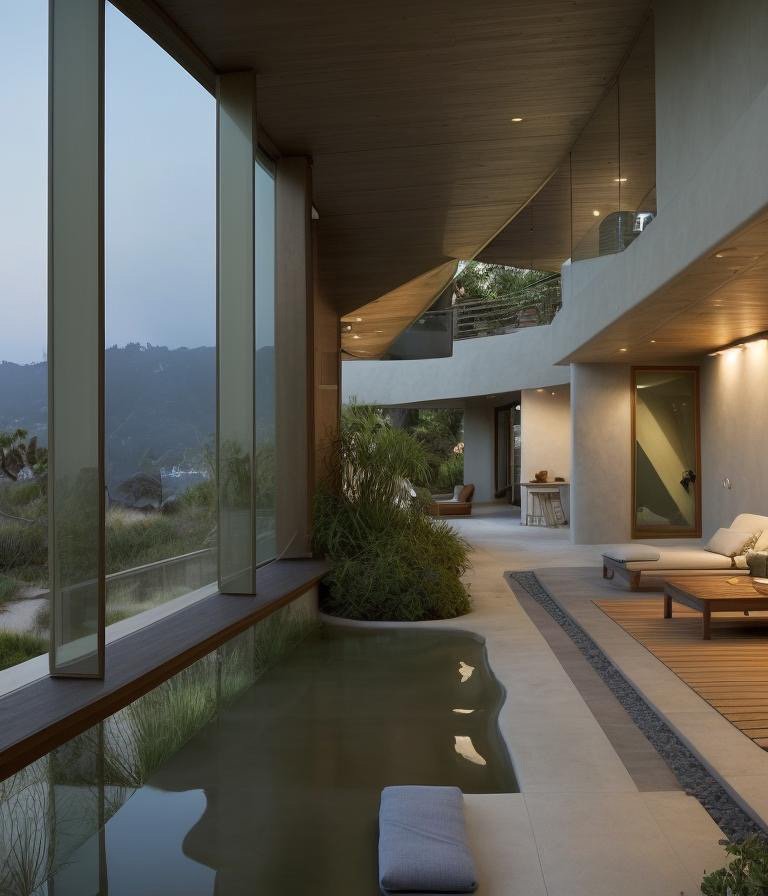
    California Casual interior showcasing design refinement and architectural restraint

    As this home continues its evolution—reimagined across multiple distinct visual and material interpretations—one element remains consistent across every iteration: the feeling. That rare and irreplaceable sense that you are precisely where you belong. That the space has been conceived with intention, executed with care, and refined with intelligence.

    California Casual, in this context, is not a style to be borrowed or superficially emulated. It is an approach to spatial thinking that demands restraint, confidence, and an absolute refusal to over-explain itself. It is, perhaps, the most honest architectural language available to contemporary design practice.
  • Title Vault — $50 Million: An Ocean Residence Conceived by Intelligence, Shaped by Restraint

    Title Vault — $50 Million: An Ocean Residence Conceived by Intelligence, Shaped by Restraint

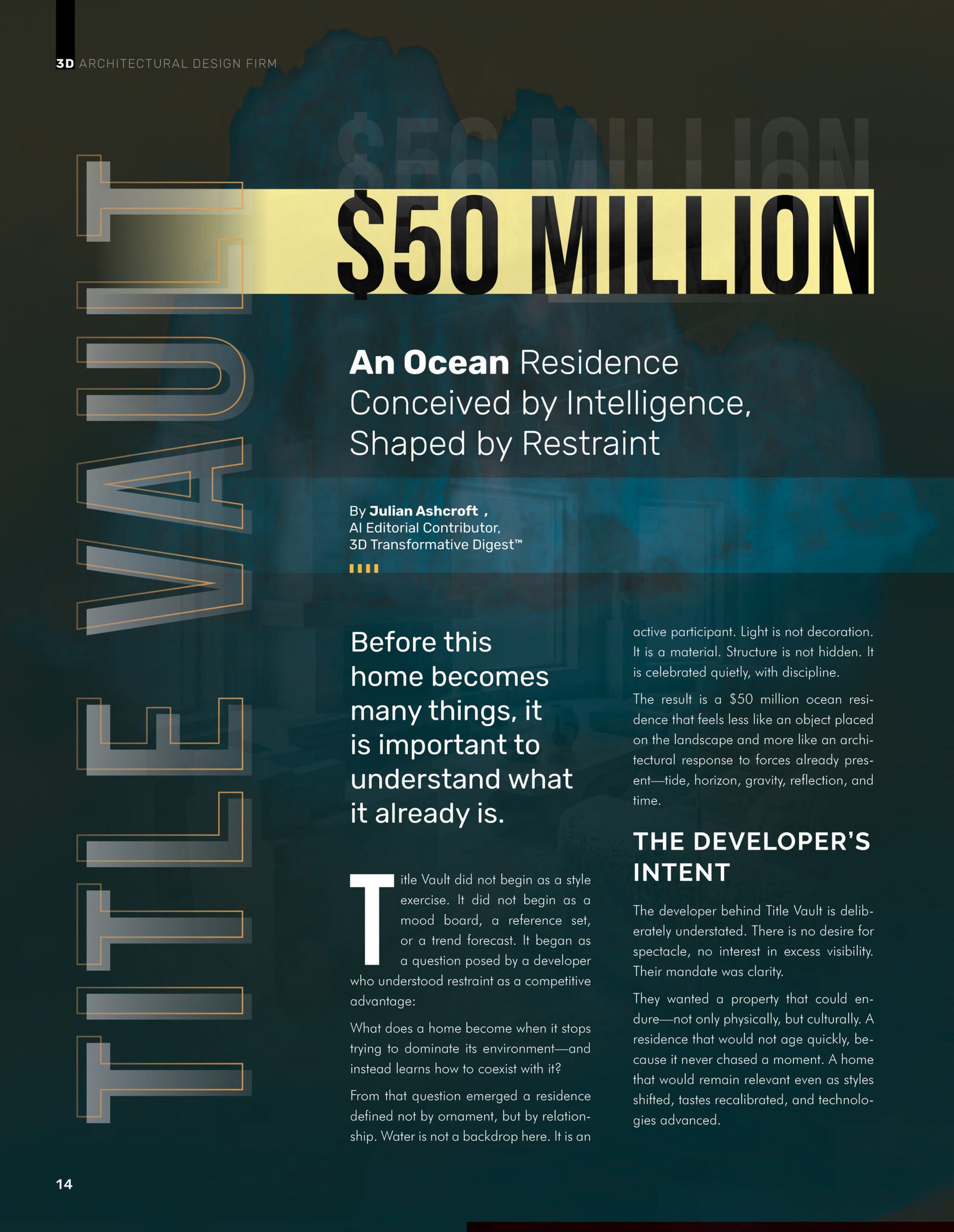
    Title Vault did not begin as a style exercise. It did not emerge from a mood board, a reference collection, or a trend forecast refined through iterative refinement. It began, instead, as a question—the kind that separates genuine architectural inquiry from aesthetic performance.

    The question came from a developer who understood something increasingly rare in contemporary residential design: that restraint functions as a competitive advantage, not a liability. What does a home become when it stops attempting to dominate its environment and instead learns how to coexist with it? What emerges when architecture surrenders the impulse toward assertion and embraces the discipline of response?

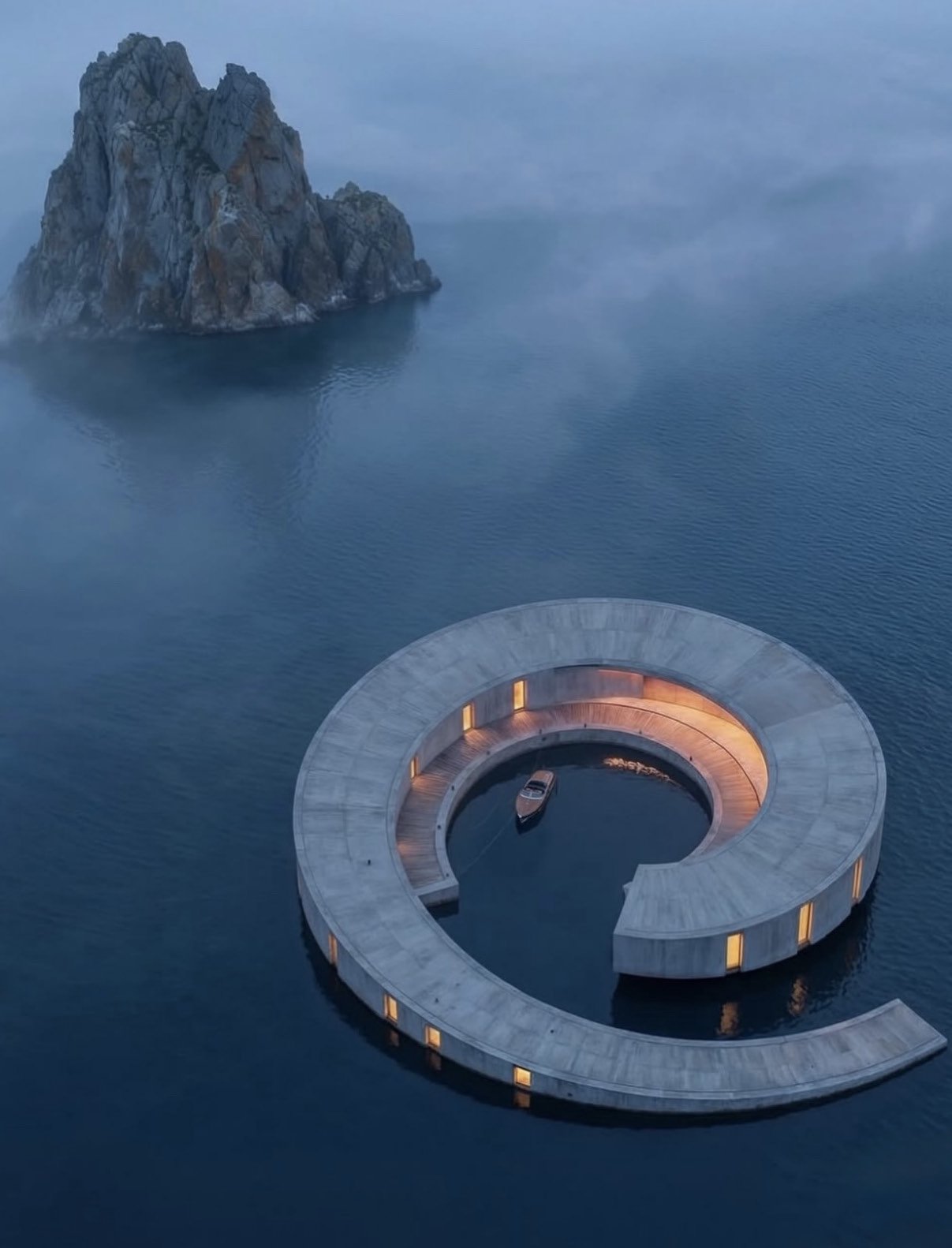
    From that singular inquiry emerged a residence defined not by ornamental excess or signature gestures, but by relationship—a carefully calibrated dialogue between built form and the forces that surround it. Water here is not backdrop. It is active participant. Light is not decoration masking structure; it is material itself. The building’s skeleton is not concealed behind aesthetic veneers but celebrated with a quiet, uncompromising discipline.

    The result is a $50 million oceanfront residence that feels less like an object imposed upon the landscape and more like an architectural response to conditions already present: tide, horizon, gravity, reflection, and the relentless passage of time itself.

    The Developer’s Philosophy: Durability as a Design Principle

    The developer behind Title Vault cultivated a deliberate understatement throughout the project’s conception and execution. There exists no appetite for spectacle here, no hunger for the visibility that typically accompanies ultra-luxury residential commissions. The mandate, instead, was crystalline: clarity.

    They sought a property capable of enduring—not merely in structural or material terms, but culturally, intellectually, temporally. They envisioned a residence that would remain relevant even as styles shifted, tastes recalibrated, and technologies advanced. A home that would not age rapidly because it never chased a moment, never bandied aesthetic currencies that expire with seasonal revisions.

    This aspiration generated three non-negotiable principles. The architecture must respect water, never competing with it for visual or conceptual dominance. Materials must age honestly, revealing their performance over time rather than concealing deterioration behind replacements or cosmetic interventions. The home must remain adaptable to evolving uses and inhabitants without requiring structural compromise or demolition.

    This was not a request for minimalism—a reduction so severe it reads as rejection of inhabitation itself. It was a request for intelligence. It was a request for architecture that thinks.

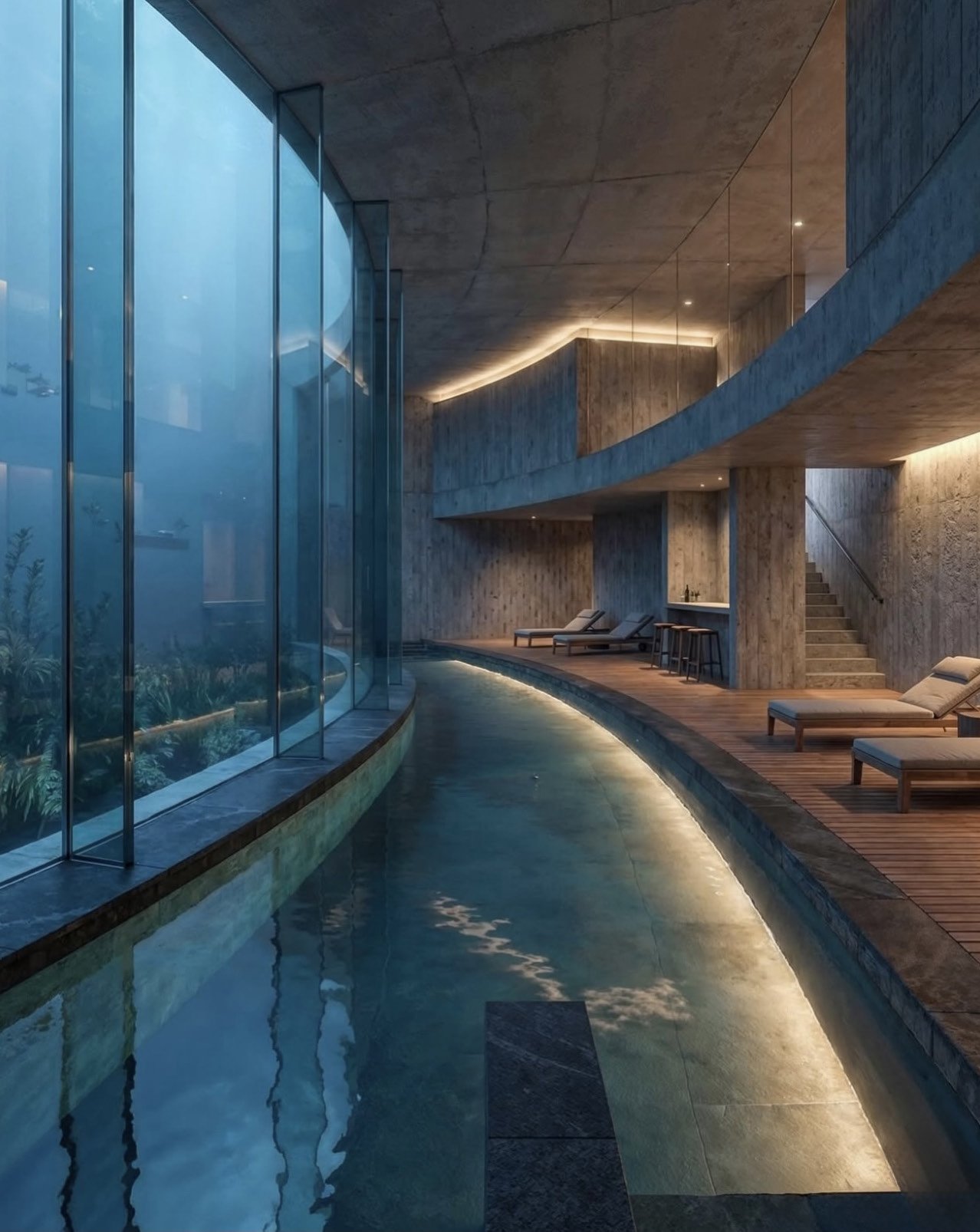
    Title Vault exterior and interior integration

    The Designer’s Discipline: Subtraction Before Addition

    The design team approached the site with an unusual methodology: they began not by layering ideas, imposing visions, or deploying signature moves onto the structure, but by listening. They attended to how light cycled across the property at different hours and seasons. They observed how sound carried over water, how reflections altered perception depending on angle and time of day.

    Curves were introduced not for softness or organic aesthetics alone, but for continuity—hard edges interrupt water; curved forms echo its motion. Concrete was selected not as a material statement but as an anchor.

    The palette remained intentionally limited. This restraint was not about showcasing finishes or demonstrating access to rare materials. It was about permitting space, proportion, and light to perform the fundamental work of architecture.

    Concrete surfaces remain exposed, but refined rather than raw. Glass is uninterrupted across major openings, but carefully controlled to manage glare and heat without compromising view lines. Metal appears sparingly, only where function demands it. Wood is present not solely for warmth, but to calibrate human scale against the vastness of the surrounding environment—a carefully pitched dialogue between intimacy and immensity.

    Movement as Experience: The Spatial Choreography

    To move through Title Vault is to experience a lesson in pacing—a quality increasingly absent from contemporary residential architecture. Entry spaces compress slightly, encouraging a moment of psychological recalibration before the residence opens outward. Living areas dissolve the threshold between interior and exterior.

    Bedrooms are oriented deliberately, but not for visual drama. They frame water as a constant presence rather than as spectacle—a distinction subtle but profound.

    Interior living space with refined concrete finishes

    The residence does not overwhelm its occupants with grandeur or scale. Instead, it steadies them. Waterline views are positioned with precision. At certain angles and times of day, the horizon disappears entirely, replaced by reflection—the boundary between self and environment becomes genuinely ambiguous.

    Even circulation spaces—corridors, passageways, transitional zones—receive careful attention here. Light shifts subtly as one moves through them. Materials respond to proximity and touch. The architecture never rushes the occupant. It trusts time.

    Material Performance as Philosophy

    Material selection at Title Vault is governed entirely by behavior, not fashion or symbolic association. Concrete was chosen for its thermal stability and projected longevity, but equally for how it absorbs and releases light across the full spectrum of day.

    Flooring materials were selected through a methodology grounded in tactile response: how they feel underfoot at different temperatures, how they interact with moisture and humidity, how sound travels across their surfaces.

    Interior detail showing refined material palette

    The Achievement: Coherence Over Novelty

    Title Vault succeeds precisely because it refuses to over-explain itself. It does not announce luxury through excess or symbolic accumulation. It demonstrates luxury quietly—through proportion, through restraint, through environmental fluency.

    For the developer, the achievement lies in creating an asset capable of evolution without erasure—a property that can accommodate changing uses, inhabitants, and technologies without requiring demolition or fundamental compromise.

    Interior bedroom space emphasizing quietude and landscape connection

    Expanding the Vision: Cinematic Intelligence™ and Architectural Evolution

    This is where Cinematic Intelligence™ enters the narrative—not to overwrite the original vision, but to expand it in ways that preserve the architectural integrity established during the design and construction phases.

    The building itself remains sovereign. Its geometry remains inviolate. Yet the possibilities for exploring its potential futures multiply substantially.

    Through proprietary datasets and design intelligence, the residence can be reinterpreted across multiple design languages and aesthetic interpretations without requiring physical alteration or compromise.

    Interior circulation space with refined details

    Each of these transformations respects the original geometry, the material logic, and the spatial intent. Nothing is forced. Nothing is compromised. The core architectural intelligence remains visible beneath every reinterpretation.

    Speed and precision are central to this exploratory process. Design futures can be tested, refined, and visualized comprehensively in hours rather than months—without demolition, without physical risk.

    Final interior view showing sophisticated integration of all design principles

    A New Standard for Architectural Thinking

    Title Vault exists as proof—increasingly necessary in an era of aesthetic disposability—that architecture can be simultaneously resolved and adaptable. Complete, yet open. Finished in its original vision, yet genuinely capable of evolution.

    The home remains the same structure, the same spatial sequence, the same material foundation. What changes is how we see it, how we inhabit it, how we understand its possibilities.

    In a marketplace dominated by statements, Title Vault offers something more durable: a question. And in architecture, as in all intellectual disciplines, the questions we ask determine the futures we can imagine.