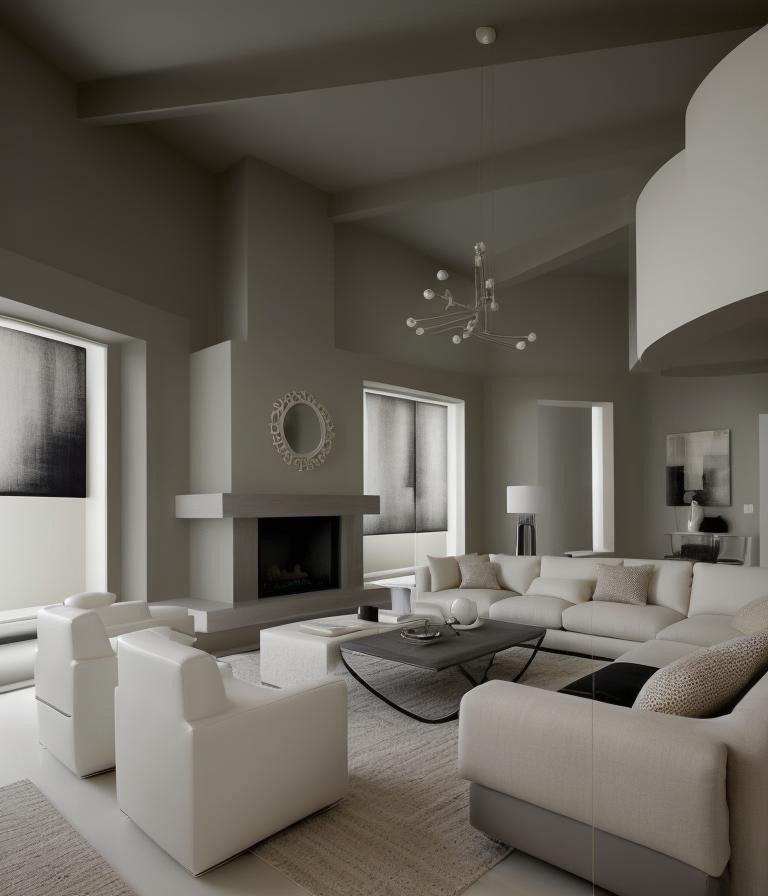
There exists a particular kind of quiet that only wealth truly understands. Not the absence of sound—but the absence of excess. The restraint to leave space untouched. The architectural confidence to permit light, proportion, and material to perform their own silent eloquence, without ornamental translation or stylistic mediation.
Chic–Contemporary design has always inhabited this rarefied territory, in that liminal space where minimalism transcends politeness and becomes something far more commanding: a visual assertion not through decoration, but through deliberate omission.
Around Beverly Hills, the reference point is almost canonical by now—that moment in architectural culture when an all-white, near-monastic residence entered the collective consciousness and fundamentally redefined what luxury could communicate. A property valued well into the hundreds of millions, stripped of ornament, stripped of rhetorical noise, stripped of the need to apologize for its own existence. It did not ask to be liked. It simply existed with the authority of something inevitable.
The Art of Architectural Editing
This property enters that lineage naturally, almost predictably. In its original form, the residence already carried what architects call “strong bones”: expansive glazing that dissolves interior boundaries, generous ceiling heights that feel less like architectural features than like captured atmosphere, and a spatial organization designed to interrogate the threshold between inside and outside. But Chic–Contemporary does not merely preserve such structure—it edits it. And editing, when executed with discipline, becomes not subtraction but distillation.

The guiding principle here is singular: clarity over decoration. This is not a slogan but a methodology, enforced through data-driven design intelligence and aesthetic rigor. Cinematic Intelligence™ approaches Chic–Contemporary not as a stylistic preference but as a philosophical commitment to spatial honesty.
The living spaces announce this clarity with immediate visual authority. Walls do not perform; they recede into soft tonal gradients—ivory, warm limestone, muted alabaster—calibrated to appear soft without suggesting sterility or coldness. The palette is narrower than it first appears, operating within a deliberately constrained chromatic bandwidth where variation happens through material rather than color.
Furniture reads sculptural rather than functional—a crucial distinction. Low-slung seating, curved silhouettes that suggest rather than demand, pieces that feel commissioned rather than acquired. Every object present has earned its place through what might be called quiet negotiation with the space. Negative space is never apologetic; it is always intentional.
Light as Material
But light becomes the true protagonist in any Chic–Contemporary interior. Recessed channels trace ceiling planes with surgical precision. Pendant forms float rather than hang, their geometry suggesting suspension rather than attachment. Natural daylight is treated like a precious material—filtered through precisely calibrated glazing, framed by architectural elements, softened through layered translucency—never allowed to glare, never permitted to disrupt the carefully maintained tonal restraint.
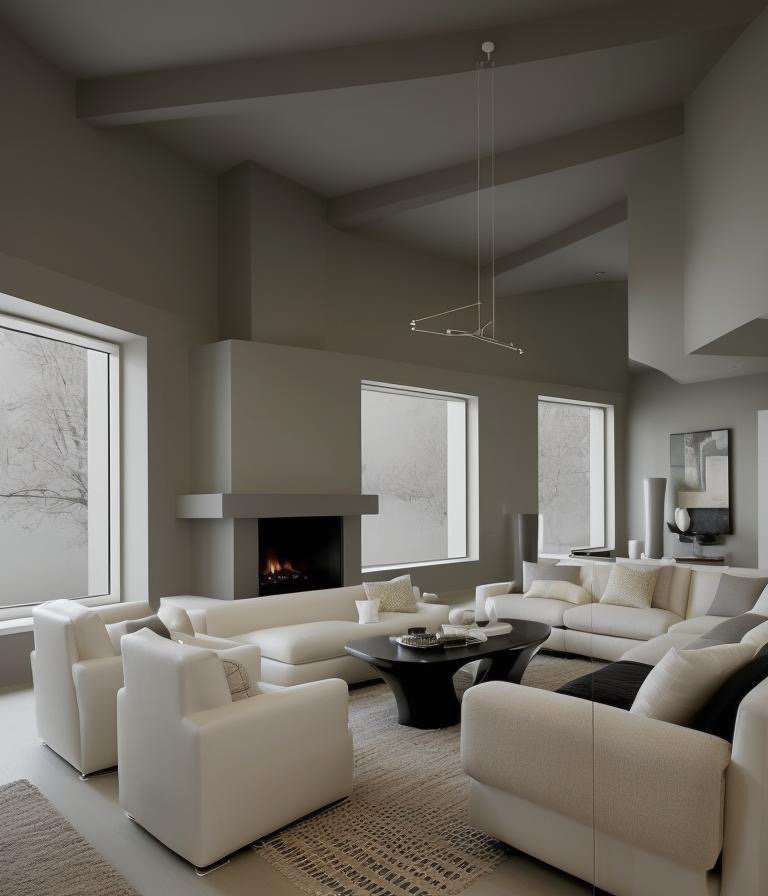
This is not brightness pursued for effect or drama. This is illumination as architecture—a treatment of light as structural element rather than atmospheric add-on. The distinction matters profoundly. In lesser hands, minimalism becomes cold and institutional. Here, the light itself prevents that risk by operating as something warm and deliberate, almost architectural in its presence.
Technical Precision and Utility Restraint
The kitchen reveals where Chic–Contemporary’s technical sophistication becomes undeniable. Cabinetry vanishes into seamless planes—not merely integrated, but truly dissolved into the spatial continuum. Stone islands present themselves as monolithic forms rather than functional surfaces, their material presence suggesting something carved rather than assembled. Hardware either conceals itself entirely or elevates to the point of becoming jewelry, operating on the principle that utility and beauty need not conflict when proportion is respected.
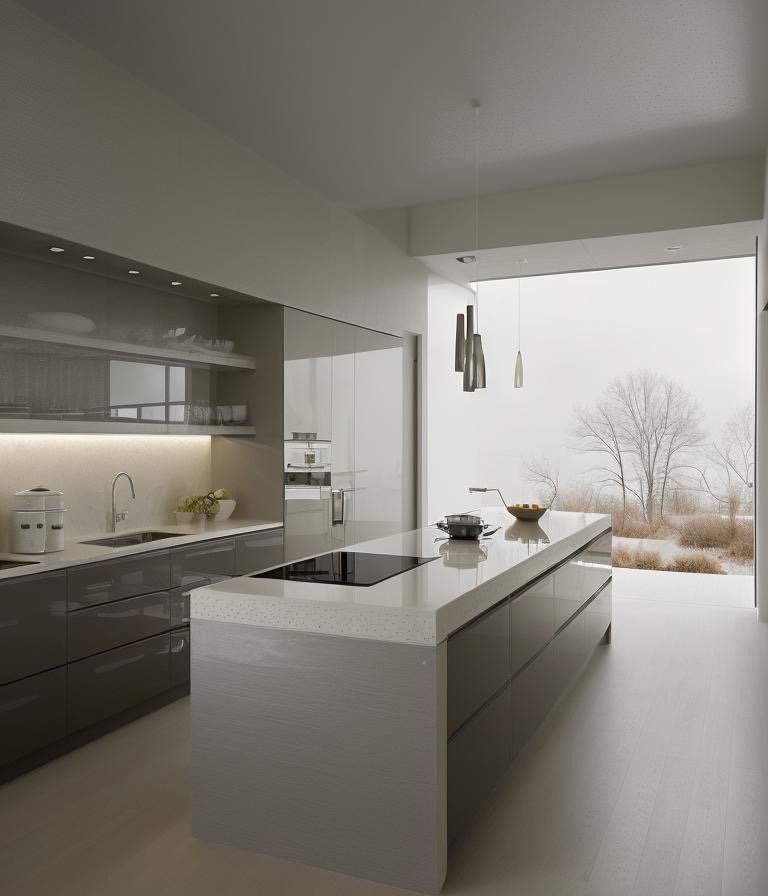
Even mundane kitchen infrastructure obeys aesthetic restraint. Nothing competes for attention because nothing needs to assert itself. The sophistication lies precisely in this absence of visual hierarchy—every element assumes its place without negotiation.
Intimacy Through Restraint
Bedrooms follow the philosophical through-line but permit themselves more textural complexity, introducing the possibility of intimacy without sacrificing restraint. Here, curves matter more—they function as the emotional register where human scale asserts itself against the larger spatial geometries. Headboards melt into walls rather than projecting from them. Textiles soften the severity without diluting the underlying rigor. The palette remains loyal to the established tonal grammar—creams, pale taupes, mineral greys—but texture does the emotional work that color relinquishes.
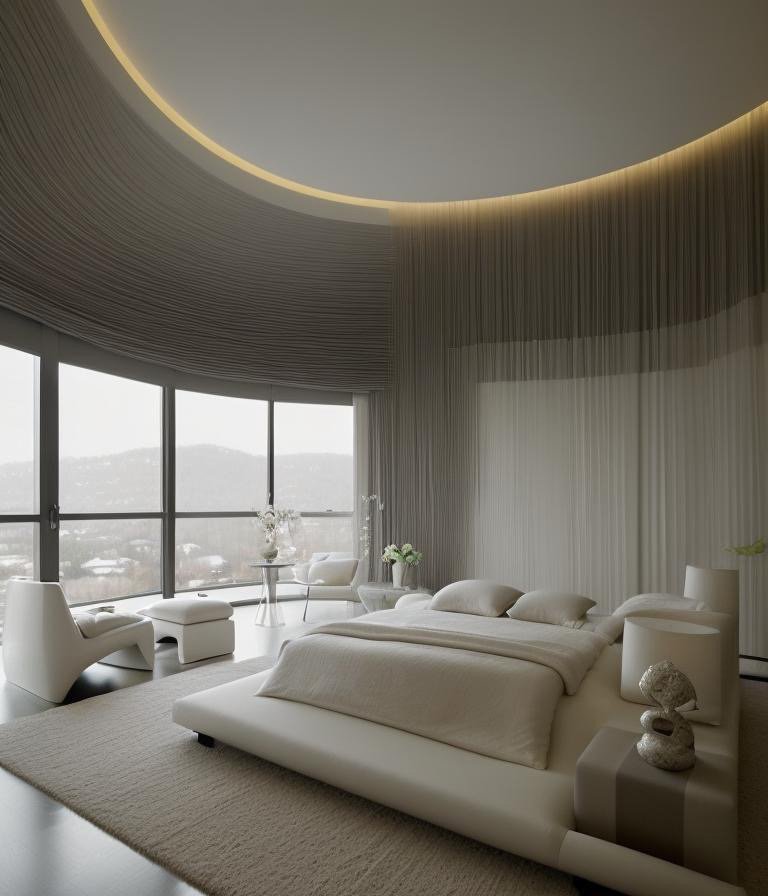
These are not rooms one occupies; they are rooms that hold you. The distinction between those two states is everything.
Proportion at Scale: The Computational Edge
What becomes apparent in examining this transformation is that Chic–Contemporary fails most often precisely where it should succeed: in large estates where minimalism can devolve into emptiness rather than intention. The risk is genuine. A five-thousand-square-foot residence stripped of ornament can easily become not cathedral-like but cavernous—more absence than presence, more void than volume.
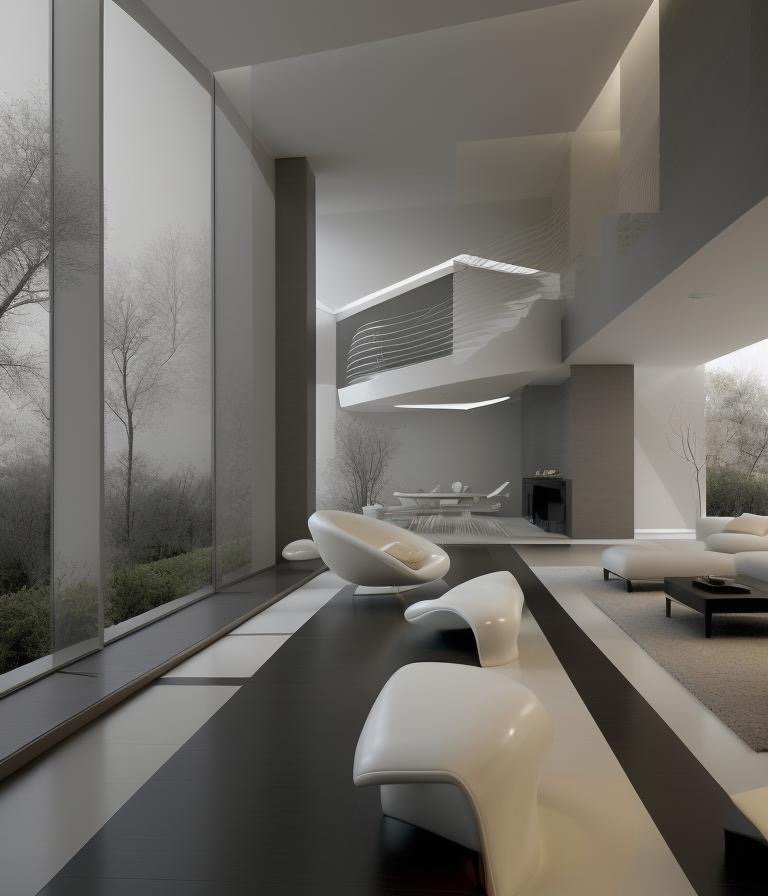
This is where computational design intelligence becomes indispensable. The data-driven engine counteracts the inherent risks of scale by calibrating spatial balance with precision: ensuring that negative space reads as architectural decision rather than unfinished business, that empty walls feel contemplative rather than austere, that large open plans maintain visual coherence without relying on furniture clusters to compensate for spatial imbalance.
Multiple variations of each room are generated, tested, and refined—adjusting ceiling articulation in increments, modulating furniture density, calibrating lighting temperature, reconsidering material finish—until the room achieves that elusive register where effortless authority and genuine luxury align. It looks simple because achieving that simplicity requires profound complexity.
The Arrogance of Clarity
Yes, there is arrogance here. But it is architectural arrogance of a specific order—the kind that assumes the viewer will eventually catch up, that doesn’t explain itself, that doesn’t perform. It trusts the fundamental principle underlying all true luxury: that excellence does not announce itself; it withdraws.
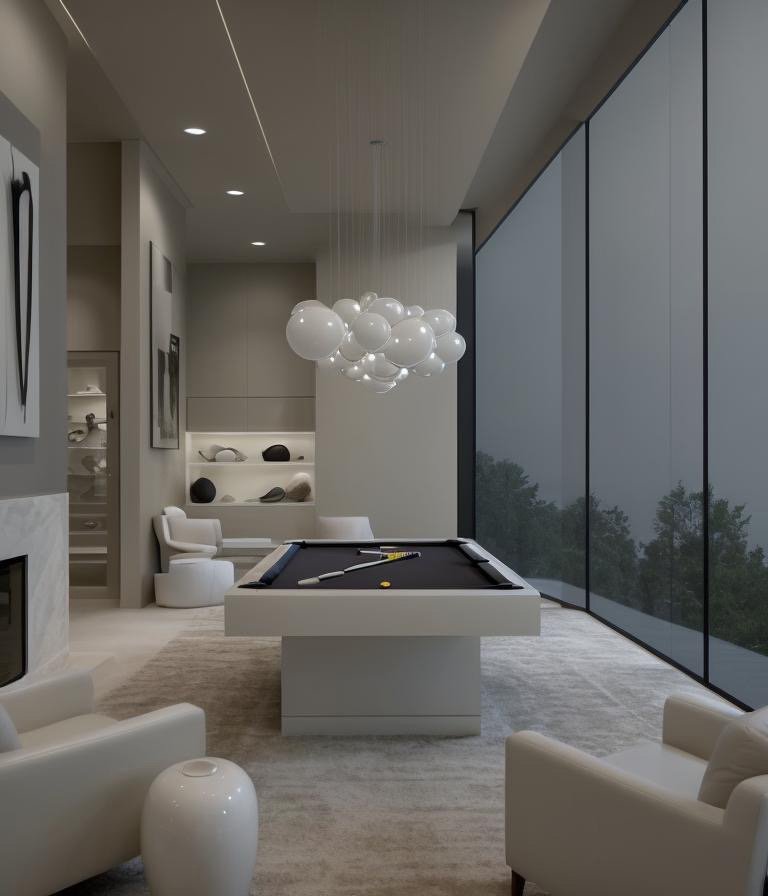
In Chic–Contemporary interiors, there are no statements—only decisions. No ornament—only intention. No excess—only control. The distinction between these paired concepts defines whether a minimalist space achieves authority or merely achieves emptiness.
A Posture, Not a Trend
As this residence moves through its transformation, the deeper insight emerges: Chic–Contemporary is not a trend that will eventually yield to whatever comes next. It is a posture. A visual language spoken with native fluency by those who have genuinely transcended the need to prove anything through their surroundings.
The homes that endure—that don’t photograph as transient or dated within five years—are those that understand this fundamental truth. They are spaces designed not for Instagram validation or magazine features, but for the private knowledge of their inhabitants. They are designed for people who have already arrived, who no longer need architecture to perform on their behalf.
This is why Chic–Contemporary resonates across decades while other design movements calcify into period pieces. It is not pursuing beauty or luxury; it is describing a state of completion. And that, ultimately, is a condition that never becomes dated because it exists outside the realm of temporal fashion entirely.