Author: viktor

  • The Leak Starts at the Opening: Reading Wind-Driven Rain on a Building Envelope

    The Leak Starts at the Opening: Reading Wind-Driven Rain on a Building Envelope

    3D Transformative Digest | Designs by Modish

    The First Complaint Is Usually Small

    A tenant notices a damp patch beside a window after a night of hard rain. The building engineer checks the interior finish, takes a photograph, and places a work order. By morning the mark is dry. The leak does not look urgent, and the space is occupied again. Months later, a second tenant reports water at a different window on the same elevation. The pattern is now harder to dismiss. Water entry at an opening can be caused by several conditions: a failed sealant joint, a blocked drainage path, damaged flashing, a component that has shifted, or a mismatch between the assembly and the exposure it experiences. The stain inside the room is a clue, not a diagnosis. A building may have multiple pathways, and water can travel within the wall before it appears at the interior surface. For owners, the operational problem is the uncertainty between first report and a defensible repair. For insurers, the unresolved condition raises questions about recurrence, maintenance, affected property, and the extent of loss. Both need the same thing at first: a record that connects location, weather, observation, investigation, and repair.

    Rain Does Not Meet a Facade in a Laboratory

    Wind-driven rain is not simply water falling vertically on a window. Wind creates pressure differences across the envelope; water encounters joints, tracks, gaskets, sill pans, drainage paths, and transitions between materials. A detail that performs under one exposure may behave differently under another pressure, orientation, construction condition, or maintenance history. FEMA's post-hurricane recovery guidance documents water intrusion at roofs, wall coverings, windows, and doors after wind damage. Its Hurricane Ian advisory focuses specifically on reducing water entry through and around windows and doors during wind-driven rain. These are observations and recommendations drawn from particular storm events, not a claim that every leak has the same cause. The useful lesson is that openings and transitions deserve focused attention, especially when moisture reports recur after severe weather. A visual walk-through may identify cracked sealant, damaged components, blocked weeps, or a visible discontinuity. It cannot always establish how the assembly is performing under pressure. ASTM E1105 describes a field method for determining water penetration of installed windows, skylights, doors, and curtain walls under uniform or cyclic static air-pressure differences. A qualified consultant can determine whether the method fits the question, what test pressure is appropriate, and what the result does, and does not, establish.

    Follow the Evidence, Not the Stain

    A good investigation begins with a location map. Mark the affected room, window or wall bay, floor, orientation, date, weather conditions, and whether the opening was exposed or sheltered. Photograph the exterior and interior from a repeatable point. Record what was wet, what was dry, and whether water appeared during or after the storm. Ask whether similar reports exist elsewhere on the elevation or in the building. Then separate observations from interpretations. "Sealant is split at the lower-left corner" is an observation. "The sealant failure caused the interior leak" is a conclusion that may require testing or opening the assembly. "Water was reported after a wind-driven rain event" is useful chronology. "The storm caused all interior damage" may exceed what the record shows.

    Preserve the work order and every handoff. If maintenance applied a temporary seal, record the product and exact location, and photograph the condition before and after. Temporary mitigation can be sensible, but it may change the evidence available to the next investigator. If interior finishes are removed, photograph the concealed condition before it is covered again. Note moisture readings with the instrument, location, date, and operator rather than passing along an isolated number.

    When a Field Test Is the Right Next Step
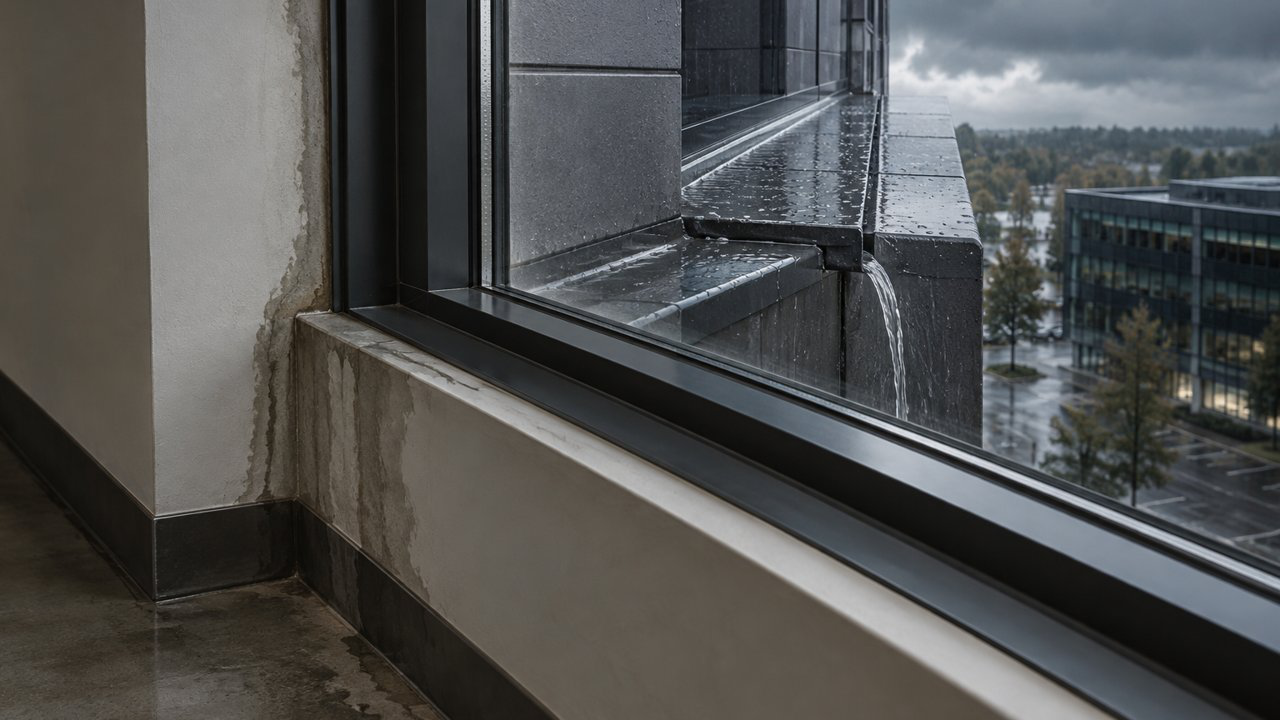
    Testing should answer a specific question. Is water crossing a particular window or curtain-wall bay under a defined pressure? Is the issue isolated to one opening or repeated across a run? Does the assembly drain as intended? Is a replacement component compatible with the surrounding system? A test plan should define the specimen, preparation, pressure, water application, observation points, and acceptance criteria before work begins. A pass or fail only has meaning within that setup. It should not be generalized to every window in the building unless the sampling and scope support that conclusion. A field test is not a substitute for reviewing the drawings, installation details, sealant history, maintenance records, and site exposure. Nor does a test finding automatically determine insurance coverage or liability. It narrows the technical question so the owner can decide what to inspect or repair next. If moisture recurs, a building-envelope professional may recommend additional probes, laboratory analysis, or a broader survey. Those steps can be disruptive. The choice should be proportionate to the frequency, severity, and consequence of the reports, and to whether the water affects occupied space, electrical systems, or building operations.

    Two Common Traps

    The first trap is treating every interior water report as proof of roof failure. A ceiling stain can come from plumbing, condensation, an exterior wall, or a prior event. Preserve the location and timing, then investigate plausible sources. A roof contractor's finding at a nearby penetration is useful evidence; it becomes stronger when linked to the interior location and confirmed repair. The second trap is waiting until a carrier asks for records. Then the owner is collecting files while negotiating a deadline. A quarterly review of open roof findings gives the property manager time to close small work orders, update the roof plan, and request missing vendor documents before renewal. The review can be short: no open issue, completed since last review, unresolved with owner/date, or inspection required. For a multi-building portfolio, consistency is more useful than a complex rating. Give every roof section the same fields and naming rules. Let exceptions remain visible; do not force an unusual assembly into a generic category just to fill a database cell. If the insurer's questionnaire asks for a simple value, preserve the richer record behind that answer.

    The Repair Is Not the End of the Investigation

    After a repair, monitor the same location through the next relevant rain event when practical. Ask the tenant or building engineer to record whether moisture returned, not just whether the stain looks different. If the area remains dry, preserve the follow-up date and conditions. If it becomes wet again, that recurrence may mean the original pathway was incomplete or another source remains.

    For recurring leaks, compare multiple units or bays with the same detail. A building may have a local installation defect, or a repeated condition across one elevation. A small sample should not be generalized to the whole facade without support. A consultant can recommend how much of the assembly to inspect based on the pattern, age, construction, and consequence of failure. Do not use an interior paint repair as proof that the envelope problem is solved. Close-out should include the technical work, any interior restoration, and a plan to verify recurrence where appropriate. That prevents a cosmetic reset from obscuring an unresolved water pathway.

    Turn a Repair into a Building Record

    A closed work order should leave the next manager better informed. Record the probable or confirmed pathway, the evidence supporting it, the area investigated, repairs completed, materials used, and whether follow-up monitoring or testing is recommended. Add photos with consistent labels. If the source remained uncertain, preserve that uncertainty rather than declaring the problem permanently resolved. This kind of documentation is useful when the property renews insurance, changes managers, undergoes a sale, or experiences another severe weather event. It can show whether a repair addressed one opening or an entire elevation. It also helps a later investigator distinguish an old stain from new water entry. A window leak can begin as a small mark on painted gypsum board. The professional response is to treat it neither as a catastrophe nor as a cosmetic nuisance. Locate it, document it, test where necessary, repair the right assembly, and keep the evidence. That is how a recurring mystery becomes a manageable maintenance issue. None of that paperwork prevents the next storm. It only ensures that when the water finds a new opening, the people who respond are not starting from zero.

  • At Renewal, a Roof's Age Is Not Its Condition

    At Renewal, a Roof's Age Is Not Its Condition

    3D Transformative Digest | Designs by Modish

    The File Says "New Roof." The Roof Says Something Else

    A property manager opens a renewal questionnaire. It asks for the roof's year of installation, material, and most recent replacement. The folder contains an invoice from six years ago. On the building, a newer coating covers an older membrane. Water stains have appeared in one tenant space; a blocked drain was cleared last winter. Is the roof six years old, older, or a repaired assembly with a specific history? The answer matters, but the paperwork does not tell the whole story. Commercial property insurers ask about roofs because the roof protects more than the structure below it. A small opening during wind or hail can become a path for water into insulation, ceilings, electrical equipment, inventory, and occupied space. Age is a useful first clue. It is not a physical inspection, and it does not say whether a roof has been maintained, repaired, modified, or damaged since its last replacement. For owners and brokers, the renewal challenge is to turn "we think it is fine" into a record another person can evaluate. For underwriters, the challenge is to separate a current condition signal from an old date copied forward in a schedule.

    Replacement, Repair, Coating: Three Different Histories

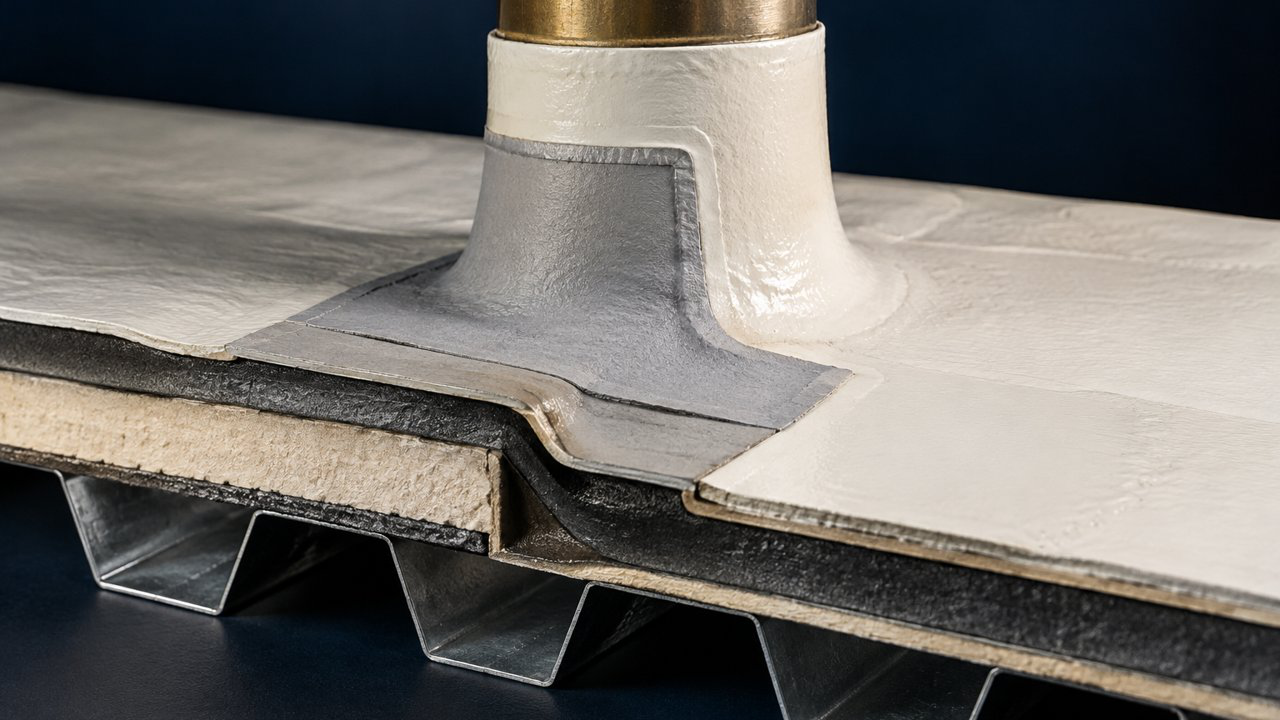
    A full replacement, a localized repair, and a coating application may all appear in a building file as "roof work." They do not mean the same thing. A replacement may change the roof assembly and its warranty. A repair may address one area while leaving the remaining system unchanged. A coating may protect or extend a surface under specified conditions, but it does not automatically reset the assembly's age or prove the condition beneath it. This is not a semantic distinction. If an underwriter assumes an entire roof was replaced when only a section was repaired, the submission is misleading even if no one intended to misstate it. If a property manager has excellent maintenance records but no current images, the file may still fail to answer the practical question: what does the roof look like now? The better record preserves the sequence. Keep the original installation information, product and contractor documents, permits where available, repair invoices, warranty conditions, inspection reports, storm dates, and photographs tied to locations. Describe the scope accurately: "north penthouse curb flashing replaced" is more useful than "roof repaired." Note who did the work and when. If the source of a date is uncertain, say so rather than turning an estimate into a fact.

    What a Useful Roof Condition Review Looks For

    A meaningful review considers more than a single overhead picture. FM Global's loss-prevention guidance recommends a regular inspection and maintenance program for roof assemblies, including inspections at least semiannually and before and after storms with high winds or heavy rain. The specific inspection method should fit the roof type, building, access conditions, and qualifications of the person performing it. A reviewer may document the roof covering, seams, flashing, penetrations, drains, curbs, rooftop equipment, ponding, debris, visible repairs, and access limitations. The pattern matters. A membrane puncture beside a rooftop unit has a different context from widespread brittle surfacing or repeated ponding at a low point. Photographs should show both context and detail: where the condition is, what it looks like at scale, and how it relates to a seam, drain, or penetration. The record should also distinguish an observed condition from an inference. A stain on the ceiling is evidence of staining; it does not by itself identify the roof defect, the date of entry, or the cause. A dark area in aerial imagery may indicate ponding, but it could also have another explanation. A roof professional can say what was inspected, what could not be accessed, and what further testing or repair is recommended.

    Ask What the Record Actually Proves

    When a broker requests a roof schedule, ask what the carrier means by roof age: the date of the entire assembly, the most recent replacement, or a component-specific date for covering, insulation, or deck. Different systems can have different histories, and a partial project may not reset every part of the roof. If a date cannot be confirmed, report the best supported information and its source. An owner estimate based on a prior manager's notes is less polished than a firm year, but more honest and useful for follow-up. The property team can request archived permits, contractor records, or previous insurer inspection reports. Do not convert an estimate into a verified fact simply because a form asks for one. The same discipline applies to condition ratings. If there is a recent report, provide its date, scope, and inspector. If not, do not write "good" because no leak was reported. State the evidence available, and obtain a qualified inspection if risk or uncertainty warrants it.

    Give Underwriting a Clear, Bounded Picture

    A renewal package should let a reviewer answer basic questions without guessing. What is the roof assembly and installation history? What work occurred since the last inspection? What conditions were observed, when, and by whom? Which items were repaired, and what remains open? Are there areas the reviewer could not see? If an estimate or warranty is attached, what exactly does it cover? A simple summary table can help, provided the supporting evidence is available. For each roof section, identify the location, system if known, source for age, most recent inspection date, repairs, unresolved observations, and document reference. Use the same building orientation or roof plan across photos and notes. A portfolio with dozens of buildings particularly benefits from consistent labels; otherwise, a high-resolution image can be impossible to associate with the correct property or roof plane. That is not a promise of better terms. Underwriting decisions depend on the carrier's appetite, policy language, location, occupancy, construction, protection, exposure, and the evidence received. A well-organized file does not guarantee coverage or a premium reduction. It does reduce avoidable ambiguity and gives the underwriter a fairer basis for questions.

    A Practical Renewal Packet

    The broker does not need a glossy presentation. A compact packet is more useful: a roof plan showing sections and orientations; a one-page history of replacements and repairs; the latest inspection report; photographs keyed to the plan; warranties; and a list of open work orders. If there are multiple roof systems or installation dates, show them separately. A single age assigned to the whole building can conceal meaningful differences between sections. The owner should identify the source behind each date. A permit or final invoice may support a replacement year. A tenant recollection may be helpful context, but it should not be presented as documentary proof. When records conflict, list both sources and the unresolved discrepancy. That gives the broker a clear question to take back to the property team before a carrier has to ask it. Where the roof has been repaired, describe the location and scope. A repair record should say what was found, what work was performed, who completed it, and whether follow-up confirmed the repair. If a contractor recommended further work that was not completed, include it as an open item with an owner and target date.

    The Work Before the Deadline

    The renewal date is a poor time to discover that the "new roof" on a spreadsheet means a coating on one section and a repair to another. Assign one person to reconcile the building record before the broker's submission is due. Ask the property team for the maintenance history; ask the contractor for the exact scope; ask the inspector to identify limitations; and mark unknown details as unknown. After a storm, keep a separate event record. Preserve pre-event images, inspection observations, temporary protection, repair approvals, invoices, and follow-up photographs. That file helps the owner make decisions about the building, even if no insurance claim is filed. It also provides useful context at the next renewal. The roof is not an abstract age value. It is an assembly with a history of exposure, work, and observation. When that history travels with the property, both the building manager and the person evaluating the risk can begin with the same facts, and ask better questions before the next storm.