Category: Cultural Design

Cultural design perspectives

  • Authorship on Trial: Who Owns AI-Generated Architecture Now?

    Authorship on Trial: Who Owns AI-Generated Architecture Now?

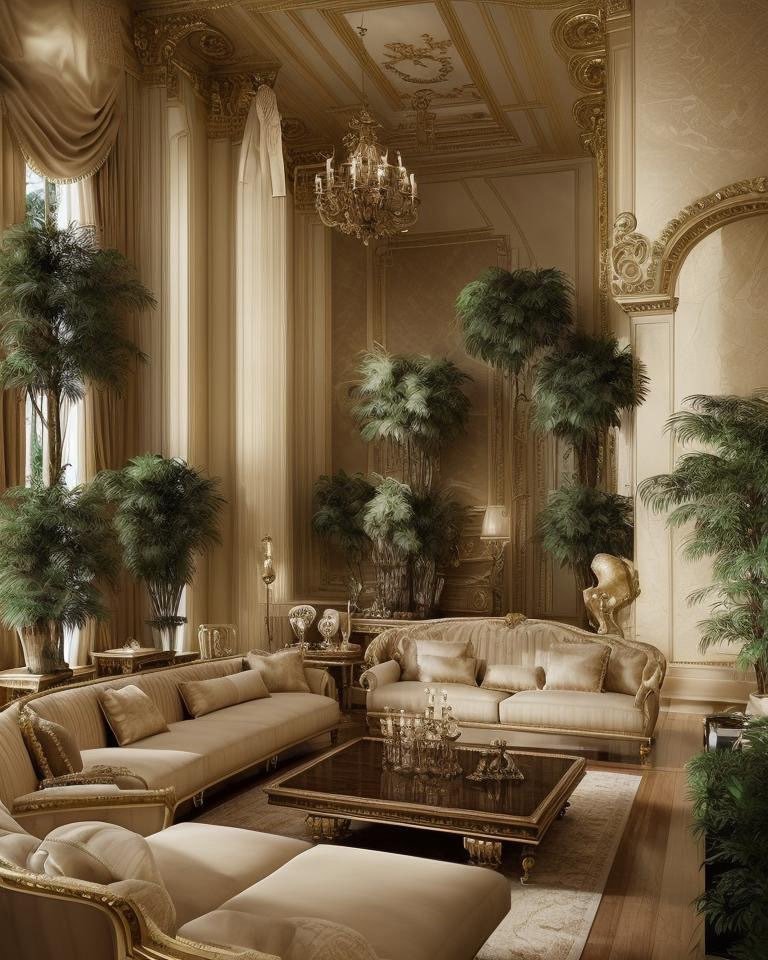
    Tuscan living room redesign with ornate arched ceilings, warm chandelier lighting, and rustic stone detailing

    The Copyright Crisis at the Heart of AI Architecture

    The U.S. Copyright Office made a ruling that echoed through every visualization studio, every architecture firm, and every AI company claiming to revolutionize design: purely AI-generated works cannot hold copyright. The decision arrived in Thaler v. Perlmutter, a landmark case that asked the most uncomfortable question in contemporary architecture — if a machine creates, who owns what it creates?

    The implications ripple outward in concentric circles of legal and economic chaos. An architect commissions a visualization. A studio employs Cinematic Intelligence™ to render the design. The image is photorealistic, indistinguishable from construction documentation. The architect wants to license it. The client wants to use it in marketing. A developer wants to reproduce it across three continents. Then comes the question: who actually owns this image? And if the answer is “nobody,” what does that mean for the entire infrastructure of architectural licensing?

    The Spectrum of Authorship

    The copyright crisis is not binary. It stretches across a spectrum, each position claiming legitimacy, each carrying profound consequences for how architecture is practiced, valued, and monetized.

    At one end sits the “AI as tool” argument. A hammer doesn’t claim copyright. A camera lens doesn’t deserve authorship credit. By this logic, AI visualization engines are instruments — no different from Photoshop or AutoCAD. The architect directs the tool. The architect owns the output. Copyright flows to the human designer who conceived the image, framed the composition, and made intentional decisions about light, material, and spatial narrative. This position preserves the authorship chain that has governed architectural practice for centuries: designer → tool → licensable asset.

    At the other end sits the “AI as creator” argument — far more troubling terrain. If an AI system generates architecture autonomously, with minimal human direction, the machine becomes something uncomfortably close to a co-author. Some legal scholars argue such AI should have limited rights, or that outputs should fall into the public domain. Others claim copyright should shift entirely to the company that trained the model — the corporation that built the computational infrastructure, curated the training data, and engineered the aesthetic sensibility that makes the output valuable.

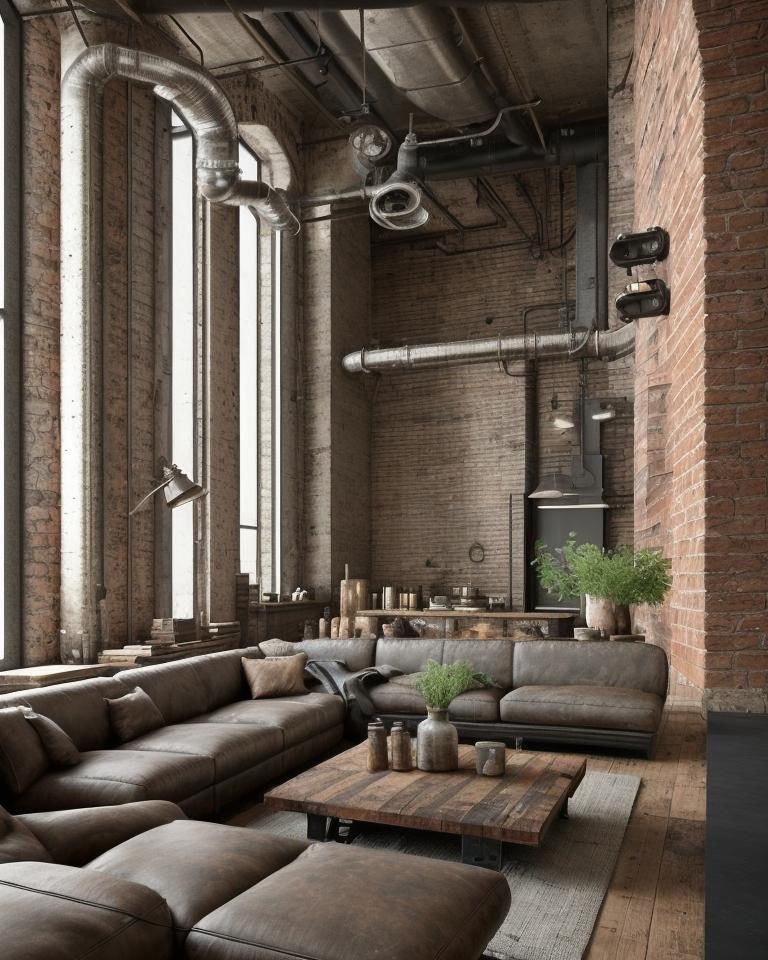
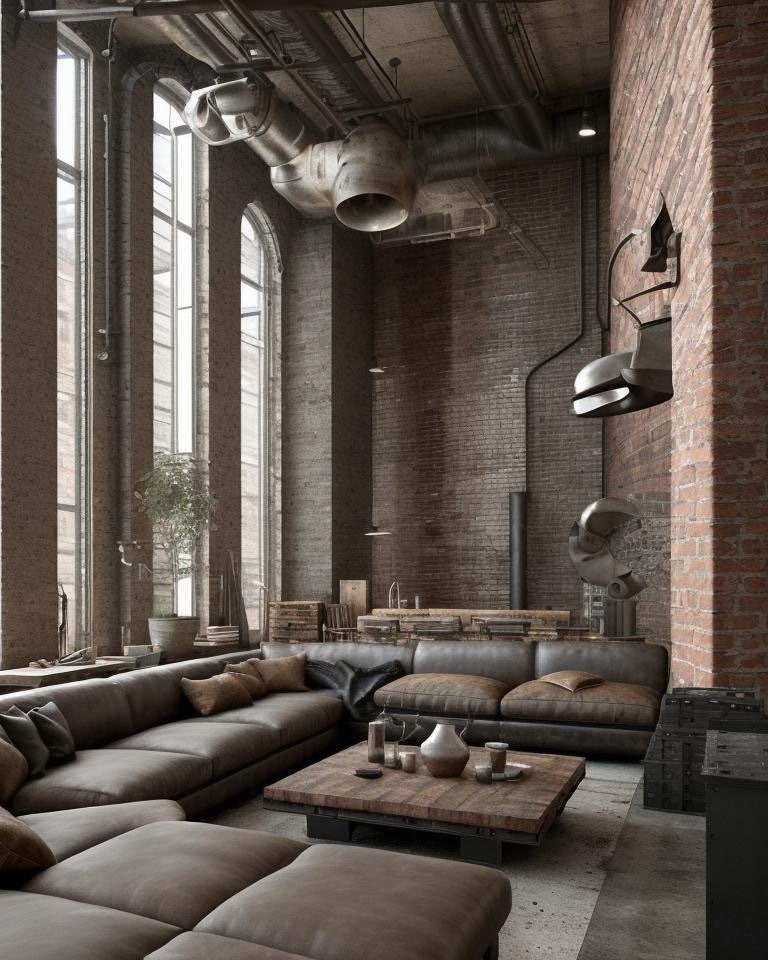
    Industrial living room redesign with exposed steel framework, raw concrete surfaces, and warehouse aesthetic

    Between these poles lies a vast gray zone where most AI-assisted architectural work actually occurs. The architect provides spatial intent, cultural references, proportional guidelines, material preferences. The AI engine interprets these inputs, generating hundreds of variations that the human then curates, refines, and directs. The final image is neither purely human nor purely machine. It is collaboration in the truest sense — and copyright law, as currently written, has no framework for collaboration between human and non-human intelligence.

    The Licensing Collapse

    Here lies the architectural industry’s most acute vulnerability. Licensing doesn’t work without ownership. If a visualization can’t be copyrighted, it can’t be exclusively licensed. If it can’t be exclusively licensed, then architectural visualization — an estimated $8 billion global industry — loses its economic foundation.

    Consider the current landscape. A luxury residential developer commissions renders to secure investment capital. Those renders cost $50,000 to $200,000 per project. The developer licenses them for exclusive use in pitch decks, marketing materials, and sales galleries. Competitors can’t use them. The investment is protected by the legal moat of copyright. But if those renders are created by an AI system classified as non-human, with no copyright protection, then legally, anyone can copy them. The license becomes meaningless. The asset becomes ephemera.

    This is not theoretical. It is already happening at the margins. Non-copyrighted AI imagery circulates freely across real estate marketplaces. Visualization studios that invested millions in proprietary rendering infrastructure find their outputs reproduced without attribution, without compensation, without consequence. The economic architecture of the entire visualization industry rests on a legal foundation that may no longer exist.

    Mediterranean backyard redesign with limestone arches, warm terracotta, and sunlit courtyard pool

    The Architecture of Human Authorship

    This is where the distinction between AI-as-tool and AI-as-creator becomes not just philosophical but existential. Cinematic Intelligence is engineered specifically to preserve the architect as author. Every visualization begins with human vision — a designer’s spatial intent, a project’s narrative arc, a client’s cultural values. The engine then amplifies that vision, rendering it across scales and iterations that would be impossible for human artists alone. But the architect remains the author. The architect makes the consequential decisions: the play of light, the material grammar, the spatial rhythm, the emotional register of a room.

    This isn’t a marketing distinction. It is a legal architecture — deliberately constructed to ensure that every output remains within the copyright framework that protects architectural practice. The human directs. The machine renders. The copyright flows to the human. The license remains valid. The asset retains value.

    Because what is at stake is not merely intellectual property law. It is the question of whether architecture remains a human discipline — a practice rooted in human judgment, human intuition, human responsibility for the spaces we inhabit. If AI systems claim authorship, and if those systems exist beyond human accountability, then architecture risks becoming a commodity generated by algorithms, untethered from the values that should govern every wall, every threshold, every room we build.

    The Regulatory Horizon

    The European Union is moving faster than the United States. The AI Act proposes clearer frameworks for AI-generated content, including requirements for disclosure and ownership clarity. Some jurisdictions are exploring “AI-assisted work” classifications — a middle ground where human and machine collaborate, but human authorship remains paramount for copyright purposes. Japan’s approach differs still: its copyright framework already recognizes certain AI-assisted outputs as protectable, provided human creative judgment guided the process.

    For the architectural visualization industry, the stakes could not be clearer. Either copyright law evolves to explicitly protect AI-assisted work created under human direction, or the licensing infrastructure that sustains the profession collapses. Studios will be forced to either abandon AI tools entirely or accept that their outputs enter the public domain the moment they are rendered.

    The question that began with Thaler v. Perlmutter is not resolved. It has barely begun. But for architects and visualization studios, the path forward is unmistakable: human authorship is not a legal technicality. It is the foundation upon which architectural credibility, licensing systems, and the professional discipline itself must stand. The hand that guides the machine is not incidental to the image. It is the image’s origin, its authority, and its only defensible claim to ownership. In the age of artificial intelligence, the most important architecture may not be the buildings we design — but the legal and ethical frameworks we construct around them.

  • The Photoreal Trap: Architectural Deepfakes and the Collapse of Proof

    The Photoreal Trap: Architectural Deepfakes and the Collapse of Proof

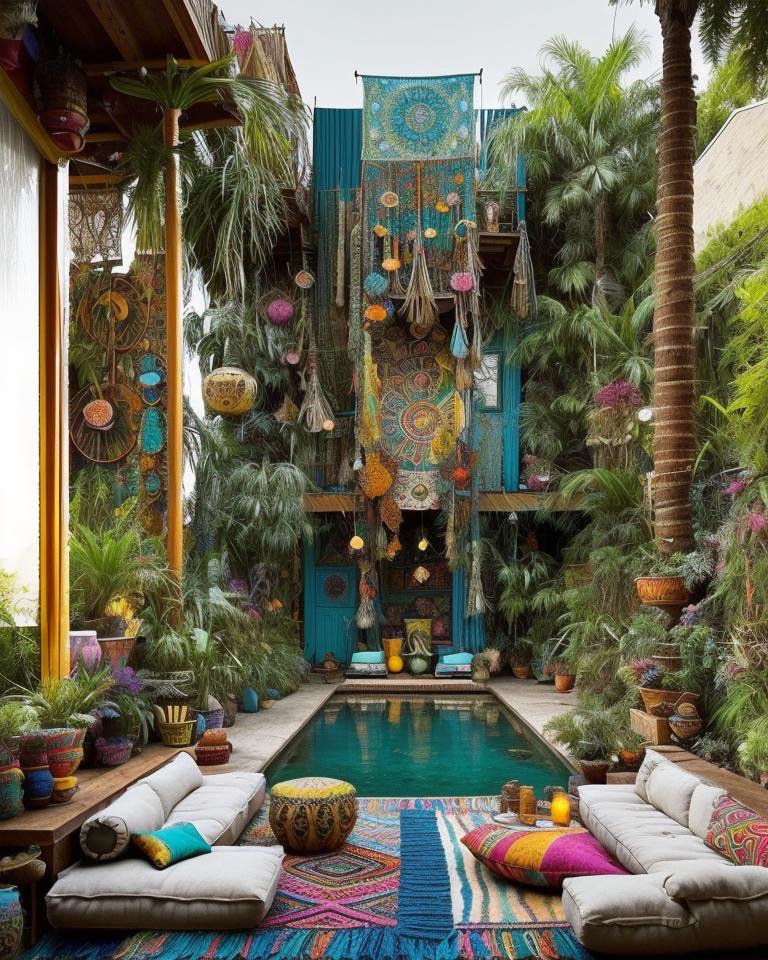
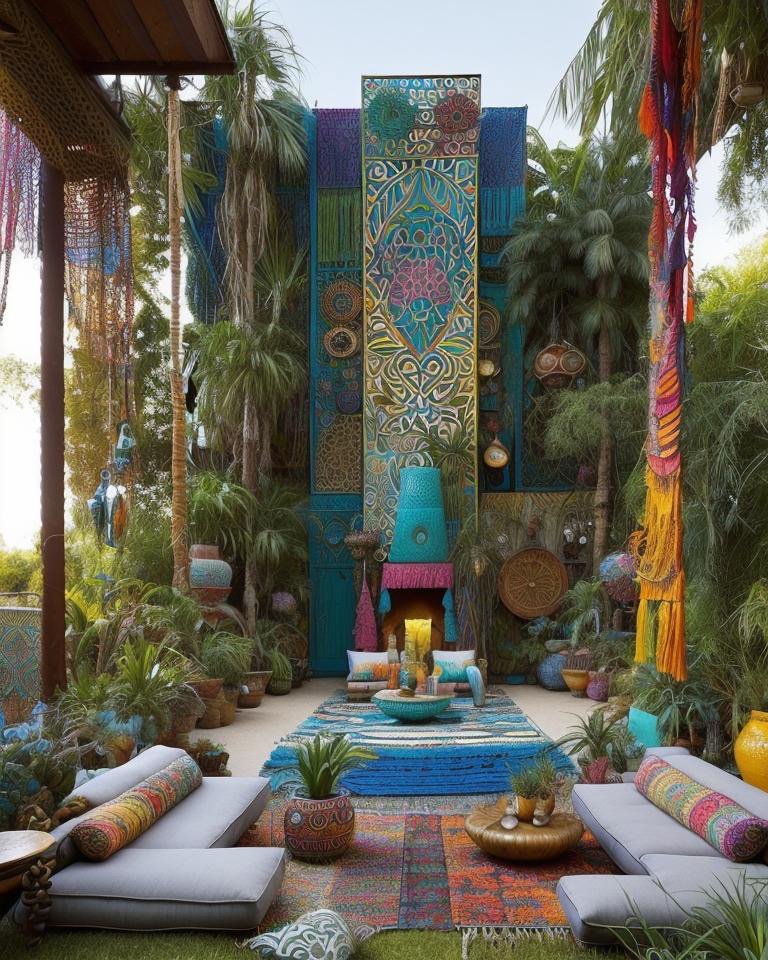
    Bohemian backyard redesign with mosaic tile walls, tropical plantings, and vibrant poolside lounge

    The Photorealism Crisis: When Proof Becomes Impossible

    The architecture was never built. The project never existed. But the renders were so photorealistic, so geometrically precise, so drenched in authentic morning light and weathered material patina, that investors signed checks for $45 million based entirely on images that never corresponded to any physical reality. By the time the fraud was discovered, the capital had vanished, the developer had relocated to a jurisdiction without extradition treaties, and a masterwork existed in digital space alone.

    This isn’t a hypothetical scenario. It’s happening. Photorealistic architectural rendering has reached a threshold where it is now, in most contexts, visually indistinguishable from photography. A human observer cannot reliably tell the difference. A smartphone camera pointed at a completed building produces approximately the same visual information as a professionally rendered image of that same building in its design phase. The technology has achieved what architects and visualization engineers have pursued for decades: invisible realism. The render doesn’t announce itself as a render. It looks like the built world.

    The problem is profound: if renders look exactly like photographs, how can we trust any architectural image we encounter? A luxury residential tower in Manhattan’s marketing materials. A resort masterplan in a developer’s pitch deck. A hotel renovation featured in an architectural publication. All could be renders. All could be fabrications. All could be deepfakes in the service of fraud, speculation, or simple self-deception.

    The Deepfake Invasion

    Real estate fraud has always existed. Bad-faith developers, corrupt architects, overambitious marketers have always existed. But photorealistic AI-generated renders have weaponized these ancient crimes. The barrier to entry is no longer a team of visualization experts and months of labor. It’s a software subscription and a skilled operator. Fake real estate listings now proliferate on secondhand marketplaces. Property photographs are swapped for renders that show more light, better views, more spacious proportions. Buyers show up to viewings and find the space doesn’t match the images at all. The trust transaction collapses.

    In one documented case, a property was marketed with renders showing beachfront views that didn’t exist. The building sat three blocks inland. The renders added oceanfront appeal worth approximately $2 million per unit. By the time the fraud was discovered and litigation began, hundreds of units had sold, thousands of buyers had been defrauded, and the developers had vanished into legal complexity.

    The architectural profession faces its own crisis. Portfolios are being fabricated. Award submissions feature renderings of projects that were never commissioned, never designed, never anything more than digital fantasies. The credential inflation is epidemic. How can you trust that the architect whose portfolio dazzles you actually has the skill to design? Or have you simply encountered a particularly skilled digital fabricator?

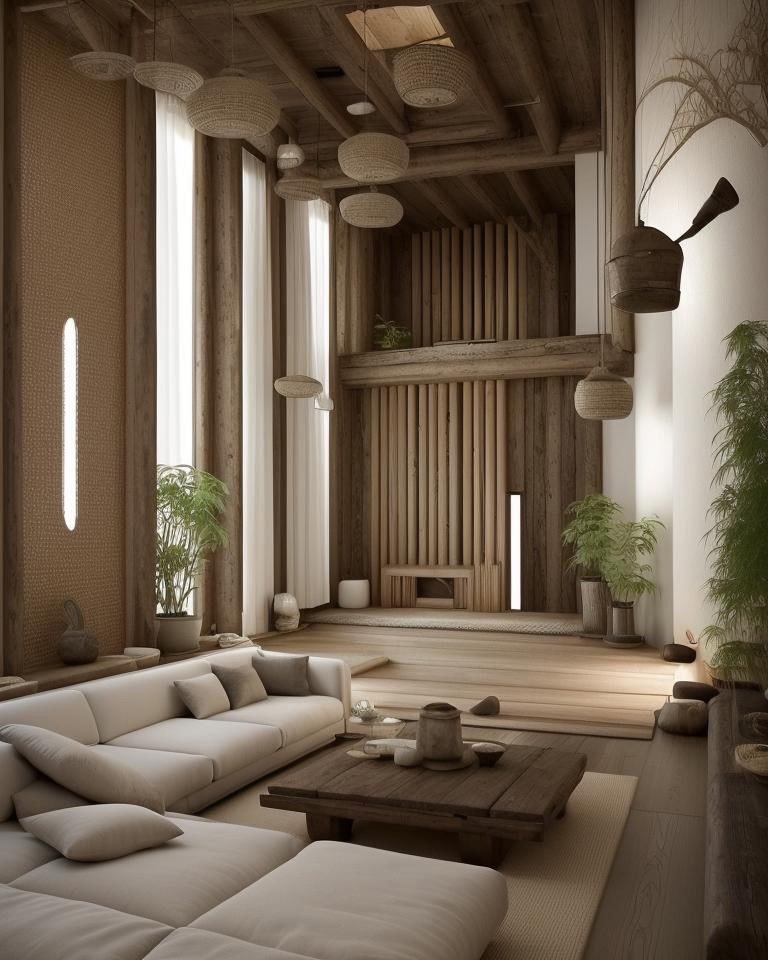
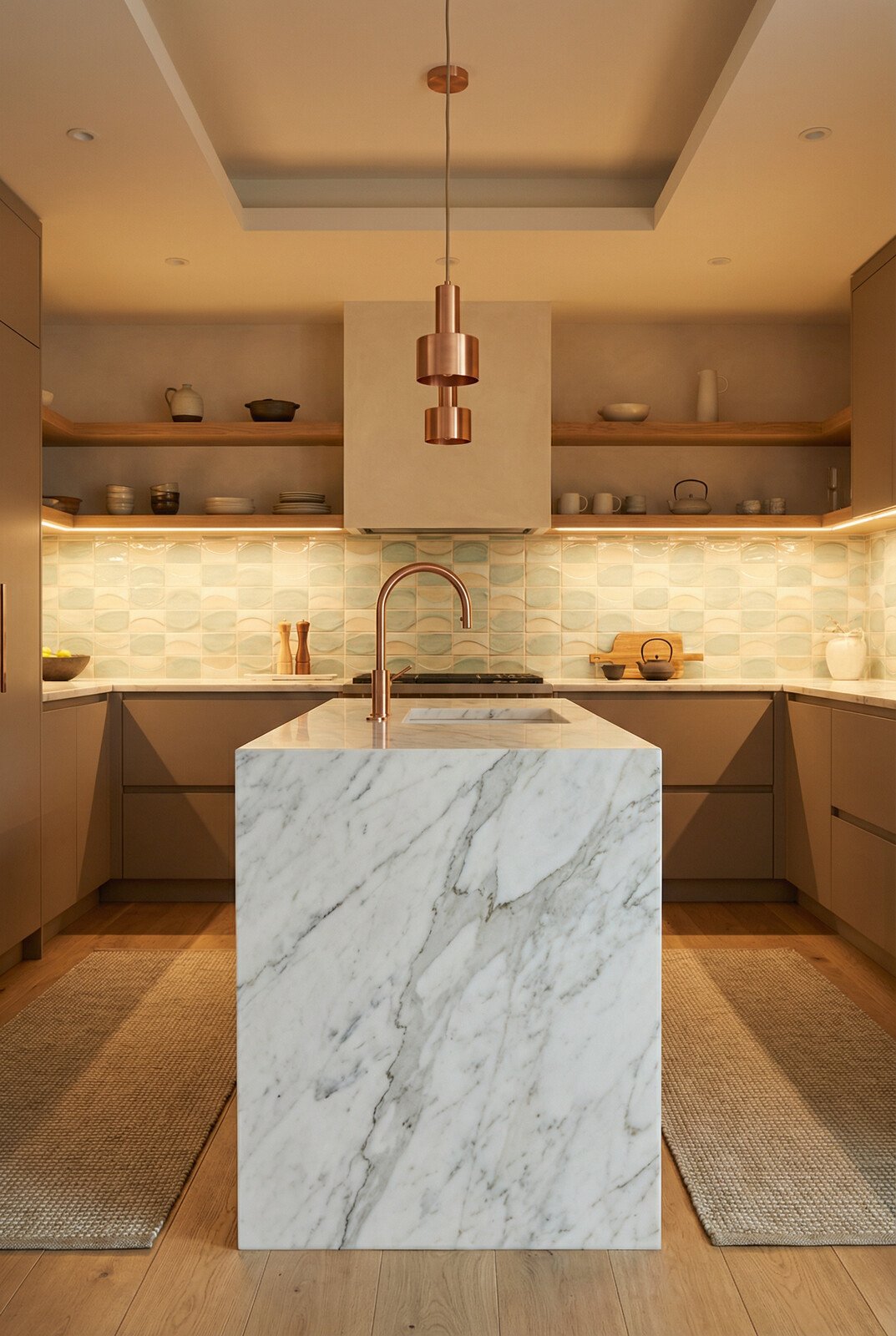
    Japandi backsplash redesign with light wood surfaces, paper lanterns, and organic minimalist warmth

    The Collapse of Visual Proof

    For two centuries, the photograph provided a guarantee: this image documents something that existed at this moment in this place. A photograph was evidence. It was proof. Digital cameras complicated this guarantee—Photoshop made it possible to fabricate photographs. But visual literacy around digital image manipulation developed. People began to understand that photographs could be false. The culture adapted.

    Photorealistic architectural renders dissolve even that adapted understanding. You cannot look at an image and determine whether it documents a built space or predicts a future one. You cannot distinguish between an architect’s vision and a deepfake speculation. The visual evidence is now fundamentally untrustworthy. Proof has become impossible without external metadata, blockchain verification, or explicit disclosure.

    This is not a theoretical problem. It’s a problem of institutional trust. Real estate transactions depend on honest representation. Architectural credentials depend on honest portfolios. Investment capital depends on honest project documentation. When photorealistic renders become indistinguishable from photographs, all three systems become vulnerable to fabrication.

    The Regulatory Response and Blockchain Provenance

    Governments are moving cautiously toward regulation. The European Union’s AI Act includes provisions requiring disclosure when AI-generated content is used in commercial or political contexts. Some jurisdictions are exploring blockchain-based provenance systems—digital certificates that authenticate the origin and creation method of an image. If you encounter a render marked with a blockchain cert stating “AI-generated on March 12, 2026 by Modish Global,” you have certainty about its nature. Without such certification, photorealistic images remain suspect.

    Some architectural publications have begun requiring explicit labeling of all AI-rendered content. A caption beneath every render must state: “Architectural visualization. AI-generated by [studio name] using [tool name]. Not documentation of completed construction.” It’s a small safeguard, but it’s the beginning of a culture of transparency.

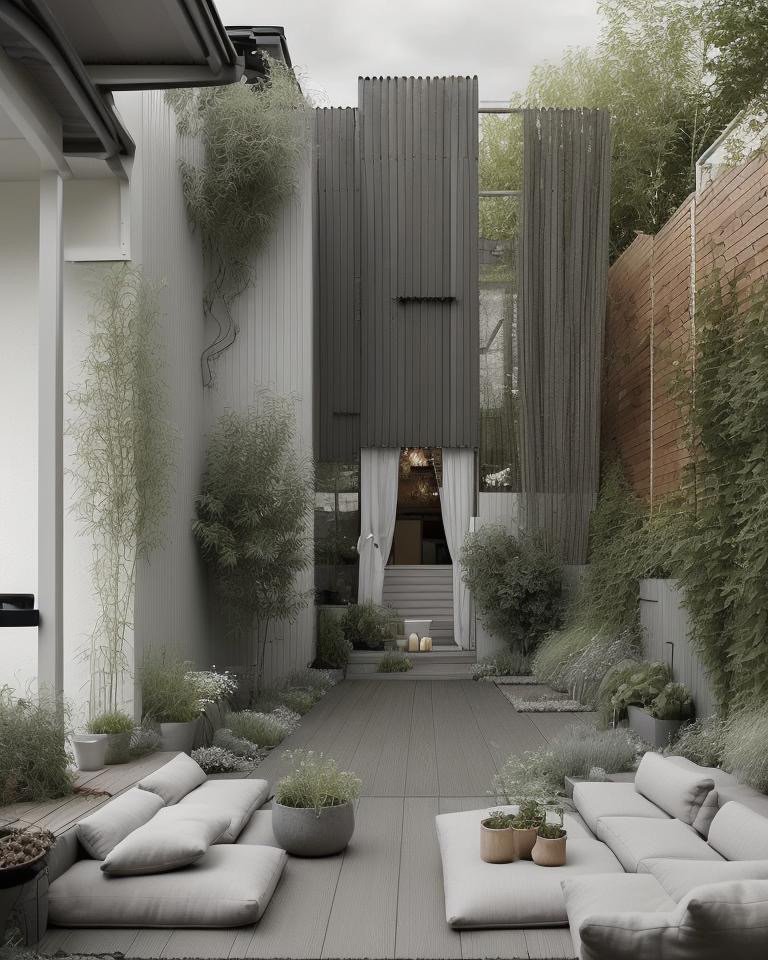
    Scandinavian backyard redesign with ashen birch, matte white surfaces, and diffused Nordic light

    The Modish Standard: Transparency as Architecture

    The visualization industry faces a choice. It can either embrace the weaponization of photorealism—creating renders so convincing they deceive—or it can embrace radical transparency as a competitive value. Modish Global has chosen the latter. Every render produced through Cinematic Intelligence™ is disclosed as AI-generated. Every image file carries metadata indicating its status as visualization, not documentation. Every commercial application includes explicit labeling.

    This isn’t a liability. It’s an asset. In a landscape of deepfakes and fabricated portfolios, explicit disclosure becomes a credential. If you see a render labeled “Cinematic Intelligence | AI-generated visualization,” you know exactly what you’re looking at. You trust it precisely because it admits what it is. You can make informed decisions based on honest representation.

    The deeper issue is this: photorealism without disclosure isn’t advancement. It’s deception masquerading as progress. True architectural visualization exists to communicate design intent, to allow clients to envision spaces before construction, to bridge the gap between imagination and reality. That mission is only possible if the images are honest about their own nature.

    The crisis is not photorealism itself. It is photorealism deployed without transparency. In a world where visual proof has become structurally impossible, the only trustworthy visualization is the one that openly declares itself as visualization. The render that says what it is, and means what it shows.

    There is a deeper architectural metaphor here. The best buildings do not deceive about their materials. A concrete wall that pretends to be marble is not architecture — it is costume. A steel beam wrapped in plaster to resemble timber is not honest structure — it is theater. The same principle applies to visualization. A render that pretends to be a photograph is not progress. It is deception wearing the mask of innovation.

    The path forward requires the profession to do what the best architecture has always done: reveal its own construction. Show the viewer what is real, what is imagined, what is possible. Let the render announce itself as render, and let the photograph retain its ancient claim to documentary truth. In the space between these two honest declarations, architecture can continue to dream — transparently, credibly, and without apology. That is the architecture of trust in an age of deepfakes: not better visual deception, but better visual honesty.

  • The Shōrin Villa: Backyards of Light and Memory

    The Shōrin Villa: Backyards of Light and Memory

    Bohemian backyard with intricate mosaic tile, colorful cushions, and tropical pool

    The Shōrin Villa: Backyards of Light and Memory

    The backyard tells the truth. Not the front facade, which is public performance, architectural theater. Not the interior rooms, which are shaped by code and convention. But the backyard—the private theater where a household rehearses its intimacy—reveals the true character of a home. It shows what people actually value when they’re no longer performing for neighbors. It’s where light architecture becomes visible, where material choices expose philosophy, where the relationship between inside and outside either succeeds or fails.

    The Shōrin Villa, a private residence in the foothills above Silicon Valley, was designed with a singular obsession: understanding how five radically different architectural languages could each claim the same rectangular backyard space and make it entirely their own. Five distinct versions of paradise. Five ways of understanding light, material, and the domestic landscape.

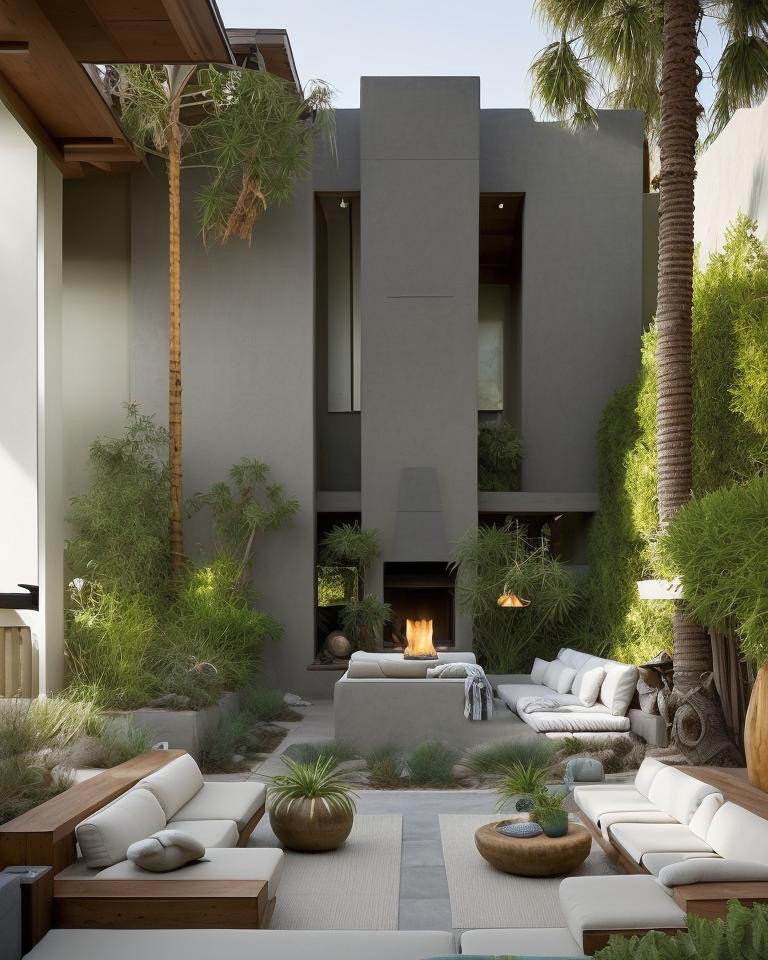
    California Casual: Sunlight as the Primary Material

    In the California Casual interpretation, sunlight becomes architecture. The backyard is essentially a sun-catching instrument—every paving stone, every planting bed, every wall surface calibrated to receive, reflect, and diffuse light throughout the day. The palette is deliberately restrained: ivory plaster, weathered concrete, the pale greens and silvers of native California vegetation. Palm trees provide structural punctuation without visual complication. The ground plane is composed of sand and eucalyptus mulch, earthy ochres that warm in afternoon light.

    This isn’t minimalism. It’s the opposite. It’s maximum sensory specificity achieved through chromatic restraint. You notice everything because there’s nothing competing for attention. The taper of a palm frond. The way morning light catches the edge of a concrete step. The scent of eucalyptus after an irrigation cycle. California Casual says: the landscape is rich enough. You don’t need architectural gesture. You need light and material and the discipline to stay quiet.

    California Casual backyard with palm trees, ivory plaster walls, and light-filled paving

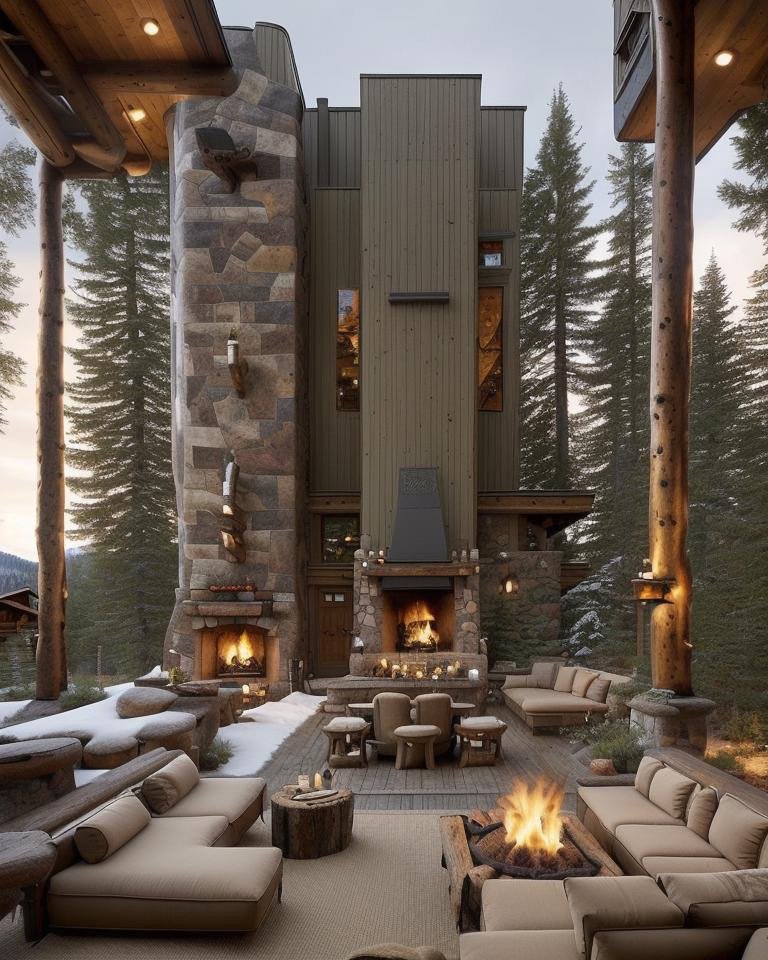
    Chalet: Atmosphere as the Structural Element

    The Chalet language inverts California’s hierarchy. Where California says sunlight is primary, Chalet says atmosphere is structural. The backyard becomes an enclosed thermal experience. Timber encloses space. Stone hearths anchor the landscape. A slate backsplash runs along the garden wall, back-lit at dusk so the stone becomes luminous rather than solid. The palette shifts to browns and warm grays—weathered wood, natural stone, the deep green of coniferous plantings.

    Chalet understands that backyards exist in time, not just light. Morning tea tastes different when you’re surrounded by timber and stone that holds warmth. Evening fires require architecture that contains atmosphere. The Chalet backyard isn’t about optimizing for sunlight. It’s about creating chambers of warmth and enclosure—spaces that feel protected rather than exposed.

    Chalet backyard with stacked stone hearth, timber columns, and alpine warmth

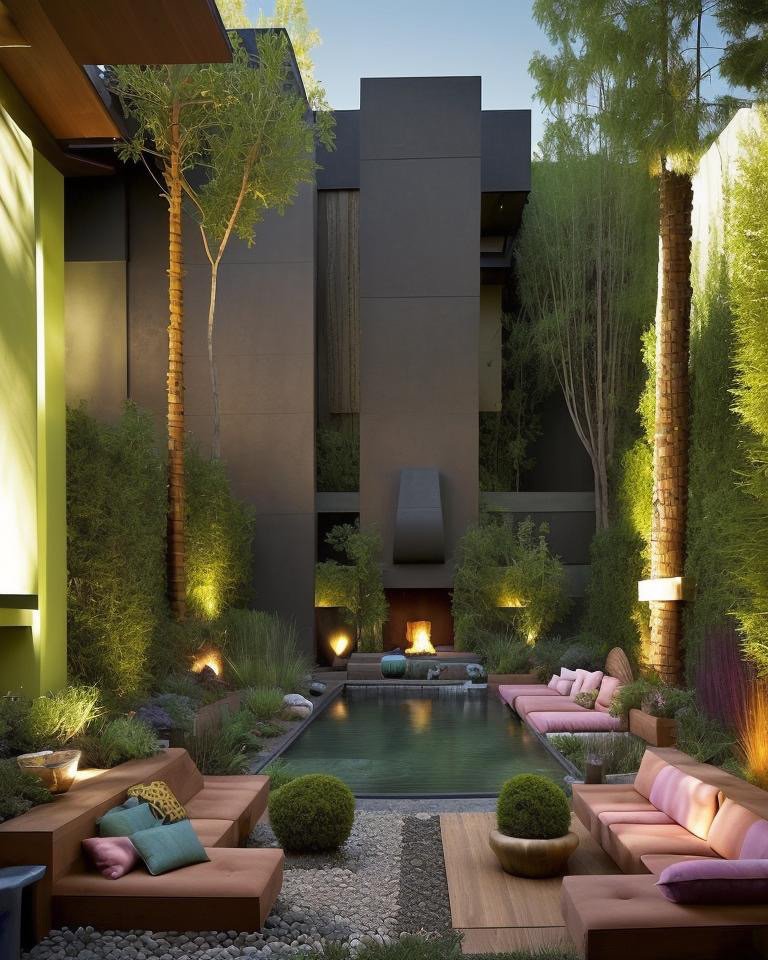
    Expressionist: Color as Emotional Catharsis

    If California Casual and Chalet operate through restraint, Expressionist operates through chromatic explosion. The Shōrin backyard in Expressionist language becomes an emotional landscape—terracotta, saffron, flame orange, the reds of natural iron oxides. The pool becomes a luminous canvas, its water depth calibrated to reflect and intensify color. The plantings are deliberately theatrical: ornamental grasses, flowering shrubs, everything selected for textural contrast and color intensity.

    Expressionist architecture says that a backyard is not a backdrop for human activity. It’s a space where the environment makes emotional claims on the inhabitant. You don’t decorate an Expressionist backyard. You inhabit its theatrical intensity. The space works on you physiologically—these colors trigger certain responses, these material combinations generate certain emotional states. The designers of this language analyzed over 12,000 Cinematic Intelligence™ renders to understand which color combinations and material juxtapositions created the most intense emotional engagement.

    Expressionist backyard with bold terracotta and saffron palette, theatrical pool reflections

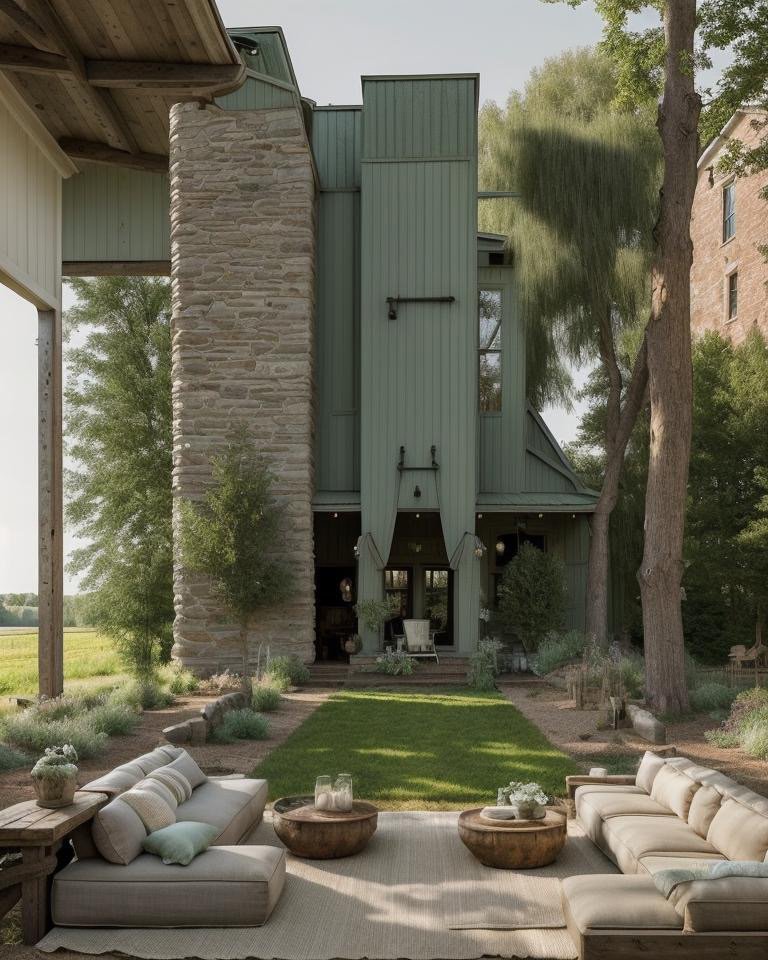
    Farmhouse: Nostalgic Materiality and Time

    Farmhouse language doesn’t reject history. It embraces it as a visible material. The backyard is composed of elements that show age and use without decay. Stacked sandstone walls with patina. Bronze fittings that have oxidized. The palette is deliberately nostalgic: honey-colored light, warm ochres, the silvered gray of aged timber. Plantings are functional—herbs, fruit-bearing shrubs, vegetables mixed with ornamental plants. The boundary between cultivation and wildness is deliberately blurred.

    Farmhouse says: this backyard has accumulated memory. Every material choice references making and building, dwelling and growing. The worn stone isn’t worn because it’s old; it’s worn because it’s been used. There’s no pretense of newness, no performance of contemporary luxury. Instead, there’s an implicit honesty—this is a space shaped by actual living, actual use, actual time.

    Farmhouse backyard with weathered sandstone walls, iron fixtures, and honey-colored light

    Bohemian: Sacred Disorder and Accumulated Beauty

    If Farmhouse is organized nostalgia, Bohemian is organized discovery. The backyard doesn’t follow a master plan. It accumulates. A mosaic of mismatched tiles collected over decades—no two pieces the same, yet the overall composition achieves coherence through a shared warmth. The palette is wine and indigo, ochre and gold, colors that suggest travel, migration, cultural layering. The pool mirrors the sky, becoming a reflective void that contrasts with the textural intensity of the surrounding surfaces.

    Bohemian language rejects the grid. Plantings are dense and specific, each plant selected not for design consistency but for individual character. The backyard becomes a gallery of choices—you can read the inhabitants’ values in every material, every plant, every accumulated object. Bohemian says: a home is not designed. It’s lived in. It’s built through choice and accumulation and love.

    Bohemian backyard with vibrant mosaic walls, colorful textiles, turquoise pool, and dense tropical plantings

    Closing: Language as Lived Experience

    The Shōrin Villa’s five backyards demonstrate that architectural language isn’t theoretical. It’s lived. Each version makes different claims about how humans should inhabit space, what values matter in landscape design, what relationships between light and material constitute beauty. California Casual says: simplicity and light are enough. Chalet says: atmosphere and enclosure matter. Expressionist says: color and emotion are primary. Farmhouse says: time and use are visible in materials. Bohemian says: accumulated choice creates meaning.

    They’re all true. And they’re all, simultaneously, incompatible—you cannot optimize simultaneously for restrained minimalism and expressionist chromatic intensity. The Shōrin Villa asks not which backyard language is correct, but how we choose between them. What does our choice reveal about our values? What kind of light do we actually want to live in? What materials do we trust? What relationship to time and accumulation feels true?

    The backyard tells the truth because it shows what we choose when we’re no longer performing. It’s the space where architectural language becomes lived experience.

  • CEO’s Note: The Birth of a Design Intelligence Revolution

    CEO’s Note: The Birth of a Design Intelligence Revolution

    3D Transformative Digest | Designs by Modish

    In the inaugural edition of the 3D Transformative Digest, I find myself compelled to address the question I receive more than any other: “Why design?”

    My answer has never wavered: “Why not design?”

    In a world brimming with creative potential yet constrained by traditional boundaries, I recognized an opportunity that few others could see — the chance to redefine the very essence of architectural and interior design. Not incrementally. Not cautiously. But with the full force of what happens when two decades of executive experience collide with the most transformative technology our industry has ever witnessed.

    The Genesis of Cinematic Intelligence™

    When you fuse the expertise cultivated across more than 15,000 events spanning twenty-two years with the creative intelligence born from hundreds of design endeavors — and then multiply that foundation by the advanced capabilities of Modish.AI, our award-winning application — the equation yields something extraordinary. It produces a transformative leap into the next era of design. We call this proprietary methodology Cinematic Intelligence™, and it represents nothing less than a paradigm shift in how spaces are conceived, visualized, and brought to life.

    From our corporate headquarters in North Las Vegas, Nevada, our innovative 3D designs are curated and mastered with a precision that the traditional design process simply cannot match. Fueled by the groundbreaking capabilities of our AI engine, we serve a multitude of industries — transcending the conventional to create spaces that inspire, innovate, and invigorate. Our unique approach combines aesthetic brilliance with the relentless precision and learning capabilities of artificial intelligence, ensuring that with every project, our dataset grows, evolves, and refines itself into something more powerful than what came before.

    The Continuous Improvement Cycle

    This is the critical distinction that separates Designs by Modish from every other firm in the architectural visualization space: our continuous improvement cycle. Each rendering we produce is not merely an image — it is a vision brought to life, a data point that feeds back into our intelligence engine, setting new benchmarks in design quality and innovation with every single output. The more we create, the more sophisticated our understanding becomes. The more sophisticated our understanding, the more extraordinary our renderings.

    It is a compounding effect. And compounding effects, as any serious strategist understands, are the foundation of category dominance.

    Consider the implications of this architecture. Every luxury kitchen we render in the Japandi tradition teaches our engine something new about negative space, natural materiality, and the interplay of light against unfinished wood. Every Hollywood Regency bathroom we visualize sharpens our understanding of gilded detail, dramatic contrast, and the emotional weight of opulence. These are not isolated projects — they are nodes in an expanding neural architecture of design knowledge that compounds with each commission.

    Global Reach, Singular Mission

    Today, we serve clients and partners across thirteen countries. Our reach is global, yet our mission remains singular: to bring the highest level of design intelligence to every corner of the world. As we look toward the future, our ambition is to expand this reach — breaking new ground, embracing new challenges, and demonstrating that the boundaries of design are not fixed walls but movable horizons.

    The architectural visualization industry has operated under the same fundamental model for decades: a client describes a vision, a designer interprets it, revisions pile up, budgets inflate, and timelines stretch. We have dismantled that model entirely. With our AI-driven infrastructure, a single residential property can be reimagined across twenty-two distinct global design languages — from Japandi minimalism to Hollywood Regency opulence, from Brutalist severity to Moroccan exuberance — in a fraction of the time and cost that traditional methods demand.

    This is not an incremental improvement. This is a structural disruption of how the design industry operates, delivers, and scales. The firms that understand this shift will partner with us. The firms that do not will find themselves competing against an engine that learns faster, produces more, and delivers at a quality threshold that manual processes cannot sustain.

    What This Publication Represents

    The 3D Transformative Digest is not a magazine in the conventional sense. It is a reference document. A visual intelligence archive. A demonstration of what becomes possible when human creativity and artificial intelligence operate in concert rather than in competition.

    Each issue you hold — or in this case, each digital page you navigate — contains renderings that would have required teams of designers, weeks of labor, and six-figure budgets to produce through traditional workflows. Our engine produces them with architectural accuracy, material realism, and a cinematic quality that sets the standard for the entire industry.

    Within these pages, you will encounter seventeen distinct architectural futures applied to a single estate. You will meet the team members driving our visual content strategy forward. You will explore the nuances of Industrial, Farmhouse, Mid-Century Modern, Bohemian, Mediterranean, Coastal, Moroccan, Japanese Zen, and California Coastal design — each rendered with the photorealistic precision that has become our signature.

    You will also discover our editorial perspective on the convergence of AI and design — the trendsetters, the technologies, and the ethical frameworks that are shaping the industry’s trajectory in 2024 and beyond. And you will meet Marquez Johnson, the fictional protagonist of our serialized creative narrative, whose ambitions in the luxury real estate market mirror the boldness with which we approach every commission.

    The Architecture of What Comes Next

    This is the future of design. Not a distant, speculative future — but one that is operational, proven, and scaling as you read these words. Our Cinematic Intelligence engine processes hundreds of design variables simultaneously: light physics, material behavior, cultural context, spatial proportion, emotional resonance. It does not guess. It calculates. And with each calculation, it becomes more precise, more nuanced, more capable of producing renderings that do not merely depict spaces but embody them.

    The implications extend far beyond aesthetics. Architects gain the ability to present clients with a portfolio of futures rather than a single interpretation. Developers can pre-visualize entire communities across multiple design languages before breaking ground. Luxury homeowners can explore twenty-two versions of their dream kitchen before committing to a single tile. Real estate marketers can differentiate listings with cinematic-quality imagery that commands attention in an oversaturated market.

    Every one of these use cases represents revenue. Every one represents a relationship. And every one represents a data point that feeds back into the engine, making the next rendering better than the last.

    An Invitation

    The architectural visualization industry stands at an inflection point. The firms and practitioners who recognize this moment — who understand that the convergence of artificial intelligence and design intelligence represents not a threat but an unprecedented expansion of creative possibility — will define the next era of the built environment. We intend to be the engine that powers that transformation.

    We are not asking you to imagine the future of design. We are showing it to you — rendered in light, material, and structure, at a quality threshold the industry has never seen. The question is no longer whether AI will transform architectural visualization. The question is whether you will be among those who harness that transformation, or among those who watch it happen from the sideline.

    We are redefining the boundaries of design, one rendering at a time. Join us on this journey, and let us reimagine the world together.

    Ben Thomas
    Chief Executive Officer, Modish Global Inc.

    3D Transformative Digest — Cinematic Intelligence Architectural Render