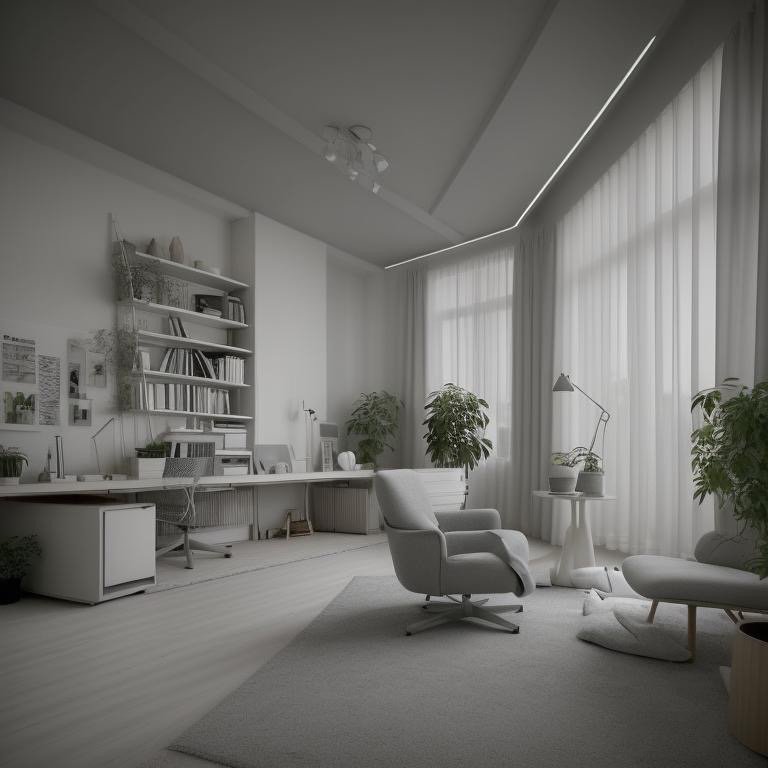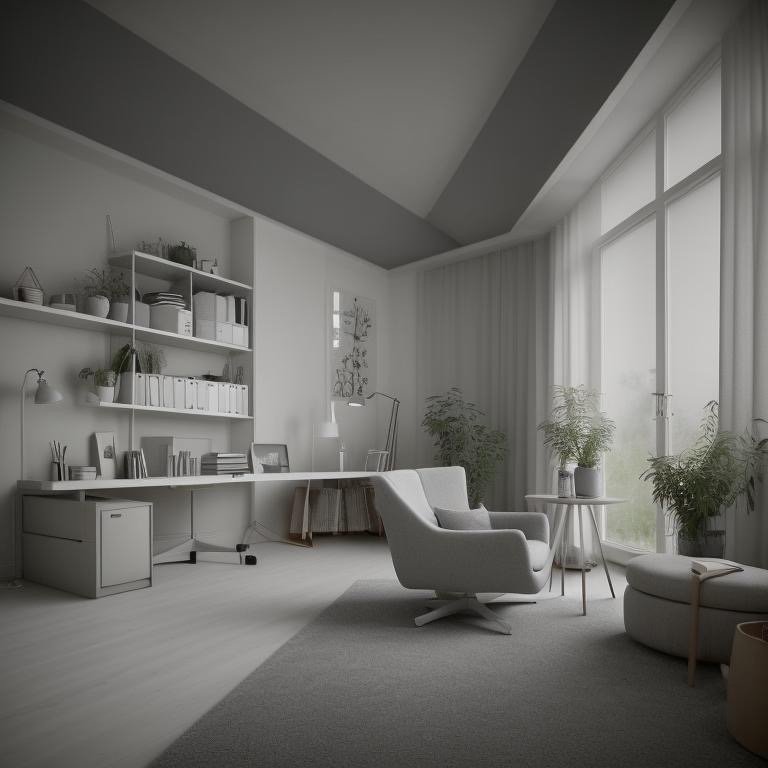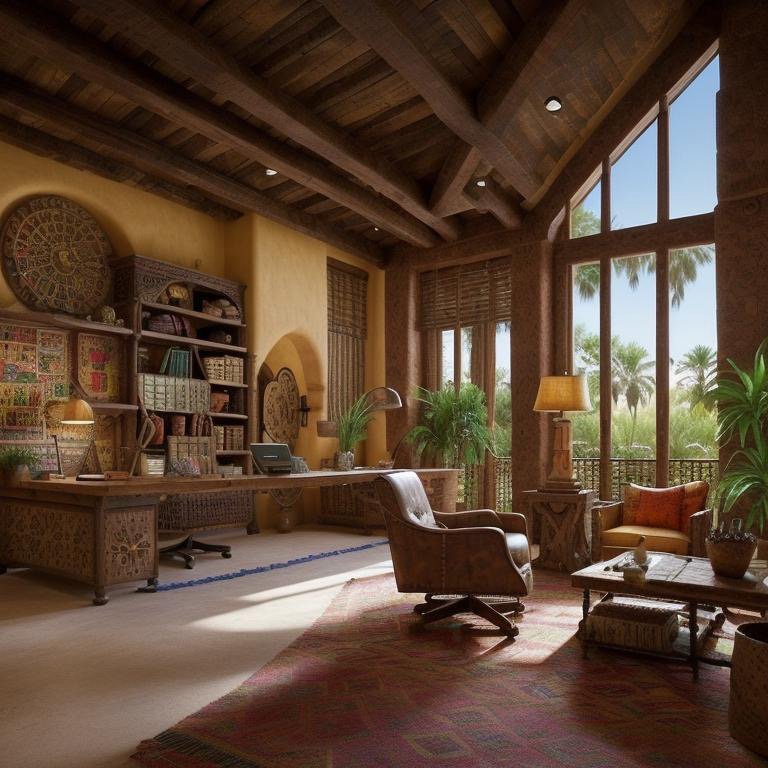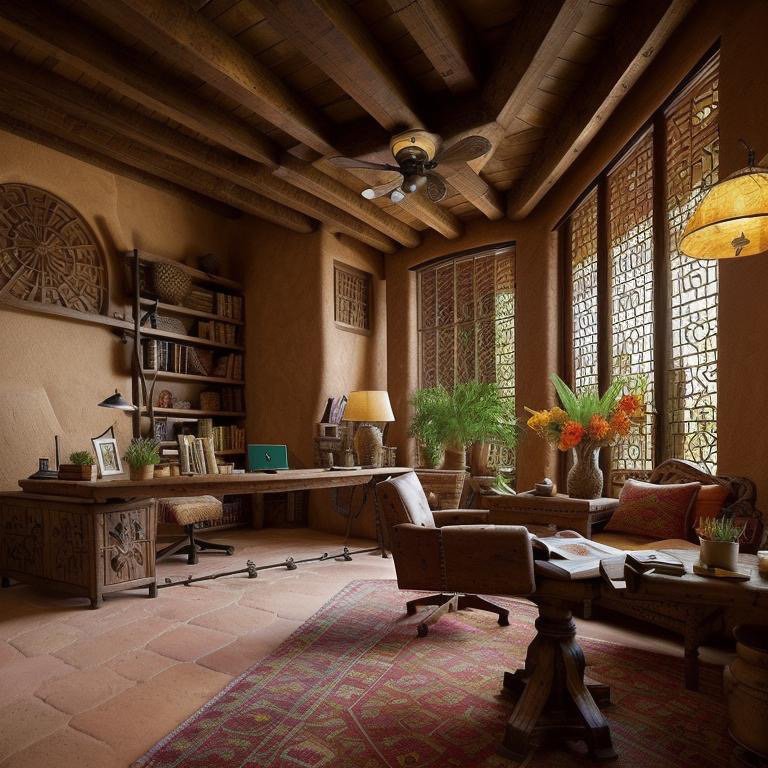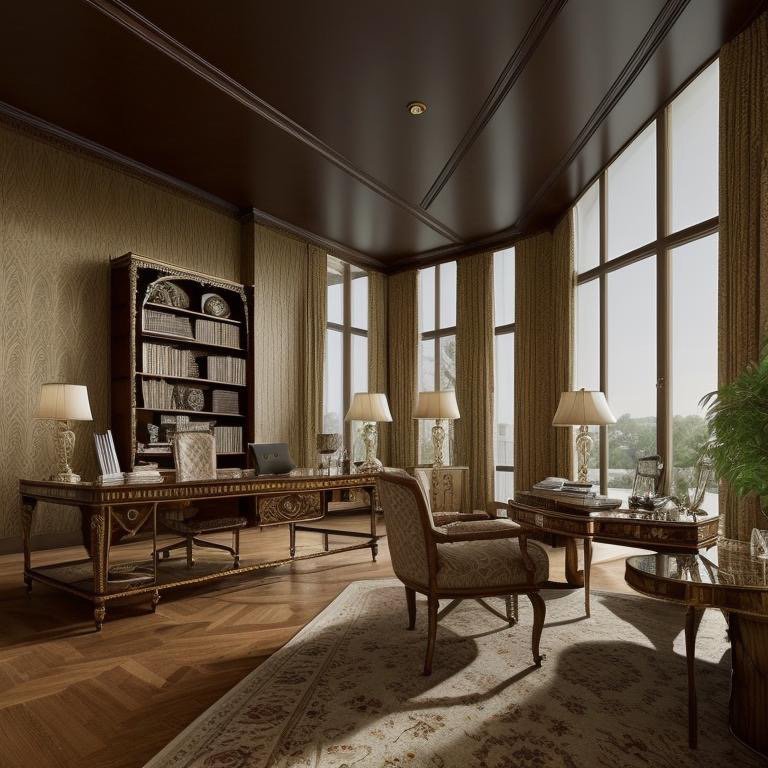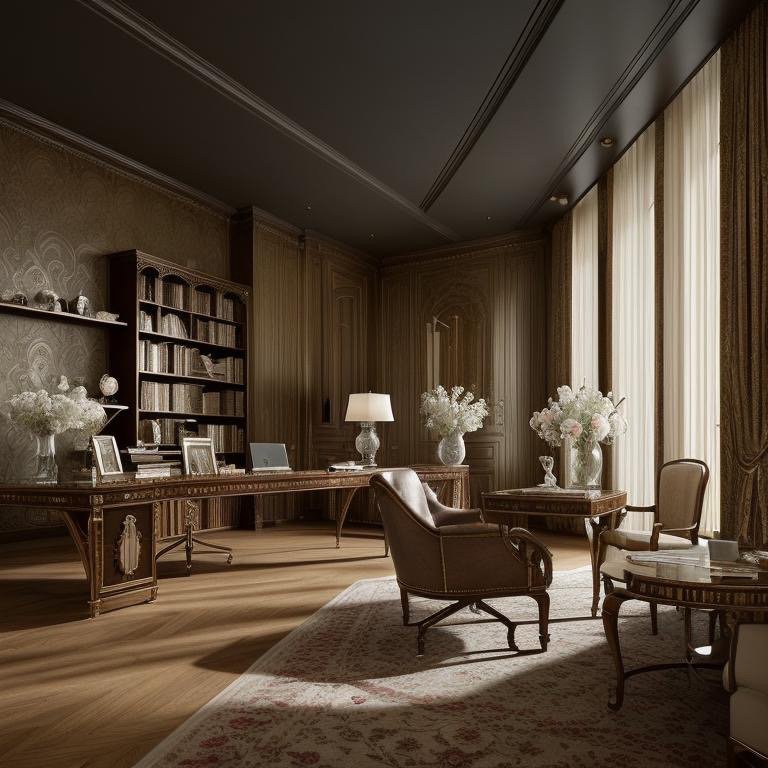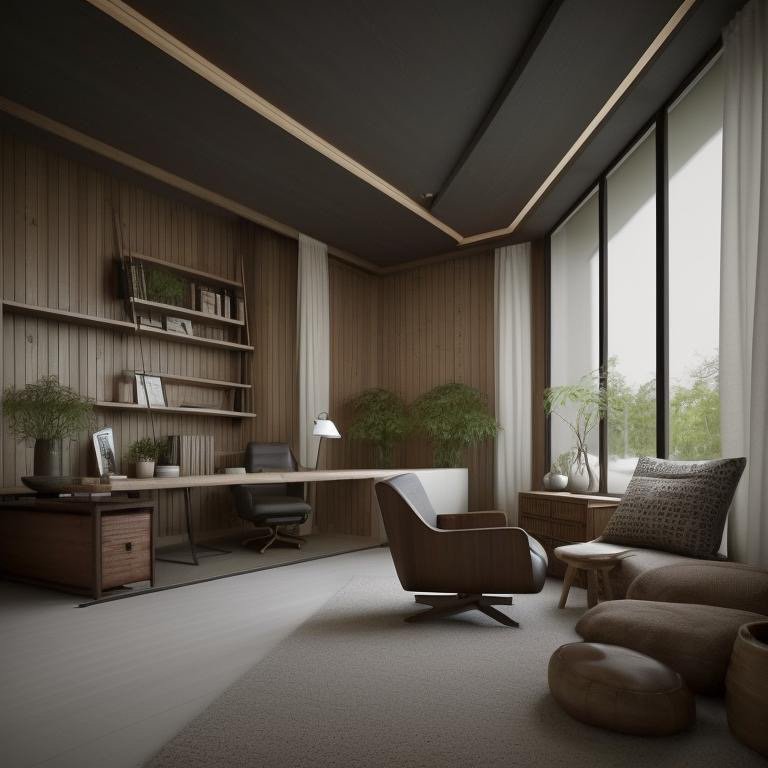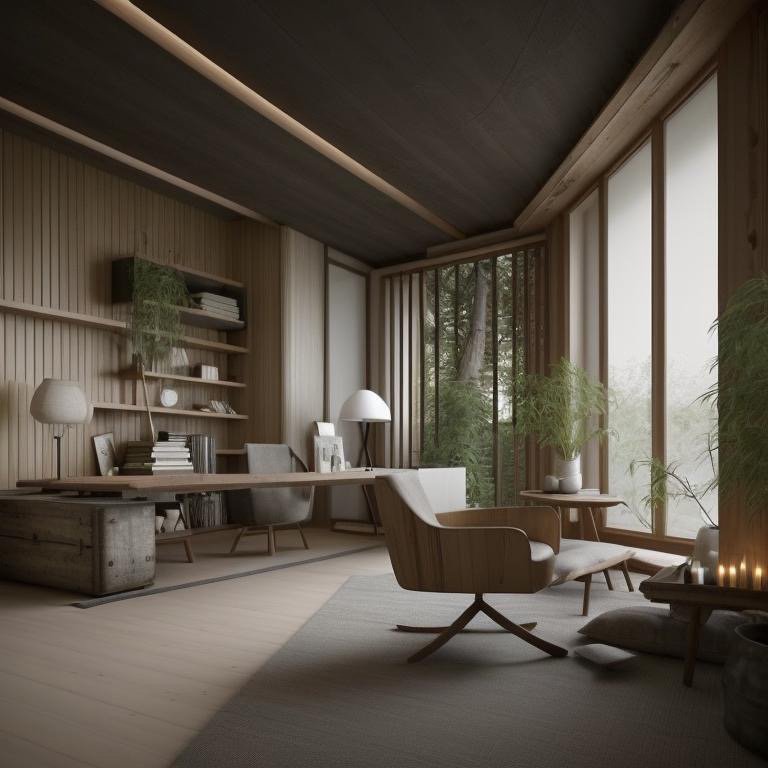
Tag: 3D Transformative Digest

  • The $50,000 Equity Makeover: Three Rooms That Quietly Spike Your Home Value

    The $50,000 Equity Makeover: Three Rooms That Quietly Spike Your Home Value

    Vibrant living room with bohemian styling and lush greenery

    The Invisible Architecture of Home Value

    The real estate market has fundamentally rewritten its own rules. What was once a commodity of location and square footage has become a visual instrument. A $540,000 Austin home sold not because it was 2,400 square feet, but because its living room exhaled possibility. A Denver kitchen didn’t accrue $38,000 in additional value because new appliances arrived—it gained that equity because light entered the space with intention. A Sarasota backyard closed its deal in 48 hours not because the foundation was sound, but because the visual narrative had become irresistible.

    Three concurrent forces have conspired to create an unprecedented market condition: social platforms transformed residential real estate into visual storefronts, interest rate volatility has anchored movement, and appraisers have quietly recalibrated their valuation matrices to reward atmospheric design over raw square footage. The convergence is unmistakable. Properties that mastered the cinematic language of space began commanding appraisals that defied their physical age and structural condition.

    What emerges is not a design trend. It is a valuation infrastructure. Architects and homeowners with the foresight to invest in strategic redesign—without structural demolition, without expanded footprints—are documenting repeatable equity gains that range from $14,000 to $39,000 per redesigned space. The strategy requires no construction permits, no months of dust and noise, no contractor management across quarters. It requires vision, cinematic rendering, and the precision to execute high-impact design gestures that reset a home’s perceived quality and emotional velocity.

    The Living Room as Emotional Foundation

    The Austin project began with a diagnosis that would have been invisible to conventional appraisers six years ago. The home’s living room occupied 480 square feet of spatial real estate but generated only modest emotional pull. The architecture existed but the atmosphere did not. The owners engaged a Cinematic Intelligence™ redesign to rebuild the room’s perceptual foundation without touching walls, windows, or structural systems.

    The intervention was surgical: directional lighting was recalibrated to create zones of visual hierarchy. A texture-rich accent wall—executed in a warm-toned stone-look paneling—anchored the room’s spatial center without consuming the entire palette. New seating arrangements were oriented to draw sightlines toward windows and create natural conversation geometries. The cumulative investment reached $14,200.

    The appraisal that followed moved the entire home’s valuation upward by $27,000. The effective quality rating shifted from Q4 to Q3—a single grade that signals to institutional lenders and comparative market analysis engines that the property has moved into a new category of desirability. The living room was not expanded. It was awakened.

    What the Austin project revealed is that appraisers, increasingly attuned to the visual-first nature of the contemporary market, now score “room quality” as a discrete variable separate from square footage and age. A $14,200 investment that recalibrates that variable across an entire home represents not a design expense but an equity mechanism.

    The Kitchen as Logical Valuation Engine

    Kitchen with arched windows and warm wood cabinetry

    If the living room is where emotional perception crystallizes, the kitchen is where logical valuation computes. Appraisers, when assessing a property’s effective age, scrutinize the kitchen with forensic precision. Is the kitchen vintage, merely dated, or contemporary? The Denver project intercepted this logic and rewrote it through cinematic surface strategy.

    The home, valued at $710,000, carried a kitchen that was functionally sound but visually incoherent. Cabinet finishes clashed with countertop materials. Lighting was ambient and undirected. Appliance panels spoke in different visual dialects. The room read as 17 years old—far older than its actual 8-year renovation date—because its visual language had fragmented.

    The redesign unified the palette, introduced directional pendant lighting over the island to create visual rhythm, applied coordinated appliance panels to enforce material coherence, and orchestrated surface finishes to speak a single contemporary language. No appliances were replaced. No footprint was altered. The investment totaled $23,500.

    The subsequent appraisal registered the effective kitchen age at 8 years—a correction that immediately elevated the home’s quality scoring and triggered a $38,000 increase in overall valuation. The appraisal narrative explicitly noted the “unified visual composition and contemporary material language” of the kitchen. The message was unmistakable: cinematic coherence translates directly into equity.

    This mechanism has become institutionalized. Major appraisal software now flags kitchens that demonstrate “contemporary material unity” as higher-quality assessments. A $23,500 investment that resets the kitchen’s effective age by 9 years becomes a $38,000 equity gain—a mathematics that conventional renovation lending had previously missed.

    The Backyard as Lifestyle Imagination

    Kitchen-to-exterior view with sunset lighting and outdoor extension

    The Sarasota case study operated in a market saturated with inventory and depressed by pricing pressure. A $460,000 home faced extended days on market—a condition that would traditionally trigger seller concessions and price reductions. Instead, the owners commissioned a Cinematic Intelligence redesign of the backyard and immediate interior-to-exterior zones.

    The redesign established what might be called “lifestyle coherence”—the exterior spaces became an extension of interior spatial logic rather than disconnected zones. Ambient lighting was layered to create depth and invitation. Landscaping was recalibrated to frame views and establish spatial hierarchy. Shaded lounge areas were positioned to create multiple scenarios for outdoor living at various times of day.

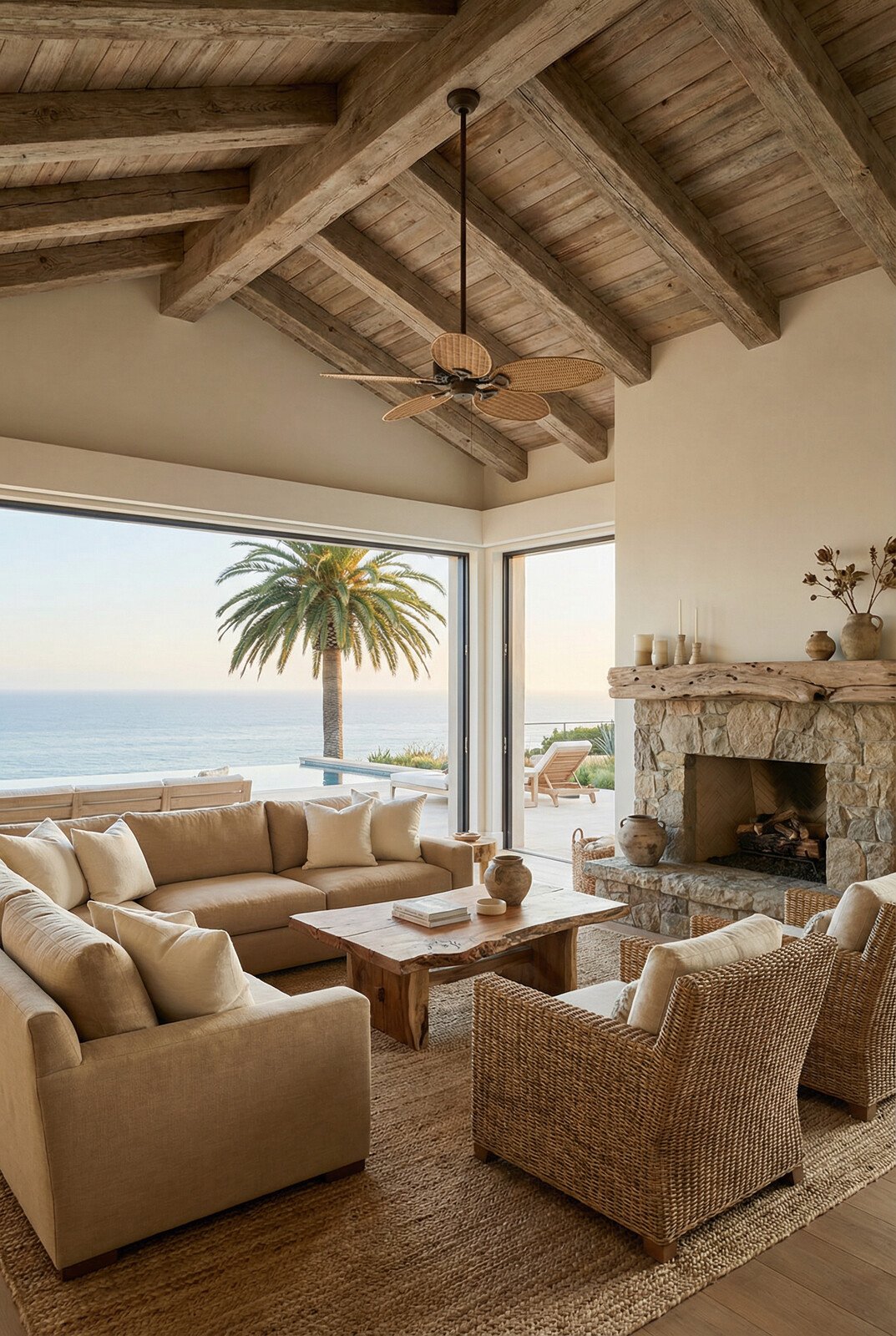
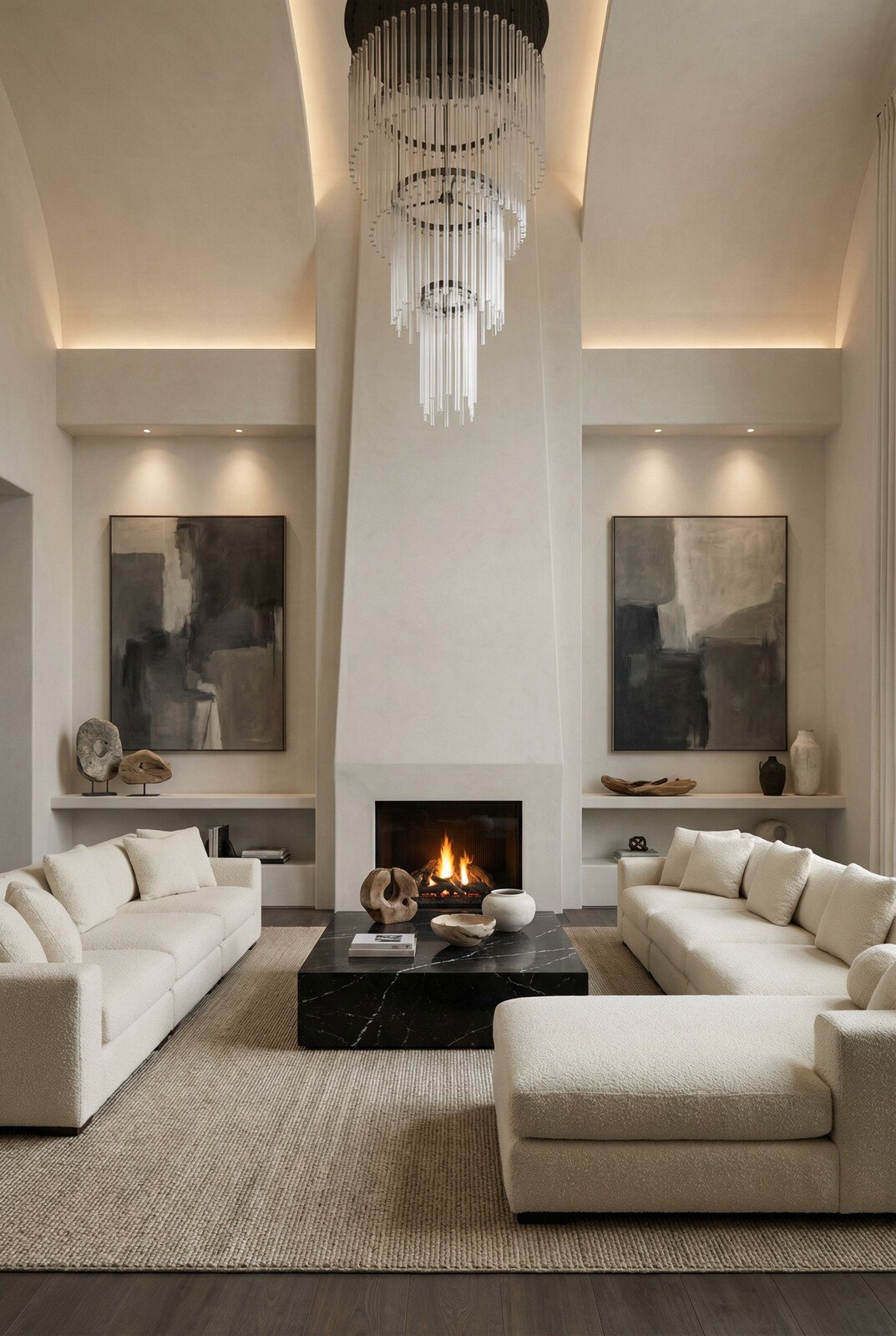
    Living room with fireplace and warm evening light

    The investment totaled $12,800. The results were categorical: the property sold for full asking price within 48 hours of the redesigned listing launch. Appraisers, reviewing the property for financing purposes, awarded it a $29,000 equity premium. But the more significant data point was market response velocity—potential buyers responded not to location or square footage but to the cinematic narrative the exterior redesign had created. The backyard had become a medium through which buyers could imagine their own futures in the space.

    This phenomenon has become repeatable. Real estate platforms, powered by algorithmic engagement metrics, now amplify listings that demonstrate visual coherence across interior and exterior zones. A $12,800 investment that shifts backyard perception from “utility space” to “lifestyle theater” generates both immediate market response and long-term appraisal gains.

    The Value Triangle: Where Emotion Meets Asset

    Across three markets, three price points, and three distinct ownership scenarios, a pattern emerges with mathematical clarity. Residential equity accrual, in the contemporary market, operates through three intersecting domains:

    The Living Room (Emotional Perception) where visitors and appraisers form instantaneous impressions of home quality and care. Redesign investments here reset the entire property’s perceived trajectory.

    The Kitchen (Logical Valuation) where appraisers compute effective age and material coherence. Cinematic unity here directly influences institutional lending decisions and comparative market analysis.

    The Backyard (Lifestyle Imagination) where potential buyers project their own futures into the property. Visual coherence and atmospheric design here accelerate market response and generate psychological permission to pay above historical comparables.

    The three points form a valuation triangle. Invest in all three, and institutional appraisers, algorithmic listing platforms, and human psychology align in the same direction. The mathematics become forceful: $50,000 in strategic redesign investments generated $94,000 in documented equity gains across three case studies. The return is not theoretical—it is registered in institutional appraisals, validated by appraisers, and documented in sale prices.

    The Execution Framework: From Diagnosis to Equity

    The strategy is replicable, but it demands precision at each gate:

    Pre-Design Audit. Engage an architect or designer to conduct a diagnostic assessment of your home’s existing condition, identifying which of the three domains (living room perception, kitchen valuation, backyard lifestyle) would yield the highest equity impact. Not every home requires investment in all three spaces.

    Comparative Market Analysis. Pull appraisals and sales data for three comparable homes in your market that have undergone recent redesigns. Understand the equity premiums appraisers have awarded. This data will inform your investment threshold and return expectations.

    Cinematic Redesign. Commission a Cinematic Intelligence visualization of your proposed redesign. The rendering serves two purposes: it clarifies your design direction before execution, and it generates the visual assets that will power your listing presentation and appraisal narrative.

    High-Impact Execution. Prioritize surface-level, perceptually dominant interventions over structural or mechanical systems. Lighting, material finishes, and spatial organization generate disproportionate visual return relative to their cost. Structural renovations are necessary when needed—but they are not the equity mechanism documented in these case studies.

    Listing Asset Renewal. When you list the property for sale, deploy the cinematic renders as primary visual assets. Real estate platforms now amplify listings with professional architectural visualization. Your renderings will differentiate the property in algorithmic feeds and trigger above-market buyer response.
    Appraisal Articulation. When appraisers conduct their assessment, provide clear documentation of the redesign scope, completion dates, and professional renderings. Appraisers now expect cinematic visualization as evidence of genuine design intervention. Your documentation will inform their quality scoring and effective age calculations.

    Design as Financial Instrument

    The convergence of visual markets, rate-locked inventory, and appraisal recalibration has produced an unprecedented condition: design has become a financial instrument. It is no longer merely aesthetic—it is architectural capital. A $14,200 investment in lighting and materials became $27,000 in equity. A $23,500 kitchen redesign unlocked $38,000 in appraisal value. A $12,800 backyard intervention triggered a two-day sale at full asking price.

    The pattern is not coincidence. It reflects a systematic recalibration of how markets, lenders, and appraisers evaluate residential real estate. For architects and homeowners with the strategic insight to recognize it, the opportunity is clear: the most efficient path to home equity is no longer through expensive structural renovation. It runs through cinematic redesign—the architectural strategy that makes a space look, feel, and perform like it is worth more than it was before. Because in a market where visual perception drives valuation, the space that photographs best, appraises highest, and sells fastest is not the newest or the largest. It is the most intentionally designed.

  • Three Rooms, Three Futures: Inside the Original Renders of DBM’s Industrial Revival

    Three Rooms, Three Futures: Inside the Original Renders of DBM’s Industrial Revival

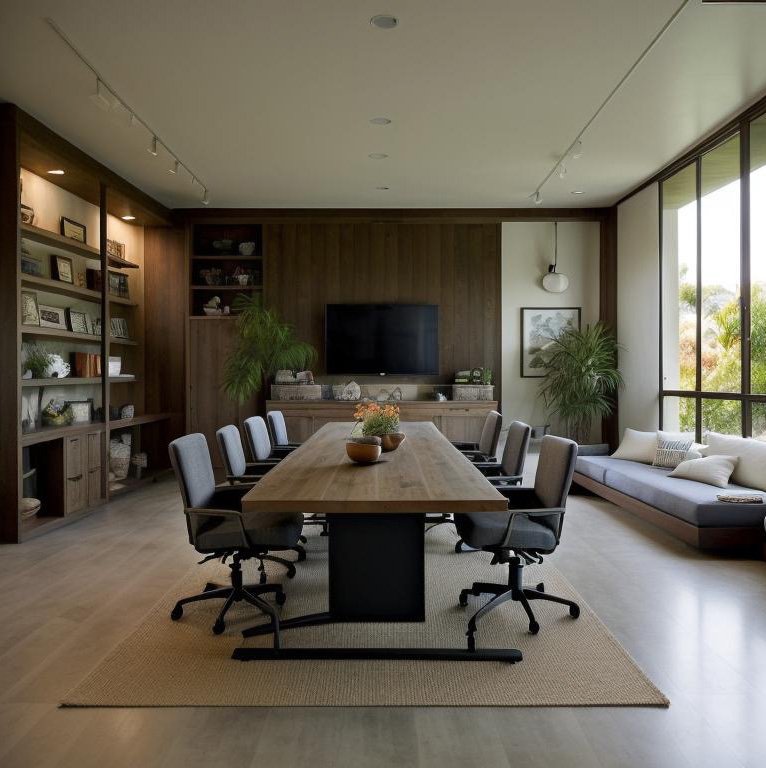
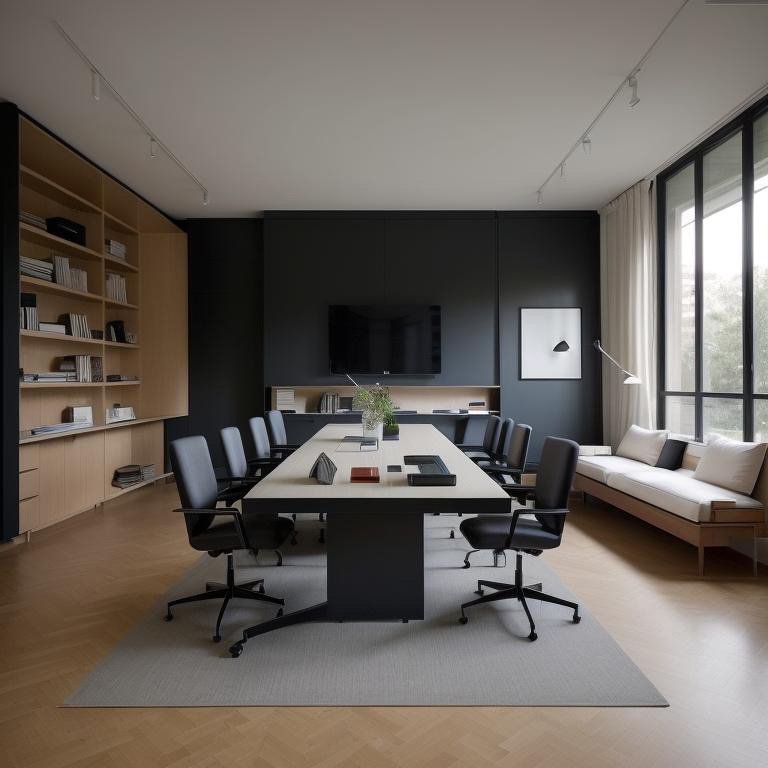
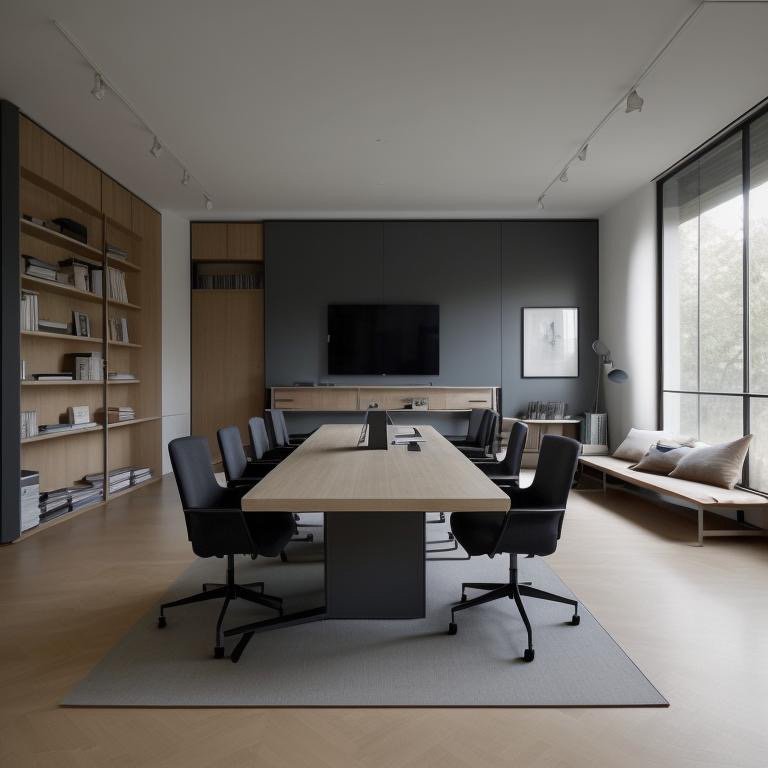
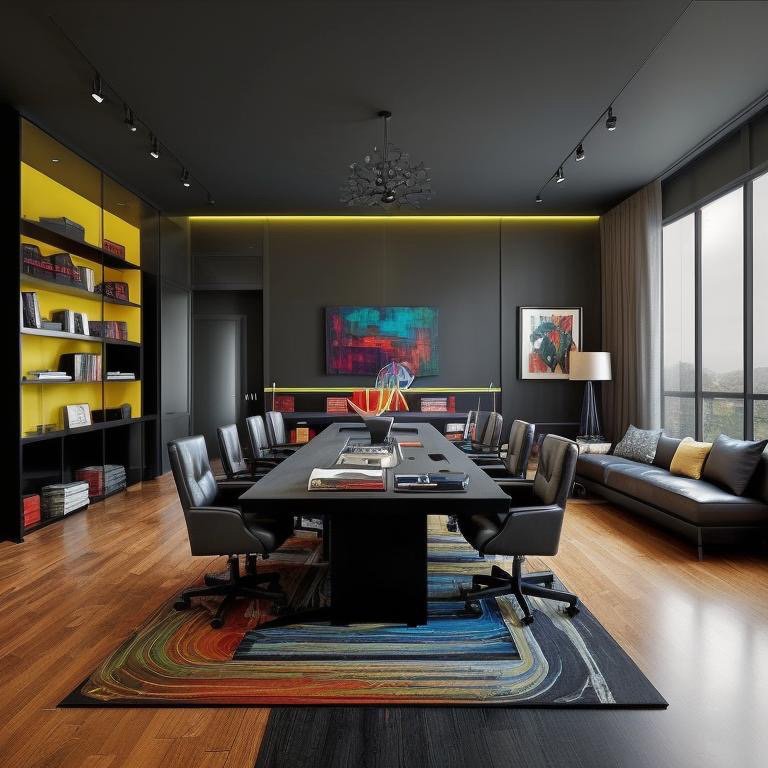
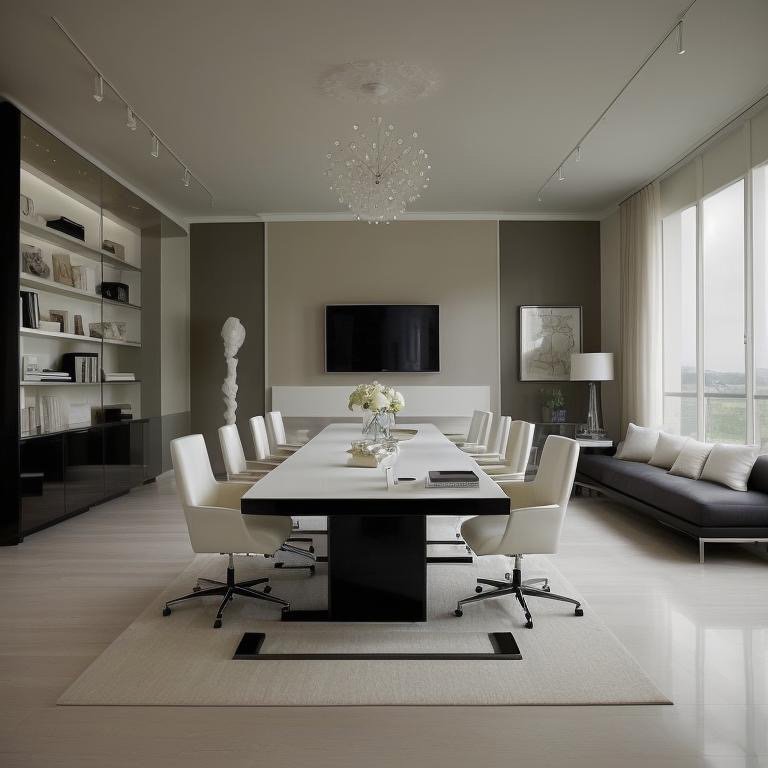
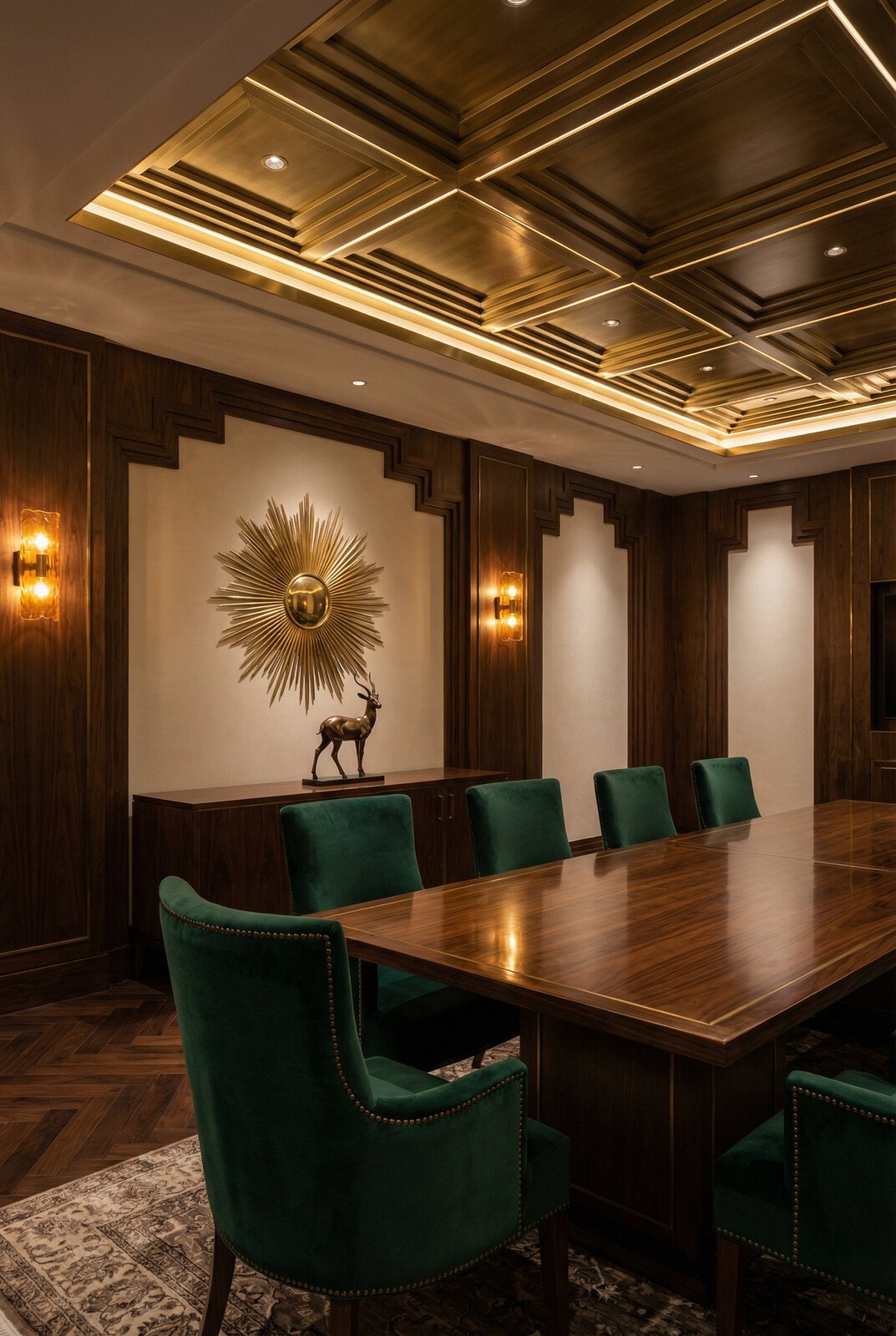
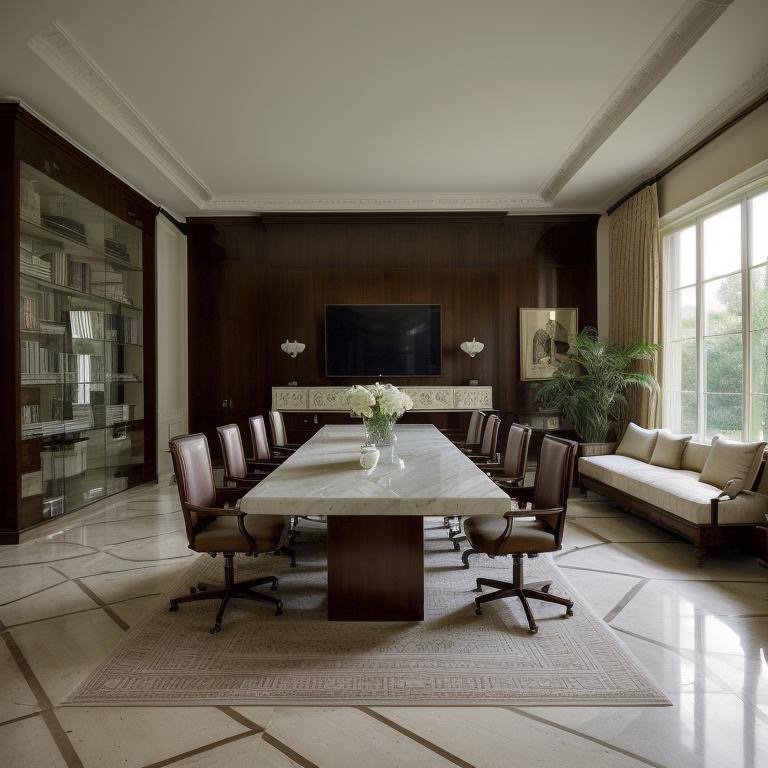
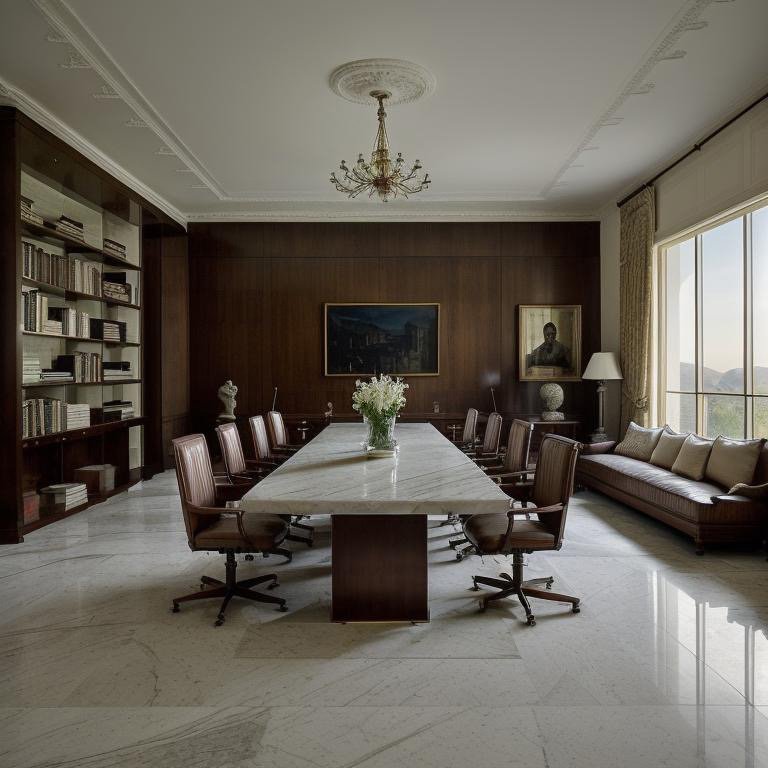
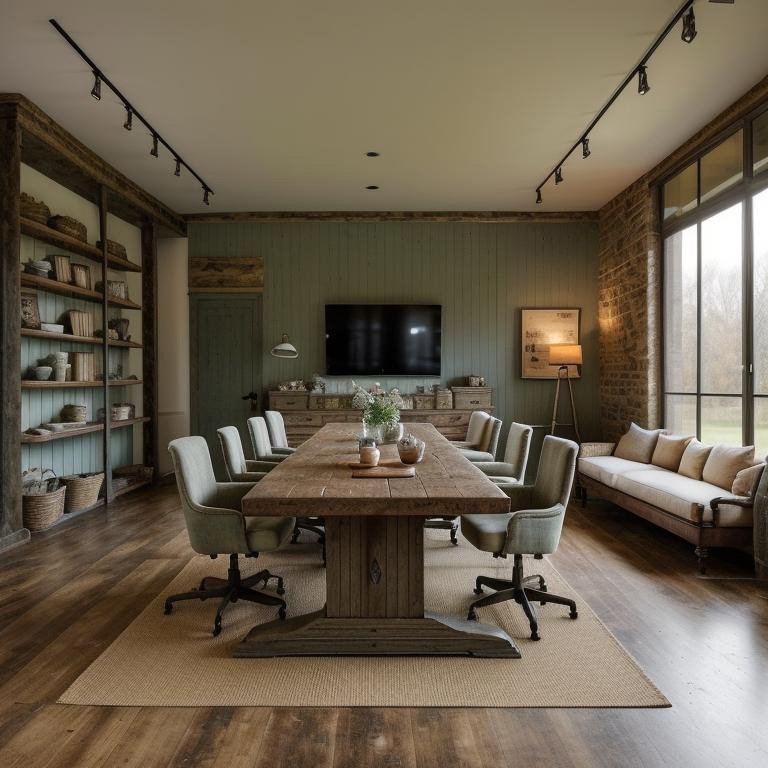
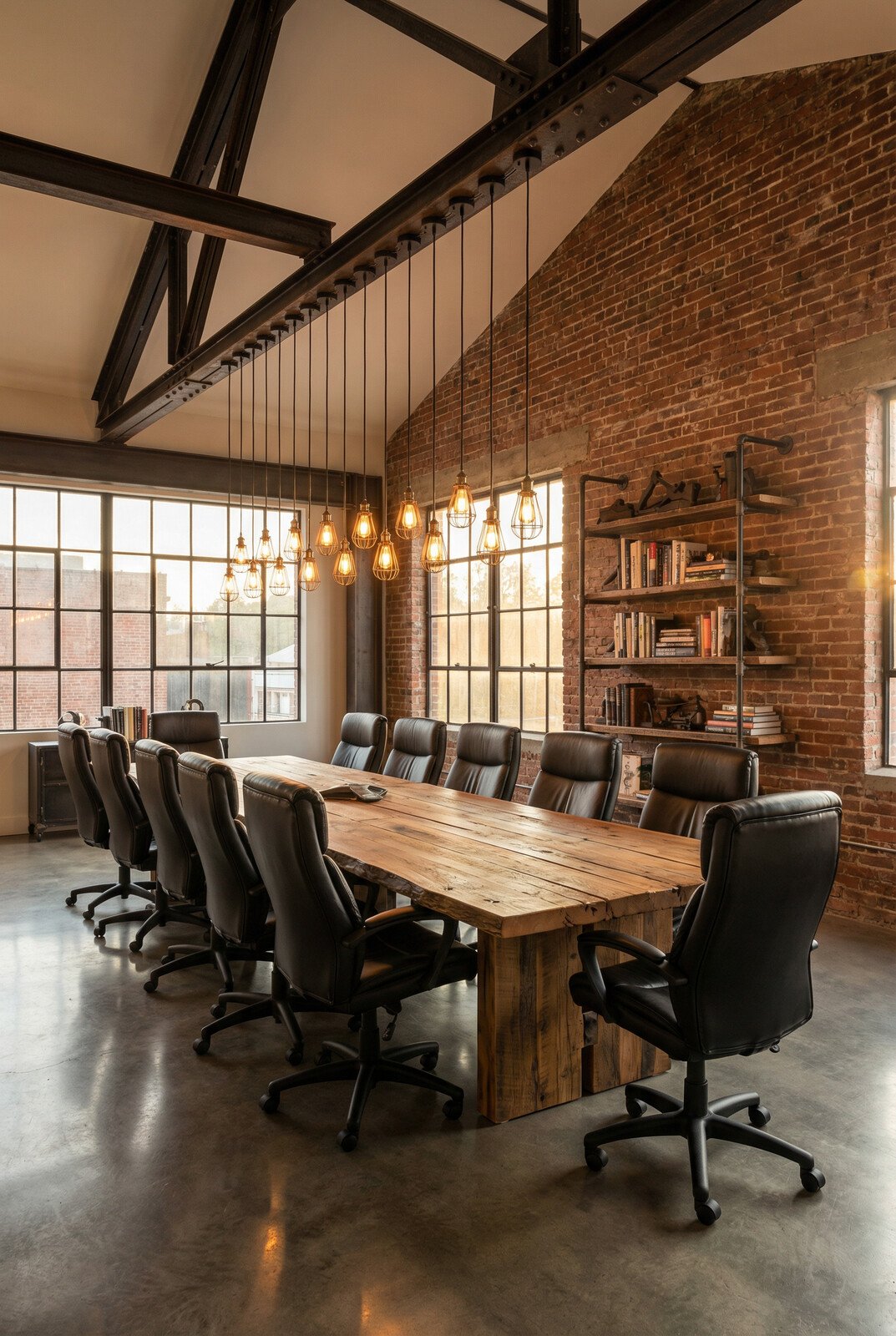
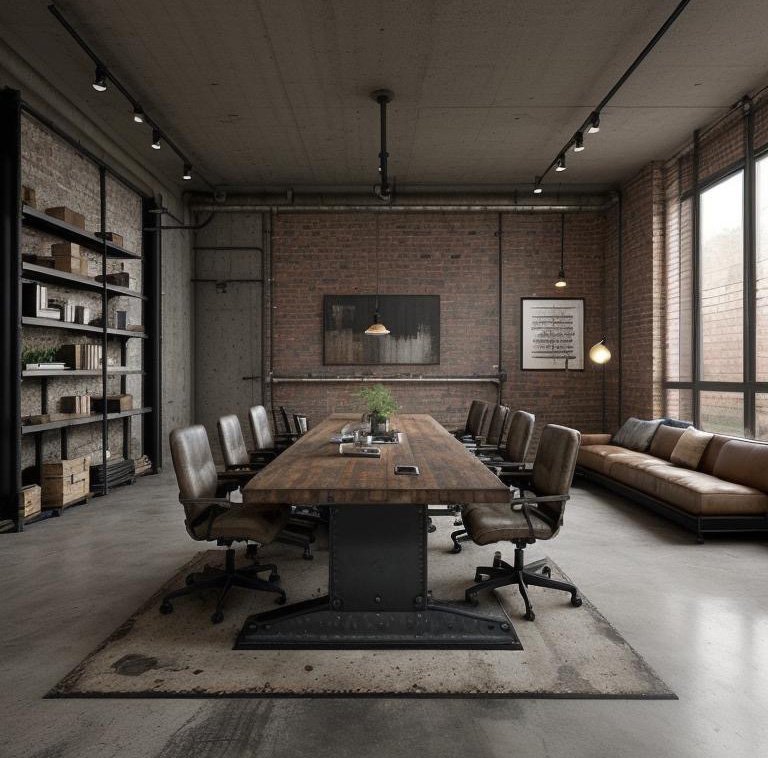
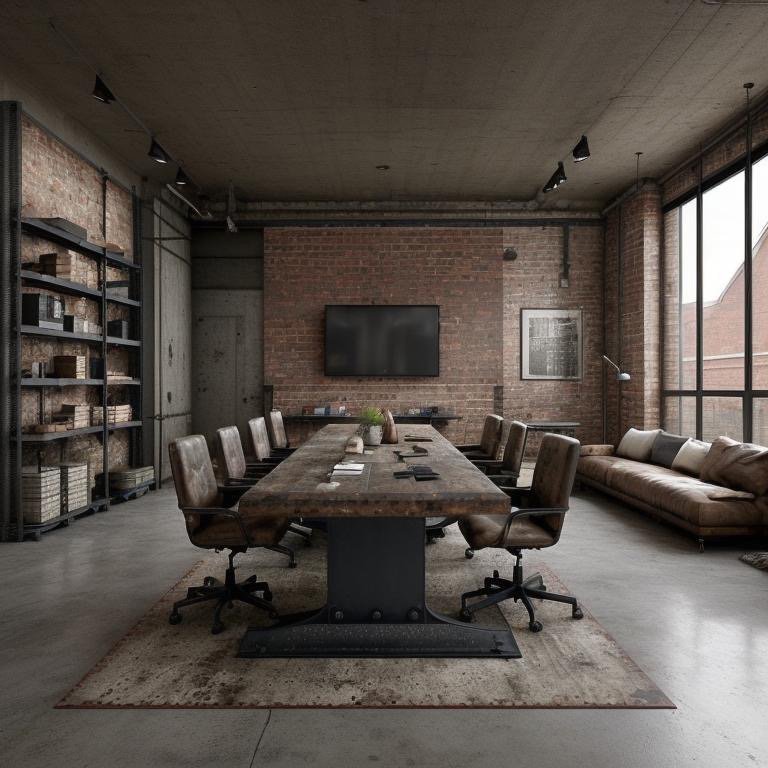
    Executive boardroom with monolithic table, deep shelving, and architectural lighting creating spatial power

    The Prologue to Transformation

    Architecture begins with decisions about presence. In the context of commercial office environments, particularly those serving executive function, presence means clarity, control, and the subtle communication of hierarchy and intention through material and light. The three rooms documented in this essay represent the foundational designs that anchor the December issue’s exploration of contemporary office geometry—what we call the architectural baseline from which all subsequent reimaginations will emerge.

    These are not finished designs in the traditional sense. They are the originals. The source geometry. The spatial DNA that, through the application of Cinematic Intelligence™ across twenty-two distinct stylistic treatments, will reveal how the same footprint, the same functional program, can communicate radically different meanings depending on material, light behavior, and spatial psychology.

    Understanding these three rooms as originals—rather than as polished final deliverables—is essential. They carry no stylistic overlay. They make no cultural claim. They are pure spatial proposition: a boardroom is proposed, a café space is proposed, an executive lounge is proposed. Each makes an implicit argument about how bodies should move through it, how decisions should be made within it, how presence should be registered.
    Room One: The Boardroom as Architectural Statement

    The boardroom is perhaps the most legible of corporate spaces. It is where capital forms consent. Where strategy becomes directive. Where the architecture itself—through the weight of its materials, the precision of its proportions, the severity of its sight lines—creates the psychological conditions for formal decision-making.

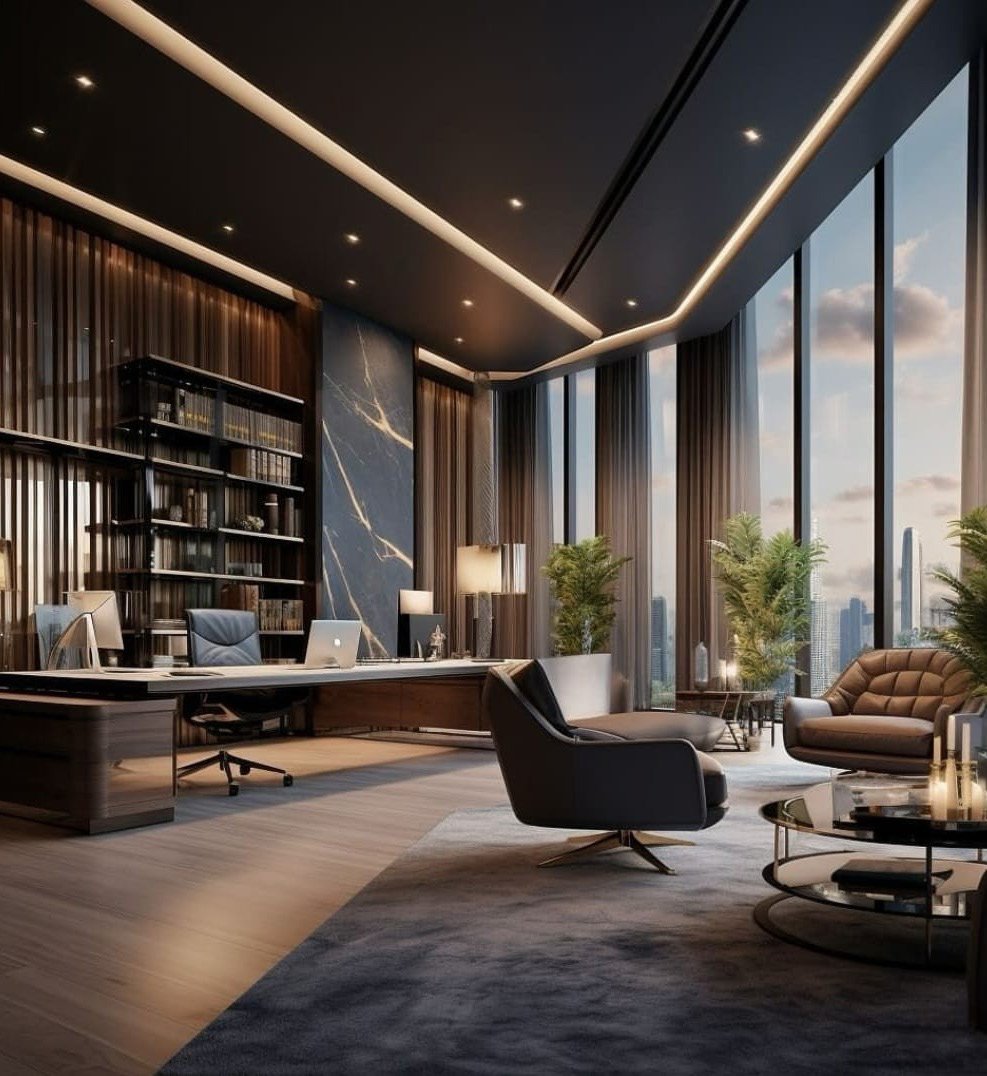
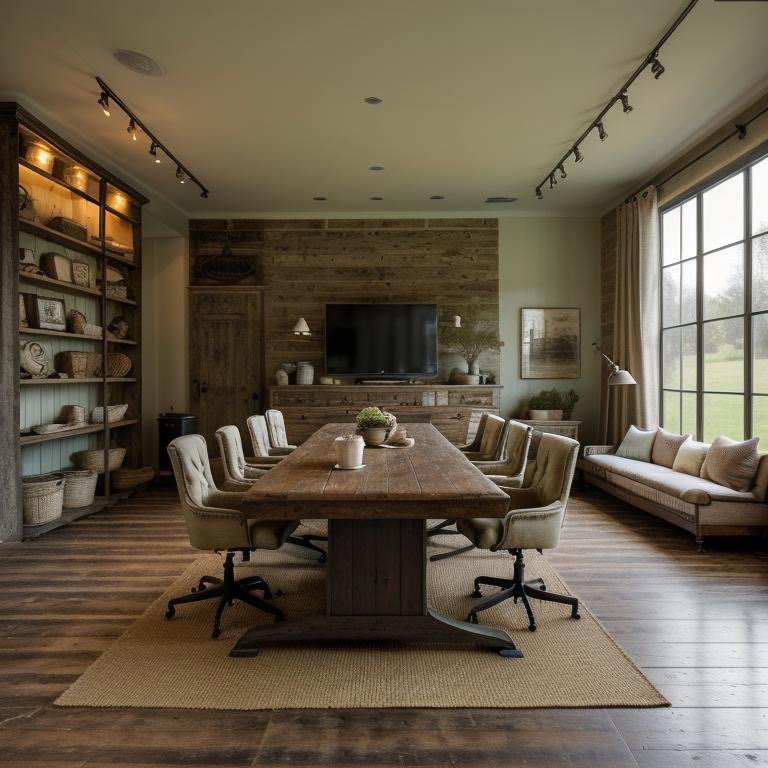
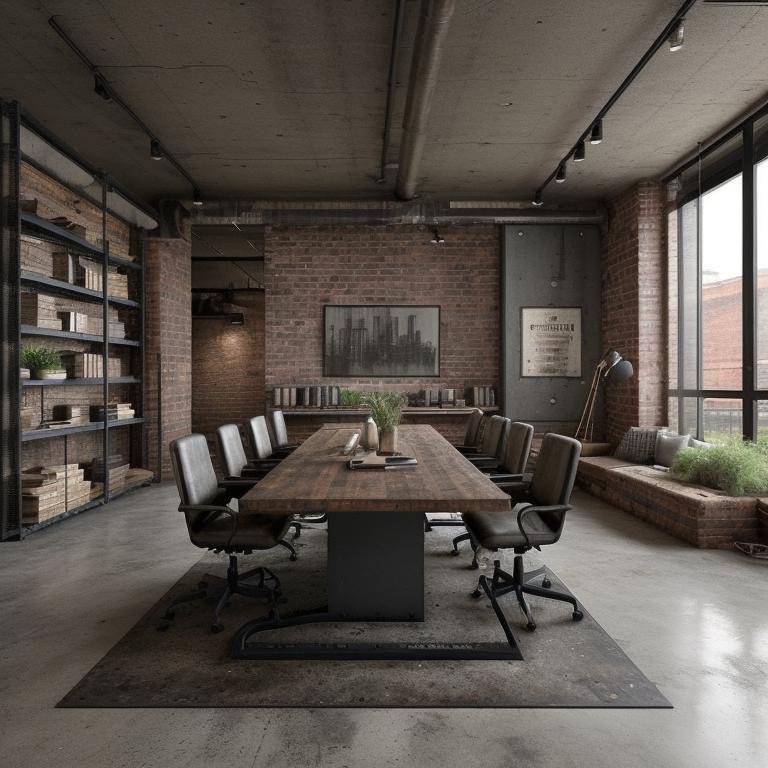
    The original boardroom render presents what we might call Contemporary Executive Brutalism: a monolithic table positioned with geometric authority, flanked by deep-set shelving that rises with architectural weight. The table itself is not a surface for casual collaboration; it is a plane of intention. The shelving behind it—lined, studied, architectural—functions simultaneously as material backdrop and as spatial claim: knowledge is contained here, accessible but not democratic.

    Light behavior is controlled and directional. This is not ambient light. This is illumination that clarifies. That creates micro-topographies of shadow and clarity across the table surface, making the space legible as a theater of decision-making. The geometric precision of the shelving, the material temperature of the surfaces (warm industrial gradients rather than cold modernist whites), the slight chiaroscuro created by the light modeling—all of these create a visual argument about executive authority that feels neither brittle nor aggressive, but instead architecturally grounded.

    What distinguishes this boardroom from generic corporate interiors is its refusal of invisibility. The space announces itself. The materials have weight. The proportions have intention. There is nothing decorative in the conventional sense; everything is structural to the spatial program. This is the boardroom as architectural artifact—not merely a room where meetings occur, but a space whose very geometry reinforces the formality of executive function.

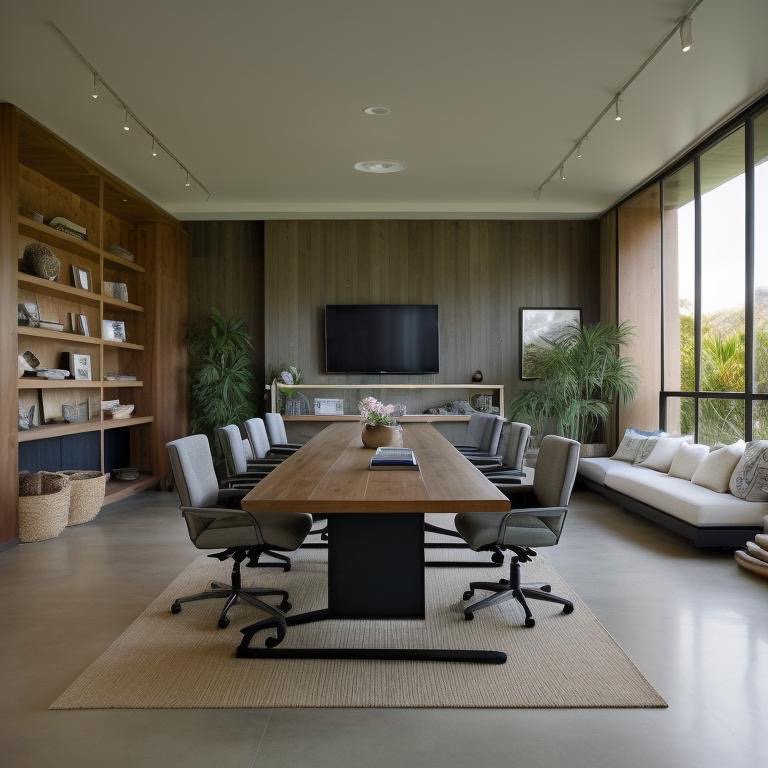
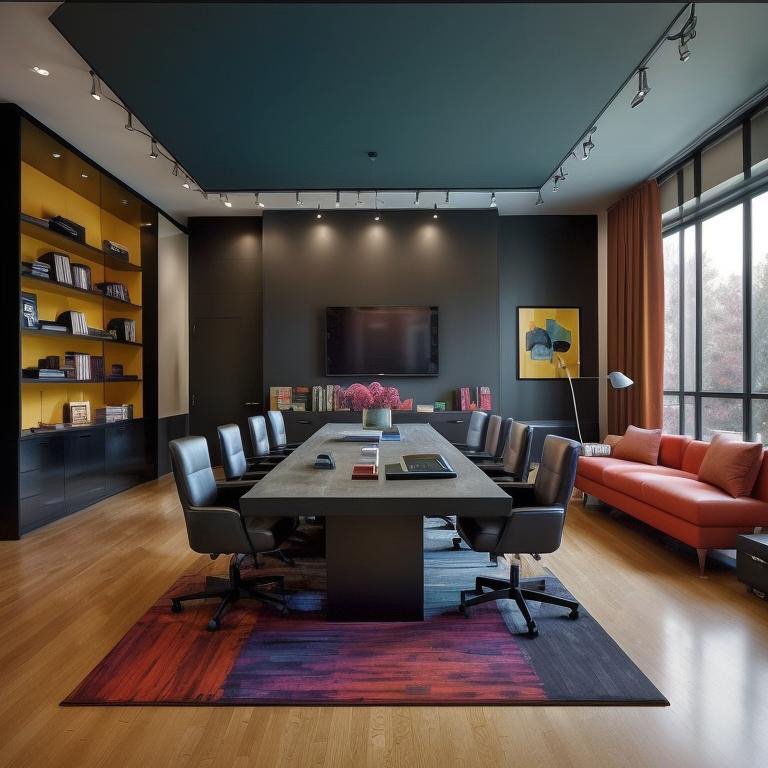
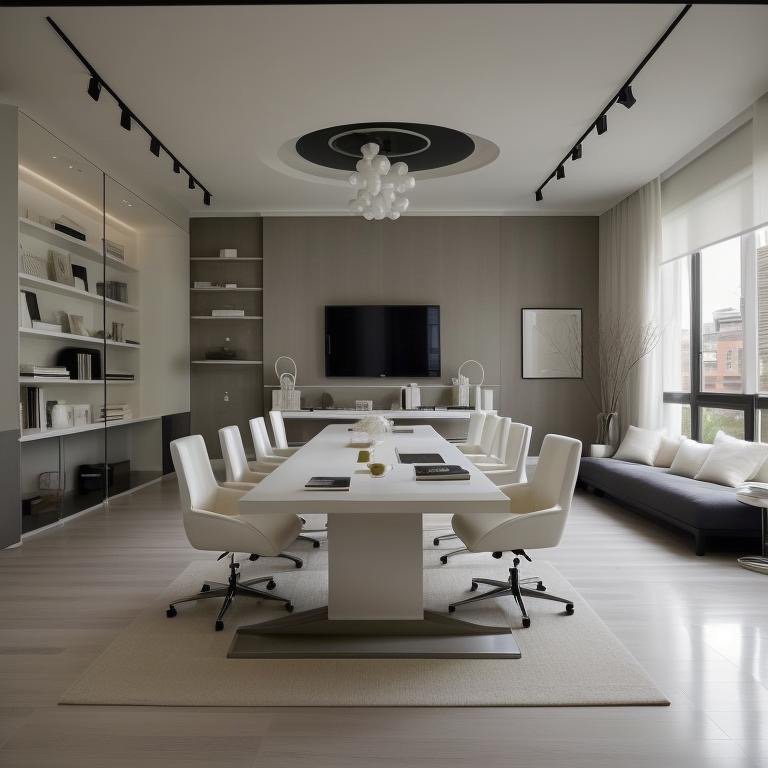
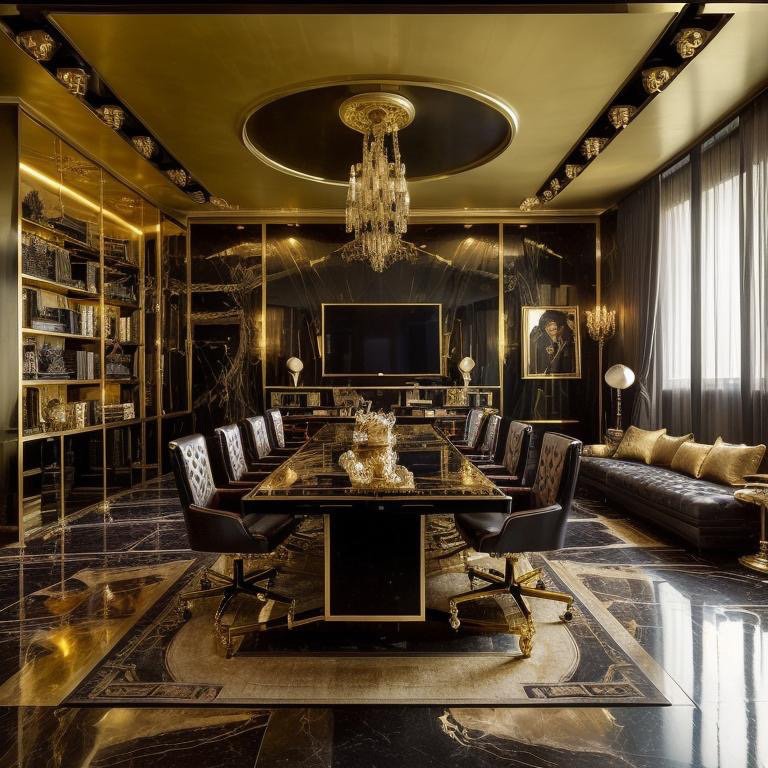
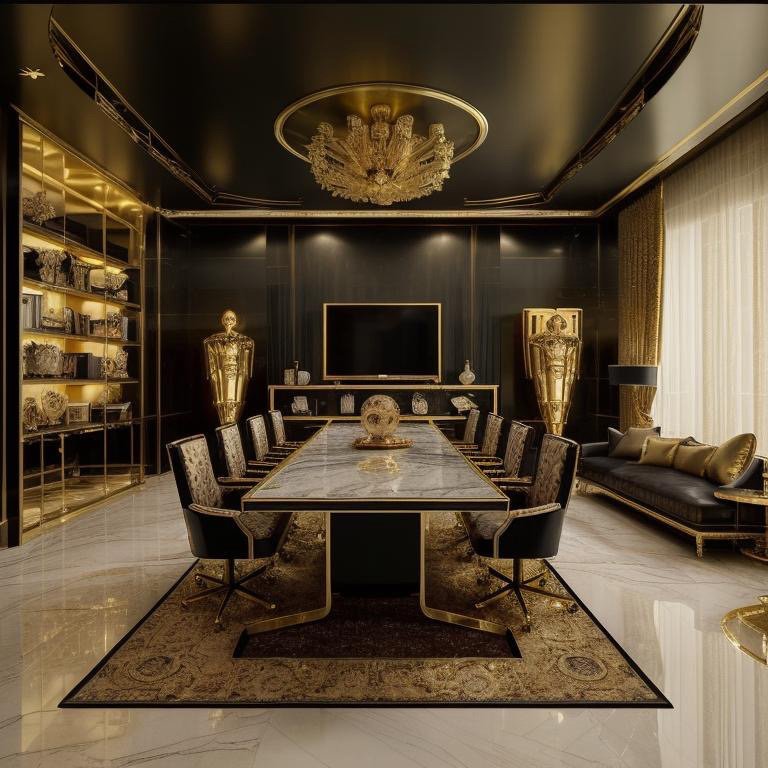
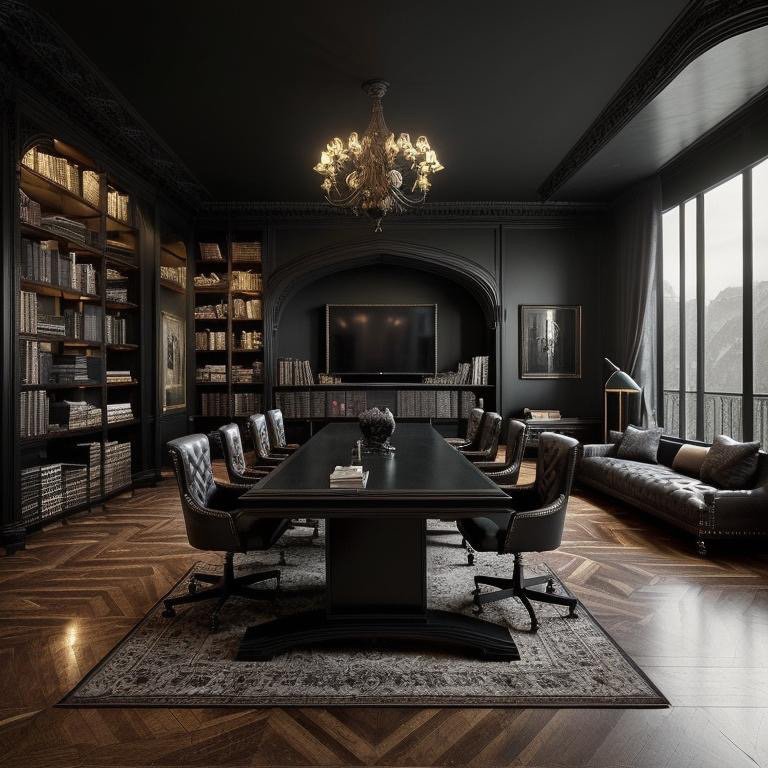
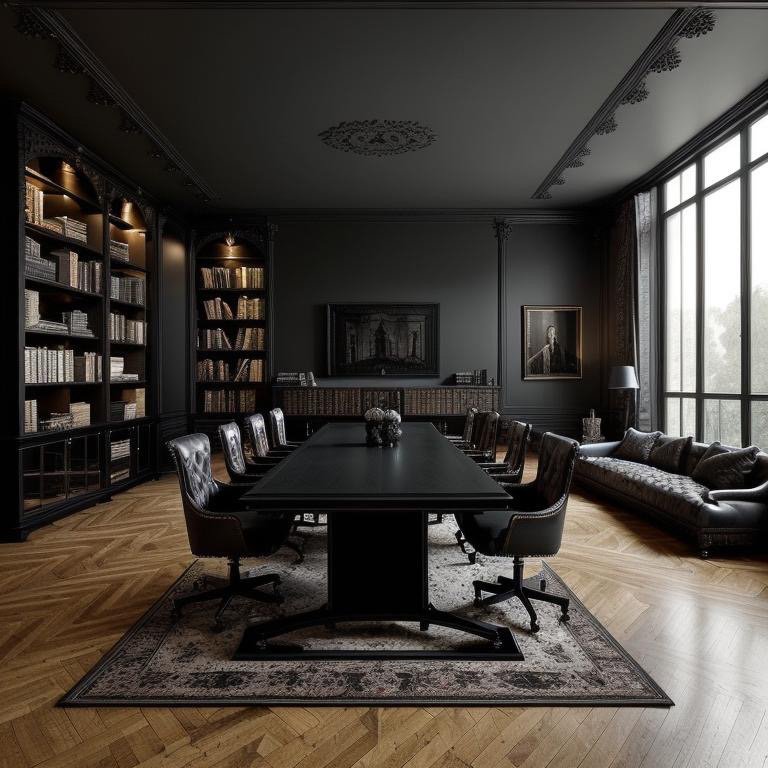
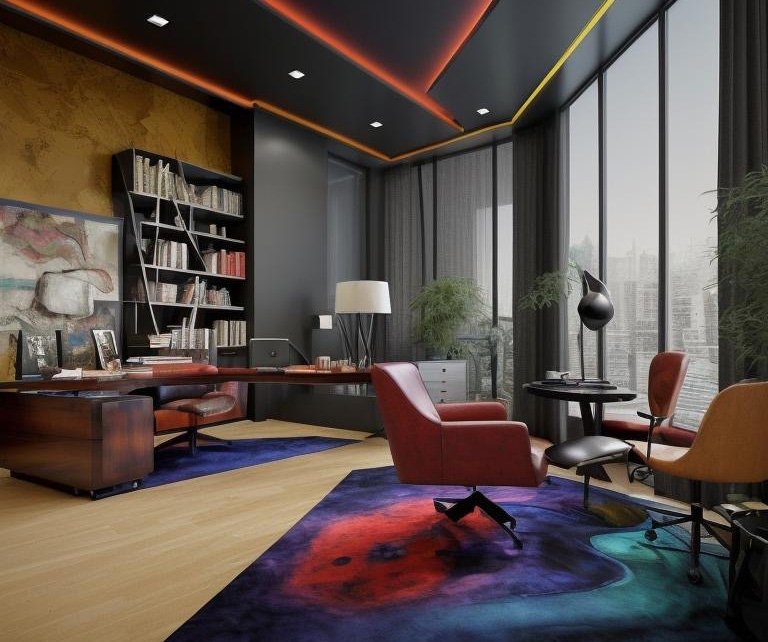
    Modern boardroom with darker material palette, refined executive styling, and controlled spatial atmosphere

    Room Two: The Café as Democratic Counter-Statement

    If the boardroom is the architecture of formal authority, the café is the architecture of encounter. It is where hierarchy dissolves momentarily into the collective. Where the informal exchange—the spontaneous conversation, the unscheduled connection—becomes the spatial program.

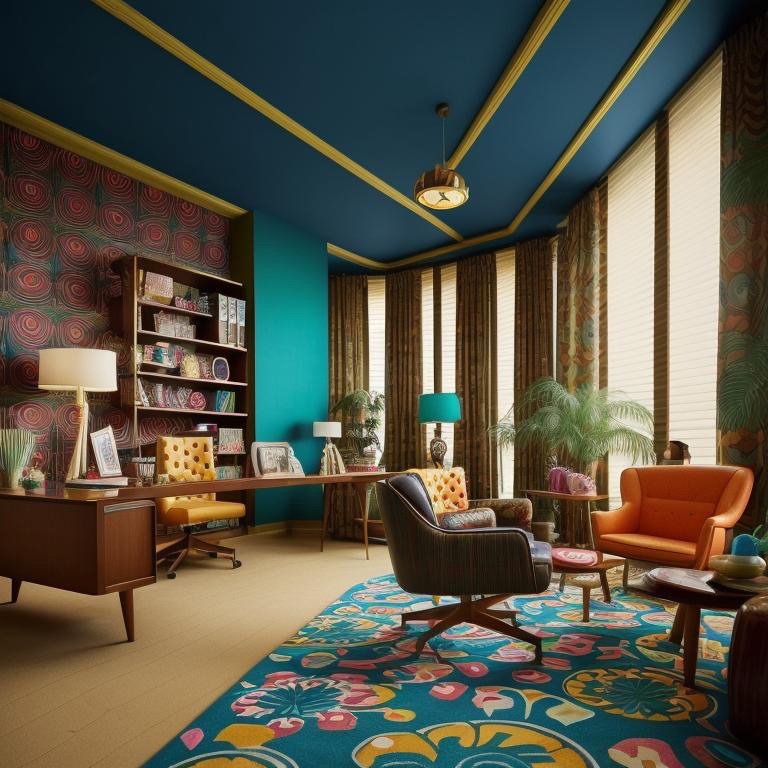
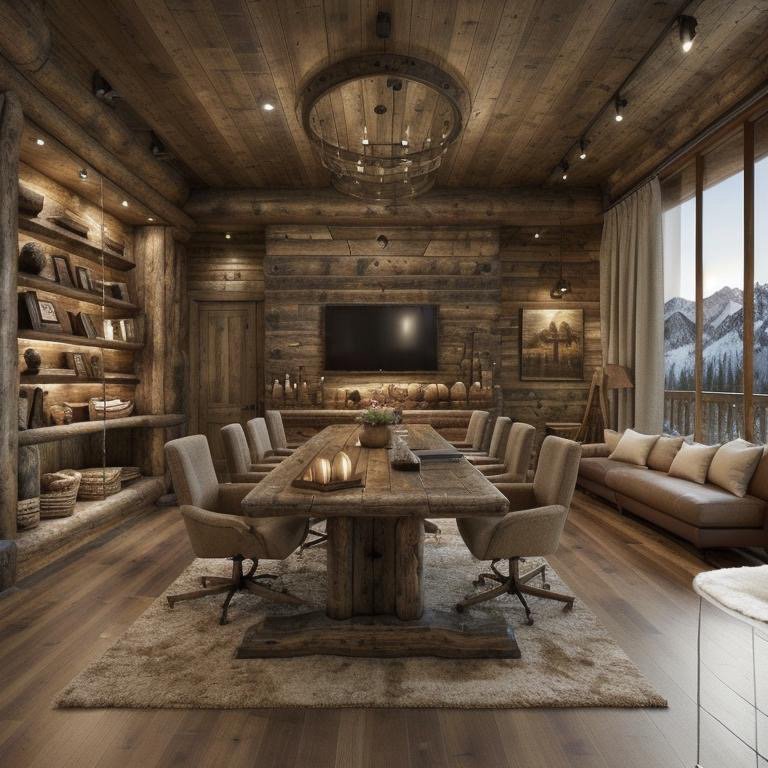
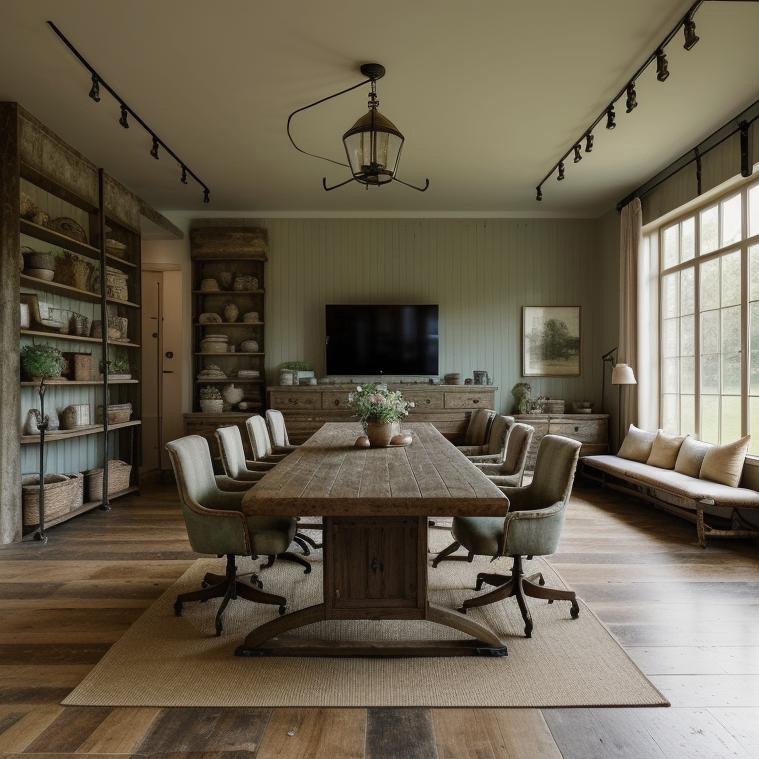
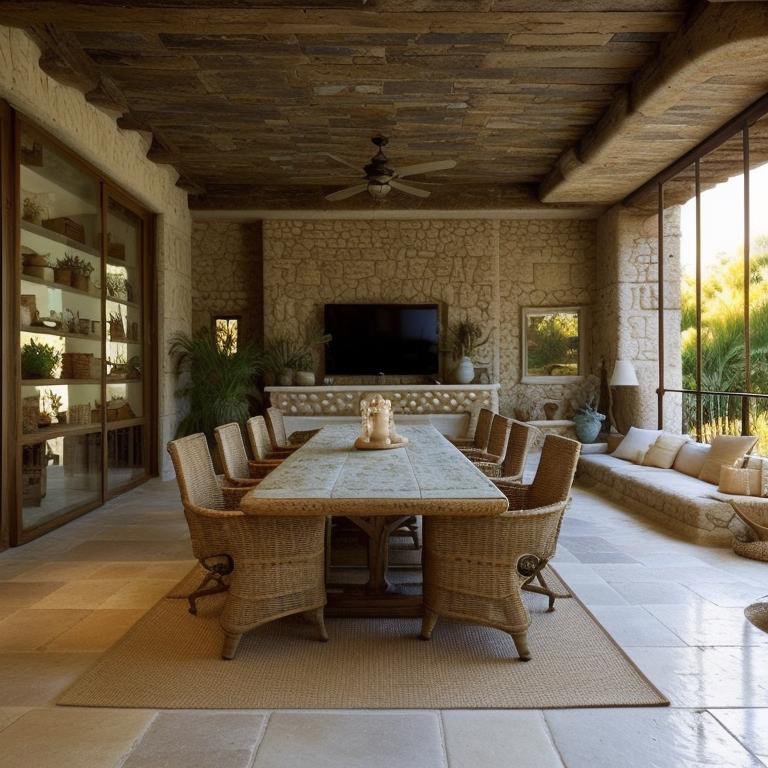
    The original café render presents what might be called Warm Modernism with Mediterranean-Industrial feeling. This is not a cafeteria. It is not utilitarian. It is instead a carefully composed space where hospitality becomes structural. The shelving is open—inviting rather than protective. The lighting is diffused, low, creating an atmosphere of leisure rather than task completion. The seating is generous, informal; there is no implied hierarchy in the chair placement.

    Material temperature is everything here. Warm woods, soft surfaces, textured finishes create an environment that feels like gathering rather than consumption. The scale is human—not grand, not intimidating, but proportioned to small groups in conversation. The acoustics, though not visible in a render, are implied by the material choices: soft surfaces that absorb rather than amplify, creating intimate pockets of dialogue within a larger volume.

    What makes this café distinct is its temporal claim. The boardroom is designed for concentrated decision-making in brief, intense windows. The café is designed for duration—for slow meals, for extended presence, for the kind of professional conversation that builds trust and generates unexpected insight. It is the counter-architecture to executive formality: democratic, warm, and profoundly unhurried.

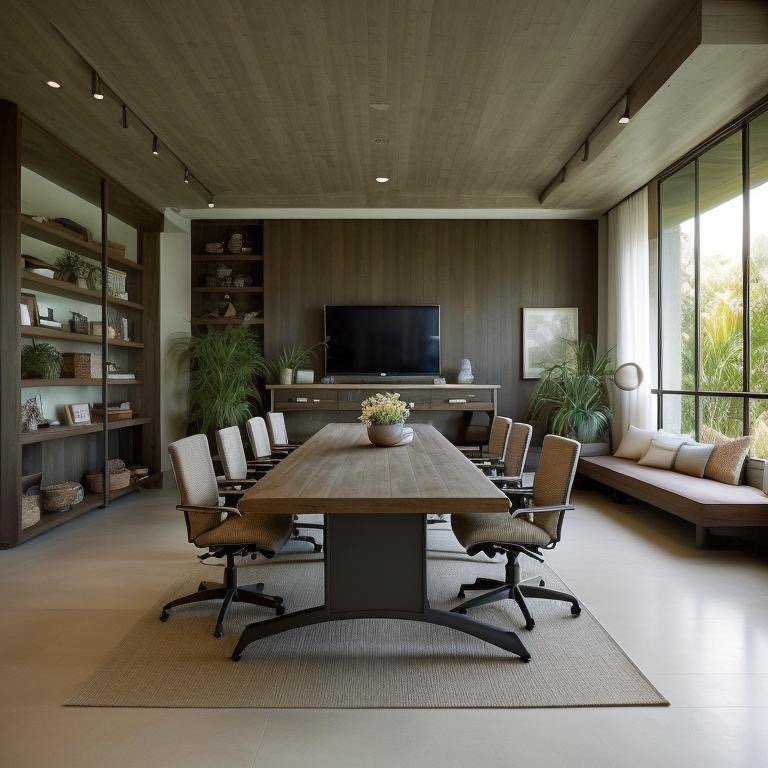
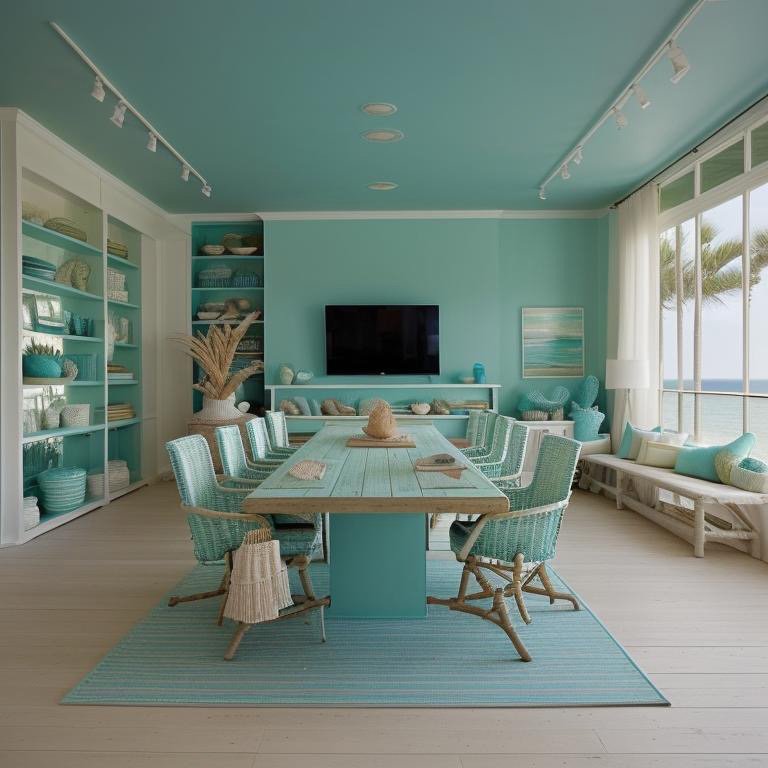
    Social dining hall with open shelving, warm lighting, and hospitality-focused architectural language

    Room Three: The Executive Lounge as Mediation

    Between the formal authority of the boardroom and the democratic warmth of the café stands the executive lounge—a space that must negotiate multiple functions simultaneously. It is where informal meetings occur. Where transitions happen. Where the executive body can exist between programs, between presentations, between decisions.

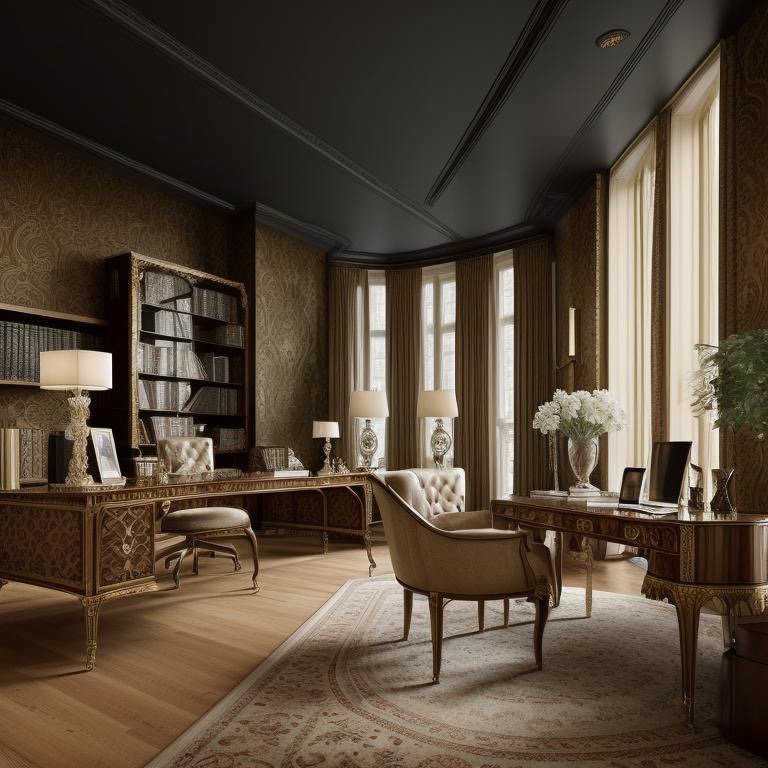
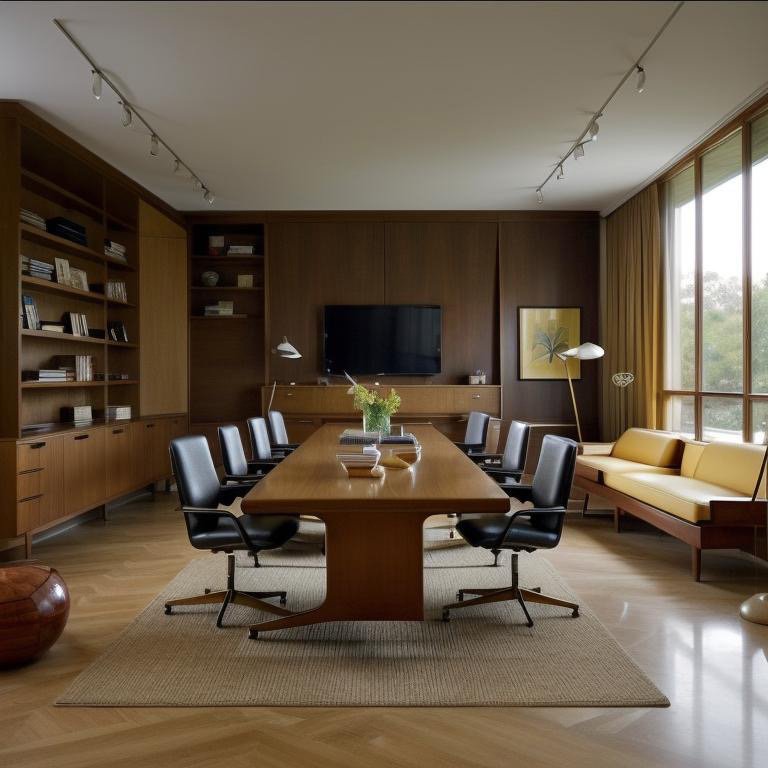
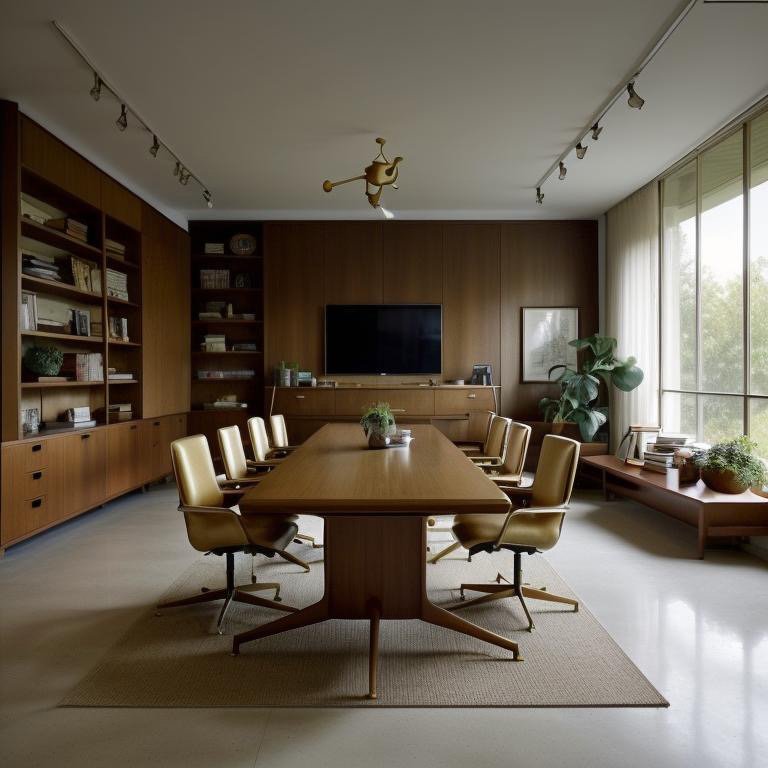
    The original lounge render extends the industrial revival vocabulary established in the boardroom but lightens it considerably. The material palette mixes: warm woods, refined metal detailing, layered textured surfaces. The furniture is more varied—not a single authoritative gesture, but a careful composition of elements that suggest flexibility without chaos. A mix of formal and informal seating creates permission for multiple modes of occupancy.

    Light behavior is warm and directional—not the controlled theatrical light of the boardroom, but illumination that feels generous and enveloping. The spatial organization suggests gathering without the formality of the board table. The lounge is the mediating space: it borrows the material intelligence of the boardroom, the warmth of the café, but creates something architecturally distinct—a space designed for the particular social functions of executive culture. The informal meeting. The pause between engagements. The moment of spatial transition.

    The Baseline Before Transformation

    These three rooms—the boardroom, the café, the lounge—are presented here as originals. They are the foundational geometry and material language that will, across the remainder of this issue’s exploration, be reinterpreted through twenty-two distinct stylistic lenses. Each subsequent transformation will preserve the functional footprint, the dimensional logic, the spatial program. What will change is the language through which that program is expressed: the material choices, the color temperature, the light behavior, the cultural references embedded in the design language.

    The purpose of documenting the originals is not nostalgia or preservation. It is clarity. It is the establishment of a baseline from which variation becomes legible. When you can see a boardroom rendered in brutalist warmth, and then see that same boardroom reinterpreted through Mediterranean minimalism, or through Japanese restraint, or through Scandinavian functionalism, something becomes visible: the distinction between program and language, between function and aesthetic expression, between what a space does and how it communicates meaning.

    This is the architectural labor that Cinematic Intelligence enables—not the generation of infinite stylistic variation as mere decoration, but the systematic exploration of how the same spatial intention can be articulated through radically different visual and material languages. The three rooms documented here are the originals. They are the question. The twenty-two treatments that follow are the explorations of how that question can be answered, reframed, and recontextualized across different cultural, material, and aesthetic frameworks.

    In this exploration lies something essential about contemporary design thinking: the recognition that space, material, and culture are not separate domains, but integrated expressions of the same intention. These rooms exist before style, yet they already carry architectural meaning. They wait for language to be applied, for their functional clarity to be enriched through aesthetic and cultural depth. The transformation is not additive. It is revelatory.

  • The Hidden Reckoning: How Billions in Industrial Offices Are About to Be Exposed

    The Hidden Reckoning: How Billions in Industrial Offices Are About to Be Exposed

    Abandoned industrial office with deteriorated workstations and dramatic overhead lighting

    The Weight of Dormancy

    Across North America, something quietly catastrophic is unfolding. Approximately one in five commercial office buildings stands functionally empty—a vacancy rate that represents not merely underutilized square footage, but the architectural manifestation of a massive economic inflection point. These buildings are not new buildings awaiting tenants. They are mature assets—products of the 1990s and 2000s—designed for a world that no longer exists.

    The financial mechanics are now inescapable. Commercial real estate loans originated between 2015 and 2017, when interest rates hovered near 3 percent, are hitting their maturity walls in 2025, 2026, and 2027. Refinancing is no longer a formality. At current rates between 7 and 8 percent—more than double the original cost of capital—thousands of properties can no longer service their debt. Covenants break. Values collapse. And the buildings themselves, once considered stable income-producing assets, become financial liabilities.

    But the financial story masks a deeper architectural reckoning. These offices were not designed for flexibility. They were designed for density, for the meeting, for the command-and-control structure that dominated corporate culture two decades ago. Their floor plates are deep and inflexible. Their mechanical systems were built for the assumption of full occupancy, full-time. Their spatial hierarchies—the executive suite on the corner, the open bullpen in the core, the conference rooms distributed as controlled access points—all of it reflected a workplace philosophy that hybrid work has made obsolete.

    Industrial office interior undergoing structural demolition with exposed framework and debris

    The Moral Depreciation of Space

    When a building sits empty, it does not simply stop generating revenue. It begins to decay, both materially and psychologically. Corridors empty of human presence become eerie. Lighting systems, originally calibrated for dense occupancy, now illuminate absence. The spatial hierarchies that once conveyed power and organization now read as abandonment. For any organization considering these spaces—even temporarily—the psychological weight is immense. You are not simply renting floor footage. You are inheriting the spatial signature of a world that failed to adapt.

    This is not a problem that market correction alone will solve. The market is already correcting, brutally. Class B and Class C office properties across secondary and tertiary markets are experiencing unprecedented pressure. Owners face a choice: invest heavily in repositioning, or accept that the asset has reached the end of its productive life as configured.

    What is remarkable—and what architecture must reckon with—is how quickly these buildings become invisible. Not physically invisible, but socially and economically invisible. The buildings that remain viable are those that acted decisively: premium properties in primary markets that invested in amenitization, in light, in flexibility. These properties—often rechristened, aesthetically reimagined—continue to command premium rents from companies that can justify the investment. Below them, the bifurcation deepens. Between the tier-one transformed properties and the tier-three warehouses, middle-market office space has become genuinely troubled.

    Decaying industrial office space with fragmented blue holographic displays and deteriorated surfaces

    Conversion, Not Preservation

    The capital that once built new offices is now redeploying toward conversion. Across major metropolitan areas, industrial office buildings are being reimagined as residential lofts, logistics hubs, light manufacturing spaces, and mixed-use developments. The economic calculus has shifted: preservation of the original program is no longer viable; transformation is the only path forward.

    This matters at the civic level in ways that pure finance cannot capture. When large office buildings in secondary downtowns go dormant, the entire sub-market destabilizes. Ground-floor retail loses foot traffic. Adjacent parking structures become liabilities. The density that once animated an address evaporates. Entire blocks that were designed around the presence of working professionals now register as precarious, available, but untouched.

    The visible cost is real estate depreciation. The hidden cost is a form of urban erosion—the slow collapse of the economic infrastructure that sustains neighborhoods. This is why conversion strategies matter. They force a reckoning with spatial purpose. A building that cannot be occupied as originally designed must be radically reimagined for a different program, a different density, a different relationship to its context. This is not merely real estate optimization. This is the reassignment of civic function.

    Renovated executive corridor with warm modern finishes, restored materials, and renewed architectural clarity

    Architecture at the Inflection Point

    The buildings that will survive the maturity wall—not merely financially, but as relevant spatial experiences—are those designed with what might be called radical flexibility. Not the false flexibility of demountable partitions and generic finishes, but genuine spatial intelligence: the ability to function at multiple occupancy levels, the capacity to shift between intensive and sparse use, the design language that does not depend on density to carry meaning.

    This is the inflection point for architecture. The buildings that do nothing—that are preserved as originally designed, that attempt to maintain their 2005 spatial logic in a 2026 market—will depreciate silently, efficiently, almost invisibly to those outside the real estate industry. The buildings that act—that are gutted and reimagined, that have their material language rewritten, that are converted to new programs with spatial intention—will transform visibly. They will become case studies. They will anchor neighborhoods. They will demonstrate that architecture remains a tool for recalibration, not merely preservation.

    The reckoning underway is not a crisis of real estate alone. It is a crisis of spatial purpose. Billions in industrial office stock designed for a specific moment in corporate culture now face the question every building eventually must confront: What are you for now? The answer will be written in concrete, glass, and the bodies that move through these spaces once more.

    What distinguishes this moment from previous downturns is the permanence of the structural shift. Previous recessions compressed occupancy temporarily; tenants returned when conditions improved. This time, the tenants have not merely departed—they have reorganized the fundamental relationship between work and space. The remote and hybrid configurations that accelerated during the pandemic have crystallized into permanent operating models. The demand that once filled these buildings is not delayed. It has been redistributed, dispersed across home offices, coworking spaces, and smaller satellite locations that bear no resemblance to the industrial office campuses of the prior era.

    For architecture, the lesson is as old as the discipline itself: a building that cannot adapt to its moment becomes a monument to the moment it was designed for. The industrial offices now facing their hidden reckoning were monuments to confidence, scale, and permanence. They must now become something else entirely—or accept that their silence will speak louder than their steel.

  • CEO’s Note: The Birth of a Design Intelligence Revolution

    CEO’s Note: The Birth of a Design Intelligence Revolution

    3D Transformative Digest | Designs by Modish

    In the inaugural edition of the 3D Transformative Digest, I find myself compelled to address the question I receive more than any other: “Why design?”

    My answer has never wavered: “Why not design?”

    In a world brimming with creative potential yet constrained by traditional boundaries, I recognized an opportunity that few others could see — the chance to redefine the very essence of architectural and interior design. Not incrementally. Not cautiously. But with the full force of what happens when two decades of executive experience collide with the most transformative technology our industry has ever witnessed.

    The Genesis of Cinematic Intelligence™

    When you fuse the expertise cultivated across more than 15,000 events spanning twenty-two years with the creative intelligence born from hundreds of design endeavors — and then multiply that foundation by the advanced capabilities of Modish.AI, our award-winning application — the equation yields something extraordinary. It produces a transformative leap into the next era of design. We call this proprietary methodology Cinematic Intelligence™, and it represents nothing less than a paradigm shift in how spaces are conceived, visualized, and brought to life.

    From our corporate headquarters in North Las Vegas, Nevada, our innovative 3D designs are curated and mastered with a precision that the traditional design process simply cannot match. Fueled by the groundbreaking capabilities of our AI engine, we serve a multitude of industries — transcending the conventional to create spaces that inspire, innovate, and invigorate. Our unique approach combines aesthetic brilliance with the relentless precision and learning capabilities of artificial intelligence, ensuring that with every project, our dataset grows, evolves, and refines itself into something more powerful than what came before.

    The Continuous Improvement Cycle

    This is the critical distinction that separates Designs by Modish from every other firm in the architectural visualization space: our continuous improvement cycle. Each rendering we produce is not merely an image — it is a vision brought to life, a data point that feeds back into our intelligence engine, setting new benchmarks in design quality and innovation with every single output. The more we create, the more sophisticated our understanding becomes. The more sophisticated our understanding, the more extraordinary our renderings.

    It is a compounding effect. And compounding effects, as any serious strategist understands, are the foundation of category dominance.

    Consider the implications of this architecture. Every luxury kitchen we render in the Japandi tradition teaches our engine something new about negative space, natural materiality, and the interplay of light against unfinished wood. Every Hollywood Regency bathroom we visualize sharpens our understanding of gilded detail, dramatic contrast, and the emotional weight of opulence. These are not isolated projects — they are nodes in an expanding neural architecture of design knowledge that compounds with each commission.

    Global Reach, Singular Mission

    Today, we serve clients and partners across thirteen countries. Our reach is global, yet our mission remains singular: to bring the highest level of design intelligence to every corner of the world. As we look toward the future, our ambition is to expand this reach — breaking new ground, embracing new challenges, and demonstrating that the boundaries of design are not fixed walls but movable horizons.

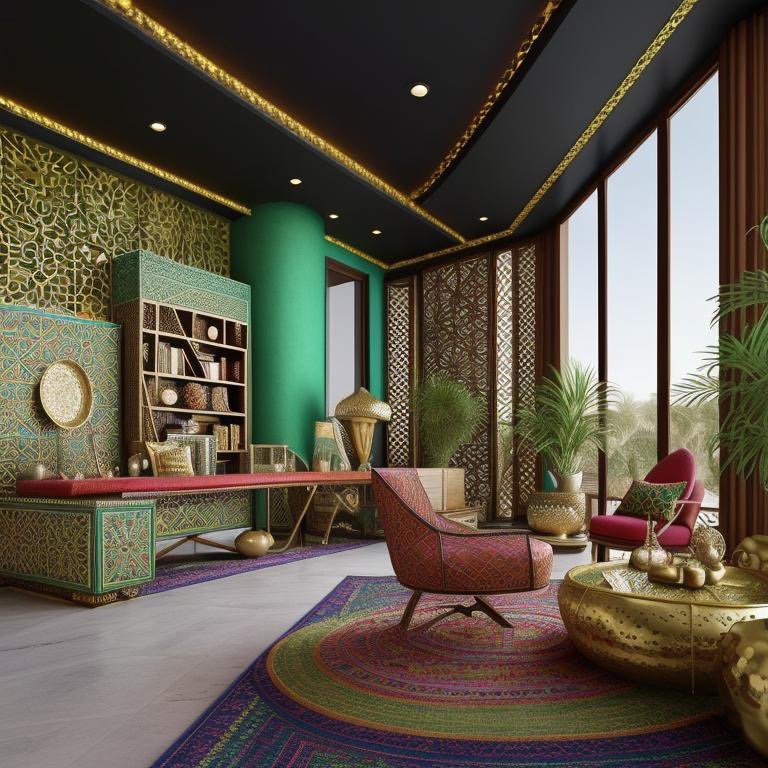
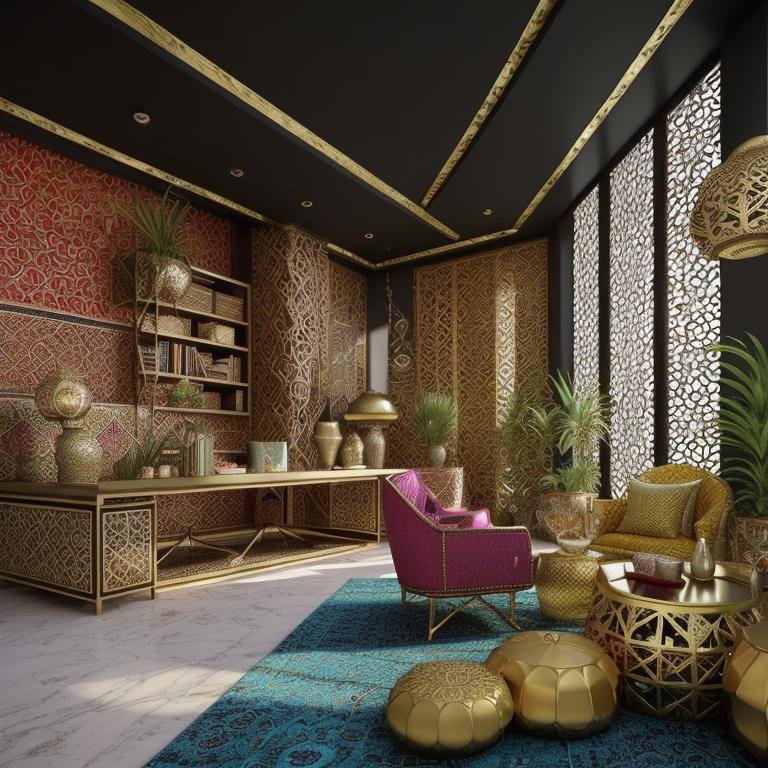
    The architectural visualization industry has operated under the same fundamental model for decades: a client describes a vision, a designer interprets it, revisions pile up, budgets inflate, and timelines stretch. We have dismantled that model entirely. With our AI-driven infrastructure, a single residential property can be reimagined across twenty-two distinct global design languages — from Japandi minimalism to Hollywood Regency opulence, from Brutalist severity to Moroccan exuberance — in a fraction of the time and cost that traditional methods demand.

    This is not an incremental improvement. This is a structural disruption of how the design industry operates, delivers, and scales. The firms that understand this shift will partner with us. The firms that do not will find themselves competing against an engine that learns faster, produces more, and delivers at a quality threshold that manual processes cannot sustain.

    What This Publication Represents

    The 3D Transformative Digest is not a magazine in the conventional sense. It is a reference document. A visual intelligence archive. A demonstration of what becomes possible when human creativity and artificial intelligence operate in concert rather than in competition.

    Each issue you hold — or in this case, each digital page you navigate — contains renderings that would have required teams of designers, weeks of labor, and six-figure budgets to produce through traditional workflows. Our engine produces them with architectural accuracy, material realism, and a cinematic quality that sets the standard for the entire industry.

    Within these pages, you will encounter seventeen distinct architectural futures applied to a single estate. You will meet the team members driving our visual content strategy forward. You will explore the nuances of Industrial, Farmhouse, Mid-Century Modern, Bohemian, Mediterranean, Coastal, Moroccan, Japanese Zen, and California Coastal design — each rendered with the photorealistic precision that has become our signature.

    You will also discover our editorial perspective on the convergence of AI and design — the trendsetters, the technologies, and the ethical frameworks that are shaping the industry’s trajectory in 2024 and beyond. And you will meet Marquez Johnson, the fictional protagonist of our serialized creative narrative, whose ambitions in the luxury real estate market mirror the boldness with which we approach every commission.

    The Architecture of What Comes Next

    This is the future of design. Not a distant, speculative future — but one that is operational, proven, and scaling as you read these words. Our Cinematic Intelligence engine processes hundreds of design variables simultaneously: light physics, material behavior, cultural context, spatial proportion, emotional resonance. It does not guess. It calculates. And with each calculation, it becomes more precise, more nuanced, more capable of producing renderings that do not merely depict spaces but embody them.

    The implications extend far beyond aesthetics. Architects gain the ability to present clients with a portfolio of futures rather than a single interpretation. Developers can pre-visualize entire communities across multiple design languages before breaking ground. Luxury homeowners can explore twenty-two versions of their dream kitchen before committing to a single tile. Real estate marketers can differentiate listings with cinematic-quality imagery that commands attention in an oversaturated market.

    Every one of these use cases represents revenue. Every one represents a relationship. And every one represents a data point that feeds back into the engine, making the next rendering better than the last.

    An Invitation

    The architectural visualization industry stands at an inflection point. The firms and practitioners who recognize this moment — who understand that the convergence of artificial intelligence and design intelligence represents not a threat but an unprecedented expansion of creative possibility — will define the next era of the built environment. We intend to be the engine that powers that transformation.

    We are not asking you to imagine the future of design. We are showing it to you — rendered in light, material, and structure, at a quality threshold the industry has never seen. The question is no longer whether AI will transform architectural visualization. The question is whether you will be among those who harness that transformation, or among those who watch it happen from the sideline.

    We are redefining the boundaries of design, one rendering at a time. Join us on this journey, and let us reimagine the world together.

    Ben Thomas
    Chief Executive Officer, Modish Global Inc.

    3D Transformative Digest — Cinematic Intelligence Architectural Render