Tag: Design Authorship

  • Architecture Without Architects: Redefining Authorship in the Age of Intelligent Design

    Architecture Without Architects: Redefining Authorship in the Age of Intelligent Design

    There is a provocative phrase circulating quietly within design circles, spoken not as manifesto but as observable fact: Architecture without Architects. It carries an echo from the mid-twentieth century, when theorist Bernard Rudofsky first invoked it to celebrate the vernacular traditions that built the world before credentialed practice claimed the discipline. Today, that same phrase returns—refracted through the lens of algorithmic intelligence, generative systems, and the unmistakable emergence of distributed authorship.

    But here we must be precise: in 2026, “without architects” does not signify the absence of design intelligence. It signifies a fundamental reorganization of who authors form, how that authorship emerges, and what constitutes legitimate architectural creation. The gatekeepers remain, yet the gates themselves have been redrawn.

    What began as an architectural exhibition celebrating indigenous wisdom has evolved into something far more consequential—a question about the nature of design agency itself in an era where artificial intelligence is not merely a tool in the architect’s hand, but increasingly a collaborator, a generator of alternatives, and in some cases, an independent voice in the creative conversation.

    Rudofsky’s Provocation Finds New Currency

    To understand the present moment, we must return briefly to 1964, when the Museum of Modern Art opened “Architecture Without Architects,” curated by Rudofsky. His thesis was elegant and somewhat heretical for its time: some of the world’s most sophisticated architecture emerged not from academic training or professional credential, but from accumulated vernacular knowledge—climate-responsive design, material intelligence, and community building practices refined across generations without a single “architect” present.

    Rudofsky was not diminishing the value of trained designers. Rather, he was expanding the definition of authorship itself. He was asking: Where does intelligence reside? Who gets to make decisions about built form? What counts as design?

    Today’s technological moment echoes that same set of questions, but with an inversion. Rather than celebrating traditions excluded from formal practice, we are now witnessing how computational systems—trained on decades of built projects, environmental data, and design logic—can generate spatial propositions with a sophistication that rivals human creativity. The question is no longer merely who designed this building, but which intelligence shaped it: human intuition, algorithmic generation, environmental constraints, or the peculiar synthesis of all three?

    “AI has not yet replaced architects. But it is redistributing creative agency in ways that blur the lines between coder, designer, developer, and end-user.”

    The Dissolution of Singular Authorship

    Generative design systems operating within architectural practice today do not function as ghostwriters. They function as genuine collaborators whose outputs carry measurable intelligence. Consider what occurs in a contemporary design workflow:

    A designer sketches intention. An algorithm parses that sketch, reads embedded briefs and constraints, and generates ten coherent alternatives—each responsive to climate data, structural logic, regulatory frameworks, and aesthetic parameters encoded into the system. The designer reviews, selects, refines. The algorithm learns from the selection and proposes refinements. A feedback loop emerges, neither human nor machine leading entirely, but both contributing to a solution that neither could have authored alone.

    This is not delegation. This is co-authorship, and it fundamentally challenges the architectural tradition of the solitary designer as singular genius—a romantic notion that has never fully withstood historical scrutiny, but which persists nonetheless in professional mythology.

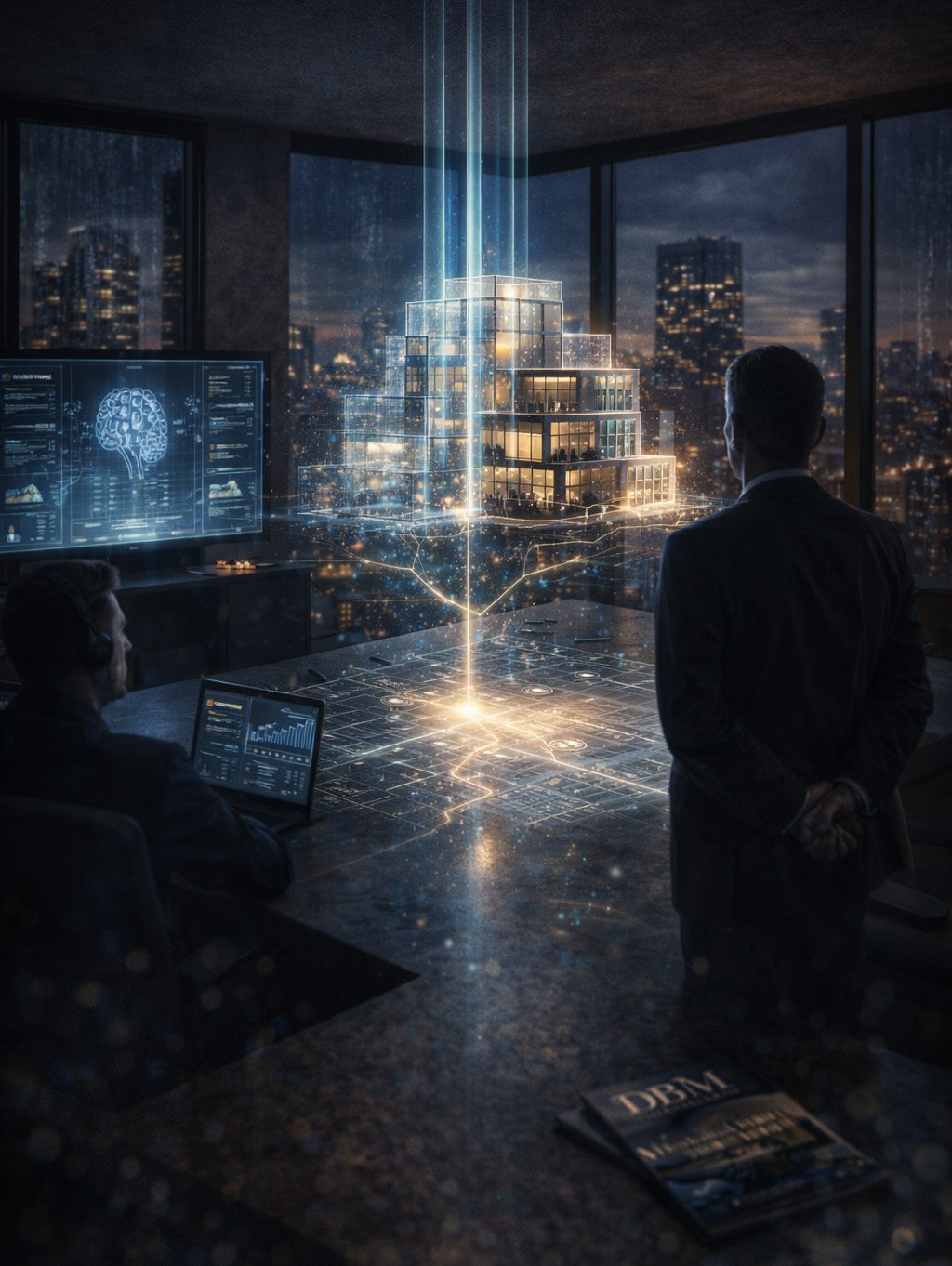
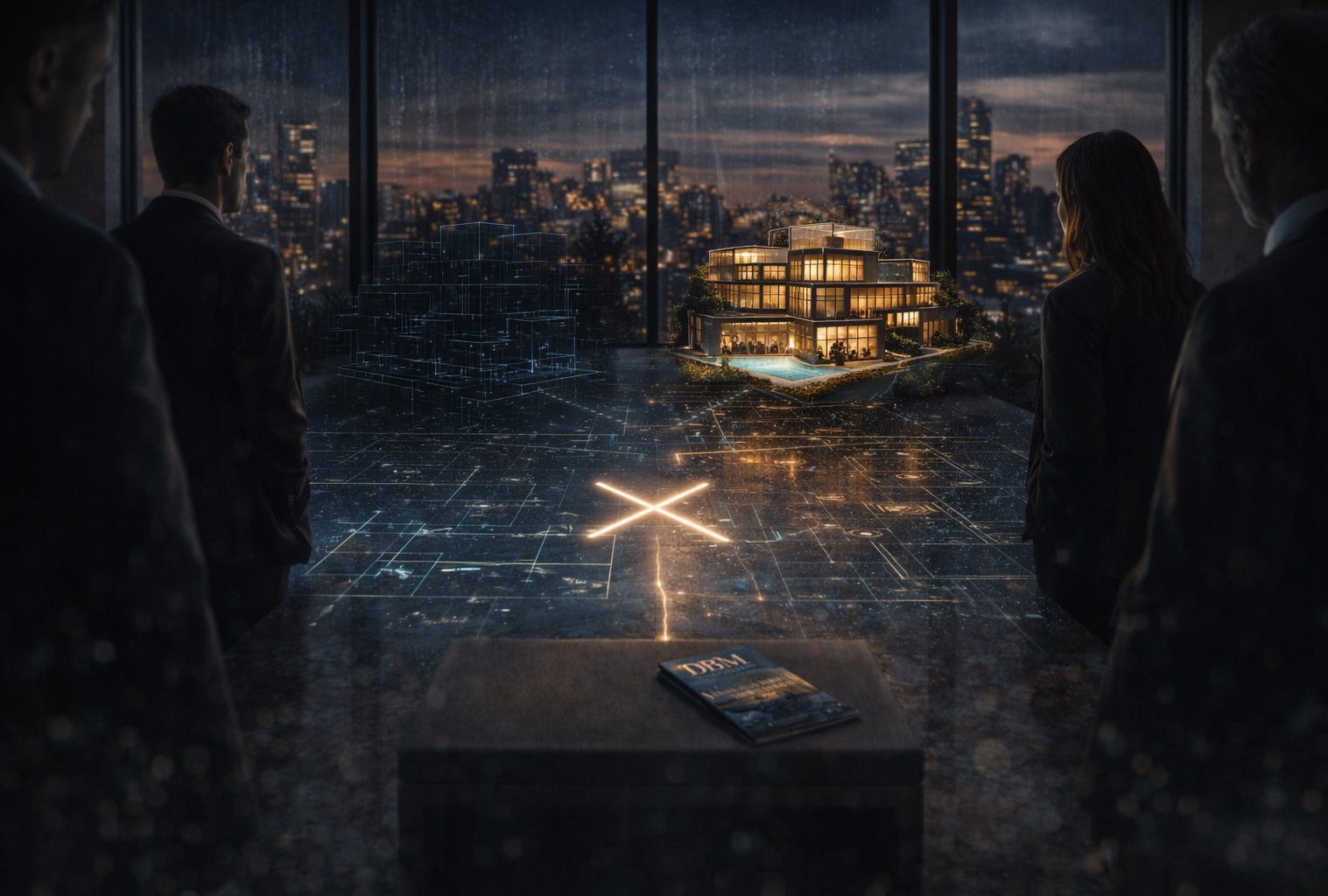
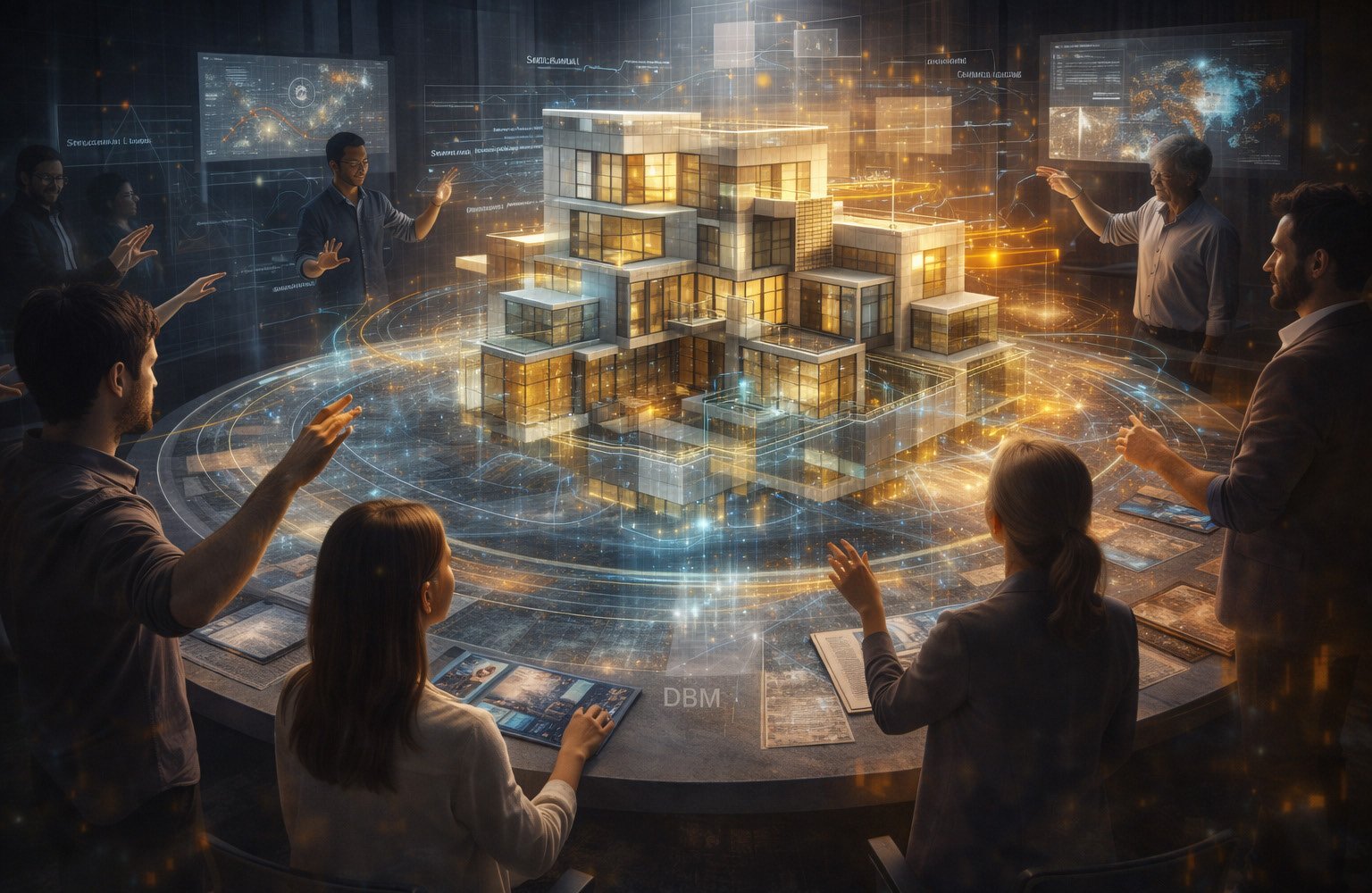
    Design intelligence visualization showing algorithmic design process

    Design intelligence cascades across multiple dimensions: computational systems expand the conceivable before human judgment narrows the field.

    What emerges from this distributed intelligence is architecture that operates differently. It is more responsive to site data—solar orientation, wind patterns, material availability, traffic flows. It is more anticipatory, modeling performance before construction. It is more inclusive of stakeholder feedback because the speed of iteration permits genuine participation rather than the traditional binary of accept or reject.

    Is this still architecture? Absolutely. But authorship has become collective, and that collectivity is not a weakness to be transcended but a fundamental recalibration of how design intelligence operates in complex environments.

    The Architect’s Metamorphosis

    The profession faces a curious moment. Every major architectural publication has engaged with questions about AI’s role in practice. Industry leaders universally acknowledge that artificial intelligence cannot yet replicate the contextual judgment, ethical responsibility, and cultural intuition that human architects contribute. The most sophisticated practices in the world are not being displaced by algorithms; they are being augmented by them.

    But amplification comes with transformation. The architect’s role is undergoing what might be termed a methodological evolution—from sole author to what we might call an orchestrator of intelligence systems.

    Where the twentieth-century architect was primarily a designer—translator of client intent into built form—the contemporary architect increasingly functions as:

    Curator of computational alternatives. Not generating every option manually, but reviewing, evaluating, and selecting from algorithmically generated possibilities based on intuitive judgment that machines have not yet mastered.

    Editor of emergent outcomes. Refining solutions that arise from complex systems, understanding that design is no longer top-down but increasingly emerges from the interaction of multiple variables and intelligence sources.

    Steward of meaning. Ensuring that the inevitable efficiency and optimization offered by algorithmic systems does not entirely erase the symbolic, cultural, and experiential dimensions that architecture must address—concerns that resist quantification.

    Integrator of distributed expertise. Orchestrating conversations between structural engineers (human and computational), environmental systems, client aspirations, regulatory requirements, and community input in ways that converge toward coherent proposals.
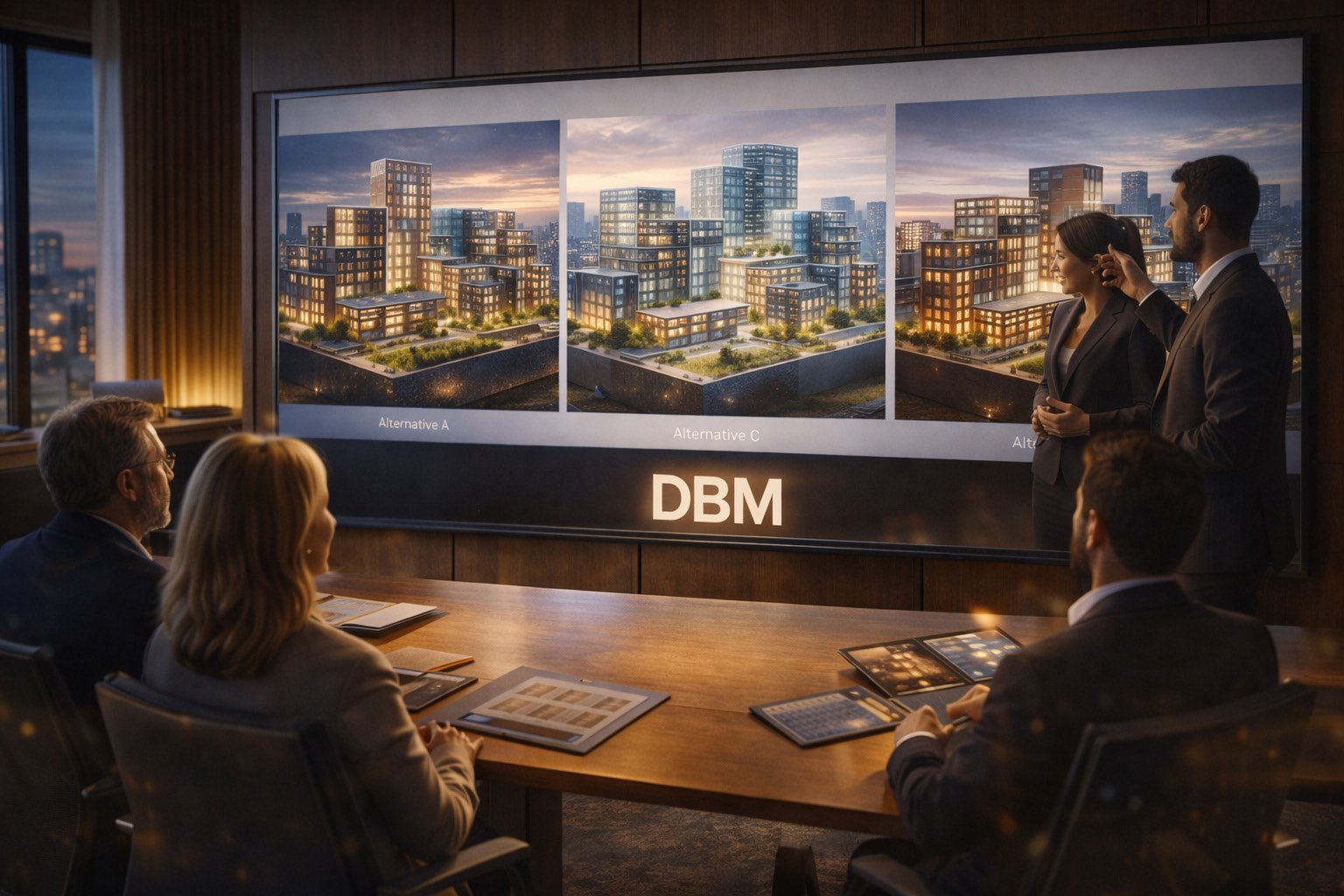
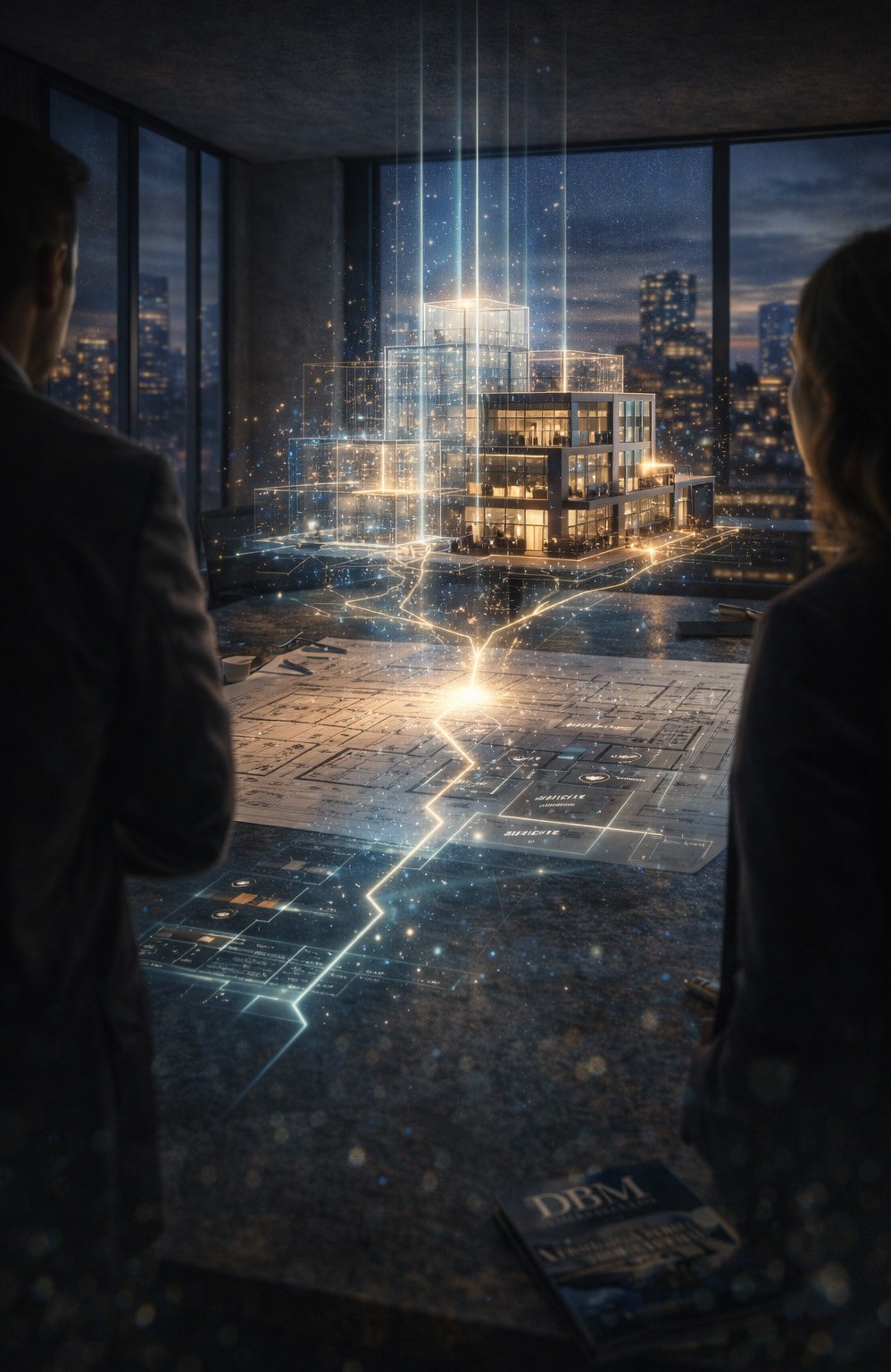
    AI and architecture concept visualization

    The algorithmic hand guides but does not grip: human judgment and computational suggestion form a continuous loop rather than a hierarchy.

    When Design Arises From Ecosystems Rather Than Individuals

    The most important architectural projects emerging in 2026 share a curious characteristic: they are difficult to attribute to a single author. The residential district designed through community participation scaffolded by generative algorithms. The cultural institution shaped by environmental simulation, programmatic stacking, and multiple rounds of stakeholder feedback. The infrastructure that evolved from performance modeling, regulatory requirement, and site-specific constraint.

    These projects are not less designed. They are differently authored.

    This represents not a betrayal of architectural tradition but its logical evolution. Throughout history, buildings have always emerged from collaboration—master builders working with craftspeople, architects collaborating with engineers, designers responding to client constraints. The difference today is that computational systems now participate in that conversation as explicit participants rather than invisible mediators.

    The result is architecture that is simultaneously more responsive and more ambitious. More responsive because real-time environmental data, performance simulation, and stakeholder feedback can inform iterations across dozens of variables. More ambitious because the speed of iteration permits exploration of solution spaces that human designers, working manually, could never traverse.

    “Technology does not strip away authorship. It redistributes it.”

    The Necessary Skepticism

    Yet skepticism remains warranted. Algorithms encode the biases of those who trained them. Optimization can erase the idiosyncratic, the culturally specific, the beautifully inefficient. Distributed authorship, if poorly orchestrated, can produce designs answerable to no one’s judgment. The efficiency of computation can marginalize dimensions of architecture that cannot be quantified—memory, narrative, the weight of historical consciousness.

    The challenge facing the profession is not whether to resist this shift—that resistance is moot—but how to integrate algorithmic intelligence while preserving the elements of architectural practice that cannot be automated: judgment, accountability, and the stubborn human insistence that buildings carry meaning beyond their functional performance.

    Contemporary architectural practice at its best is grappling with this carefully. The most sophisticated studios are not allowing algorithms to make decisions but rather to expand the field of conceivable decisions, leaving the ultimate synthesis to human judgment informed by both computational wisdom and the irreducible complexity of context.

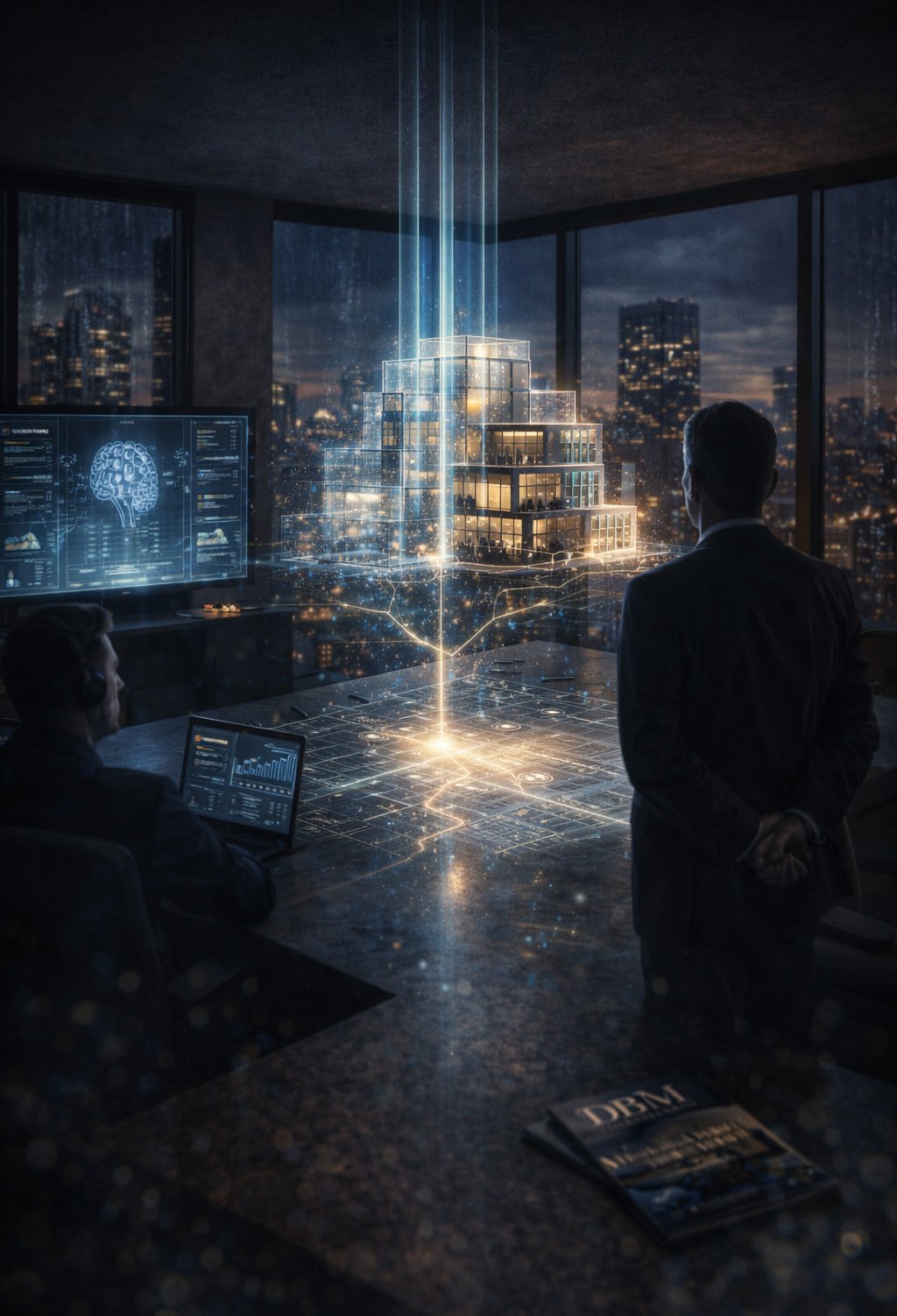
    Collaborative design concept showing multiple intelligence sources converging

    Multiple intelligence sources converge: the contemporary design process is decidedly non-linear, non-hierarchical, and distributed across human and computational participants.

    A Redefinition Rather Than Erasure

    To return to Rudofsky’s original insight: his exhibition celebrated architecture that operated outside formal credentialing, outside academic tradition, outside the professional establishment. It was not a dismissal of trained architects but an expansion of where architectural intelligence could reside.

    Contemporary algorithmic design extends that expansion further. It suggests that architectural authorship can reside in generative systems, in community participation scaffolded by technology, in stakeholder feedback processed through computational interpretation, in environmental data given voice through performance simulation.

    This is genuinely unsettling to a profession that has long defined itself through the authority of individual expertise. But that unsettling is productive. It forces the discipline to articulate what, precisely, architects contribute that algorithms cannot—and to defend that contribution not through credential or gatekeeping but through demonstrated value in the cultural, contextual, and experiential dimensions of the built environment.

    The phrase “architecture without architects,” invoked in 2026, should not be heard as threat but as invitation. An invitation to understand authorship more generously. An invitation to recognize that intelligence is distributed across multiple forms—human intuition and algorithmic generation, professional expertise and community wisdom, individual vision and collective emergence.

    The architect of the future will not be displaced but reimagined: not as sole author but as orchestrator, not as the origin point of all decisions but as the steward of meaning-making in a design process of extraordinary complexity. That is a diminishment only if we insist on measuring it against a romantic ideal of the solitary genius. Measured against the actual sophistication of the problems architecture must now address, it is an evolution toward something more adequate to the moment.

    The buildings being designed today through this distributed intelligence are not lesser for lacking a singular author. Many of them are better—more responsive, more inclusive, more anticipatory of performance and impact. And that, perhaps, is Rudofsky’s true legacy: the understanding that architecture emerges not from the credential of the architect, but from the intelligence that brings it into being, wherever that intelligence resides.
  • The Rise of the Ghost Architect: How Buildings Are Being Designed Without Names

    The Rise of the Ghost Architect: How Buildings Are Being Designed Without Names

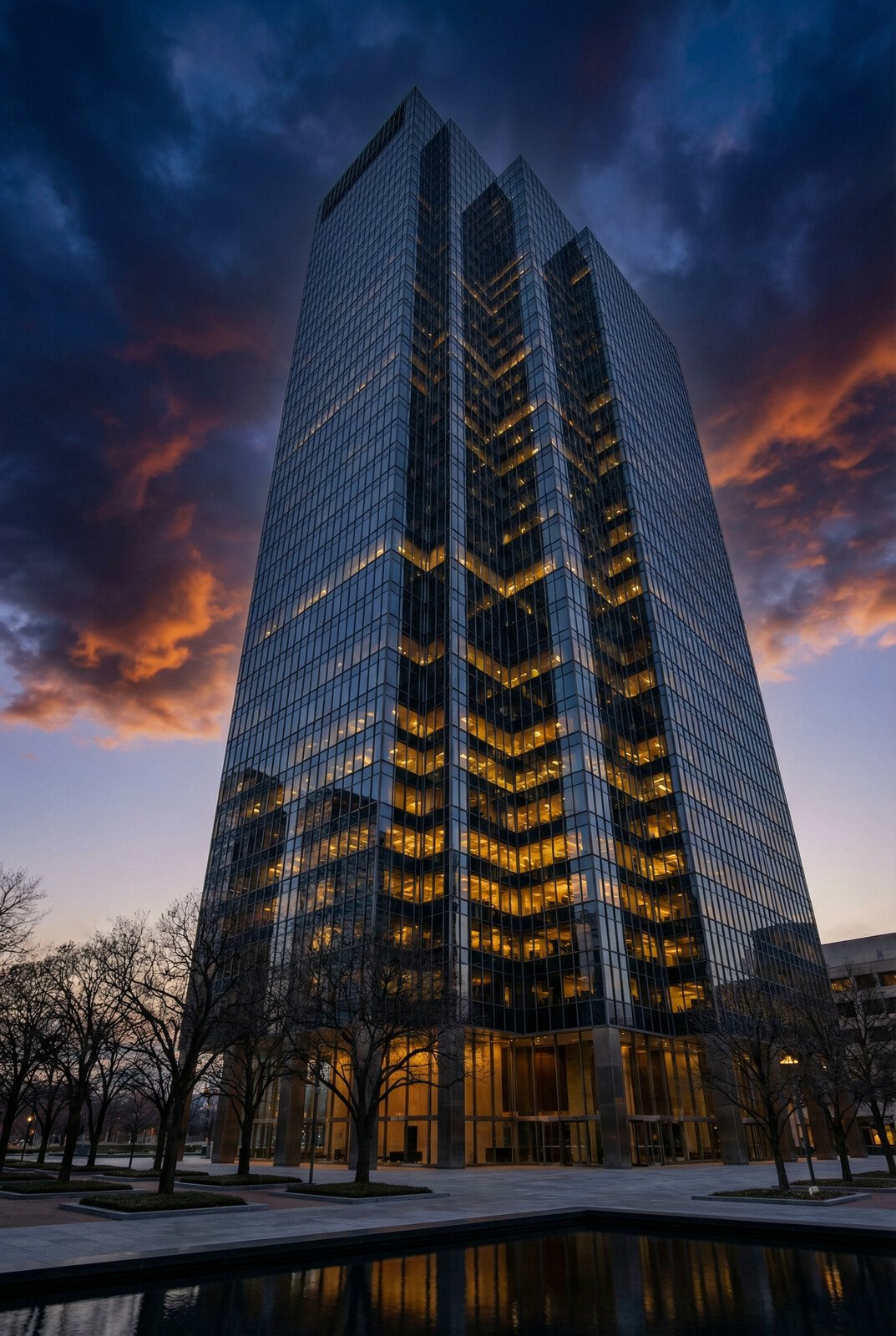
    night cityscape with illuminated buildings

    There is a figure in contemporary architecture who has no name, attends no meetings, signs no drawings, claims no credit. Yet influences every decision. Shapes form. Determines mood. Establishes proportion. Establishes identity. This figure is not a person. It is a system. And it is reshaping how buildings come into being.

    Call it the ghost architect. Not metaphorical—functional. An intelligence that inhabits the early stages of architectural conception, working before human architects are formally engaged, without the constraints of professional accountability, without the friction of client relationships or regulatory submission. The ghost architect explores. Tests. Visualizes. Fails silently. Iterates at velocity. Then vanishes before the real work begins.

    What remains is a fully formed spatial concept. A massing that feels inevitable. A proportion system that appears natural. An aesthetic sensibility that suggests deep research and intentional curation. But it emerged from no sketchbook. No design firm fought for it in a charrette. No architect’s signature appears anywhere on the work. It was made by an intelligence that does not require attribution to do what it does best: generate possibility at scale.

    Architecture Was Always About Authorship

    The discomfort with the ghost architect runs deep because architecture in the modern era has been fundamentally tied to the idea of the author. The architect as author. The firm as the site of creative intention. The building as the expression of individual vision. Frank Lloyd Wright’s signature was as much a part of his architecture as his proportion systems. Zaha Hadid’s authorship was inseparable from her formal language. The building was the architect made visible.

    This wasn’t accidental. It was the foundational mythology of Modern architecture—the belief that great spaces emerged from great minds, that individual genius was the origin point of spatial excellence. Clients hired architects because they wanted to access that genius. Developers competed for landmark architects because the name on the building added value. The whole infrastructure of contemporary architectural culture—the awards, the publications, the canons of taste—was built on the assumption that the author mattered.

    architectural concept visualization

    But clients stopped caring about this mythology earlier than anyone realized. They stopped asking “who is the architect?” and started asking “what is the space?” The shift was nearly invisible at first. A developer would consult an AI visualization engine to test massing options before engaging an architect. A real estate firm would use Cinematic Intelligence™ to pre-visualize a property’s potential before the design was formally commissioned. A marketing team would request three spatial variants—three different aesthetic treatments of the same program—and show them to investors before a single conceptual drawing was approved.

    The ghost architect was born in these moments. Not in a laboratory or a research initiative, but in the actual workflow of real development. It emerged because it solved a problem: how to explore spatial possibility quickly, cheaply, and without the overhead of a full architectural team. The developer gets designs. The investor sees options. The project moves forward. The architect arrives after the major decisions have been made.

    The Ghost Architect Handles Exploration; The Human Architect Handles Responsibility

    This is where the discomfort becomes productive. An AI system can visualize spatial concepts because visualization is a technical competency. It can propose massing, test proportions, render material studies, and generate variants at a speed that no human team can match. It can do all of this without exhaustion or ego or the need for recognition. It is, in purely mechanical terms, excellent at early-stage design exploration.

    But there is something it cannot do. It cannot choose wisely. It can generate options. It cannot take responsibility for them. It can propose futures, but it cannot believe in them, cannot defend them, cannot sit with the client and explain why this particular future is worth building. The ghost architect proposes. The human architect chooses.

    varied architectural concept studies

    The distinction matters because it reframes what architecture actually is. For much of the twentieth century, architects believed their primary role was conceptualization—the generation of spatial ideas. But what the ghost architect reveals is that this belief was only partly true. Clients don’t pay for concepts. They pay for outcomes. They pay for spaces that function, feel right, perform economically, and endure culturally. Concept generation is part of that, but only part.

    The human architect’s real work is judgment. Judgment about which concept deserves to be built. Judgment about which proportions will actually serve the program. Judgment about which aesthetic gestures enhance rather than distract. Judgment about how a building will sit in its context and carry its meaning across decades, not just across the presentation. The ghost architect can propose. Only the human architect can judge.

    This is uncomfortable because it means architecture is smaller and more specific and more relational than the mythology suggested. It’s not about individual genius producing unprecedented forms. It’s about experienced practitioners making careful choices about which proposals deserve the weight of built reality. It’s about responsibility rather than originality.

    Attribution Will Become Irrelevant, Then Important Again

    The next decade will force a reckoning with attribution. Some buildings already exist in a kind of authorship limbo—visualized by AI, developed by corporations, managed by firms, inhabited by people who will never know or care who designed them. The question of “who is the architect?” will become increasingly unanswerable. And that is, paradoxically, an opportunity.

    integrated architectural visualization

    Because once the mythology of the author is stripped away, what remains is the actual work: the calibration of space to purpose, the alignment of form to function, the discipline of proportion, the sophistication of material. These things don’t require a signature. They require thinking. And thinking is what remains when the ghost has finished its work.

    The buildings of the future are already being imagined. Quietly. Without names. Without meetings. Without the friction and politics and ego that have always characterized architectural practice. They are being imagined by systems that propose and propose and propose until something emerges that works. Then a human architect inherits that work, judges it, refines it, and takes responsibility for it. And somewhere in that inheritance is where real architecture happens.

    architectural massing study

    The Ghost Architect Is Not the Future; It’s the Present

    Some fear this moment. They see the ghost architect as a harbinger—the beginning of the end of architecture as a human discipline. But this misreads what’s actually happening. The ghost architect doesn’t replace the human architect. It liberates the human architect from the pretense of authorship. It says: stop trying to be the sole origin of all spatial ideas. Stop defending your ego in the form of formal gestures. Stop believing that greatness comes from isolation.

    Instead, engage with the abundance of spatial proposals. Judge them carefully. Choose what actually serves the building and the people who will inhabit it. Refine what needs refinement. Reject what deserves rejection. Take responsibility for the outcome, even if you didn’t generate the initial concept.

    refined architectural proposal

    This is harder work than conceptualization, not easier. It requires taste. It requires judgment. It requires the ability to see through visual spectacle to actual spatial truth. And it requires the courage to say: this idea came from elsewhere, but I am choosing to build it, and I am responsible for that choice.

    The ghost architect has already begun its work. The buildings being designed right now—before you read this—are being shaped by systems that propose at velocities humans cannot match. And the question facing architecture is not whether to resist this reality, but whether to rise to the challenge it presents. Can architects become judges of spatial quality instead of generators of spatial novelty? Can they take responsibility for choices they didn’t originate? Can they do the harder work of curation rather than the more celebrated work of creation?

    curated architectural solution

    The ghost architect is not a threat to architecture. It is a test. And architecture has always been best when it understood itself as a discipline of judgment, not of originality. The buildings that endure are not the ones that were unprecedented. They are the ones that were, at every moment of decision, chosen carefully. The ghost architect can generate the options. But only the human architect can choose wisely. And in that choice—in that responsibility—is where real architecture lives.

    architectural space in context

    detailed architectural realization

  • The Final Three: How DBM Pushed California Casual, Bohemian & Bauhaus Beyond Their Limits

    The Final Three: How DBM Pushed California Casual, Bohemian & Bauhaus Beyond Their Limits

    Boardroom with warm earth tones, colorful pattern accent, and curated spatial harmony

    The Conclusion That Explains Everything

    These are the final three. Not three additional styles among many, but three styles that reveal the true architecture of the entire 22-style collection. They do not merely conclude—they explain.

    Across these three, DBM’s Cinematic Intelligence™ encounters the deepest truth about design transformation: A room is not defined by its style. A room is defined by its intelligence. Intelligence is how a space interprets light, how it navigates culture, how it honors identity while remaining effortlessly itself. Intelligence is the invisible structure beneath every aesthetic choice.

    These final three styles are often misunderstood because they live closest to everyday life. They feel familiar. They feel accessible. This proximity is precisely why they are the hardest to master. Everyone thinks they understand California Casual. Everyone believes they can do Bohemian. Everyone assumes Bauhaus is simplicity itself.

    They are wrong. And DBM’s interpretation proves it.

    California Casual: The Paradox of Effortlessness

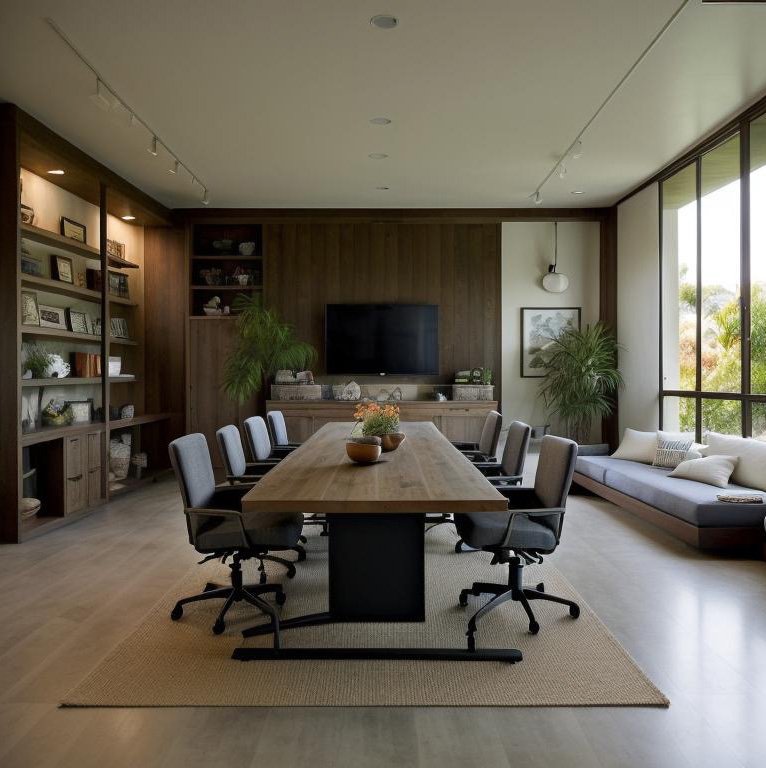
    California Casual boardroom with warm earth tones, green plants, relaxed sophistication

    California Casual is deceptively complex. The entire aesthetic hinges on a paradox: it must feel effortless while requiring extreme precision. It must whisper, not shout. It must breathe, not sprawl.

    Most interpretations fail because they oversoften the style. They confuse casual with careless. They treat California Casual as permission to abandon standards. The result is rooms that feel unfinished—spaces that lack architectural conviction.

    DBM’s interpretation approached California Casual as atmospheric logic, not color palette. The boardroom became breathable but never bland. Warm but never rustic. Green plants exist here not as decoration but as atmospheric participants—they shift light, create micro-climates, remind inhabitants that this space is alive.

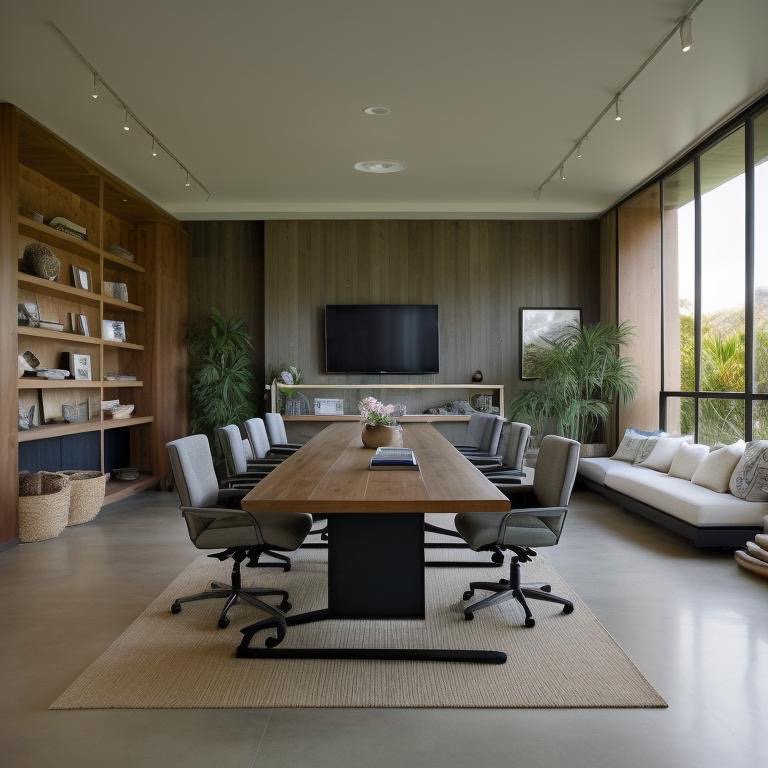
    California Casual variation with soft sunlit gradients and natural material warmth

    This room feels like a boardroom that grew up in Malibu but runs a Fortune 100. It carries the ease of the Pacific Coast—the unforced warmth, the light that seems to arrive from everywhere at once. Yet it maintains absolute executive authority. Decisions made here feel inevitable. Collaboration feels natural. The space itself invites clarity.

    Cinematic Intelligence understood that California Casual is not about relaxation. It is about achieving focus through comfort. This boardroom is where strategy sessions feel like conversations between equals. Where hierarchy dissolves not through informality but through shared architectural respect.

    This is California Casual as infrastructure for leadership.

    Bohemian: Discipline Masquerading as Freedom

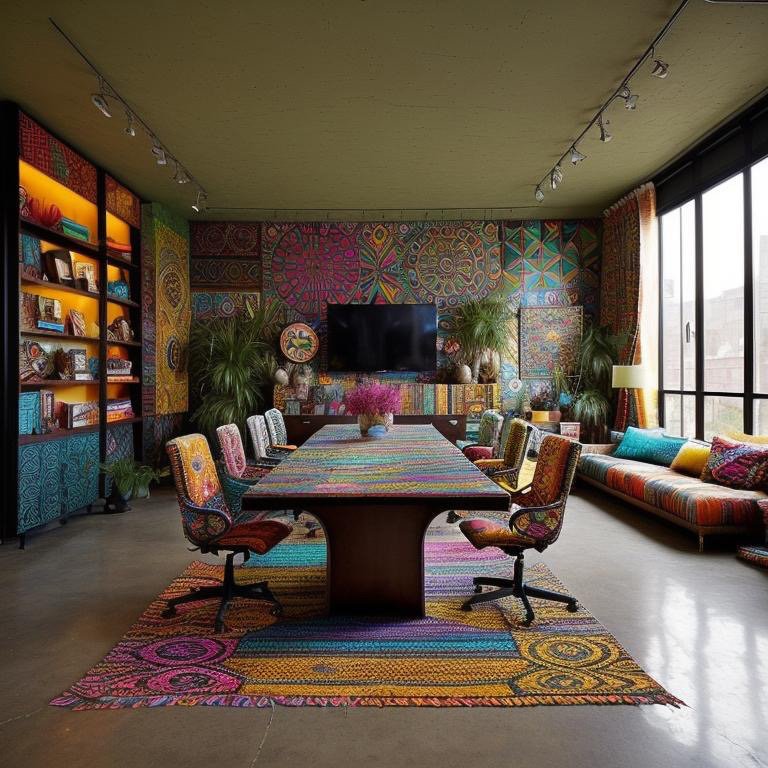
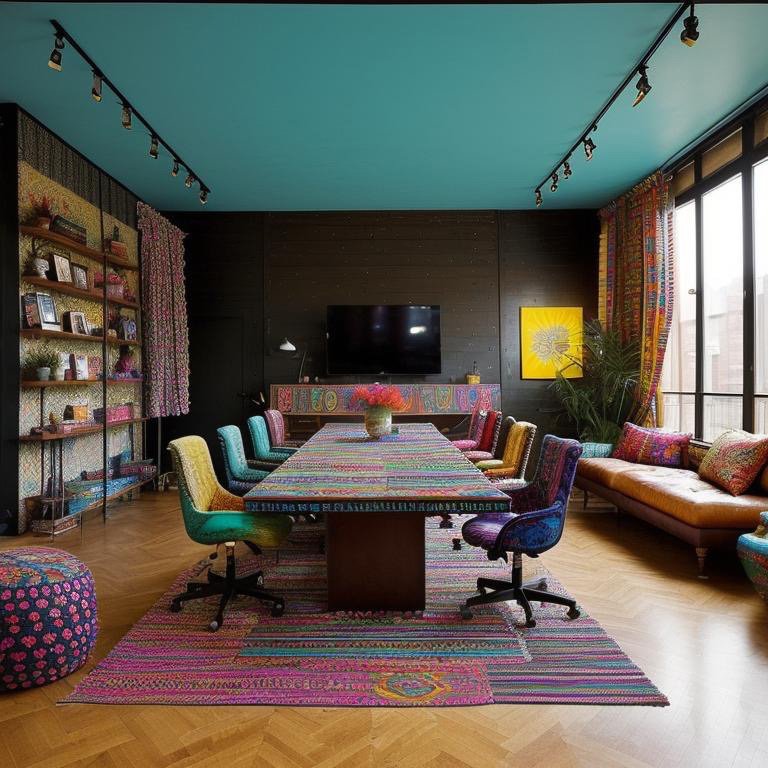
    Bohemian boardroom with rich jewel tones, curated patterns, textiles, and layered depth

    Bohemian is notoriously risky. One wrong move and the style collapses into visual clutter and identity confusion. A room becomes a costume shop instead of a space. Personality overwhelms purpose. Culture becomes caricature.

    The miracle of DBM’s Bohemian interpretation is discipline. This is personality without noise, color without chaos, culture without cliché. The engine achieved this through a single method: narrative order.

    Rich jewel tones in this space do not compete—they graduate. Patterns speak in rhythm rather than screaming for attention. Colors support each other rather than demanding individual recognition. Textures are layered with the precision of a conductor orchestrating an orchestra where every instrument has heard the composition memorized.

    Bohemian variation with curated eclecticism and architectural harmony

    The style never surrenders to itself. It surrenders to architecture. Every bold choice—every emerald wall, every patterned textile, every artistic gesture—exists because it serves the room’s clarity, not its chaos. This Bohemian boardroom is for leaders, not tourists. It speaks to those who understand that personality and precision are not opposites but partners.

    Cinematic Intelligence approached Bohemian as a design philosophy: How do you celebrate cultural richness without creating visual noise? The answer is understanding that true eclecticism is not random—it is curation. Every element was chosen not because it is interesting but because it is necessary.

    This boardroom feels like it has lived. It has history. It has traveled. Yet it remains focused. It remains intelligent. It refuses to apologize for its color while maintaining its purpose.

    Bauhaus: Sacred Ground

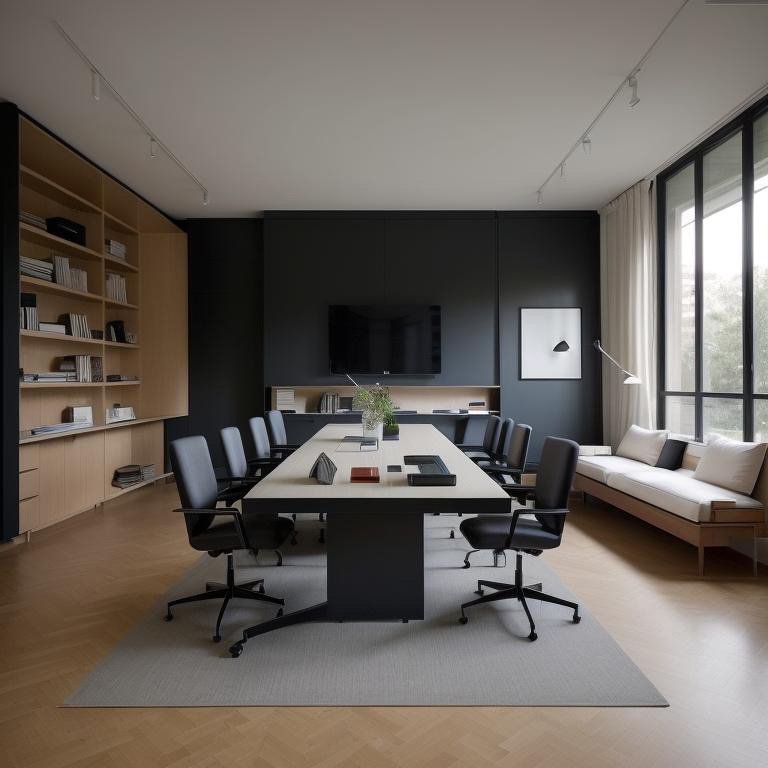
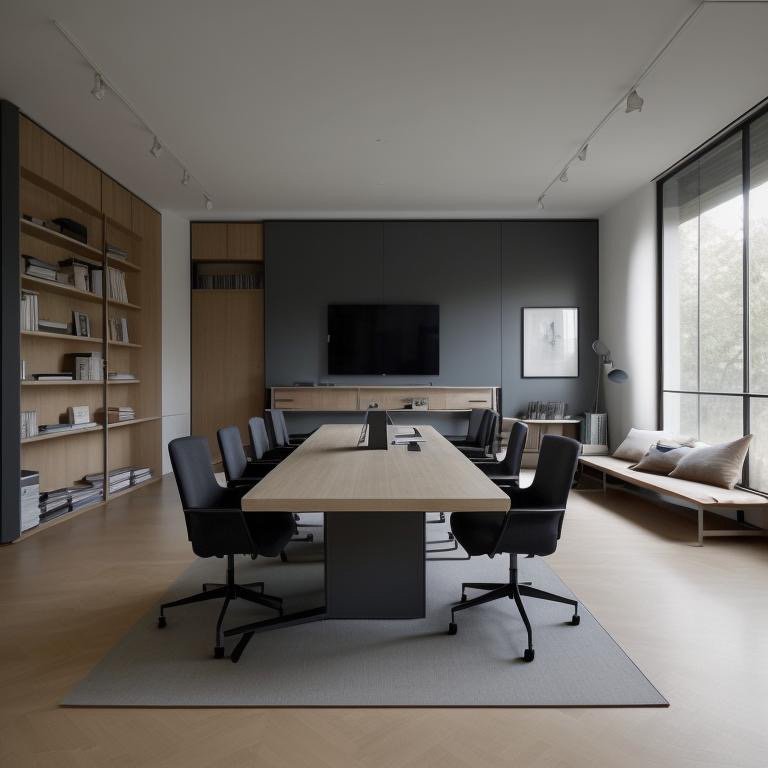
    Bauhaus boardroom with clean geometry, monochrome palette, mathematical discipline

    Bauhaus is sacred ground in design history. It is not a style that can be adopted casually. It is a philosophy—mathematical, taught not invented. It demands clarity, order, honesty, humility, rigor.

    Most contemporary interpretations struggle because they misunderstand the core principle: Bauhaus does not eliminate beauty. Bauhaus eliminates dishonesty. Every form must have function. Every material must be true. Every line must be justified. This is design as moral discipline.

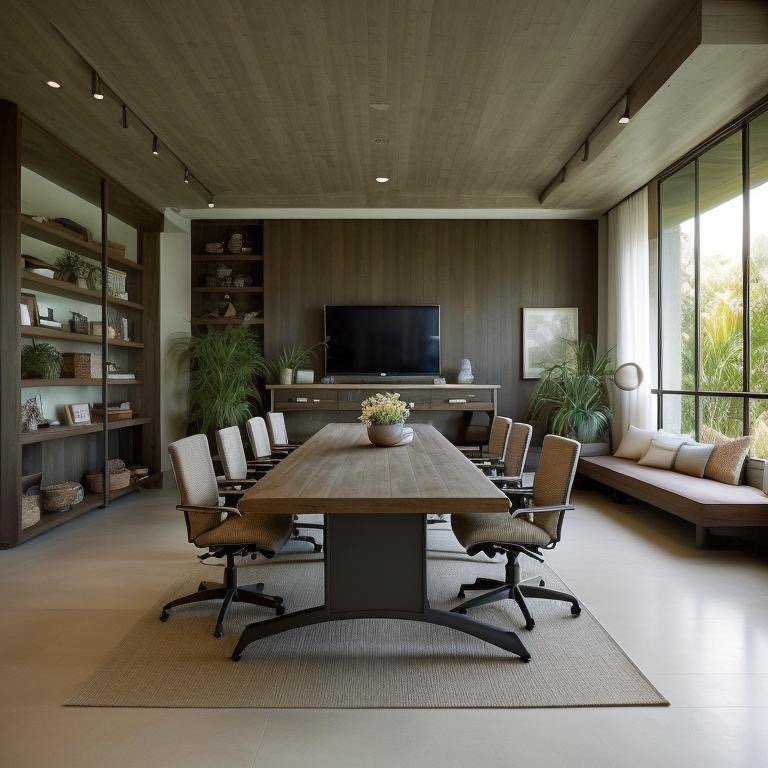
    DBM’s Bauhaus interpretation is almost unnerving in its purity. Geometry is exact. Materials align without ornament. The palette is disciplined—monochromes that speak through reflection and shadow rather than through color. This boardroom could have been approved by Walter Gropius himself. Nothing is loud but everything matters.

    Bauhaus variation with mathematical precision and disciplined material honesty

    Cinematic Intelligence here operated as a philosophical restraint. At every decision point, the question was: Is this necessary? Does this serve function? Does this material speak truth? Most design systems cannot sustain this level of interrogation. Most designers lack the conviction.

    Yet this Bauhaus boardroom proves that restraint is not emptiness. Discipline is not sterility. A room governed by Bauhaus principles is more alive than spaces drowning in decoration. Life emerges from clarity. Strength emerges from honesty.

    The Final Three Reveal the Method

    Across this entire 22-style collection, structure never changed. Proportions never changed. The spatial envelope remained constant. This is not accident. This is evidence.

    This is the DBM method: Styles evolve. Architecture remains sovereign.

    The Cinematic Intelligence engine did not change the boardroom. It revealed it—through California Casual’s warmth, through Bohemian’s richness, through Bauhaus’s clarity, through Expressionism’s energy, through Coastal’s atmosphere, through Chalet’s intimacy, through Chic Contemporary’s precision, and through fourteen other styles, each one proving the same principle.

    One room. Twenty-two languages. One unchanging architecture that could speak every language fluently.

    The Architecture of Infinite Futures

    This collection concludes not with finality but with revelation. Architecture is not a limitation. Architecture is a canvas of infinite futures.

    Cinematic Intelligence is the engine that reveals those futures with precision, emotion, and respect. It understands that style is not surface. It is how a space speaks to those who inhabit it. It is the frequency on which a room communicates purpose, culture, identity, aspiration.

    These final three styles—California Casual, Bohemian, Bauhaus—are not the conclusion of a collection. They are proof of a principle. They are evidence that transformation is not about changing what is. It is about revealing what has always been possible.

    A room is intelligent not because of its decoration. It is intelligent because of how it chooses to think. And that intelligence, once revealed, changes everything.