Category: AI and Architecture

AI applications in architecture

  • Architecture Without Architects: Redefining Authorship in the Age of Intelligent Design

    Architecture Without Architects: Redefining Authorship in the Age of Intelligent Design

    There is a provocative phrase circulating quietly within design circles, spoken not as manifesto but as observable fact: Architecture without Architects. It carries an echo from the mid-twentieth century, when theorist Bernard Rudofsky first invoked it to celebrate the vernacular traditions that built the world before credentialed practice claimed the discipline. Today, that same phrase returns—refracted through the lens of algorithmic intelligence, generative systems, and the unmistakable emergence of distributed authorship.

    But here we must be precise: in 2026, “without architects” does not signify the absence of design intelligence. It signifies a fundamental reorganization of who authors form, how that authorship emerges, and what constitutes legitimate architectural creation. The gatekeepers remain, yet the gates themselves have been redrawn.

    What began as an architectural exhibition celebrating indigenous wisdom has evolved into something far more consequential—a question about the nature of design agency itself in an era where artificial intelligence is not merely a tool in the architect’s hand, but increasingly a collaborator, a generator of alternatives, and in some cases, an independent voice in the creative conversation.

    Rudofsky’s Provocation Finds New Currency

    To understand the present moment, we must return briefly to 1964, when the Museum of Modern Art opened “Architecture Without Architects,” curated by Rudofsky. His thesis was elegant and somewhat heretical for its time: some of the world’s most sophisticated architecture emerged not from academic training or professional credential, but from accumulated vernacular knowledge—climate-responsive design, material intelligence, and community building practices refined across generations without a single “architect” present.

    Rudofsky was not diminishing the value of trained designers. Rather, he was expanding the definition of authorship itself. He was asking: Where does intelligence reside? Who gets to make decisions about built form? What counts as design?

    Today’s technological moment echoes that same set of questions, but with an inversion. Rather than celebrating traditions excluded from formal practice, we are now witnessing how computational systems—trained on decades of built projects, environmental data, and design logic—can generate spatial propositions with a sophistication that rivals human creativity. The question is no longer merely who designed this building, but which intelligence shaped it: human intuition, algorithmic generation, environmental constraints, or the peculiar synthesis of all three?

    “AI has not yet replaced architects. But it is redistributing creative agency in ways that blur the lines between coder, designer, developer, and end-user.”

    The Dissolution of Singular Authorship

    Generative design systems operating within architectural practice today do not function as ghostwriters. They function as genuine collaborators whose outputs carry measurable intelligence. Consider what occurs in a contemporary design workflow:

    A designer sketches intention. An algorithm parses that sketch, reads embedded briefs and constraints, and generates ten coherent alternatives—each responsive to climate data, structural logic, regulatory frameworks, and aesthetic parameters encoded into the system. The designer reviews, selects, refines. The algorithm learns from the selection and proposes refinements. A feedback loop emerges, neither human nor machine leading entirely, but both contributing to a solution that neither could have authored alone.

    This is not delegation. This is co-authorship, and it fundamentally challenges the architectural tradition of the solitary designer as singular genius—a romantic notion that has never fully withstood historical scrutiny, but which persists nonetheless in professional mythology.

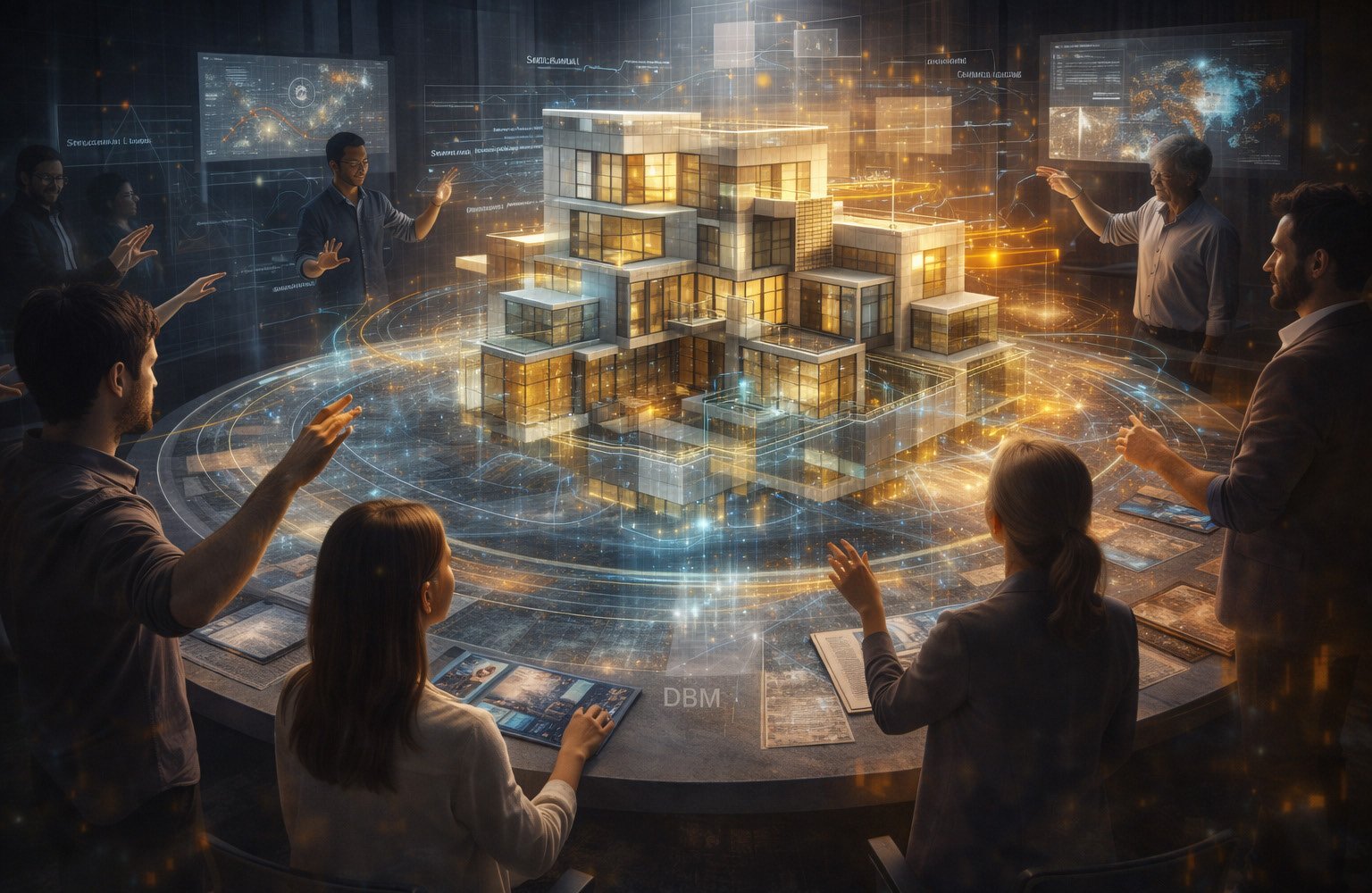
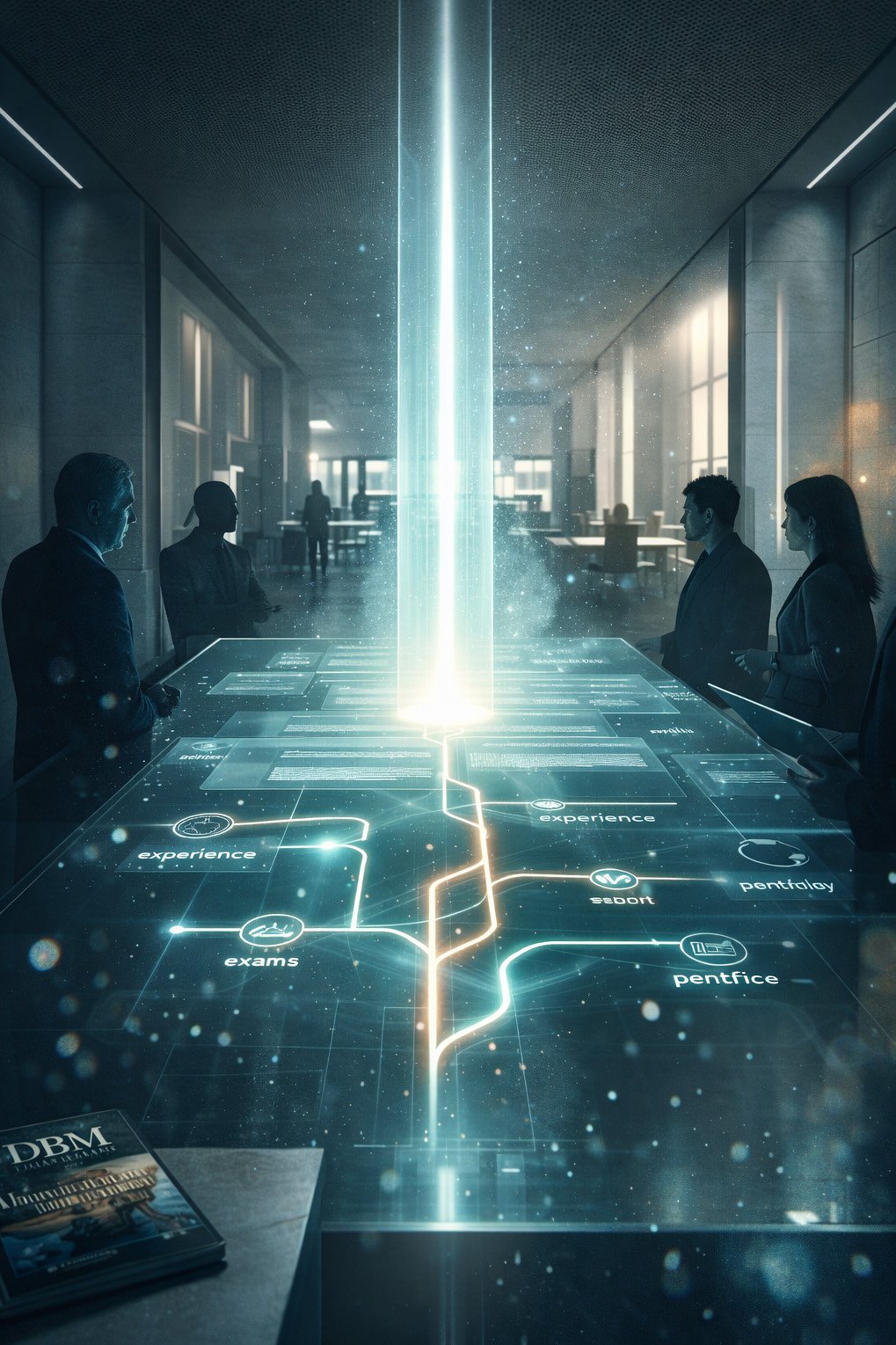
    Design intelligence visualization showing algorithmic design process

    Design intelligence cascades across multiple dimensions: computational systems expand the conceivable before human judgment narrows the field.

    What emerges from this distributed intelligence is architecture that operates differently. It is more responsive to site data—solar orientation, wind patterns, material availability, traffic flows. It is more anticipatory, modeling performance before construction. It is more inclusive of stakeholder feedback because the speed of iteration permits genuine participation rather than the traditional binary of accept or reject.
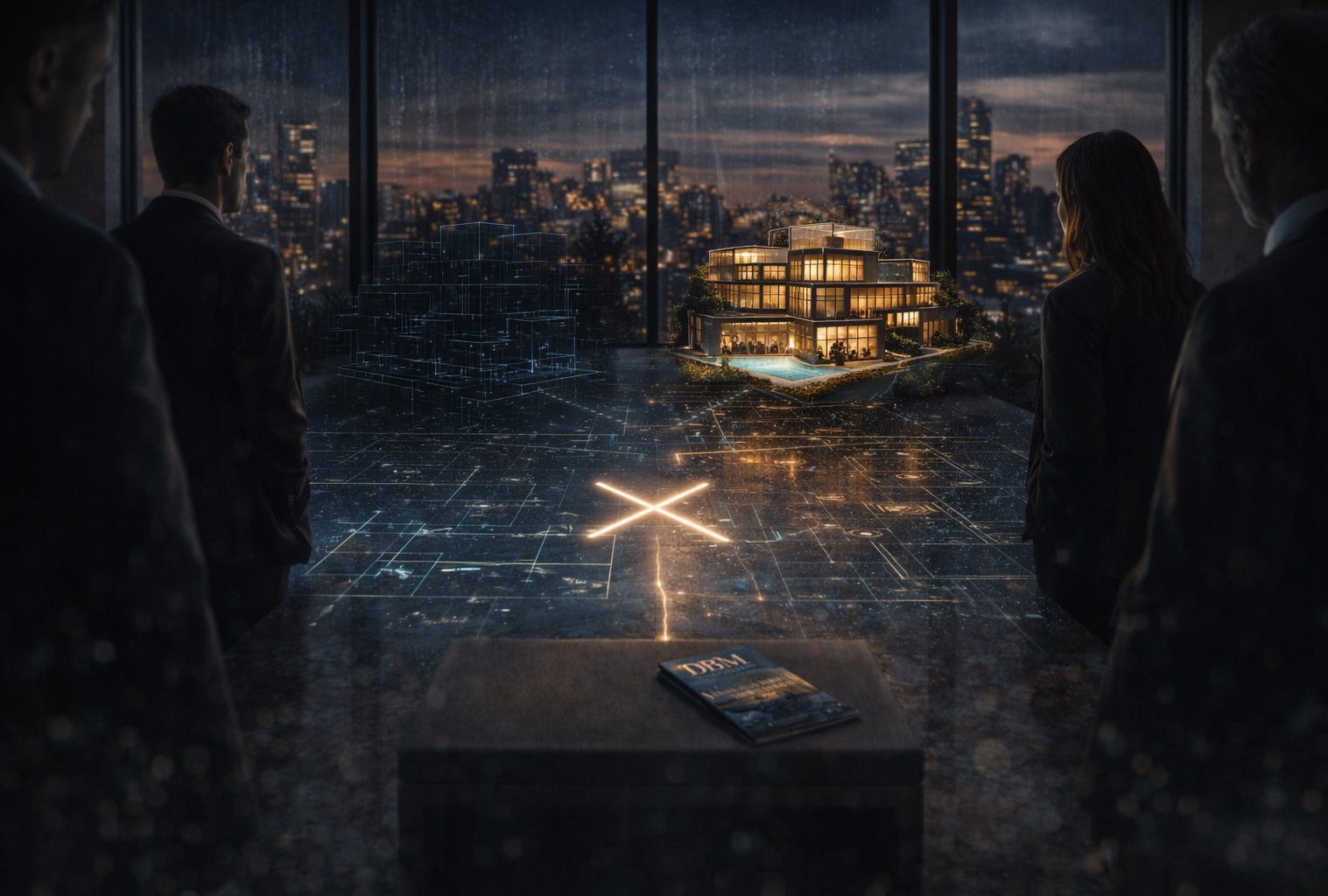
    Is this still architecture? Absolutely. But authorship has become collective, and that collectivity is not a weakness to be transcended but a fundamental recalibration of how design intelligence operates in complex environments.
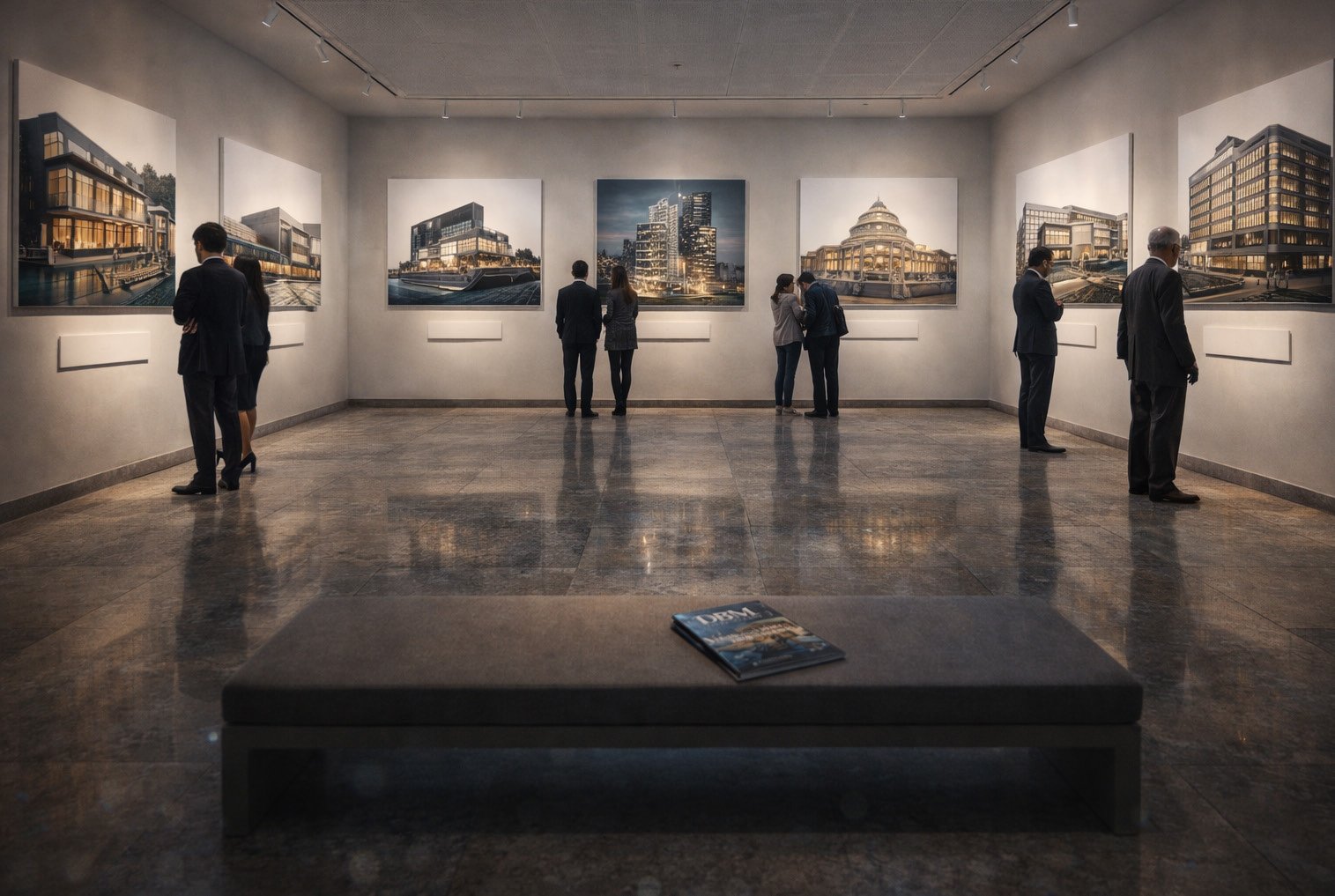
    The Architect’s Metamorphosis

    The profession faces a curious moment. Every major architectural publication has engaged with questions about AI’s role in practice. Industry leaders universally acknowledge that artificial intelligence cannot yet replicate the contextual judgment, ethical responsibility, and cultural intuition that human architects contribute. The most sophisticated practices in the world are not being displaced by algorithms; they are being augmented by them.

    But amplification comes with transformation. The architect’s role is undergoing what might be termed a methodological evolution—from sole author to what we might call an orchestrator of intelligence systems.

    Where the twentieth-century architect was primarily a designer—translator of client intent into built form—the contemporary architect increasingly functions as:

    Curator of computational alternatives. Not generating every option manually, but reviewing, evaluating, and selecting from algorithmically generated possibilities based on intuitive judgment that machines have not yet mastered.

    Editor of emergent outcomes. Refining solutions that arise from complex systems, understanding that design is no longer top-down but increasingly emerges from the interaction of multiple variables and intelligence sources.

    Steward of meaning. Ensuring that the inevitable efficiency and optimization offered by algorithmic systems does not entirely erase the symbolic, cultural, and experiential dimensions that architecture must address—concerns that resist quantification.

    Integrator of distributed expertise. Orchestrating conversations between structural engineers (human and computational), environmental systems, client aspirations, regulatory requirements, and community input in ways that converge toward coherent proposals.

    AI and architecture concept visualization

    The algorithmic hand guides but does not grip: human judgment and computational suggestion form a continuous loop rather than a hierarchy.

    When Design Arises From Ecosystems Rather Than Individuals

    The most important architectural projects emerging in 2026 share a curious characteristic: they are difficult to attribute to a single author. The residential district designed through community participation scaffolded by generative algorithms. The cultural institution shaped by environmental simulation, programmatic stacking, and multiple rounds of stakeholder feedback. The infrastructure that evolved from performance modeling, regulatory requirement, and site-specific constraint.

    These projects are not less designed. They are differently authored.

    This represents not a betrayal of architectural tradition but its logical evolution. Throughout history, buildings have always emerged from collaboration—master builders working with craftspeople, architects collaborating with engineers, designers responding to client constraints. The difference today is that computational systems now participate in that conversation as explicit participants rather than invisible mediators.

    The result is architecture that is simultaneously more responsive and more ambitious. More responsive because real-time environmental data, performance simulation, and stakeholder feedback can inform iterations across dozens of variables. More ambitious because the speed of iteration permits exploration of solution spaces that human designers, working manually, could never traverse.

    “Technology does not strip away authorship. It redistributes it.”

    The Necessary Skepticism

    Yet skepticism remains warranted. Algorithms encode the biases of those who trained them. Optimization can erase the idiosyncratic, the culturally specific, the beautifully inefficient. Distributed authorship, if poorly orchestrated, can produce designs answerable to no one’s judgment. The efficiency of computation can marginalize dimensions of architecture that cannot be quantified—memory, narrative, the weight of historical consciousness.

    The challenge facing the profession is not whether to resist this shift—that resistance is moot—but how to integrate algorithmic intelligence while preserving the elements of architectural practice that cannot be automated: judgment, accountability, and the stubborn human insistence that buildings carry meaning beyond their functional performance.

    Contemporary architectural practice at its best is grappling with this carefully. The most sophisticated studios are not allowing algorithms to make decisions but rather to expand the field of conceivable decisions, leaving the ultimate synthesis to human judgment informed by both computational wisdom and the irreducible complexity of context.

    Collaborative design concept showing multiple intelligence sources converging

    Multiple intelligence sources converge: the contemporary design process is decidedly non-linear, non-hierarchical, and distributed across human and computational participants.

    A Redefinition Rather Than Erasure

    To return to Rudofsky’s original insight: his exhibition celebrated architecture that operated outside formal credentialing, outside academic tradition, outside the professional establishment. It was not a dismissal of trained architects but an expansion of where architectural intelligence could reside.

    Contemporary algorithmic design extends that expansion further. It suggests that architectural authorship can reside in generative systems, in community participation scaffolded by technology, in stakeholder feedback processed through computational interpretation, in environmental data given voice through performance simulation.

    This is genuinely unsettling to a profession that has long defined itself through the authority of individual expertise. But that unsettling is productive. It forces the discipline to articulate what, precisely, architects contribute that algorithms cannot—and to defend that contribution not through credential or gatekeeping but through demonstrated value in the cultural, contextual, and experiential dimensions of the built environment.

    The phrase “architecture without architects,” invoked in 2026, should not be heard as threat but as invitation. An invitation to understand authorship more generously. An invitation to recognize that intelligence is distributed across multiple forms—human intuition and algorithmic generation, professional expertise and community wisdom, individual vision and collective emergence.

    The architect of the future will not be displaced but reimagined: not as sole author but as orchestrator, not as the origin point of all decisions but as the steward of meaning-making in a design process of extraordinary complexity. That is a diminishment only if we insist on measuring it against a romantic ideal of the solitary genius. Measured against the actual sophistication of the problems architecture must now address, it is an evolution toward something more adequate to the moment.

    The buildings being designed today through this distributed intelligence are not lesser for lacking a singular author. Many of them are better—more responsive, more inclusive, more anticipatory of performance and impact. And that, perhaps, is Rudofsky’s true legacy: the understanding that architecture emerges not from the credential of the architect, but from the intelligence that brings it into being, wherever that intelligence resides.

  • The $200 Billion Visualization Shift: How Design Intelligence Is Quietly Reordering the Industry

    The $200 Billion Visualization Shift: How Design Intelligence Is Quietly Reordering the Industry

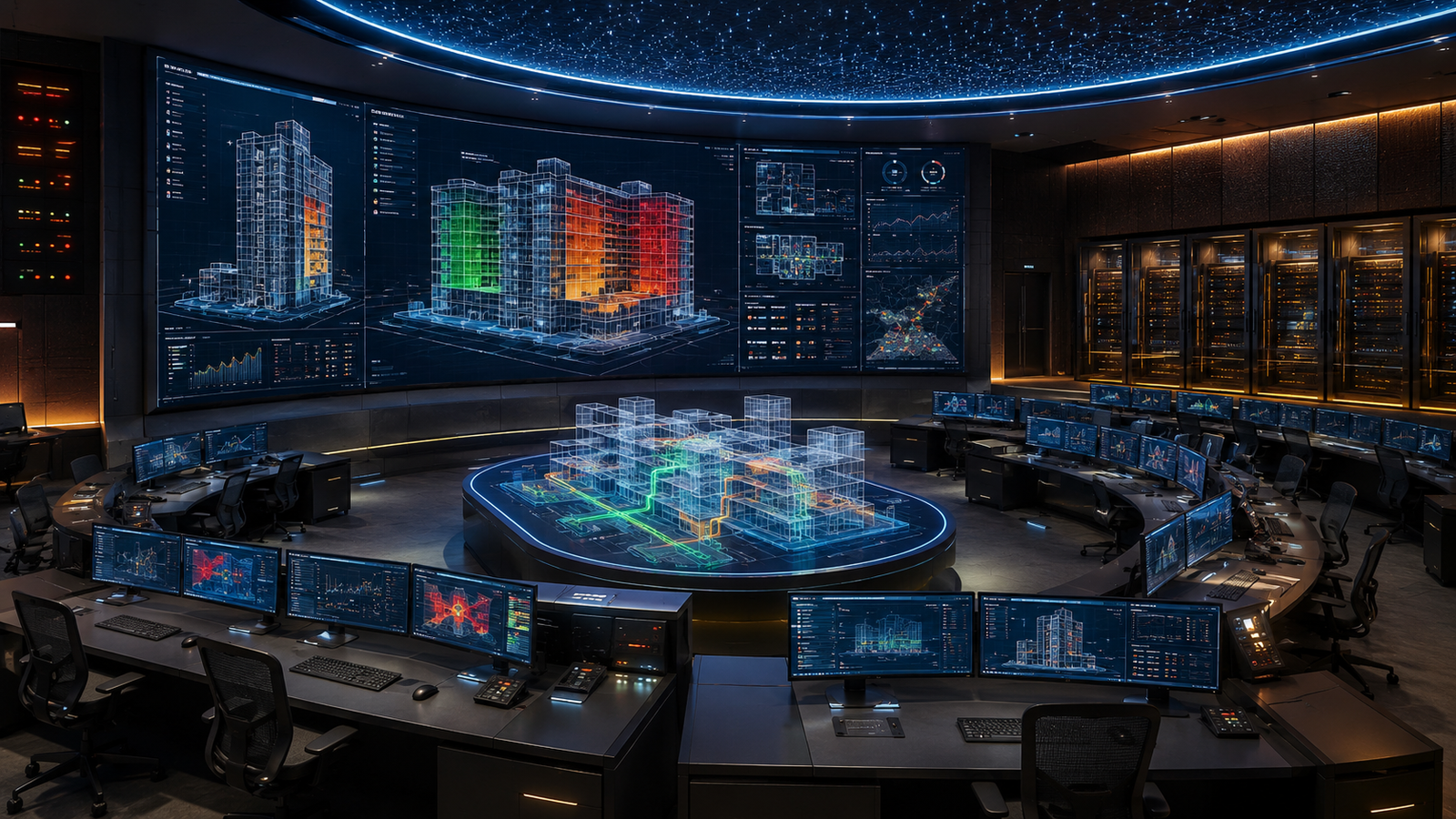
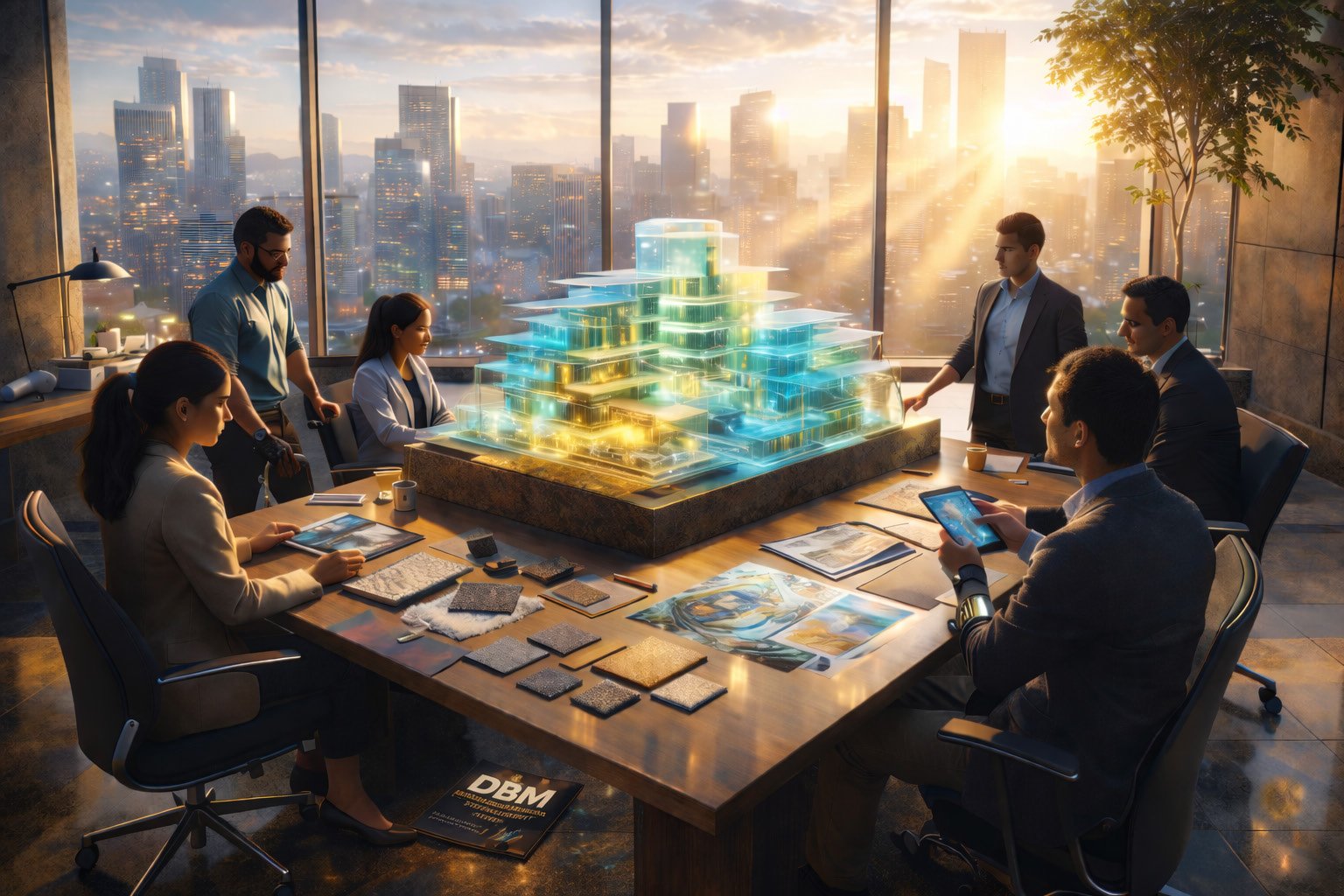
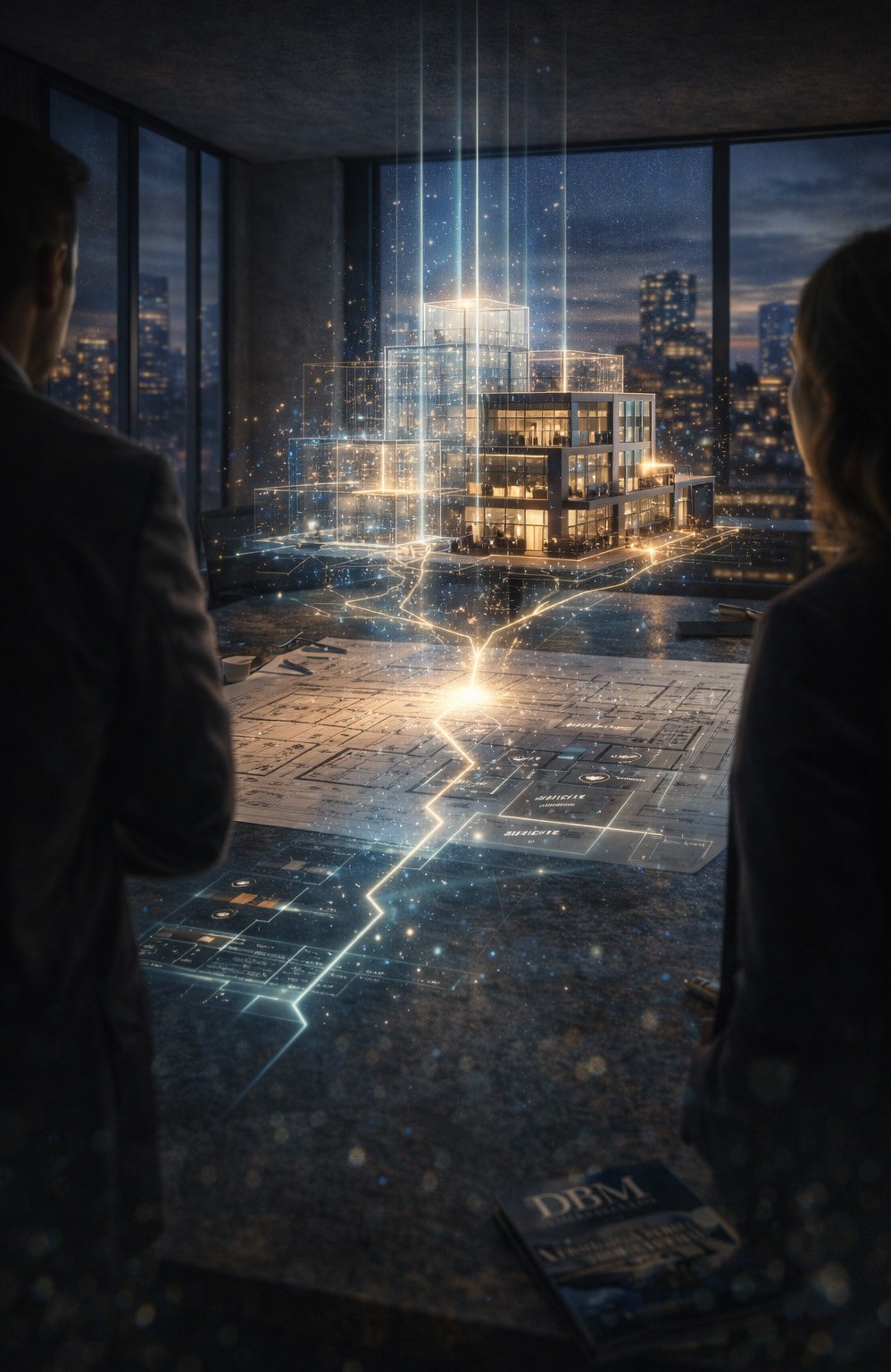
    DBM global design intelligence visualization command center with data processing infrastructure

    There is a particular kind of change that does not announce itself. It does not arrive with declarations or disruption headlines. It moves instead through meeting rooms, inboxes, procurement workflows, and approvals—noticed only after outcomes begin to differ.

    That is how the visualization economy has shifted.

    Over the past several years, architectural visualization has undergone a metamorphosis so profound it borders on invisible. What began as a representational tool—a means of explaining an idea—has evolved into something far more consequential: a decision-making instrument. The image is no longer confirmation. It has become persuasion, arbitration, and increasingly, valuation.

    Industry analysts now estimate that more than $200 billion in global real estate value flows through projects where advanced visualization plays a decisive role—long before construction begins. This figure is not speculative. It is the combined weight of capital allocation, entitlement acceleration, pre-sales confidence, and institutional approval that visualization now quietly influences. It is the price of clarity in an economy increasingly resistant to ambiguity.

    The shift is not aesthetic. It is structural. It is a reorganization of how authority moves through design.

    When Seeing Becomes Deciding

    In traditional architectural practice, visualization followed design. The sequence was linear, hierarchical: concept, schematic drawings, developed design, construction documents, and finally—rendering. The image was a byproduct, a finishing decoration applied to confirm what had already been decided.

    That temporal logic has inverted.

    Today, high-fidelity visualization often enters a project before schematic design is finalized. Sometimes, it precedes land acquisition entirely. Developers test feasibility through simulated environments. Investors assess risk by experiencing space rather than interpreting abstracted orthographic projections. Planning boards increasingly respond not to the geometry of intent but to the clarity of lived experience. The rendering has become the document itself.

    Visualization functions now as the language of alignment—and alignment, in capital markets, moves money. When stakeholders can perceive the same future with clarity, consistency, and temporal immediacy, decision-making compresses. Friction evaporates. Institutional confidence rises. In markets responsive to cross-border investment, this clarity now directly affects project valuation, sometimes by millions before a single trade occurs.

    The implication is vast: visualization has graduated from communication tool to economic instrument.

    The Structural Drivers Behind Acceleration

    The market does not reward complexity for its own sake, yet complexity has become the architectural condition. Contemporary projects must respond simultaneously to environmental constraints, cultural sensitivities, mixed-use programming, evolving work patterns, climate adaptation, and increasingly volatile financing conditions. Sequential decision-making—the old model—becomes a liability.

    Visualization allows these variables to be explored in concert rather than sequence. A single environment can test material performance against daylight modeling against acoustic strategy against cost implications. The trade-offs become visible before they become irreversible.

    Second, timelines have contracted. When construction costs fluctuate and capital markets shift monthly, decision velocity becomes competitive advantage. Visualization compresses deliberation by replacing speculation with experience. A two-week deliberation becomes two days when stakeholders can inhabit the space rather than imagine it.

    Third, distance has collapsed. Global development teams now operate across continents and time zones. The project site exists in one place; decision-makers exist in many others. Visualization becomes the shared ground where decisions are made without physical presence—a kind of spatial lingua franca that transcends geography.

    Together, these forces have elevated visualization from a support discipline into strategic infrastructure.

    The Emergence of Design Intelligence

    What distinguishes the current moment from earlier visualization booms is not resolution, realism, or raw computational horsepower. It is intelligence—systems that do not merely produce images but interpret spatial logic with consistency and coherence across iterations.

    Cinematic Intelligence™ systems preserve architectural intent across multiple design variations. They allow environments to be explored across parallel design languages without fragmentation. A material change, a lighting adjustment, a spatial manipulation can be tested systematically, revealing consequences before they become expensive.

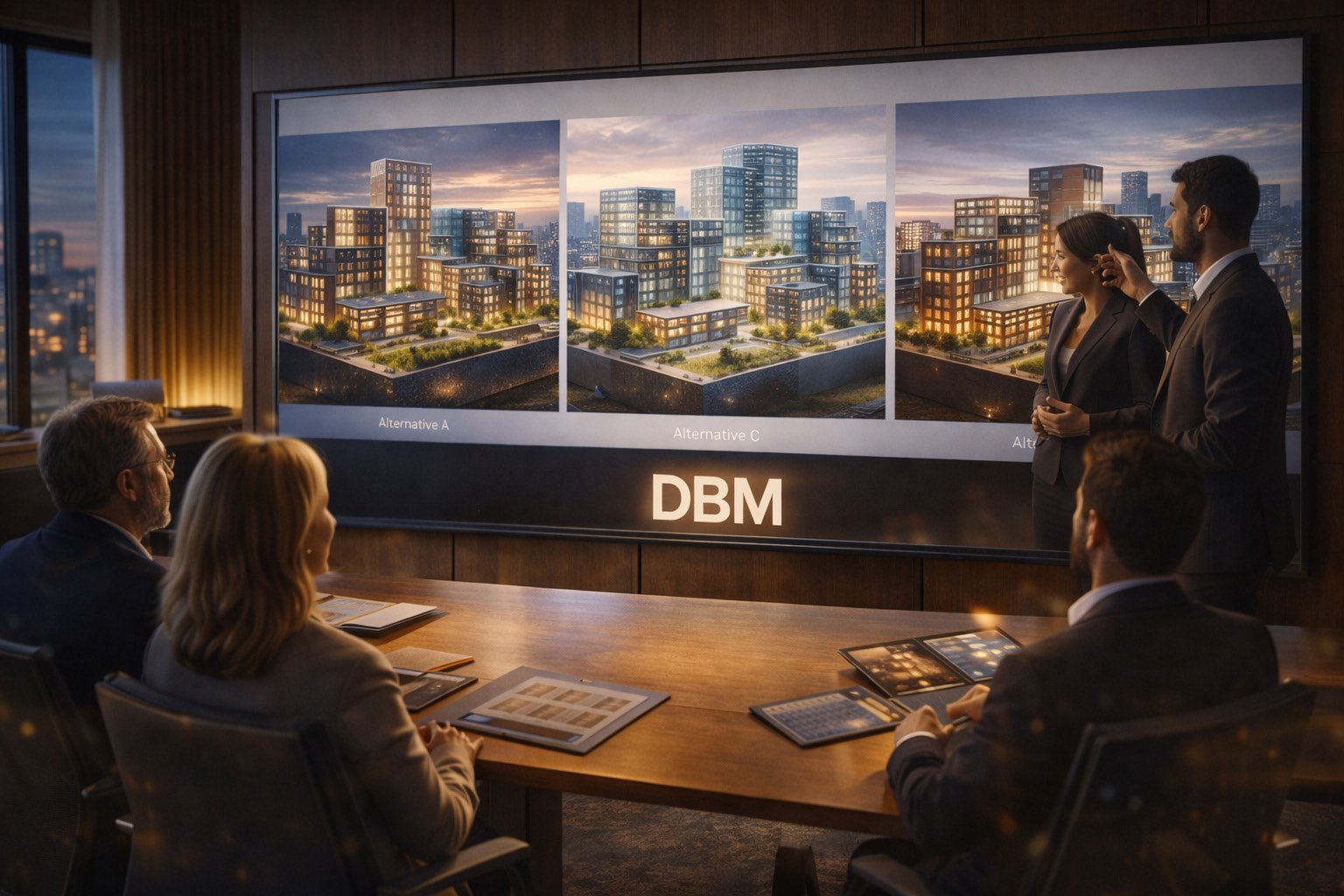
    This fundamentally changes how decisions are made and defended. Instead of committing to a single visual direction early and defending it through approvals, teams can evaluate genuine alternatives. Material strategies, lighting behaviors, spatial atmospheres can be tested comparatively. The trade-offs become legible. Risk becomes quantifiable.

    The value proposition is not image abundance. It is control. It is authorship that remains coherent through iteration. It is the ability to explore what if without losing what is.

    A Quiet Reorganization of Workflow

    Firms that have integrated design intelligence into their operational workflows have begun to move differently through approvals and entitlements. They arrive at presentations not with a singular vision to defend but with options to contextualize. They do not ask stakeholders to imagine. They show.

    This approach produces measurable downstream effects: fewer revision cycles, stabilized approvals, protected design integrity combined with enhanced adaptability. The design authorship becomes stronger, not weaker, because its reasoning is visible.

    The friction that traditionally slowed projects—the back-and-forth between design intent and stakeholder comprehension—diminishes. What emerges is a faster path to institutional confidence, which in capital-intensive industries is the path to realization.

    The Repricing of Visualization

    The $200 billion figure does not represent rendering budgets. It represents downstream economic influence across multiple vectors: pre-leasing and off-plan sales, capital stack confidence and institutional appetite, entitlement and zoning outcomes, brand positioning and market differentiation in competitive landscapes.

    Visualization now shapes perception before the first shovel enters earth. In real estate, perception carries measurable financial weight. Perception determines whether a project attracts institutional capital or pedestrian financing. It determines whether land entitlements accelerate or stall. It determines whether cultural acceptance enables development or resistance forestalls it.

    For the first time in the discipline’s history, visualization is being directly valued as part of project economics, not relegated to the presentation budget.

    An Industry in Adjustment

    Not every practice has adapted at the same velocity. Some continue to treat visualization as presentation polish—a quality-of-life enhancement applied after decisions have been made. Others are experimenting with new tools but without the operational infrastructure to preserve coherence across iteration cycles.

    What is becoming increasingly apparent is that visualization without intelligence creates noise. Visualization with intelligence creates direction. The difference is beginning to manifest in project outcomes—in approval timelines, in capital attraction, in market differentiation.

    The gap between practices that have integrated design intelligence and those that remain in traditional workflows is widening. It is visible not in aesthetics but in economics.

    A Lasting Recalibration of Authority

    This is not a moment of replacement. Architects, designers, and planners remain essential to cultural and spatial innovation. What is shifting is the medium through which their thinking is tested, communicated, and trusted by stakeholders whose decisions control capital allocation.

    Design intelligence does not replace authorship. It amplifies it. It allows intention to persist through iteration. It makes reasoning visible to those who fund it.

    As this shift continues—and it is not a future condition but a present one—the industry will gradually stop asking who designed the space and begin asking how clearly was it understood. Understanding becomes the measure of design excellence, not form alone. Clarity becomes a market advantage, not a luxury.

    The $200 billion visualization shift is not awaiting consensus or industry-wide validation. It is already embedded in how decisions are being made, in which projects move forward, in which practices attract institutional capital.

    Most industries recognize structural shifts only after they have passed, when historians note the moment of inflection in retrospect. Architecture is in one now—still unfolding, still comprehensible in real time for those attending closely. The question is not whether visualization will reorder the discipline. It already has. The question is how deeply practices will integrate design intelligence into their operational DNA, and how quickly.

  • The End of the Architecture Degree Monopoly

    The End of the Architecture Degree Monopoly

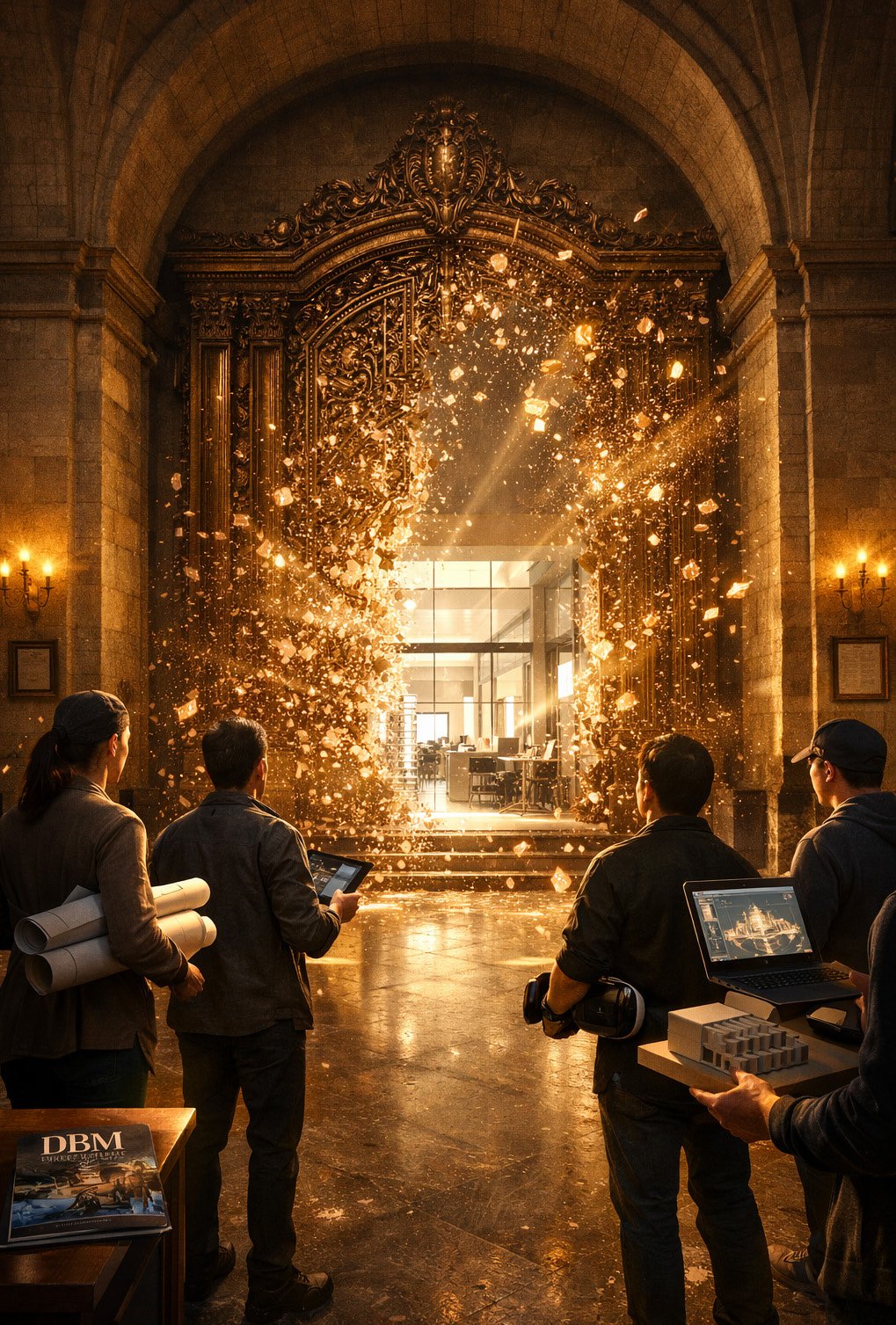
    Golden portal revealing modern office with transformed spatial hierarchy

    For over a century, architecture followed a script. You studied for five years, apprenticed for three more, accumulated hours under licensed supervision, passed an examination, and then—only then—could you legally call yourself an architect. The credential preceded the work. The title governed the practice. The degree was not a preparation for architecture; it was the permission slip to do architecture.

    That script no longer governs reality. And the architecture industry is discovering what happens when regulatory gatekeeping collides with market velocity.

    The shift began quietly. Several U.S. states have now revised their licensure pathways to permit architectural licensure without an accredited degree. Instead, they require demonstrated experience—portfolios, project leadership, peer validation. Not a piece of paper. Evidence. It is a subtle distinction with profound consequences. The credential shifted from predictive (you studied this, so you can probably do it) to demonstrative (you have done this, so you can clearly do it).

    But the regulatory change only codified what the market had already decided. Firms hired non-degree practitioners—technologists, designers, builders who came from diverse backgrounds—because those practitioners could produce at scale and iterate with intelligence. A parametric modeler trained in software development could generate more informed spatial variations than a traditionally educated architect beholden to a singular design method. A builder with deep material knowledge could make faster, more informed decisions about performance and craft. A designer from another discipline could bring fresh conceptual frameworks to problems that institutional architecture education had calcified into orthodoxy.

    Technology collapsed the barrier. Parametric modeling, Building Information Management, and AI-assisted iteration removed the artificial scarcity that once justified credentialing gatekeeping. There was no longer a mystique to architectural knowledge that required years of apprenticeship to unlock. The tools democratized the syntax. The methods became accessible. What remained was not credential but cognition—the ability to think spatially, to iterate intelligently, to understand how design decisions propagate through systems.

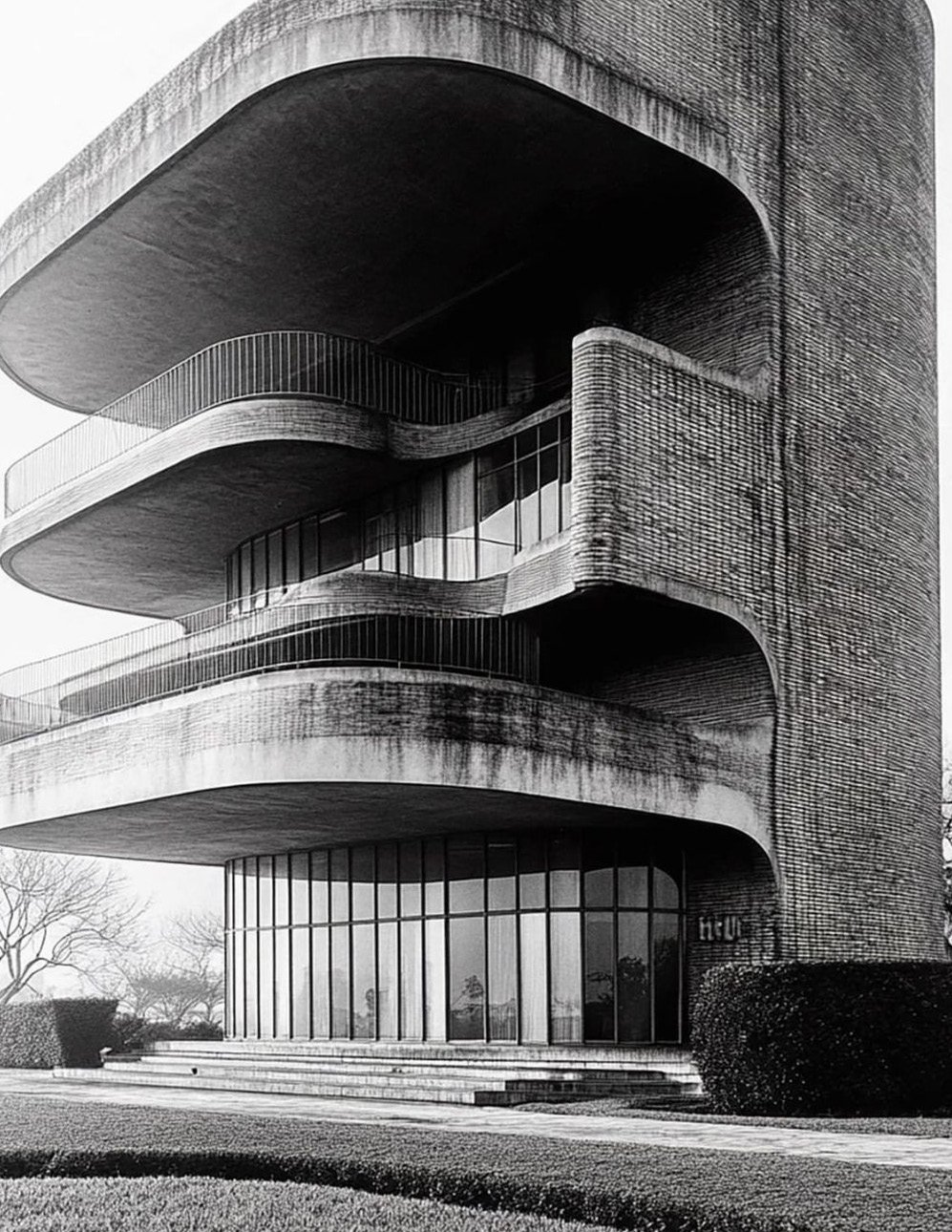
    Architectural space showing sophisticated spatial reasoning and material intelligence

    The Redefinition of Skill

    AI accelerated this transformation. Suddenly, “architectural skill” was no longer synonymous with “degree-holding architect.” It meant something more granular and more powerful: the cognitive advantage to work at speed with complexity, to evaluate spatial options across multiple variables, to understand how form relates to function and culture and cost.

    A designer could now iterate through dozens of office configurations in hours—each one rendered with photorealistic fidelity, each one evaluating acoustics and daylighting and material performance. They did not need to spend three years learning by imitation to access this capability. They needed to understand the problem and trust the tools. And the tools themselves had become intelligent enough to scaffold the thinking.

    Cinematic Intelligence™ exemplifies this pivot. It does not require an architectural degree to operate. It requires spatial understanding, design intention, and the ability to brief a cognitive engine on what you want to explore. A facility manager working with a design tool can now generate office iterations that rival what a traditional architecture firm would have charged $50,000 to produce. Not because the facility manager became an architect, but because the tools distributed architectural capability across the organization.

    What emerged from this distribution is something that credentialing systems struggle to accommodate: a new class of practitioners. Non-traditional designers who came from marketing, from software, from construction, from creative fields entirely outside the architecture discipline. AI-augmented architects who learned on the job rather than in school. Interdisciplinary creators who saw spatial problems as one expression of a larger design challenge.

    Contemporary office demonstrating refined spatial composition and material calibration

    The architecture schools, for their part, are slowly shifting their identity. No longer gatekeeper, increasingly incubator. The best programs now teach frameworks for thinking spatially and iteratively, rather than anointing students with a credential. They prepare people to work with intelligence engines, not replace them. They cultivate judgment—the ability to evaluate when a design is working and when it needs to shift. That judgment is increasingly valuable and increasingly difficult to automate.

    The Distribution of Authority

    The most consequential shift is psychological. For a century, architectural authority was concentrated. The licensed architect was the sole arbiter of spatial decisions in most commercial contexts. Their vision governed. Their judgment was final. Their name went on the letterhead, and their credential stood as proof that the decisions were defensible.

    What is emerging now is diffused authority. The VP of Operations has spatial judgment. The design director brings legitimate architectural thinking to the table. The facilities team understands how space serves organizational culture. The contractor, who knows the site and the constraints, becomes a co-author of design. The executive leadership, freed from deferring to credentialed expertise, can ask better questions: “What should this space make possible? What character should it have? What kind of work should it enable?”

    This is not anti-expertise. It is anti-credential. The expertise—spatial reasoning, material knowledge, understanding of how design propagates—remains essential. But the credential that once bundled this expertise exclusively is no longer the only pathway to access it.

    Firms that once hired a single architect to design their office now assemble a team: a spatial strategist, a technologist who understands rendering and iteration, a material specialist, perhaps a traditional architect whose role is now to curate and refine rather than originate. The work becomes collaborative in a way that credential-based structures made difficult.

    Refined architectural interpretation showing disciplined materiality and spatial clarity

    The Future of Licensure

    Licensure itself is undergoing quiet revision. Some states are experimenting with “practice-based” pathways that require demonstrated work rather than degree completion. Others are creating tiered credentialing—specialist licenses for specific domains (workplace design, parametric systems, material engineering). Still others are simply recognizing that the market is already licensing people through hire, through portfolio, through repetition and success.

    The traditional AIA-pathway architecture degree will persist. There is genuine value in a comprehensive education that combines history, theory, systems thinking, and practice exposure. But it will no longer be the only pathway. The monopoly is ending because the conditions that justified the monopoly—scarcity of knowledge, complexity that required extended apprenticeship, the need for a regulatory proxy for quality—no longer exist.

    What emerges is something closer to meritocracy, at least in theory. Can you think spatially? Can you iterate intelligently? Can you brief a design engine and evaluate its output? Can you understand how materials and light and proportion affect human experience? Can you see the connection between space and organizational culture? If yes, you have architectural skill. The credential becomes secondary to evidence. Credibility becomes harder to fake because the work is visible, evaluated, refined in real time by stakeholders who understand the stakes.

    The industrial office crisis forced the architecture industry to confront something uncomfortable: that traditional pathways no longer guaranteed the expertise that users actually needed. The regulatory and market response has been to distribute authority, to trust judgment wherever it emerges, and to believe that tools intelligent enough to scaffold thinking have made the monopoly obsolete.

    The architecture degree will survive. But its purpose has shifted from licensing to incubation. And the architectural authority it once concentrated is now distributed across a field of practitioners who came to the work through a hundred different paths, all of them now legitimate.

  • The Rise of the Ghost Architect: How Buildings Are Being Designed Without Names

    The Rise of the Ghost Architect: How Buildings Are Being Designed Without Names

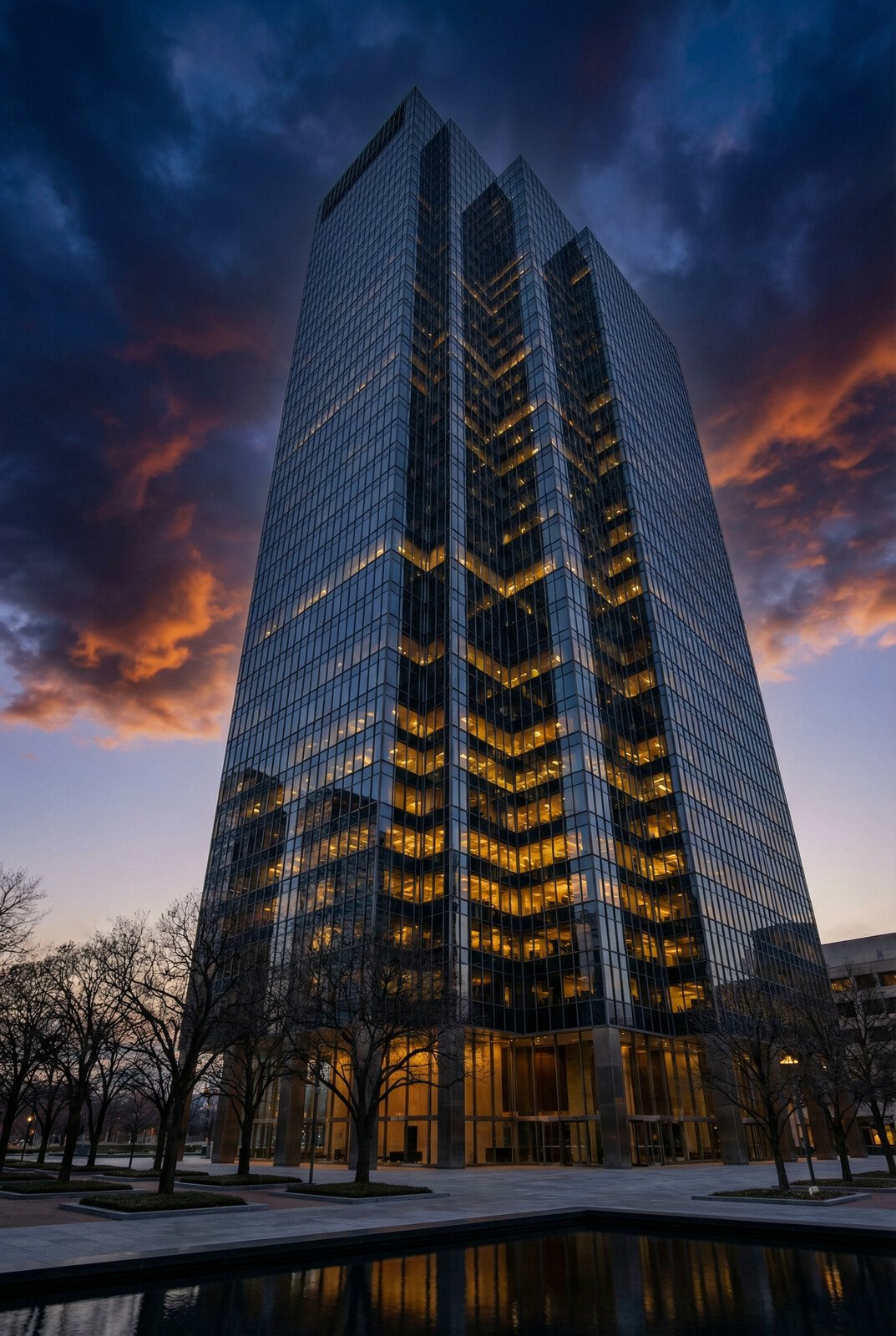
    night cityscape with illuminated buildings

    There is a figure in contemporary architecture who has no name, attends no meetings, signs no drawings, claims no credit. Yet influences every decision. Shapes form. Determines mood. Establishes proportion. Establishes identity. This figure is not a person. It is a system. And it is reshaping how buildings come into being.

    Call it the ghost architect. Not metaphorical—functional. An intelligence that inhabits the early stages of architectural conception, working before human architects are formally engaged, without the constraints of professional accountability, without the friction of client relationships or regulatory submission. The ghost architect explores. Tests. Visualizes. Fails silently. Iterates at velocity. Then vanishes before the real work begins.

    What remains is a fully formed spatial concept. A massing that feels inevitable. A proportion system that appears natural. An aesthetic sensibility that suggests deep research and intentional curation. But it emerged from no sketchbook. No design firm fought for it in a charrette. No architect’s signature appears anywhere on the work. It was made by an intelligence that does not require attribution to do what it does best: generate possibility at scale.

    Architecture Was Always About Authorship

    The discomfort with the ghost architect runs deep because architecture in the modern era has been fundamentally tied to the idea of the author. The architect as author. The firm as the site of creative intention. The building as the expression of individual vision. Frank Lloyd Wright’s signature was as much a part of his architecture as his proportion systems. Zaha Hadid’s authorship was inseparable from her formal language. The building was the architect made visible.

    This wasn’t accidental. It was the foundational mythology of Modern architecture—the belief that great spaces emerged from great minds, that individual genius was the origin point of spatial excellence. Clients hired architects because they wanted to access that genius. Developers competed for landmark architects because the name on the building added value. The whole infrastructure of contemporary architectural culture—the awards, the publications, the canons of taste—was built on the assumption that the author mattered.

    architectural concept visualization

    But clients stopped caring about this mythology earlier than anyone realized. They stopped asking “who is the architect?” and started asking “what is the space?” The shift was nearly invisible at first. A developer would consult an AI visualization engine to test massing options before engaging an architect. A real estate firm would use Cinematic Intelligence™ to pre-visualize a property’s potential before the design was formally commissioned. A marketing team would request three spatial variants—three different aesthetic treatments of the same program—and show them to investors before a single conceptual drawing was approved.

    The ghost architect was born in these moments. Not in a laboratory or a research initiative, but in the actual workflow of real development. It emerged because it solved a problem: how to explore spatial possibility quickly, cheaply, and without the overhead of a full architectural team. The developer gets designs. The investor sees options. The project moves forward. The architect arrives after the major decisions have been made.

    The Ghost Architect Handles Exploration; The Human Architect Handles Responsibility

    This is where the discomfort becomes productive. An AI system can visualize spatial concepts because visualization is a technical competency. It can propose massing, test proportions, render material studies, and generate variants at a speed that no human team can match. It can do all of this without exhaustion or ego or the need for recognition. It is, in purely mechanical terms, excellent at early-stage design exploration.

    But there is something it cannot do. It cannot choose wisely. It can generate options. It cannot take responsibility for them. It can propose futures, but it cannot believe in them, cannot defend them, cannot sit with the client and explain why this particular future is worth building. The ghost architect proposes. The human architect chooses.

    varied architectural concept studies

    The distinction matters because it reframes what architecture actually is. For much of the twentieth century, architects believed their primary role was conceptualization—the generation of spatial ideas. But what the ghost architect reveals is that this belief was only partly true. Clients don’t pay for concepts. They pay for outcomes. They pay for spaces that function, feel right, perform economically, and endure culturally. Concept generation is part of that, but only part.

    The human architect’s real work is judgment. Judgment about which concept deserves to be built. Judgment about which proportions will actually serve the program. Judgment about which aesthetic gestures enhance rather than distract. Judgment about how a building will sit in its context and carry its meaning across decades, not just across the presentation. The ghost architect can propose. Only the human architect can judge.

    This is uncomfortable because it means architecture is smaller and more specific and more relational than the mythology suggested. It’s not about individual genius producing unprecedented forms. It’s about experienced practitioners making careful choices about which proposals deserve the weight of built reality. It’s about responsibility rather than originality.

    Attribution Will Become Irrelevant, Then Important Again

    The next decade will force a reckoning with attribution. Some buildings already exist in a kind of authorship limbo—visualized by AI, developed by corporations, managed by firms, inhabited by people who will never know or care who designed them. The question of “who is the architect?” will become increasingly unanswerable. And that is, paradoxically, an opportunity.

    integrated architectural visualization

    Because once the mythology of the author is stripped away, what remains is the actual work: the calibration of space to purpose, the alignment of form to function, the discipline of proportion, the sophistication of material. These things don’t require a signature. They require thinking. And thinking is what remains when the ghost has finished its work.

    The buildings of the future are already being imagined. Quietly. Without names. Without meetings. Without the friction and politics and ego that have always characterized architectural practice. They are being imagined by systems that propose and propose and propose until something emerges that works. Then a human architect inherits that work, judges it, refines it, and takes responsibility for it. And somewhere in that inheritance is where real architecture happens.

    architectural massing study

    The Ghost Architect Is Not the Future; It’s the Present

    Some fear this moment. They see the ghost architect as a harbinger—the beginning of the end of architecture as a human discipline. But this misreads what’s actually happening. The ghost architect doesn’t replace the human architect. It liberates the human architect from the pretense of authorship. It says: stop trying to be the sole origin of all spatial ideas. Stop defending your ego in the form of formal gestures. Stop believing that greatness comes from isolation.

    Instead, engage with the abundance of spatial proposals. Judge them carefully. Choose what actually serves the building and the people who will inhabit it. Refine what needs refinement. Reject what deserves rejection. Take responsibility for the outcome, even if you didn’t generate the initial concept.

    refined architectural proposal

    This is harder work than conceptualization, not easier. It requires taste. It requires judgment. It requires the ability to see through visual spectacle to actual spatial truth. And it requires the courage to say: this idea came from elsewhere, but I am choosing to build it, and I am responsible for that choice.

    The ghost architect has already begun its work. The buildings being designed right now—before you read this—are being shaped by systems that propose at velocities humans cannot match. And the question facing architecture is not whether to resist this reality, but whether to rise to the challenge it presents. Can architects become judges of spatial quality instead of generators of spatial novelty? Can they take responsibility for choices they didn’t originate? Can they do the harder work of curation rather than the more celebrated work of creation?

    curated architectural solution

    The ghost architect is not a threat to architecture. It is a test. And architecture has always been best when it understood itself as a discipline of judgment, not of originality. The buildings that endure are not the ones that were unprecedented. They are the ones that were, at every moment of decision, chosen carefully. The ghost architect can generate the options. But only the human architect can choose wisely. And in that choice—in that responsibility—is where real architecture lives.

    architectural space in context

    detailed architectural realization

  • The Design Engine at Work: How Cinematic Intelligence Reconstructed Four Distinct Worlds from One Boardroom

    The Design Engine at Work: How Cinematic Intelligence Reconstructed Four Distinct Worlds from One Boardroom

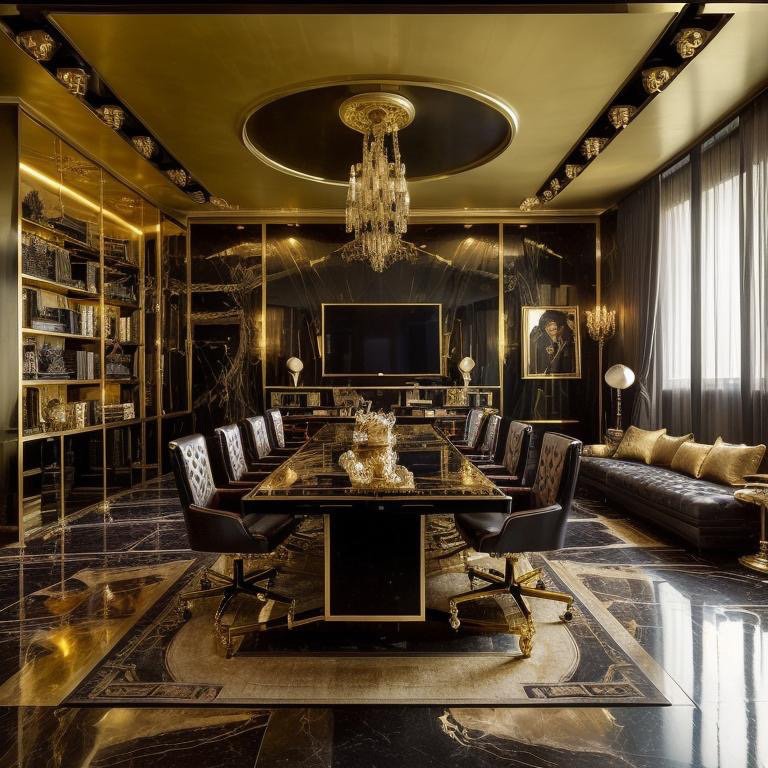
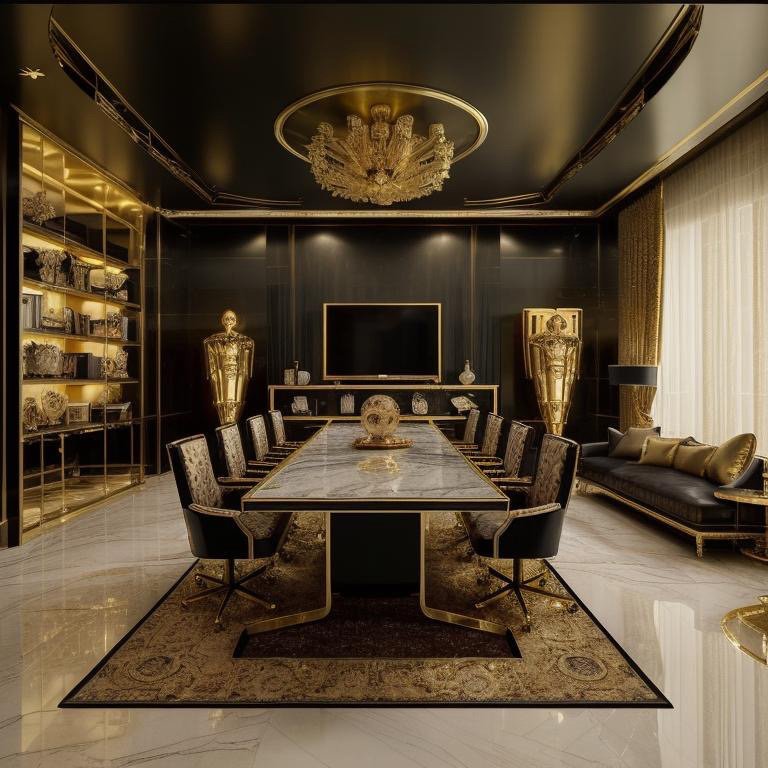
    Hollywood Regency boardroom with gilded surfaces, dramatic lighting, and mirrored walls

    Four Worlds from One Blueprint

    Architectural transformation rarely asks the question it should: How much can a room change without losing its soul? Most renovation narratives follow a linear path—select a style, adapt the space, declare completion. But what happens when a single room, with fixed dimensions and immutable volume, becomes the canvas for four entirely distinct design languages? What remains when everything else is stripped away?

    This investigation began with a boardroom—a twelve-by-sixteen-foot rectangular volume with a twelve-foot ceiling. The geometry was absolute. The rhythm immutable. Yet Modish’s design engine, powered by Cinematic Intelligence™, approached this constraint not as limitation but as liberation. The question shifted: not “which style suits this space,” but rather “how many truths can this space contain?”

    The answer, across four interpretations, revealed something unexpected about design itself. The room’s identity is not fixed in its proportions. It lives in its emotional temperature. It breathes through its material language. It speaks through light.

    Hollywood Regency: Excess with Discipline

    The first interpretation treated the boardroom like a film set. The engine’s approach was counterintuitive—begin not with color or furniture, but with light temperature. Warm golds became the foundational layer. The ceiling transformed into a stage. The conference table, once merely functional, became the protagonist. Shelving shifted into luminous frames, backlit and deliberate.

    Hollywood Regency, in its purest form, is controlled spectacle. It seduces without apology. The Cinematic Intelligence analysis isolated what makes this language work: gilded surfaces are not decoration—they are light amplifiers. Mirrored atmospheres are not vanity—they are spatial multiplication. Every surface participates in drama.

    Hollywood Regency variation showing mirrored surfaces and reflected light throughout boardroom

    The room in this iteration became sensual. Power manifested not through weight but through luminosity. A leader sitting at this table would feel the room amplify their presence. That was the intention. That was the success metric.

    Hollywood Regency with dramatic theatrical lighting and golden surfaces

    Greek Revival: Precision as Poetry

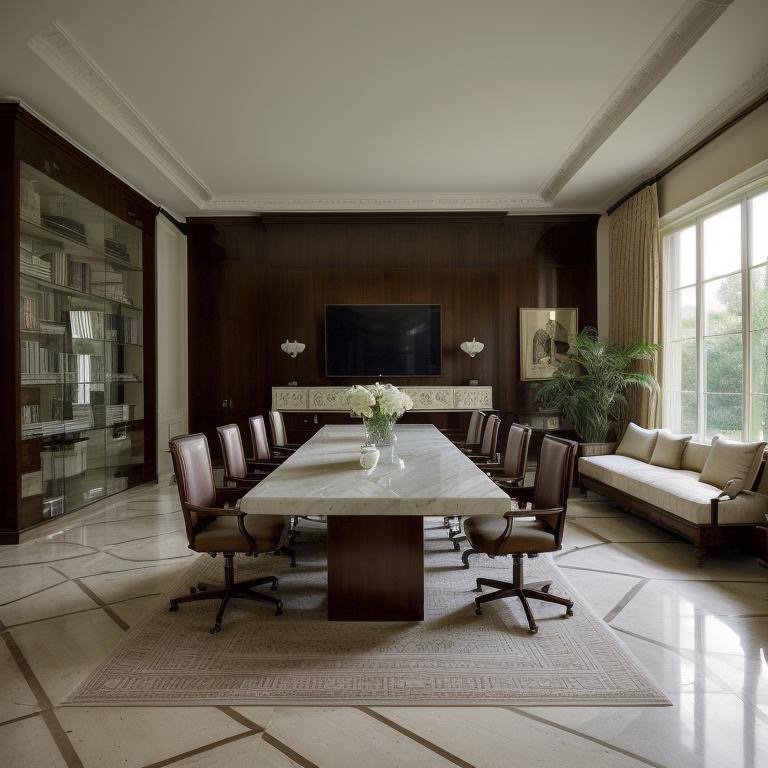
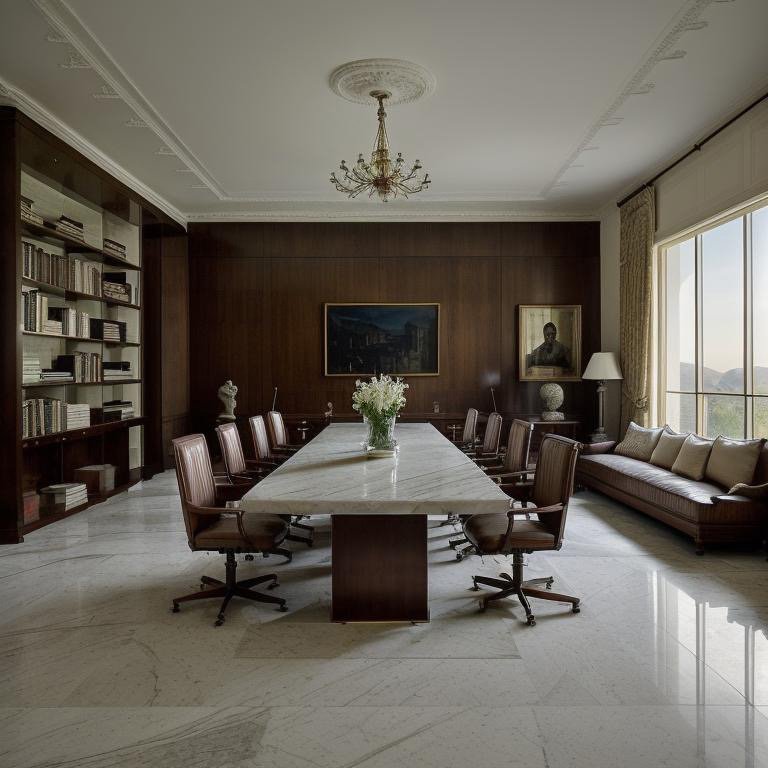
    The second interpretation inverted the emotional temperature entirely. If Hollywood Regency seduced through excess, Greek Revival seduced through order. The design engine recalibrated the room’s geometry with classical proportion logic. Crown moldings transformed into shallow arcs that echoed Doric discipline. Vertical panels replaced traditional columns, maintaining rhythm without literal reference.

    Marble became the emotional anchor—not as veneered surface but as material philosophy. Veining patterns were selected to reinforce the room’s linear logic. Every geological mark had purpose. The palette remained cool. The light became even and scholarly. This was a room designed for clarity of thought.

    Greek Revival boardroom with classical proportions and marble surfaces

    Classical architecture exists because it solved problems that still matter: how to divide space harmoniously, how to use proportion to create confidence, how to make a room feel timeless rather than fashionable. The boardroom in this form became a temple to precision. A leader here would feel held by geometry itself.

    Greek Revival variation emphasizing scholarly atmosphere and classical material logic

    Gothic Revival: Depth Through Restraint

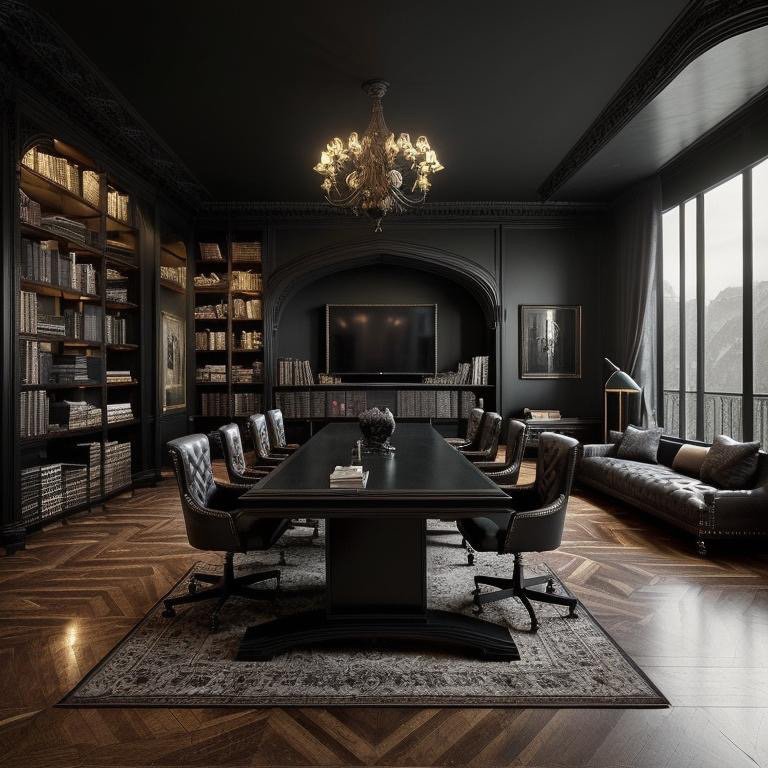
    The third interpretation tested restraint in the presence of drama. Gothic Revival is often misread as darkness. It is not. It is selectivity. The engine began with shadow mapping, understanding that depth is created not through dimness but through light’s relationship to surface. The room darkened, but only to elongate perception. Light became sculptural.

    Charcoal walls absorbed rather than reflected. Obsidian surfaces created depth through non-reflection. Brass accents—kept muted, never polished bright—became spatial punctuation. This was mystery without heaviness. A sanctuary for strategic thinking. The room in this form communicated that important work requires focus, and focus requires the removal of distraction.

    Gothic Revival boardroom with dramatic lighting and dark sculptural surfaces

    Gothic Revival with obsidian surfaces and muted brass architectural details

    Power here was quiet. Confidence manifested as gravitas. A leader at this table would feel the room’s weight—not oppressive, but grounding. Every decision made in this space would carry the psychological weight of the room’s architecture.

    Farmhouse Modern: Authority Meets Comfort

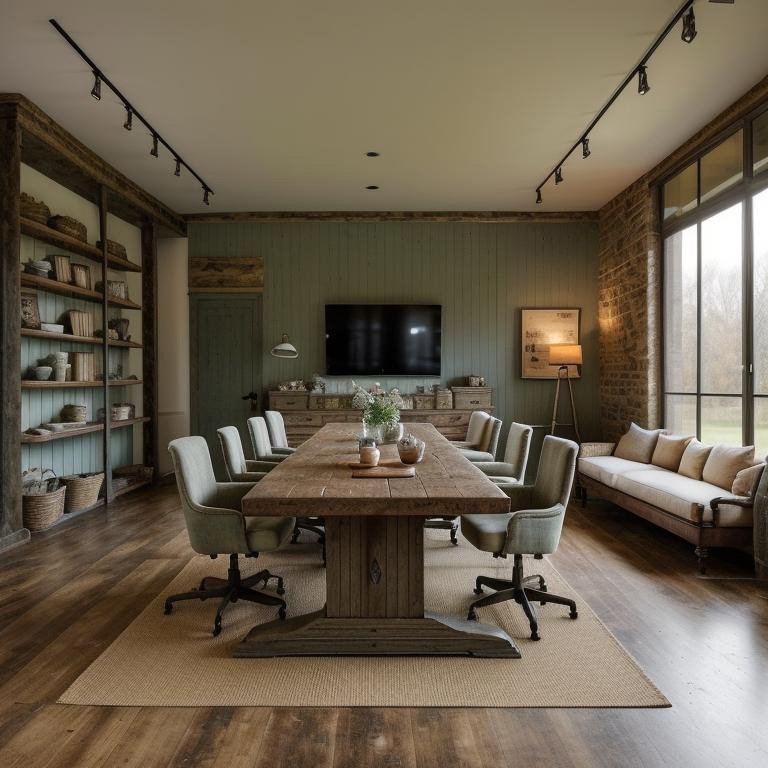
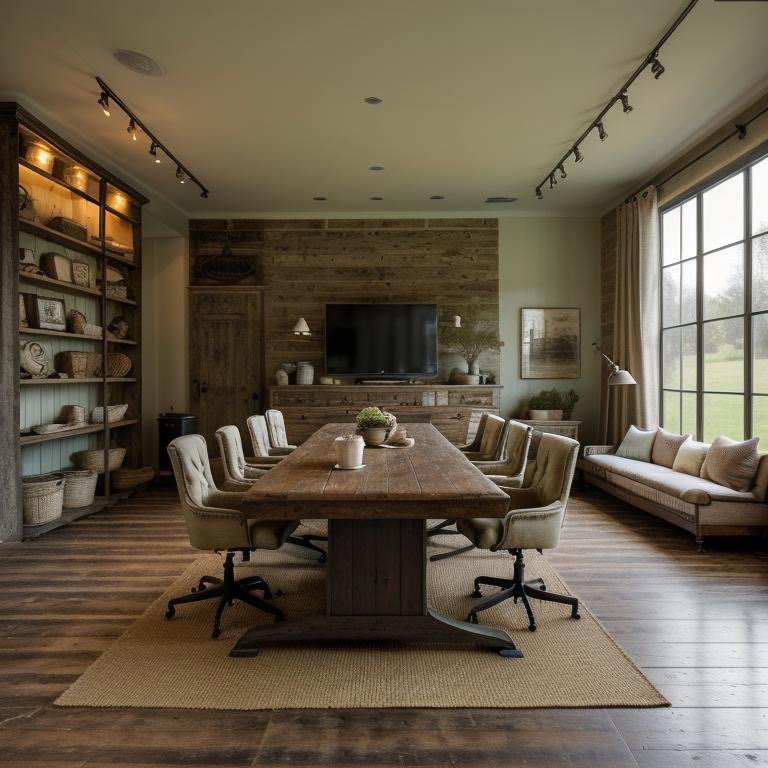
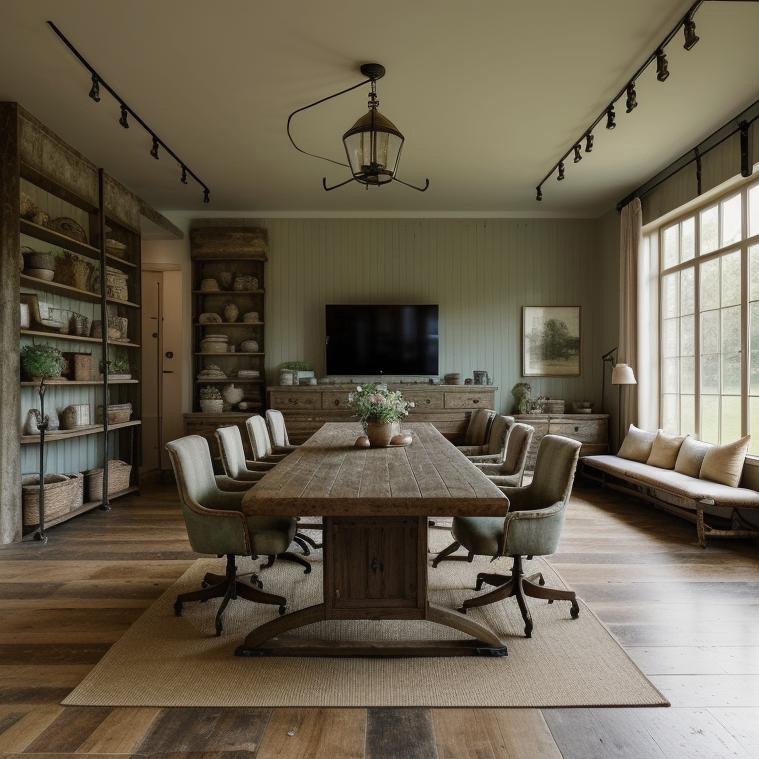
    The fourth interpretation posed the hardest translation: how does executive leadership live in warmth? Farmhouse Modern is inherently humanistic—it celebrates natural materials, visible texture, the patina of honest use. Yet it is often dismissed as casual. The design engine approached this as a belief system challenge. Could a boardroom remain authoritative while feeling accessible?

    The engine changed texture first. Woods warmed in tone and grain pattern. Walls shifted from paint to limewash, allowing surface irregularity to create visual interest. Floors carried visible grain structure. Textiles became tactile rather than refined. The result: leadership that maintained its authority while extending an invitation. A leader here would feel both professional and human.

    Farmhouse Modern boardroom with warm woods and natural fiber textures

    Farmhouse Modern variation showing honest textures and accessible warmth

    The Architectural Truth Beneath

    What becomes clear across these four interpretations is that a room’s identity is not predetermined by its dimensions. The twelve-by-sixteen-foot rectangle maintained its proportions across all iterations. The volume never changed. The ceiling height remained constant. Yet the room became four entirely different experiences.

    This reveals design’s deepest principle: a space’s meaning is constructed through emotional language, not geometric fact. The Cinematic Intelligence analysis proved three critical points:

    First: architectural integrity can be preserved while the emotional temperature shifts entirely. The room remained proportionate and functional in every interpretation. Second: light and material are the primary tools of emotional recalibration. Change how light moves through space, change what surfaces touch the eye, and the entire psychological experience reorganizes. Third: style is not cosmetic—it is philosophical. Each design language represents a different theory of what should happen in this room, and the architecture serves that theory.

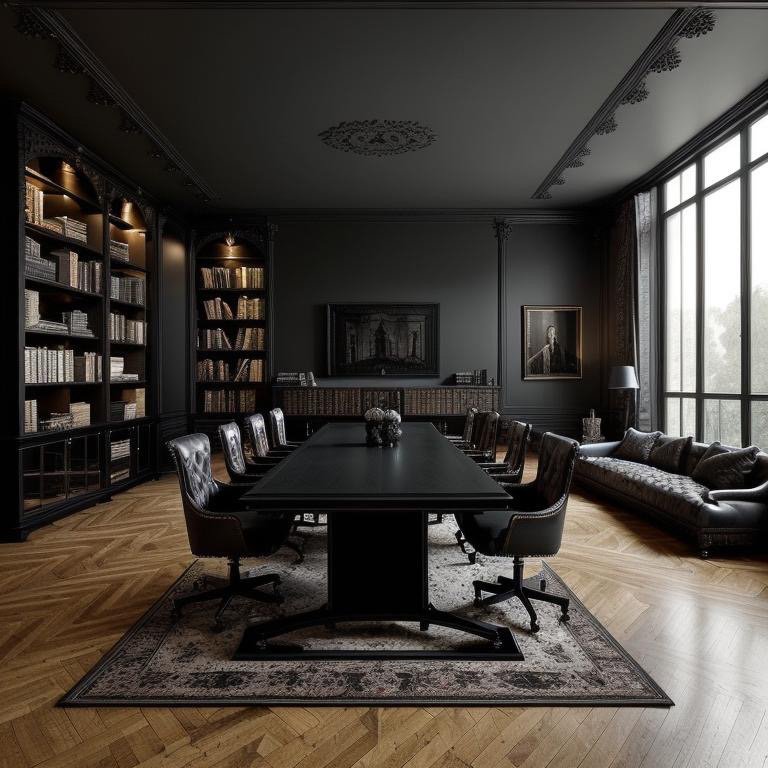
    Boardroom overview showing architectural bones before design language application

    The highest achievement of Cinematic Intelligence is not the creation of beautiful spaces. It is the demonstration that one space contains infinite possibility when guided by clear design logic. The room did not become four different spaces. It became one space reflected through four different lenses, each lens revealing a different aspect of what architecture can communicate.

    For designers and architects, the implication is profound: your role is not to decorate rooms. It is to interpret them. It is to ask what emotional truth a space should tell, and then to deploy light, material, and proportion to tell that truth with absolute clarity. The boardroom proved that when this work is done with discipline, even the most constrained architectural situation becomes a canvas for unlimited expression.

    The four worlds extracted from this single boardroom are not alternatives. They are coexisting possibilities—simultaneous futures that a space holds within its proportions, waiting to be revealed by the right combination of material intelligence and emotional intent. This is the engine at work: not replacing the architect’s vision, but expanding it into territories the original design never imagined it could reach.

  • The Hidden Reckoning: How Billions in Industrial Offices Are About to Be Exposed

    The Hidden Reckoning: How Billions in Industrial Offices Are About to Be Exposed

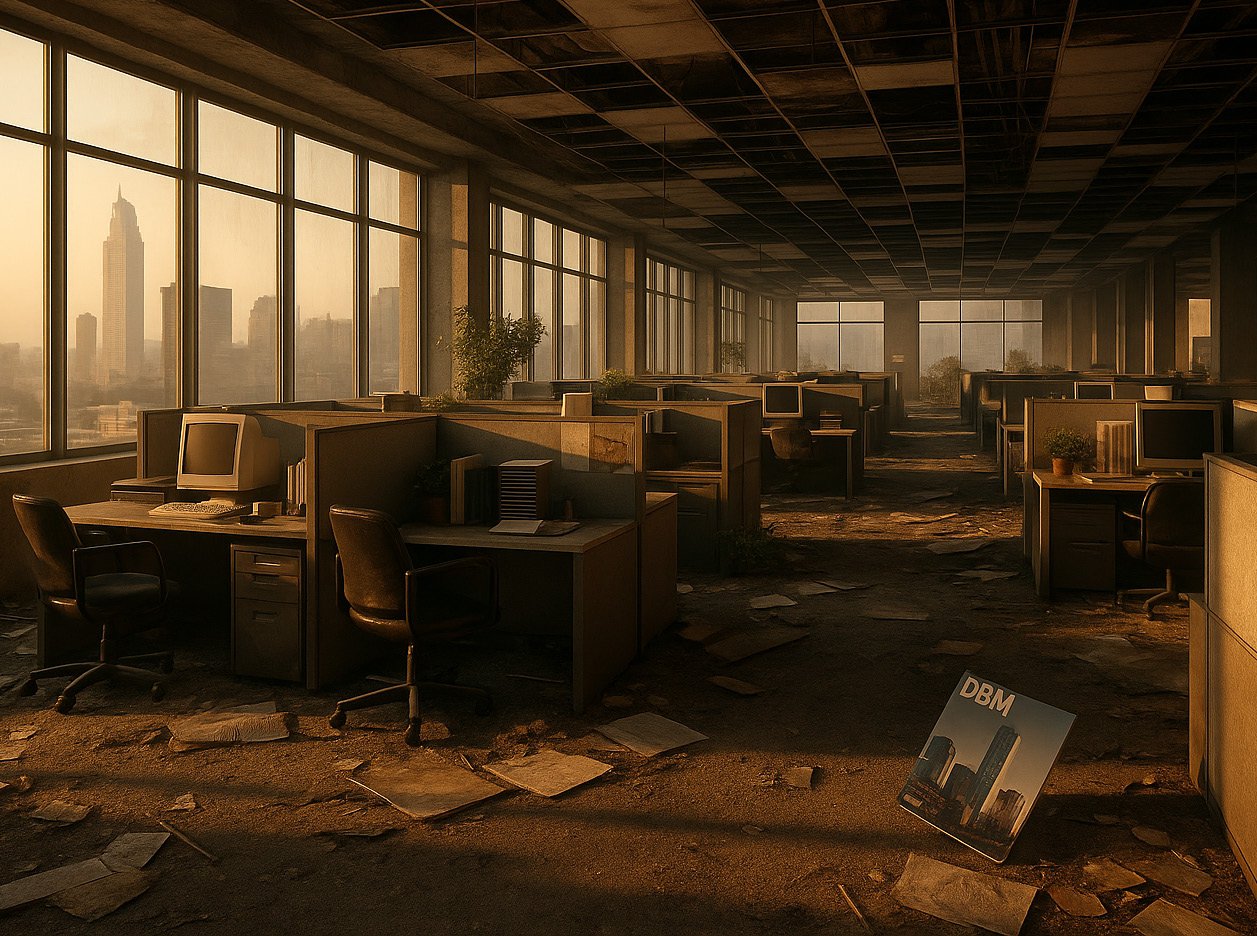
    Abandoned industrial office with deteriorated workstations and dramatic overhead lighting

    The Weight of Dormancy

    Across North America, something quietly catastrophic is unfolding. Approximately one in five commercial office buildings stands functionally empty—a vacancy rate that represents not merely underutilized square footage, but the architectural manifestation of a massive economic inflection point. These buildings are not new buildings awaiting tenants. They are mature assets—products of the 1990s and 2000s—designed for a world that no longer exists.

    The financial mechanics are now inescapable. Commercial real estate loans originated between 2015 and 2017, when interest rates hovered near 3 percent, are hitting their maturity walls in 2025, 2026, and 2027. Refinancing is no longer a formality. At current rates between 7 and 8 percent—more than double the original cost of capital—thousands of properties can no longer service their debt. Covenants break. Values collapse. And the buildings themselves, once considered stable income-producing assets, become financial liabilities.

    But the financial story masks a deeper architectural reckoning. These offices were not designed for flexibility. They were designed for density, for the meeting, for the command-and-control structure that dominated corporate culture two decades ago. Their floor plates are deep and inflexible. Their mechanical systems were built for the assumption of full occupancy, full-time. Their spatial hierarchies—the executive suite on the corner, the open bullpen in the core, the conference rooms distributed as controlled access points—all of it reflected a workplace philosophy that hybrid work has made obsolete.

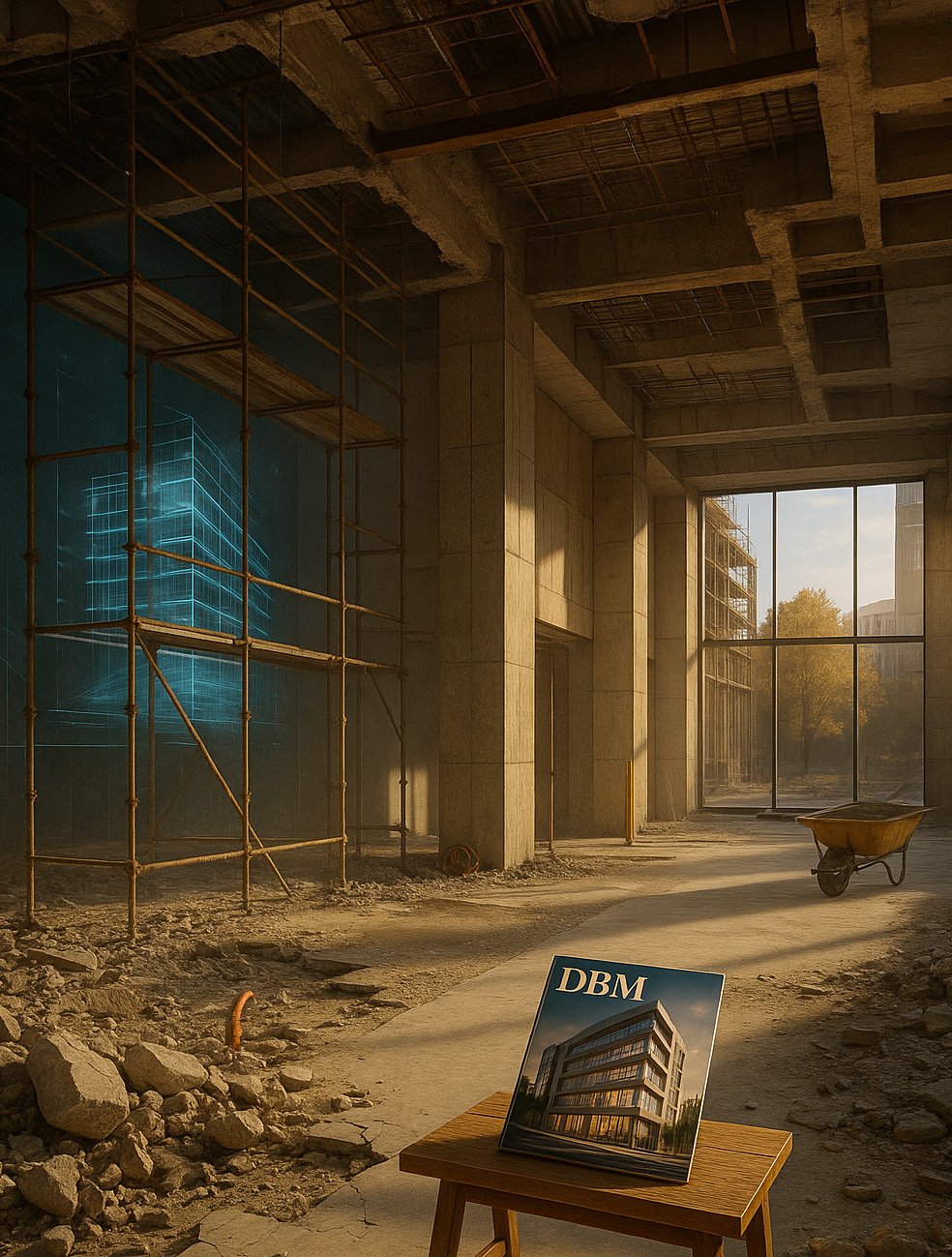
    Industrial office interior undergoing structural demolition with exposed framework and debris

    The Moral Depreciation of Space

    When a building sits empty, it does not simply stop generating revenue. It begins to decay, both materially and psychologically. Corridors empty of human presence become eerie. Lighting systems, originally calibrated for dense occupancy, now illuminate absence. The spatial hierarchies that once conveyed power and organization now read as abandonment. For any organization considering these spaces—even temporarily—the psychological weight is immense. You are not simply renting floor footage. You are inheriting the spatial signature of a world that failed to adapt.

    This is not a problem that market correction alone will solve. The market is already correcting, brutally. Class B and Class C office properties across secondary and tertiary markets are experiencing unprecedented pressure. Owners face a choice: invest heavily in repositioning, or accept that the asset has reached the end of its productive life as configured.

    What is remarkable—and what architecture must reckon with—is how quickly these buildings become invisible. Not physically invisible, but socially and economically invisible. The buildings that remain viable are those that acted decisively: premium properties in primary markets that invested in amenitization, in light, in flexibility. These properties—often rechristened, aesthetically reimagined—continue to command premium rents from companies that can justify the investment. Below them, the bifurcation deepens. Between the tier-one transformed properties and the tier-three warehouses, middle-market office space has become genuinely troubled.

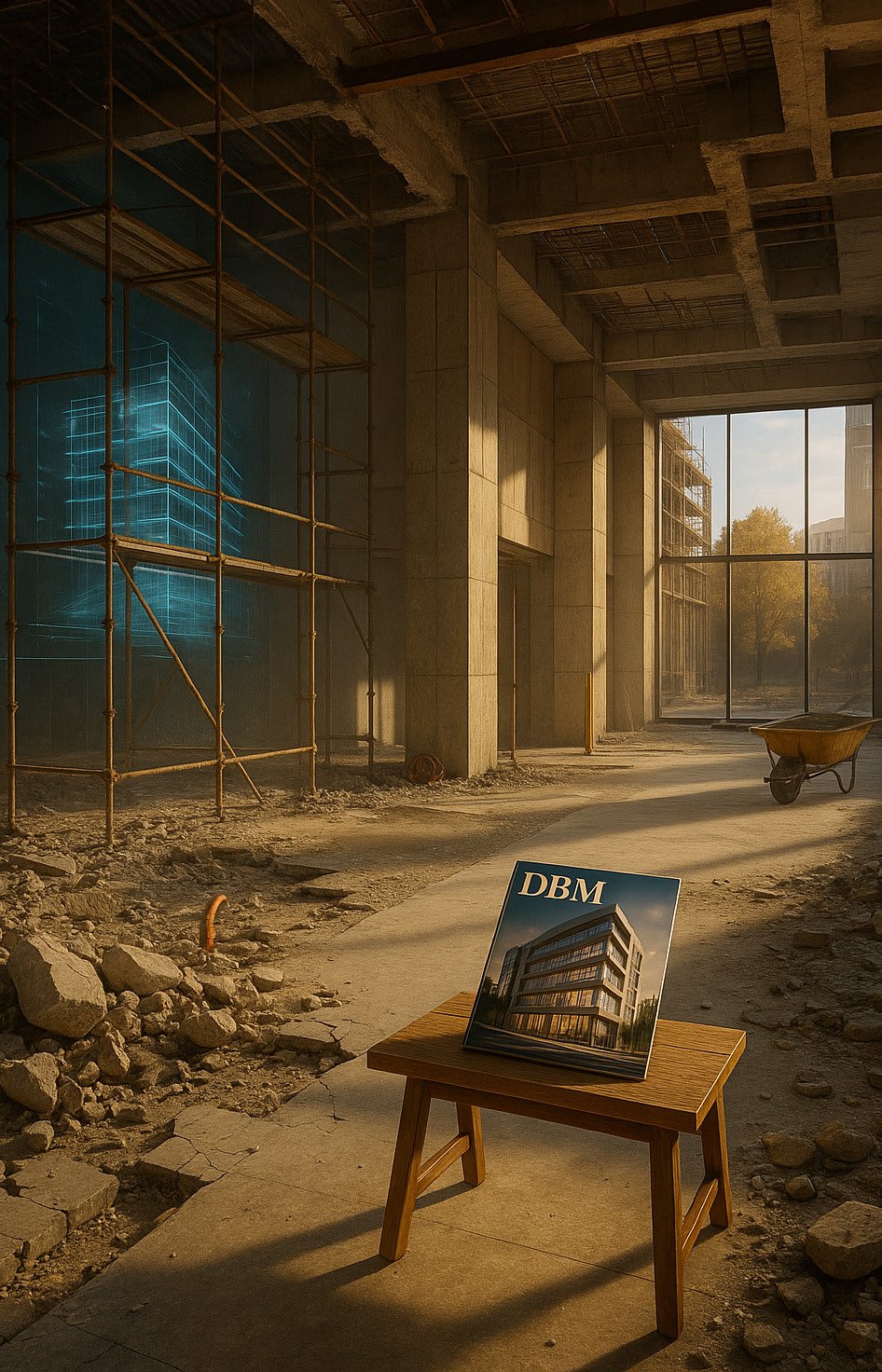
    Decaying industrial office space with fragmented blue holographic displays and deteriorated surfaces

    Conversion, Not Preservation

    The capital that once built new offices is now redeploying toward conversion. Across major metropolitan areas, industrial office buildings are being reimagined as residential lofts, logistics hubs, light manufacturing spaces, and mixed-use developments. The economic calculus has shifted: preservation of the original program is no longer viable; transformation is the only path forward.

    This matters at the civic level in ways that pure finance cannot capture. When large office buildings in secondary downtowns go dormant, the entire sub-market destabilizes. Ground-floor retail loses foot traffic. Adjacent parking structures become liabilities. The density that once animated an address evaporates. Entire blocks that were designed around the presence of working professionals now register as precarious, available, but untouched.

    The visible cost is real estate depreciation. The hidden cost is a form of urban erosion—the slow collapse of the economic infrastructure that sustains neighborhoods. This is why conversion strategies matter. They force a reckoning with spatial purpose. A building that cannot be occupied as originally designed must be radically reimagined for a different program, a different density, a different relationship to its context. This is not merely real estate optimization. This is the reassignment of civic function.

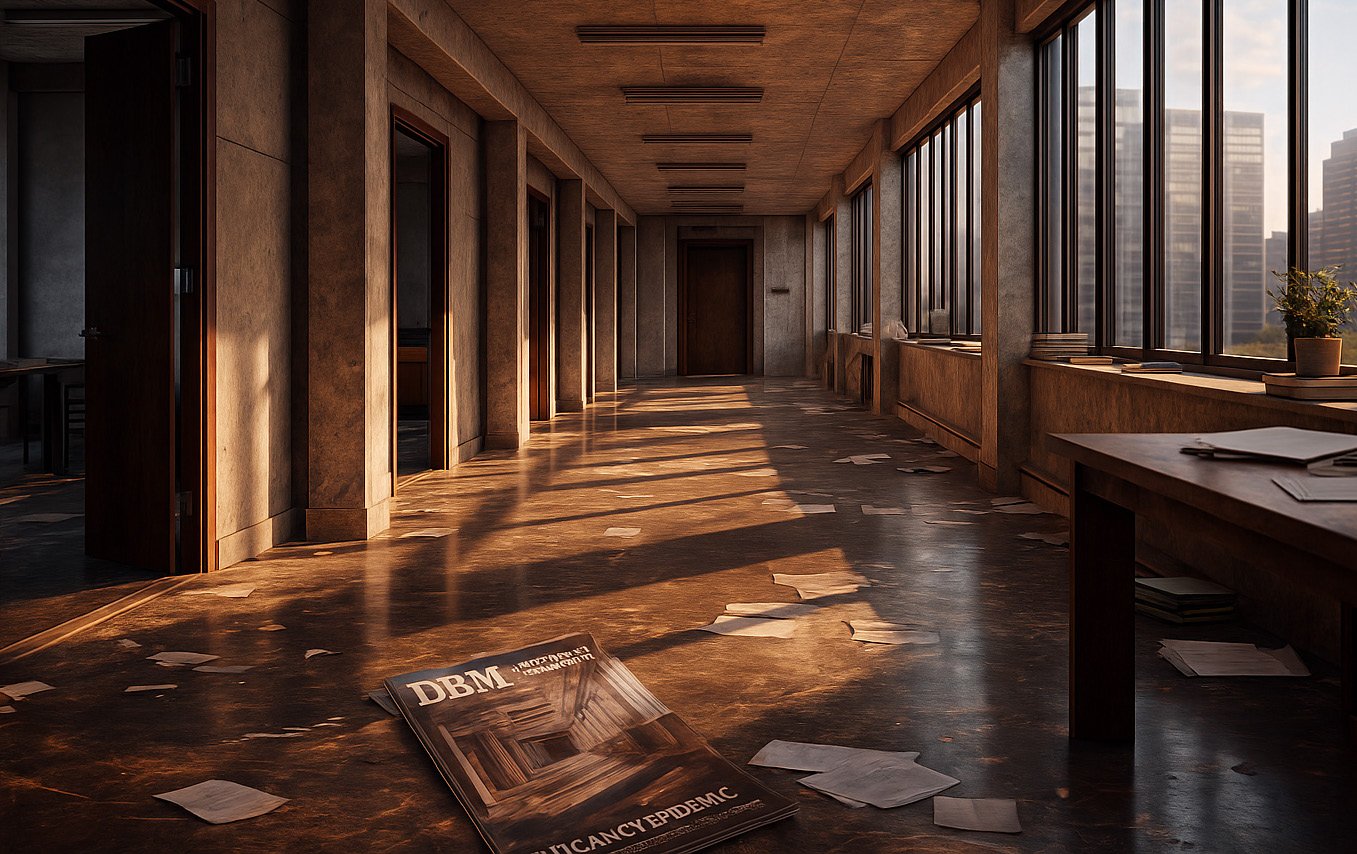
    Renovated executive corridor with warm modern finishes, restored materials, and renewed architectural clarity

    Architecture at the Inflection Point

    The buildings that will survive the maturity wall—not merely financially, but as relevant spatial experiences—are those designed with what might be called radical flexibility. Not the false flexibility of demountable partitions and generic finishes, but genuine spatial intelligence: the ability to function at multiple occupancy levels, the capacity to shift between intensive and sparse use, the design language that does not depend on density to carry meaning.

    This is the inflection point for architecture. The buildings that do nothing—that are preserved as originally designed, that attempt to maintain their 2005 spatial logic in a 2026 market—will depreciate silently, efficiently, almost invisibly to those outside the real estate industry. The buildings that act—that are gutted and reimagined, that have their material language rewritten, that are converted to new programs with spatial intention—will transform visibly. They will become case studies. They will anchor neighborhoods. They will demonstrate that architecture remains a tool for recalibration, not merely preservation.

    The reckoning underway is not a crisis of real estate alone. It is a crisis of spatial purpose. Billions in industrial office stock designed for a specific moment in corporate culture now face the question every building eventually must confront: What are you for now? The answer will be written in concrete, glass, and the bodies that move through these spaces once more.

    What distinguishes this moment from previous downturns is the permanence of the structural shift. Previous recessions compressed occupancy temporarily; tenants returned when conditions improved. This time, the tenants have not merely departed—they have reorganized the fundamental relationship between work and space. The remote and hybrid configurations that accelerated during the pandemic have crystallized into permanent operating models. The demand that once filled these buildings is not delayed. It has been redistributed, dispersed across home offices, coworking spaces, and smaller satellite locations that bear no resemblance to the industrial office campuses of the prior era.

    For architecture, the lesson is as old as the discipline itself: a building that cannot adapt to its moment becomes a monument to the moment it was designed for. The industrial offices now facing their hidden reckoning were monuments to confidence, scale, and permanence. They must now become something else entirely—or accept that their silence will speak louder than their steel.