3D Transformative Digest | Designs by Modish

The File Says "New Roof." The Roof Says Something Else
A property manager opens a renewal questionnaire. It asks for the roof's year of installation, material, and most recent replacement. The folder contains an invoice from six years ago. On the building, a newer coating covers an older membrane. Water stains have appeared in one tenant space; a blocked drain was cleared last winter. Is the roof six years old, older, or a repaired assembly with a specific history? The answer matters, but the paperwork does not tell the whole story. Commercial property insurers ask about roofs because the roof protects more than the structure below it. A small opening during wind or hail can become a path for water into insulation, ceilings, electrical equipment, inventory, and occupied space. Age is a useful first clue. It is not a physical inspection, and it does not say whether a roof has been maintained, repaired, modified, or damaged since its last replacement. For owners and brokers, the renewal challenge is to turn "we think it is fine" into a record another person can evaluate. For underwriters, the challenge is to separate a current condition signal from an old date copied forward in a schedule.
Replacement, Repair, Coating: Three Different Histories
A full replacement, a localized repair, and a coating application may all appear in a building file as "roof work." They do not mean the same thing. A replacement may change the roof assembly and its warranty. A repair may address one area while leaving the remaining system unchanged. A coating may protect or extend a surface under specified conditions, but it does not automatically reset the assembly's age or prove the condition beneath it. This is not a semantic distinction. If an underwriter assumes an entire roof was replaced when only a section was repaired, the submission is misleading even if no one intended to misstate it. If a property manager has excellent maintenance records but no current images, the file may still fail to answer the practical question: what does the roof look like now? The better record preserves the sequence. Keep the original installation information, product and contractor documents, permits where available, repair invoices, warranty conditions, inspection reports, storm dates, and photographs tied to locations. Describe the scope accurately: "north penthouse curb flashing replaced" is more useful than "roof repaired." Note who did the work and when. If the source of a date is uncertain, say so rather than turning an estimate into a fact.
What a Useful Roof Condition Review Looks For
A meaningful review considers more than a single overhead picture. FM Global's loss-prevention guidance recommends a regular inspection and maintenance program for roof assemblies, including inspections at least semiannually and before and after storms with high winds or heavy rain. The specific inspection method should fit the roof type, building, access conditions, and qualifications of the person performing it. A reviewer may document the roof covering, seams, flashing, penetrations, drains, curbs, rooftop equipment, ponding, debris, visible repairs, and access limitations. The pattern matters. A membrane puncture beside a rooftop unit has a different context from widespread brittle surfacing or repeated ponding at a low point. Photographs should show both context and detail: where the condition is, what it looks like at scale, and how it relates to a seam, drain, or penetration. The record should also distinguish an observed condition from an inference. A stain on the ceiling is evidence of staining; it does not by itself identify the roof defect, the date of entry, or the cause. A dark area in aerial imagery may indicate ponding, but it could also have another explanation. A roof professional can say what was inspected, what could not be accessed, and what further testing or repair is recommended.
Ask What the Record Actually Proves
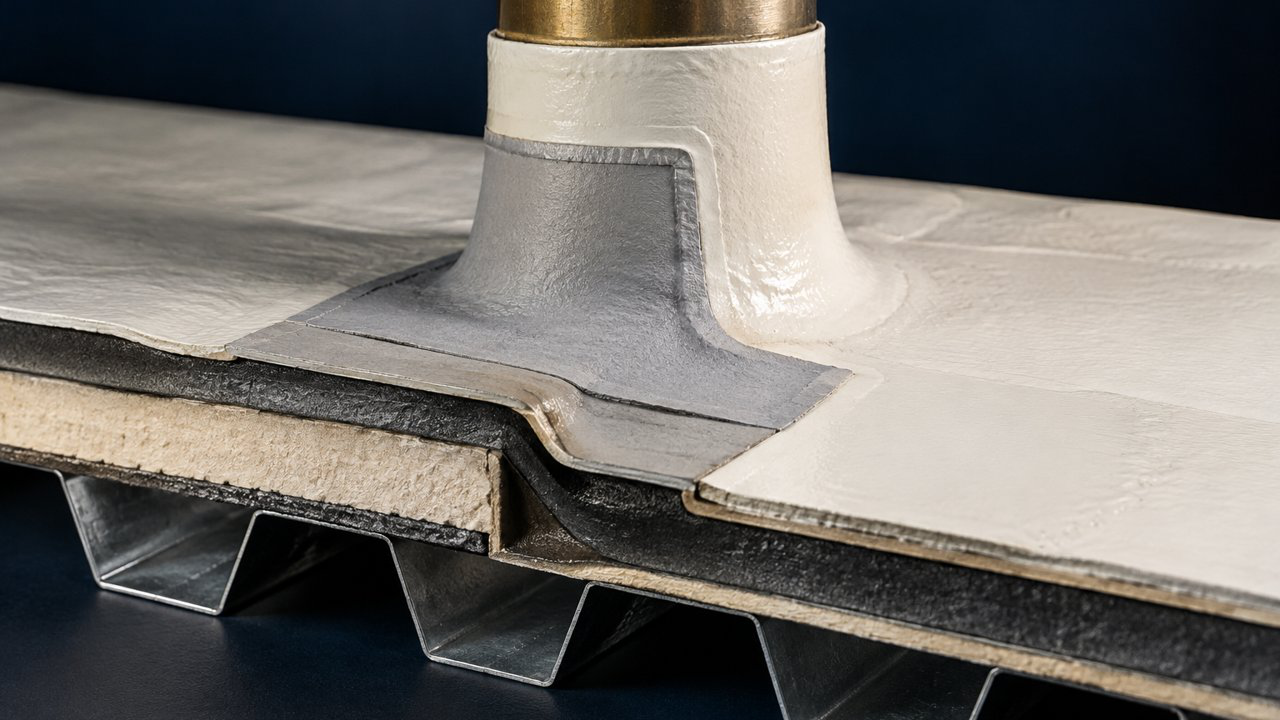
When a broker requests a roof schedule, ask what the carrier means by roof age: the date of the entire assembly, the most recent replacement, or a component-specific date for covering, insulation, or deck. Different systems can have different histories, and a partial project may not reset every part of the roof. If a date cannot be confirmed, report the best supported information and its source. An owner estimate based on a prior manager's notes is less polished than a firm year, but more honest and useful for follow-up. The property team can request archived permits, contractor records, or previous insurer inspection reports. Do not convert an estimate into a verified fact simply because a form asks for one. The same discipline applies to condition ratings. If there is a recent report, provide its date, scope, and inspector. If not, do not write "good" because no leak was reported. State the evidence available, and obtain a qualified inspection if risk or uncertainty warrants it.
Give Underwriting a Clear, Bounded Picture
A renewal package should let a reviewer answer basic questions without guessing. What is the roof assembly and installation history? What work occurred since the last inspection? What conditions were observed, when, and by whom? Which items were repaired, and what remains open? Are there areas the reviewer could not see? If an estimate or warranty is attached, what exactly does it cover? A simple summary table can help, provided the supporting evidence is available. For each roof section, identify the location, system if known, source for age, most recent inspection date, repairs, unresolved observations, and document reference. Use the same building orientation or roof plan across photos and notes. A portfolio with dozens of buildings particularly benefits from consistent labels; otherwise, a high-resolution image can be impossible to associate with the correct property or roof plane. That is not a promise of better terms. Underwriting decisions depend on the carrier's appetite, policy language, location, occupancy, construction, protection, exposure, and the evidence received. A well-organized file does not guarantee coverage or a premium reduction. It does reduce avoidable ambiguity and gives the underwriter a fairer basis for questions.
A Practical Renewal Packet
The broker does not need a glossy presentation. A compact packet is more useful: a roof plan showing sections and orientations; a one-page history of replacements and repairs; the latest inspection report; photographs keyed to the plan; warranties; and a list of open work orders. If there are multiple roof systems or installation dates, show them separately. A single age assigned to the whole building can conceal meaningful differences between sections. The owner should identify the source behind each date. A permit or final invoice may support a replacement year. A tenant recollection may be helpful context, but it should not be presented as documentary proof. When records conflict, list both sources and the unresolved discrepancy. That gives the broker a clear question to take back to the property team before a carrier has to ask it. Where the roof has been repaired, describe the location and scope. A repair record should say what was found, what work was performed, who completed it, and whether follow-up confirmed the repair. If a contractor recommended further work that was not completed, include it as an open item with an owner and target date.
The Work Before the Deadline
The renewal date is a poor time to discover that the "new roof" on a spreadsheet means a coating on one section and a repair to another. Assign one person to reconcile the building record before the broker's submission is due. Ask the property team for the maintenance history; ask the contractor for the exact scope; ask the inspector to identify limitations; and mark unknown details as unknown. After a storm, keep a separate event record. Preserve pre-event images, inspection observations, temporary protection, repair approvals, invoices, and follow-up photographs. That file helps the owner make decisions about the building, even if no insurance claim is filed. It also provides useful context at the next renewal. The roof is not an abstract age value. It is an assembly with a history of exposure, work, and observation. When that history travels with the property, both the building manager and the person evaluating the risk can begin with the same facts, and ask better questions before the next storm.
Leave a Reply