3D Transformative Digest | Designs by Modish
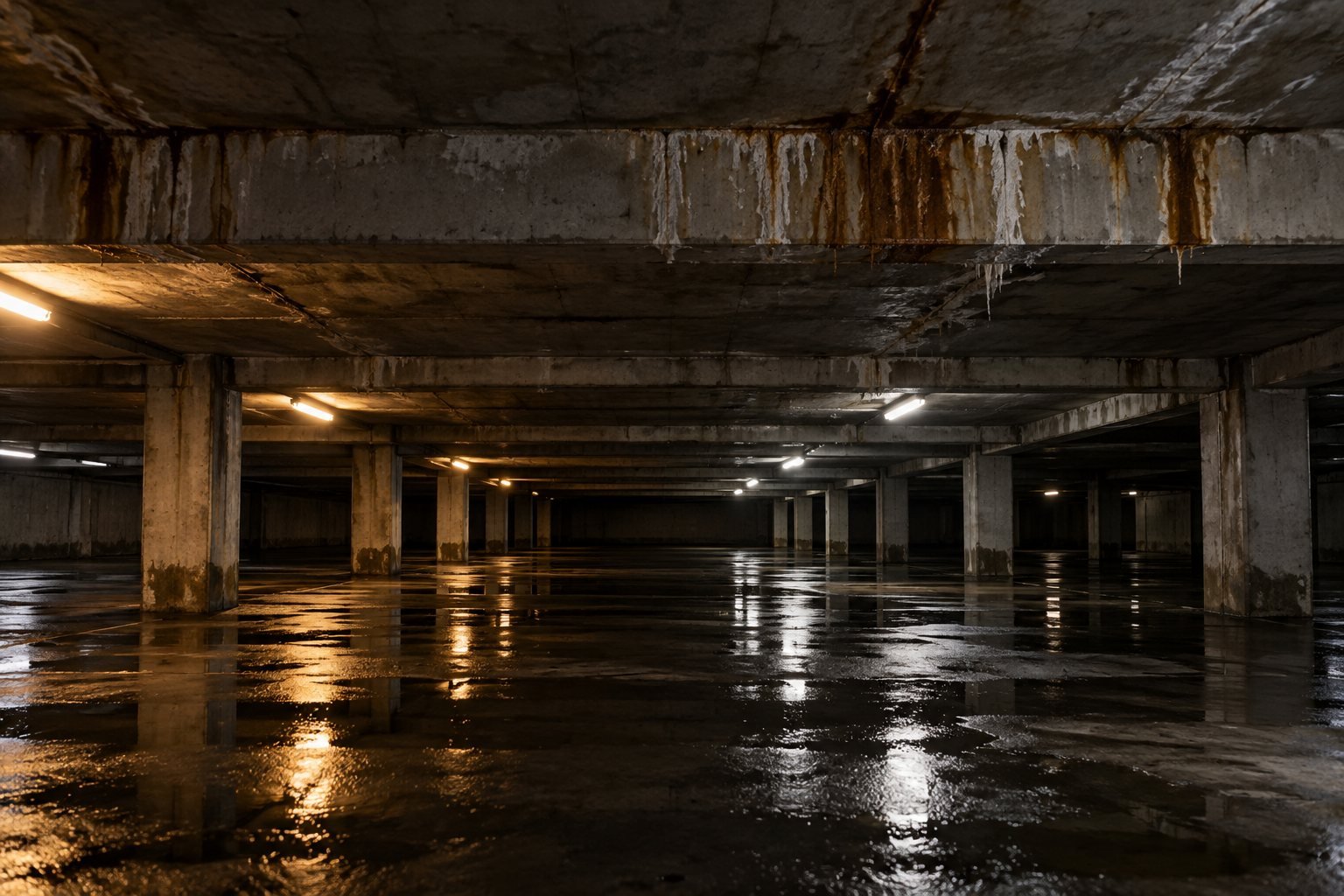
Level P2, After Dark
Go down to the second level of almost any older parking garage after the cars have gone home, and it will start talking to you.
It is quieter than you expect. The fluorescent tubes hum. Somewhere a drip lands on the slab with a patience that is almost rude. There is a puddle in the same low spot it occupied last spring, and the spring before that, and you get the feeling it has a lease. Look up. Running down from a hairline crack in the ceiling is a long brown stain, the color of strong tea, and next to it a white crust that looks like somebody spilled powdered sugar and let it dry.
Most people walk past all of it with their keys in their hand. I do not blame them. Nobody comes to a garage to look at the ceiling.
But the ceiling is where the confession is written, and I have learned to read it.
A Building Within the Building
Here is the uncomfortable truth about parking structures. They have the hardest job on the property and get the least attention.
A garage is a concrete building that lives half outdoors. It freezes and thaws. It bakes. It takes the weight of thousands of cars, braking and turning on the same ramps, year after year. And in any place that sees winter, every one of those cars is a delivery truck for road salt. It rides in on the tires and the wheel wells, melts off in a slow drip, and sits on the slab in a briny film that nobody bothers to rinse.
That salt is the villain of this story, and it is a patient one.
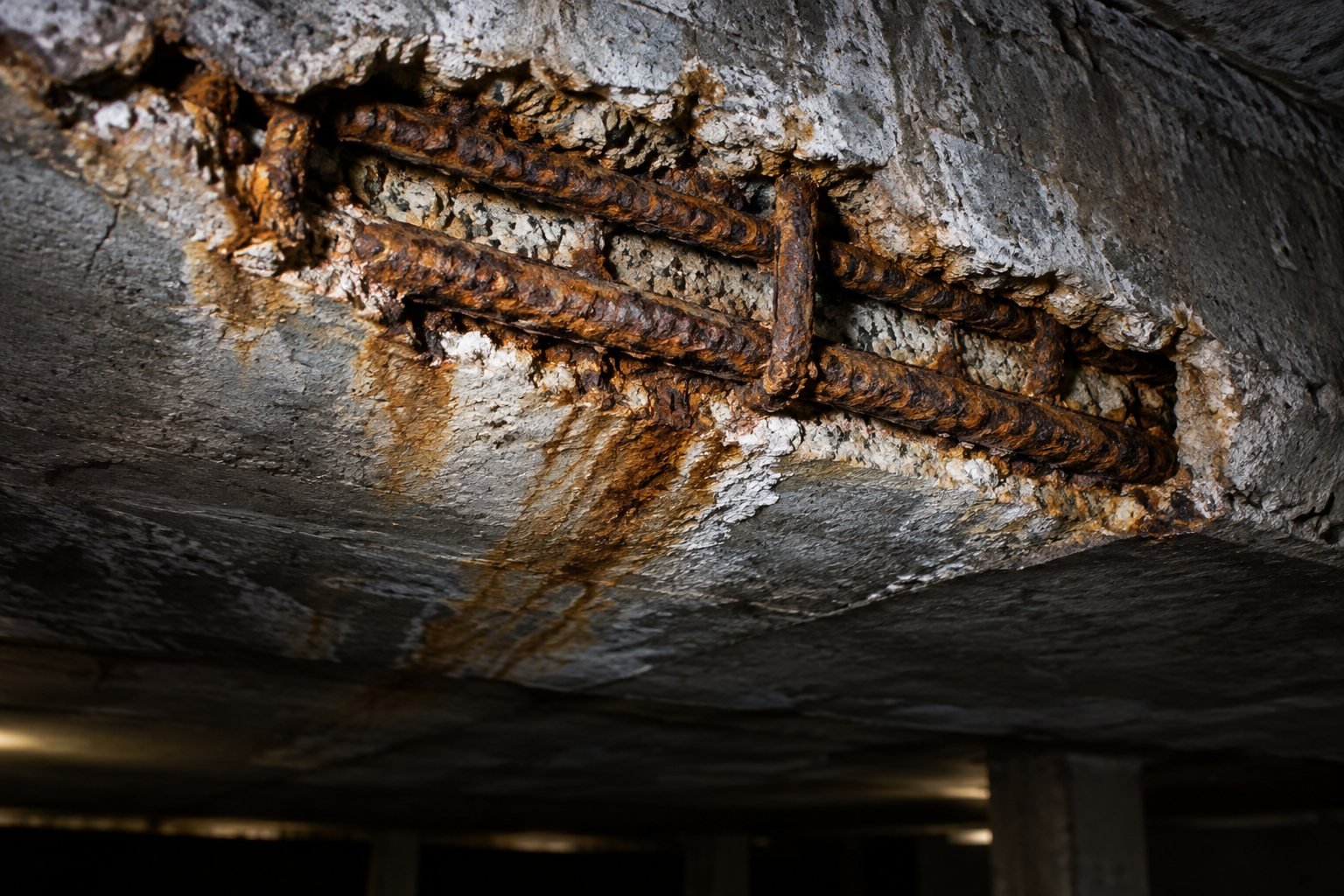
Concrete looks solid, but it is porous. Water carries the chlorides down into it, a little at a time, until they reach the steel reinforcing bars inside. Steel in healthy concrete is protected. Steel bathed in chlorides starts to corrode. And corroding steel does something sneaky: rust takes up more room than the steel it replaces. So the bar swells, quietly, inside the concrete, and pushes outward until the concrete cracks and eventually lets go.
That is what the stains are. The brown is the steel leaving. The white crust is efflorescence, minerals carried out by water moving through places water should not be moving. Each one is a little memo from inside the slab.
The Slow Reveal
Nobody loses a garage overnight. That is exactly what makes this so dangerous, and so easy to ignore.
It starts with a crack nobody thinks about. Then a stain under the crack. Then one day the concrete over a bar makes a hollow sound when someone taps it, because it has already separated from the steel underneath. Engineers call that delamination, and they find it the old-fashioned way, by dragging a chain across the deck or tapping with a hammer and listening for the note to change. It is one of the oldest diagnostic tricks in the business, and it still works beautifully.
After delamination comes spalling. A chunk of concrete falls off the underside of a slab, usually overnight, usually onto the hood of somebody's car, and suddenly the garage that nobody wanted to talk about is the only thing anybody wants to talk about. The board calls a meeting. The property manager starts answering emails at midnight. An insurance adjuster is on the phone.
And the honest engineer in the room has to say what every honest engineer says at that moment: this did not start this year.
The Tendons You Cannot See
Many modern garages are built with post-tensioned slabs, which use high-strength steel tendons, stretched tight and locked off at the edges, to hold the concrete in compression. It is clever engineering that allows long, open spans with fewer columns. Drivers love it, even if they have no idea it is there.
The catch is that those tendons are also steel, and they also hate water. They are protected by grease and plastic sheathing, and the anchors at the slab edges are supposed to be sealed. When water and salt find a path to them, through a leaky joint, a cracked edge or a bad patch, the corrosion can happen out of sight and the failure of a tendon can be sudden rather than gradual. That is why engineers who know these structures get very interested in water stains near slab edges and anchor zones. It is not paranoia. It is pattern recognition.
The Top Deck Gets It Worst
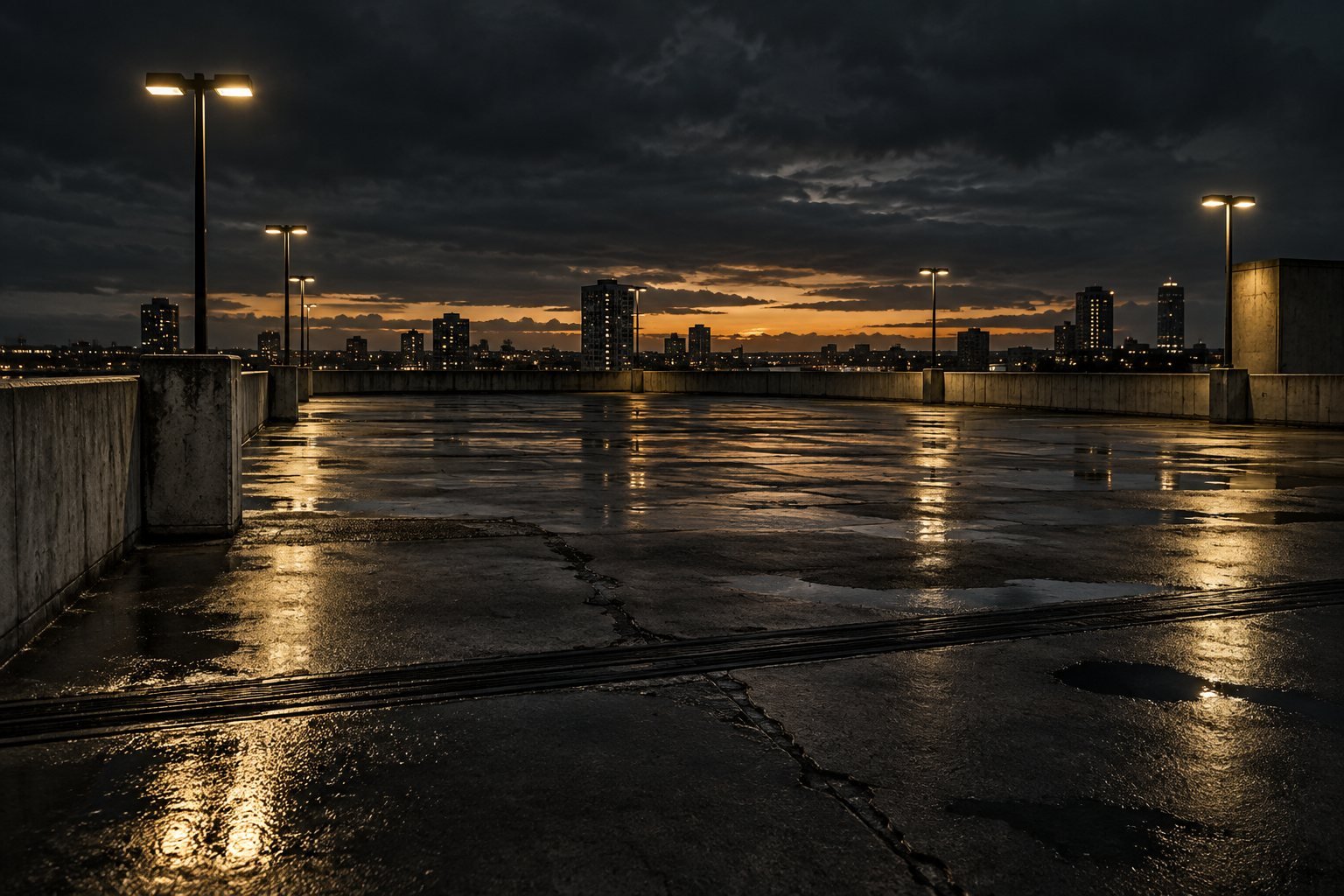
Now take the elevator up. The roof level of an open garage is where the weather does its loudest work.
Rain and snowmelt hit it directly. Water collects in any spot where the slope is not quite right, and it sits. The expansion joints, the rubber seams that let the structure move with the seasons, wear out and start passing water straight to the level below. The protective traffic coating, if there ever was one, has been worn thin by tires along the drive lanes. Drains clog with leaves and grit. Every one of these is small. Together, they decide how fast the rest of the building ages.
Some cities have stopped trusting owners to notice on their own and now require periodic structural inspections of parking garages. That is not a scandal. That is a hint. When regulators start scheduling your check-ups, it is usually because enough garages skipped theirs.
Who Hears About It First
Here is the part of the garage story that keeps owners up at night, and it has nothing to do with concrete chemistry.
When a piece of a slab lands on a car, the first call is rarely to an engineer. It is to the insurer, and sometimes to a lawyer. Everybody wants to know the same thing: did anyone know? Was there a report that flagged this bay? Was there a stain in a photo from three years ago that nobody acted on? A garage with a clean, current condition record is a building that can answer those questions calmly. A garage without one is a building where every answer starts with a pause.
The same thing happens at a sale or a refinance. The buyer's engineer walks the levels, sees the stains and the patches, and does what any careful professional does with uncertainty: assumes the worst and prices it in. Owners who can hand over a documented history, with the repairs, the dates of the work and the before and after, tend to have a much shorter conversation. Owners who cannot are negotiating against the most pessimistic guess in the room.
What a Good Read Actually Looks Like
This is where I get a little evangelical, because the garage is one of the clearest cases I know for doing the work before the drama.
With 192 points, we treat the garage as the building it actually is, not as a pile of separate complaints. The slabs and their cover. The cracks and where they lead. The stains and what they say about water movement. The joints, the drains, the coatings, the slope, the edges, the anchor zones. The history of past repairs, and whether the patches are holding or failing around their edges. Each point is a question with evidence attached. Put together, they give an owner one verdict: what is sound, what is deteriorating, and what needs attention first.
Cinematic Intelligence turns that verdict into renders a board can follow without an engineering degree. A level plan with the delaminated zones shown where the chain drag found them. A close-up of the worst bay so nobody argues about whether it is real. A picture of the top deck with the ponding spots marked, so the drainage fix is obvious instead of theoretical.
And DesignVault 3D keeps the file. What was found, what was repaired, what the concrete looked like before and after. When the next inspection comes around, the next engineer is not starting from zero, and when the property changes hands, the buyer's team sees a documented history instead of a shrug.
Talk About It While It Is Cheap
I understand the instinct to leave the garage alone. It is not glamorous. It does not show up in the leasing photos. Repairs mean closing levels, moving cars and annoying everyone.
But concrete repair has a cruel price curve. Sealing a deck, fixing a joint and cleaning out the drains is modest work. Patching a few delaminated areas is manageable. Replacing corroded steel across whole bays, or shoring a structure while tendons are repaired, is a different budget and a very different conversation with tenants, lenders and insurers. The difference between those outcomes is usually not luck. It is timing.
So go down to P2 some evening. Listen to the drip. Look at the stains, the white crust, that puddle with the long lease.
The garage has been trying to tell somebody for years. It would be nice if that somebody were you.
Leave a Reply