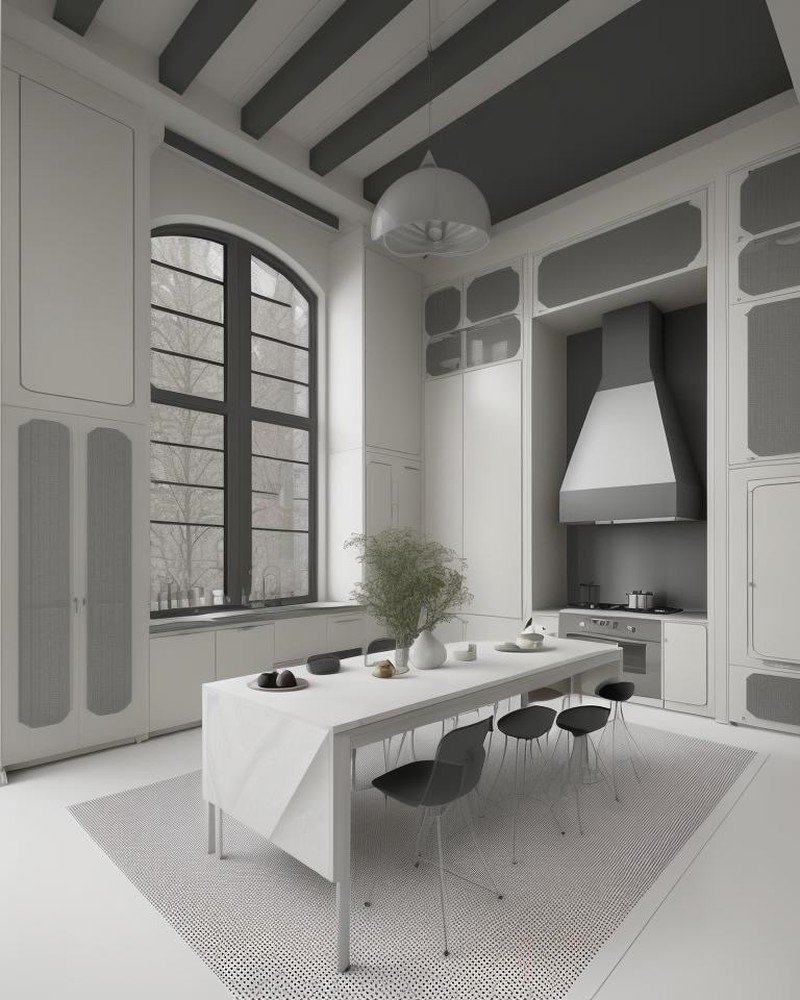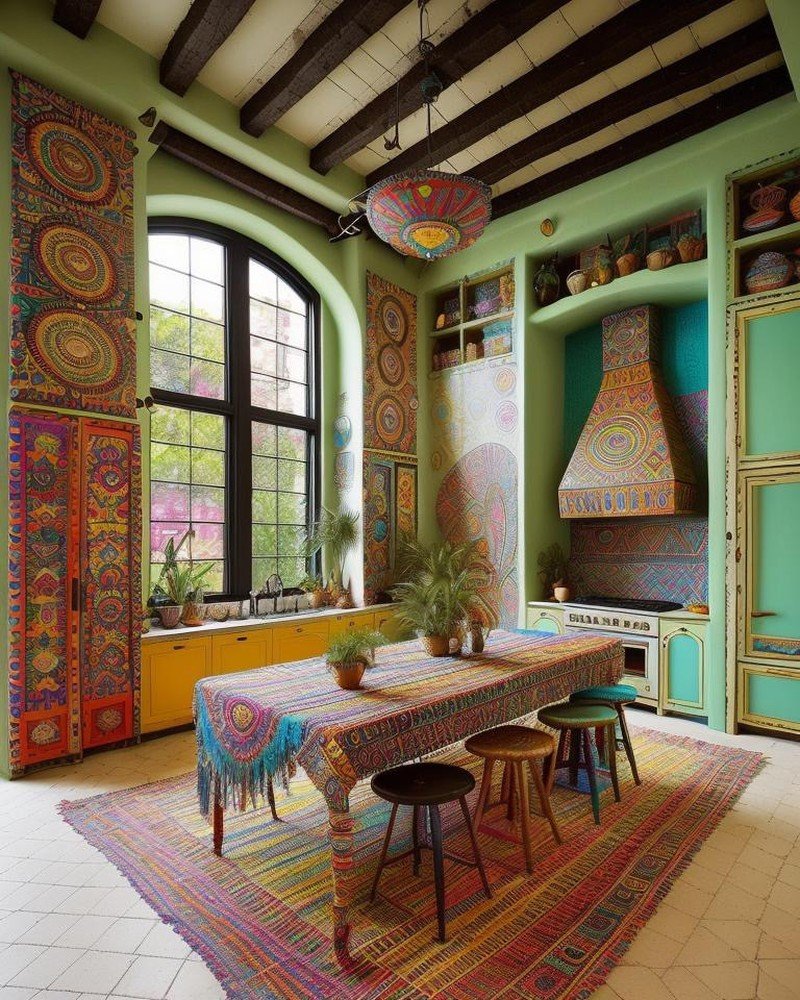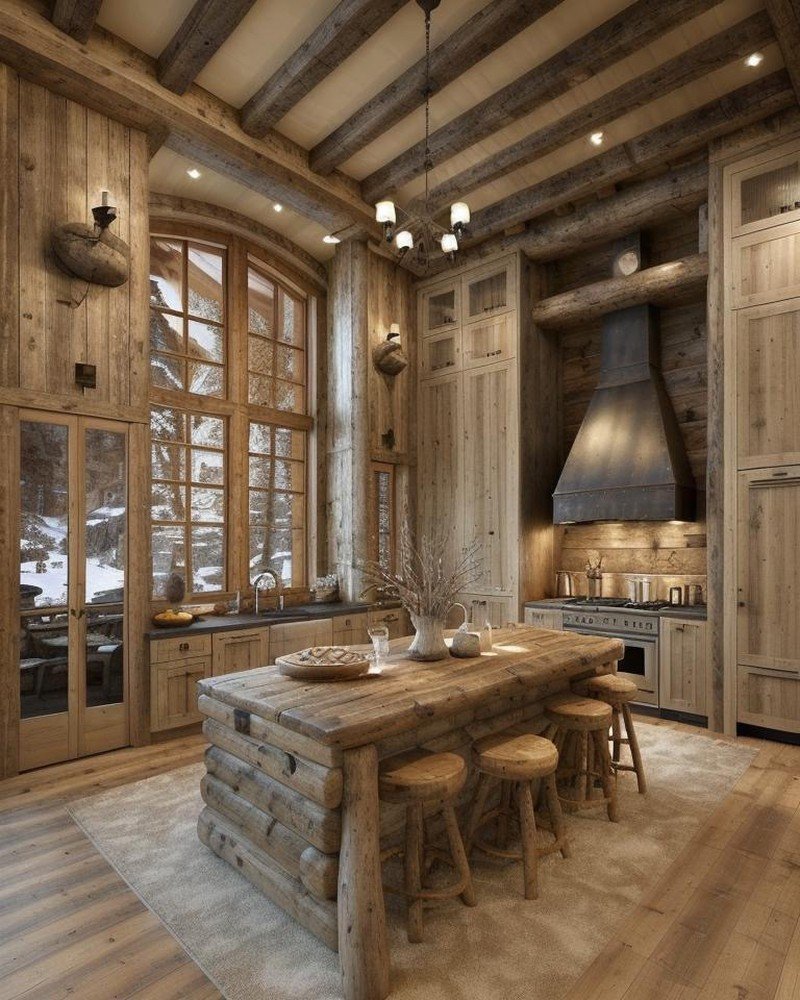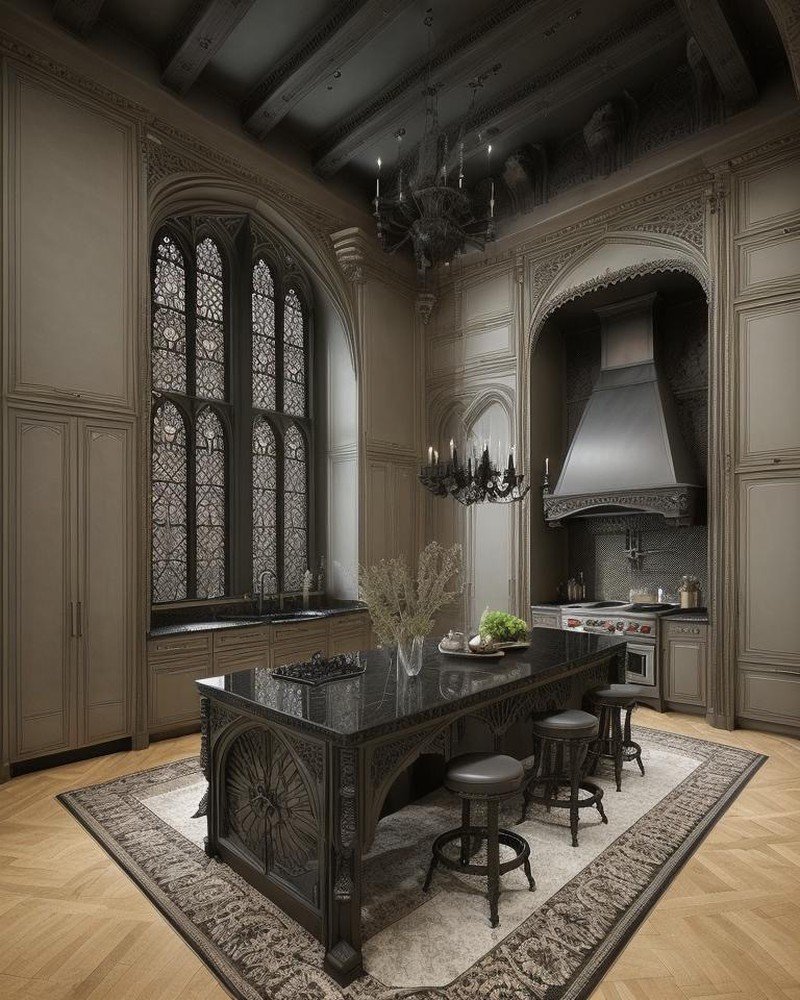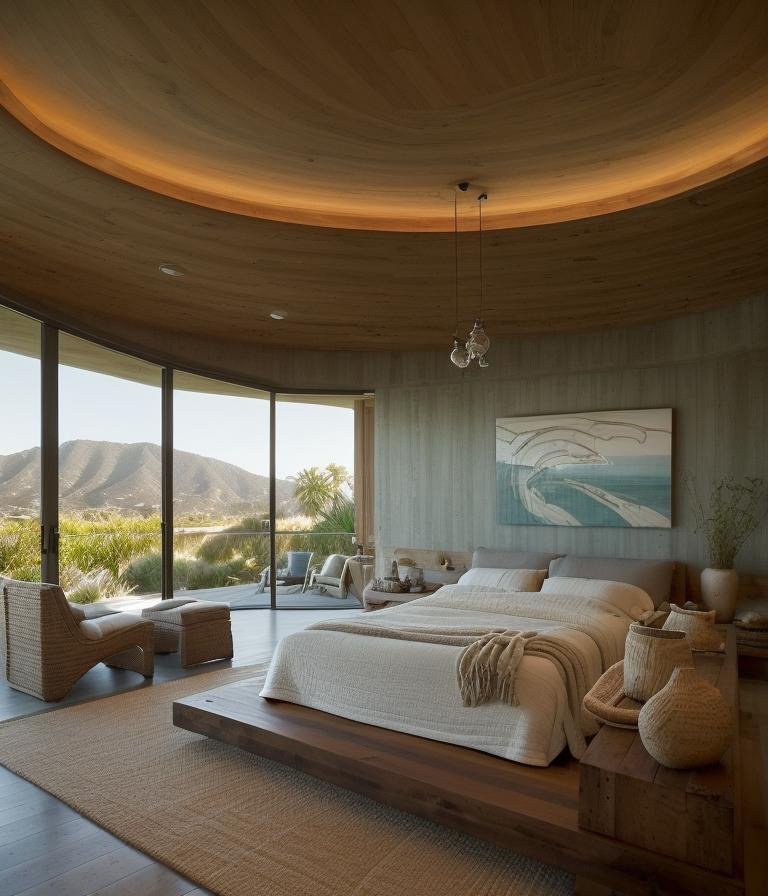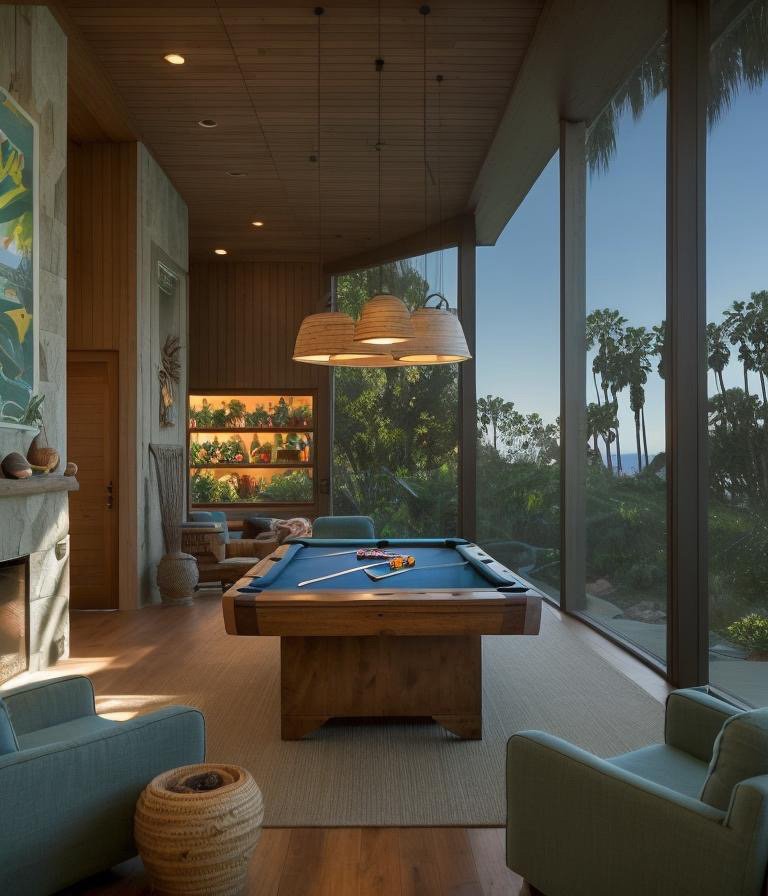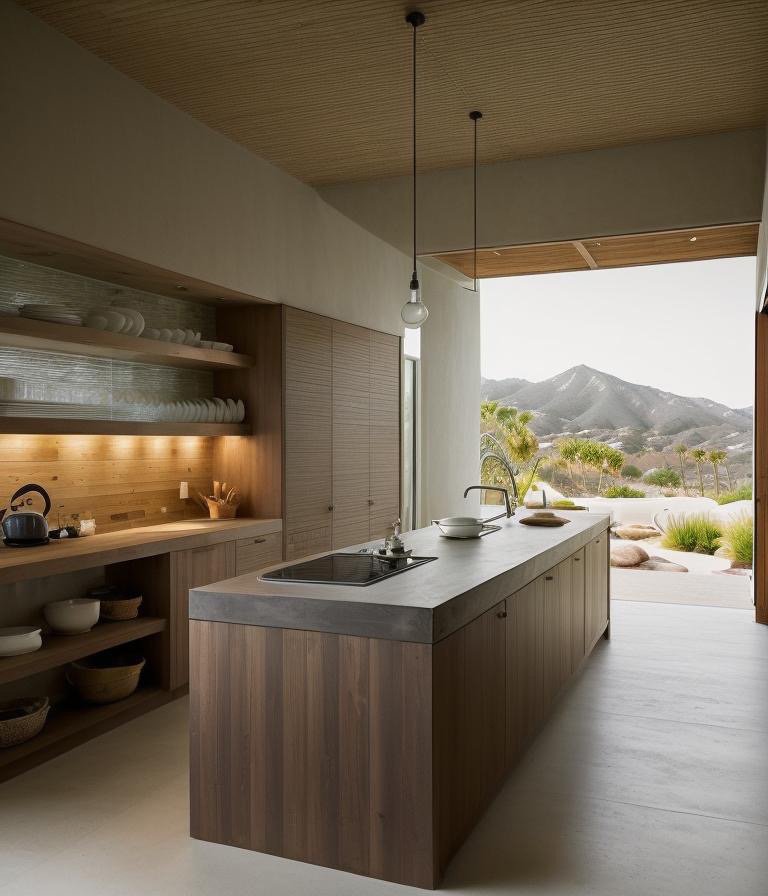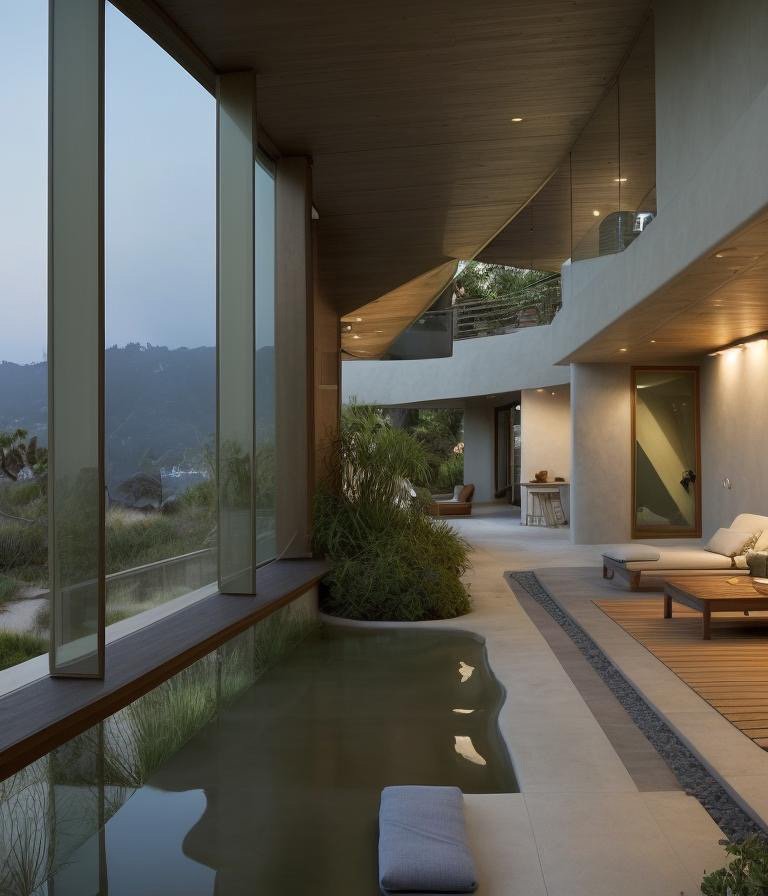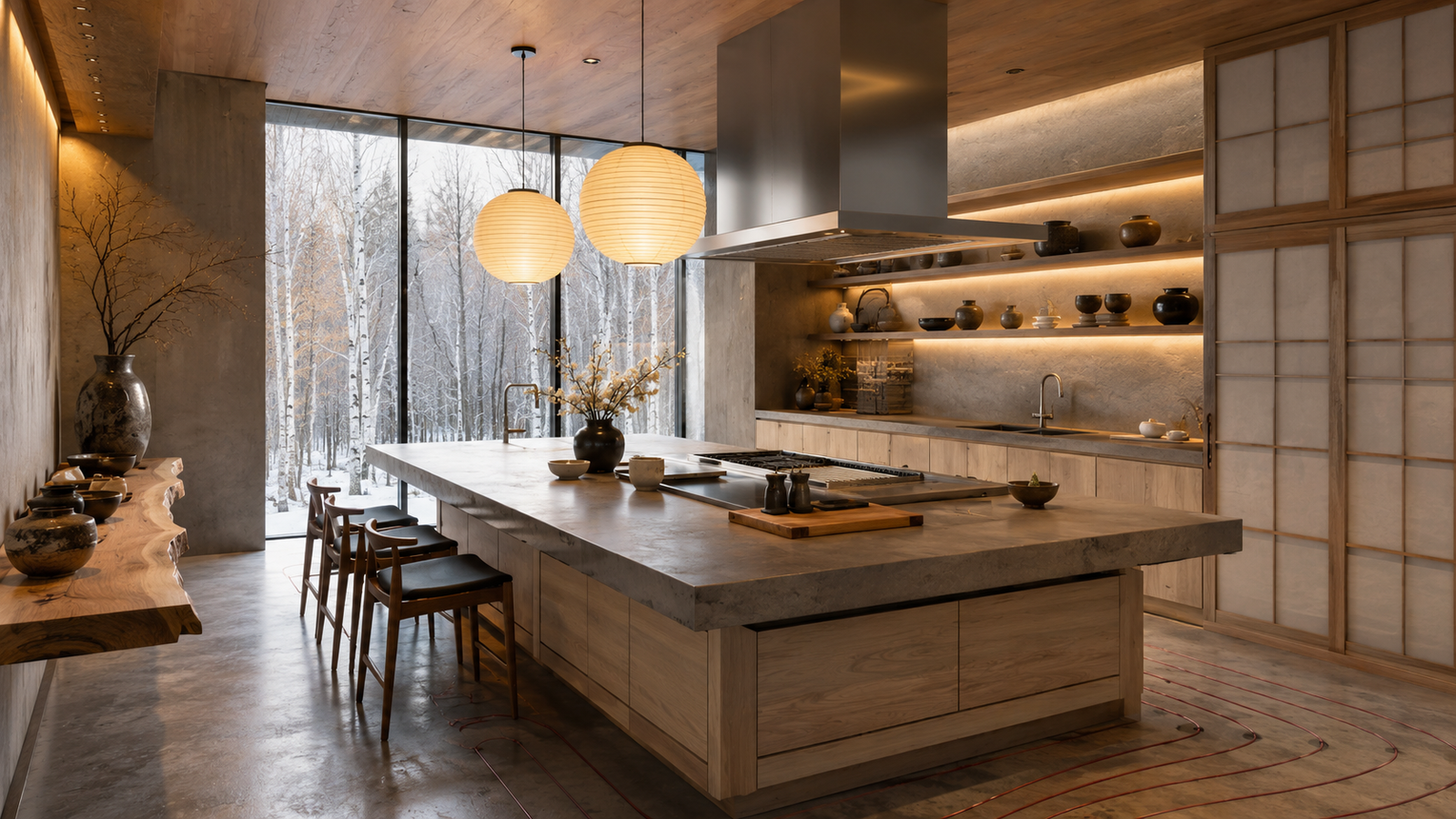
Tag: Cinematic Intelligence

  • Four Rooms I Entered Without Leaving My Chair

    Four Rooms I Entered Without Leaving My Chair

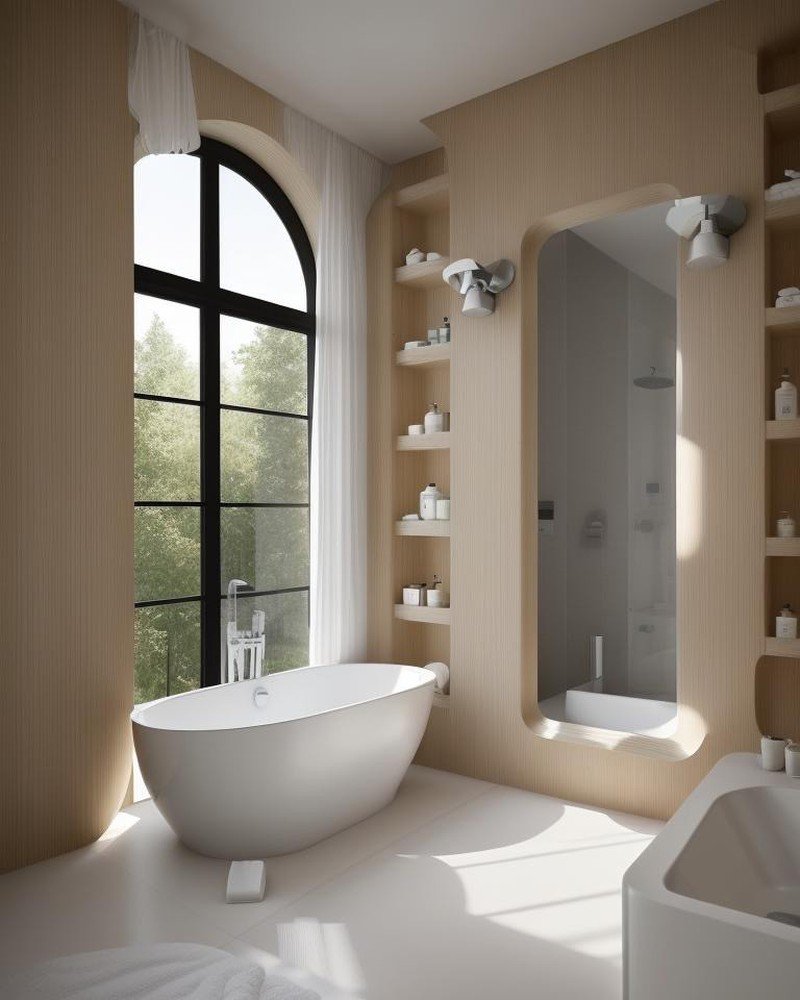
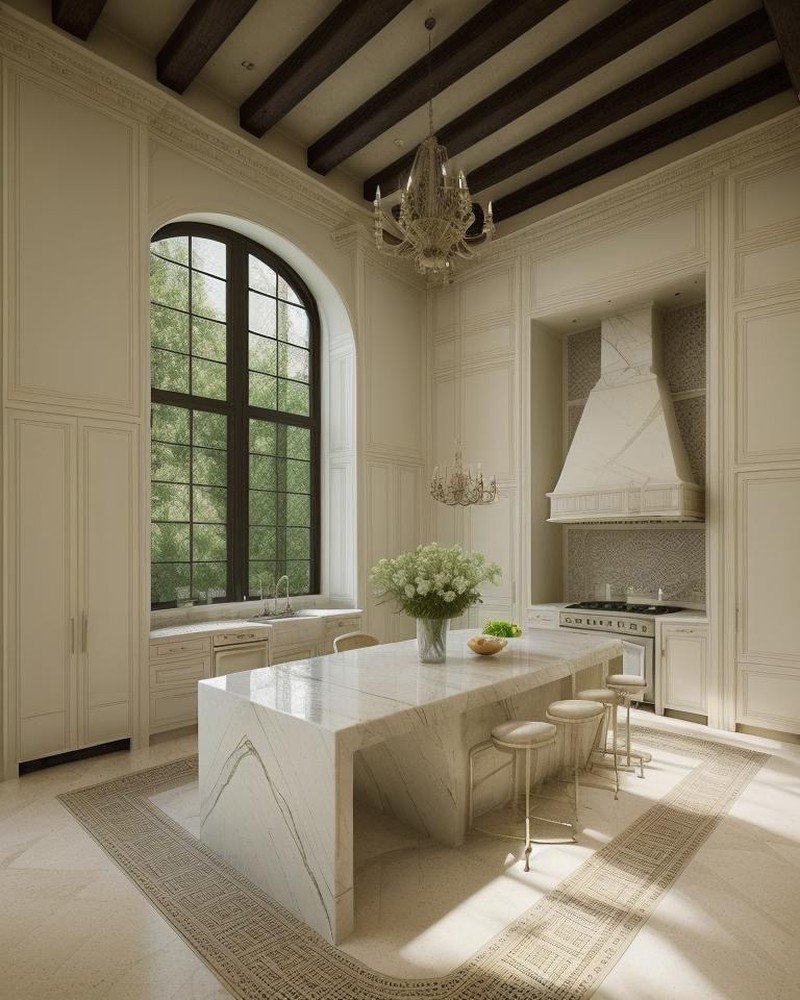
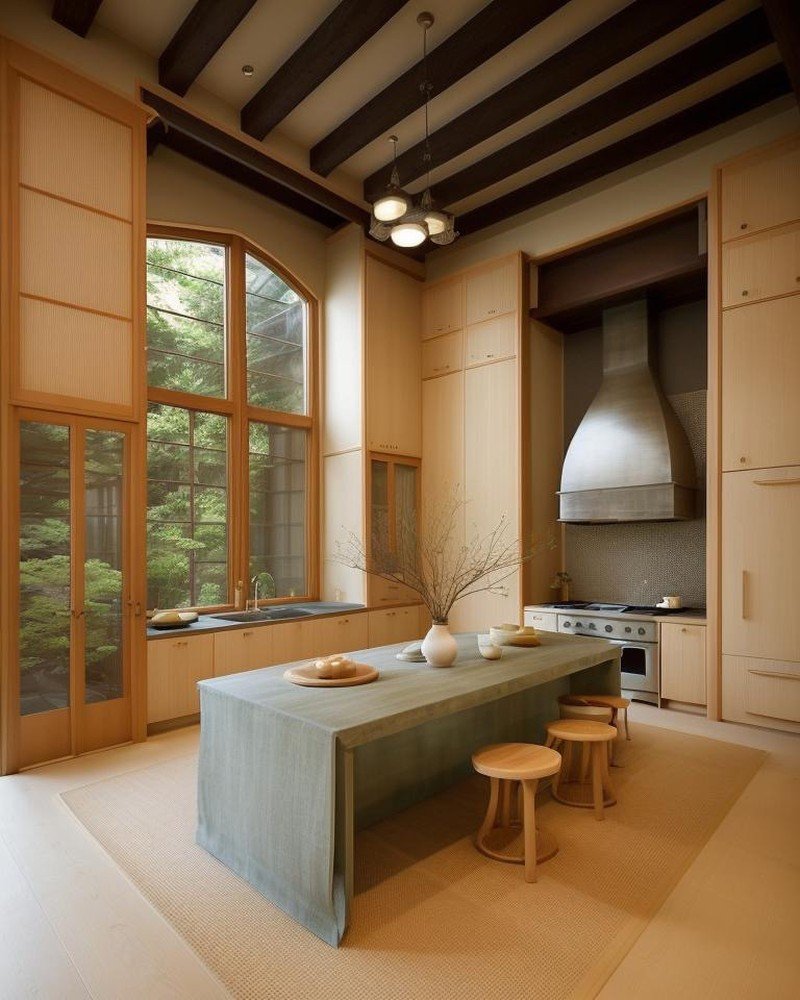
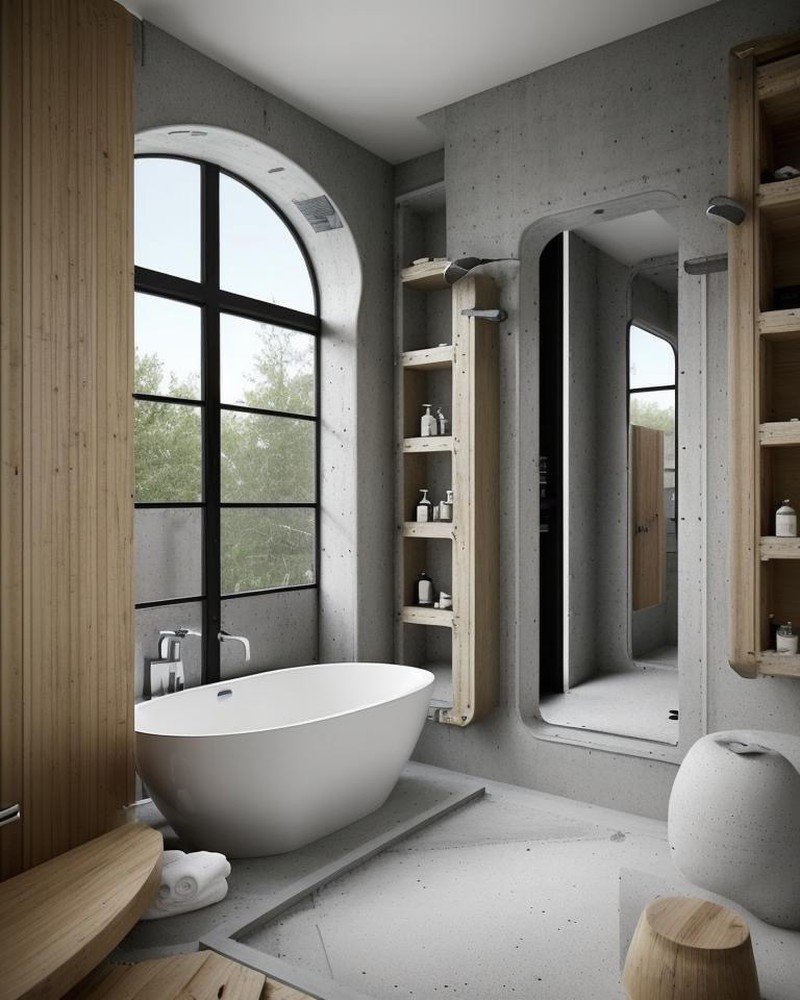
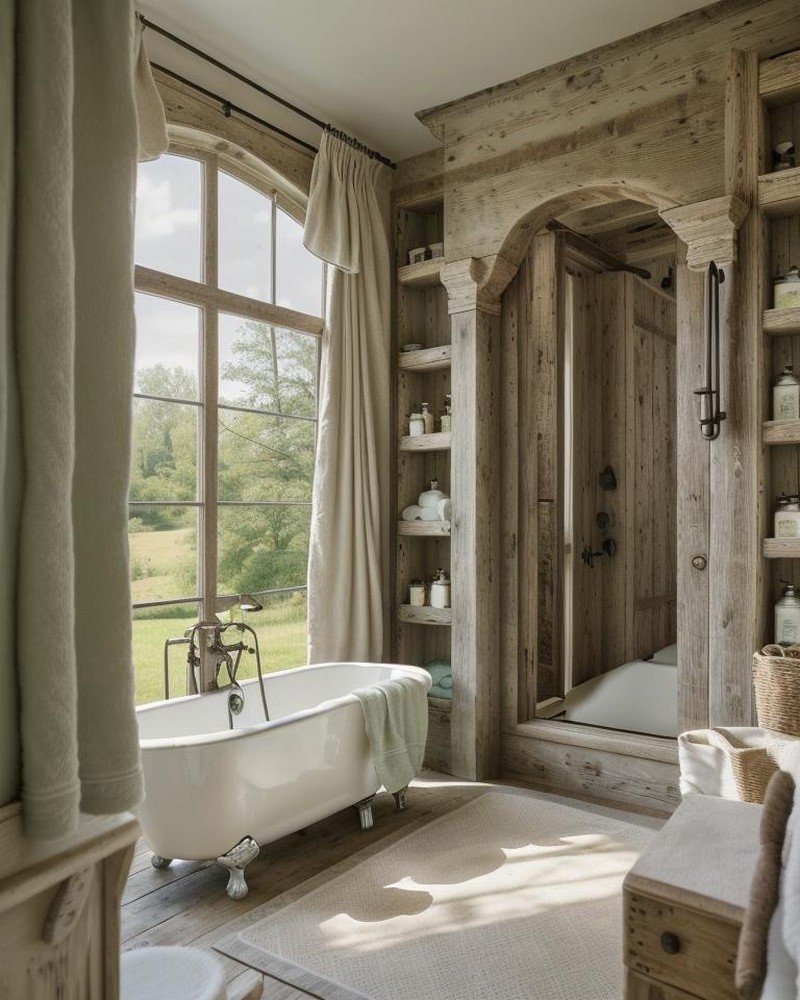
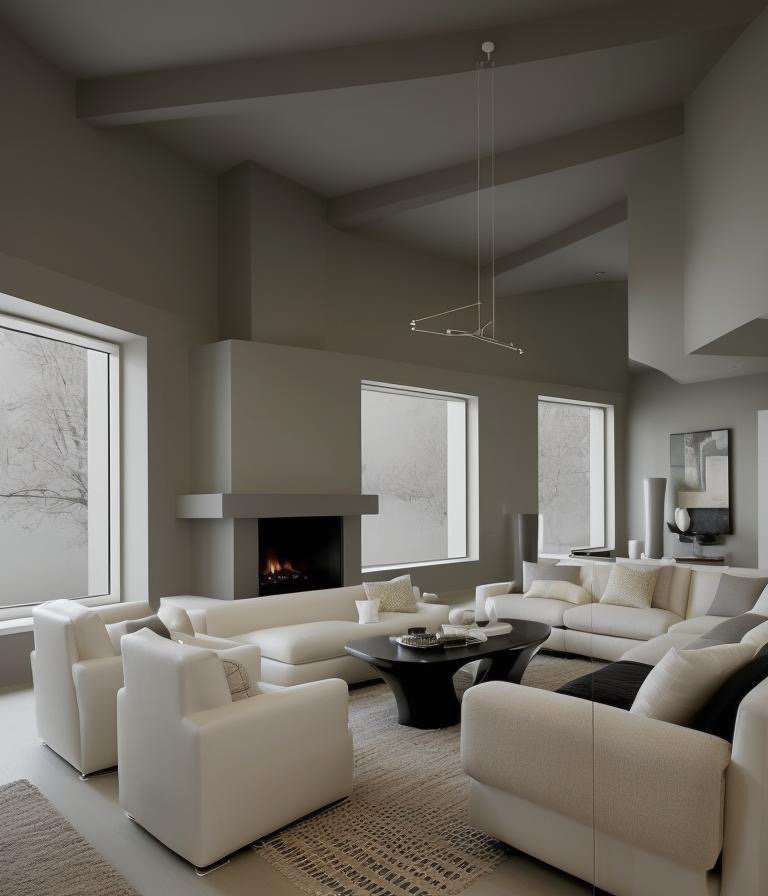
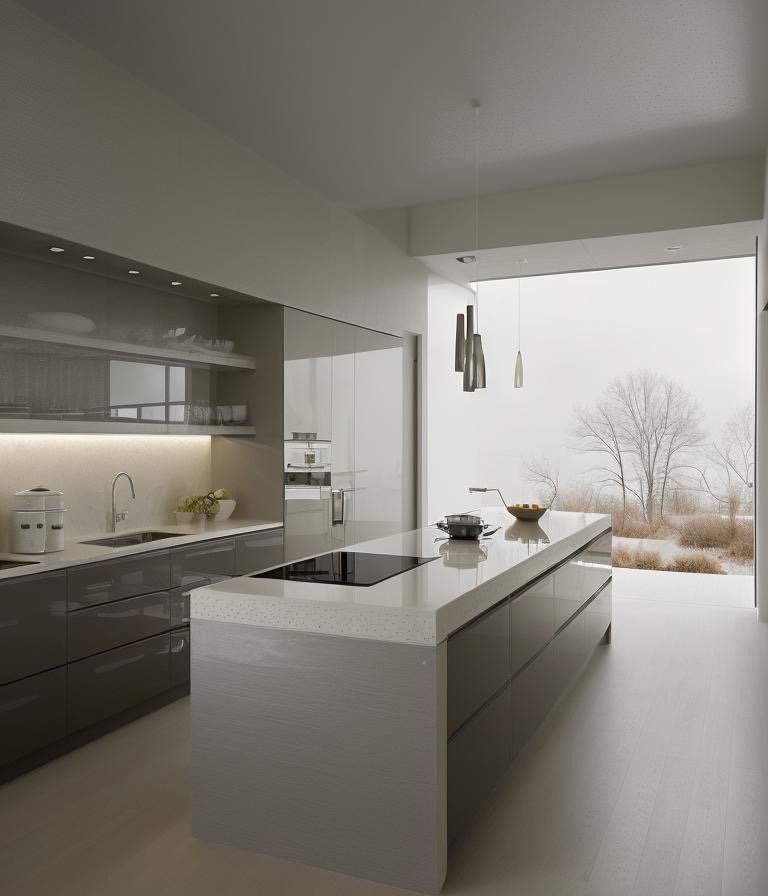
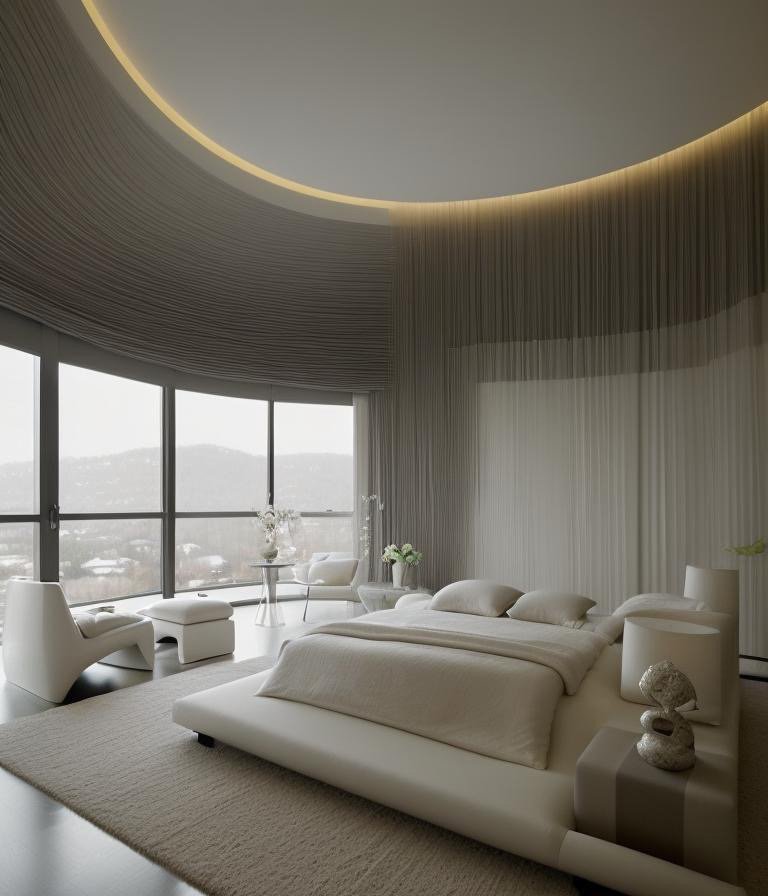
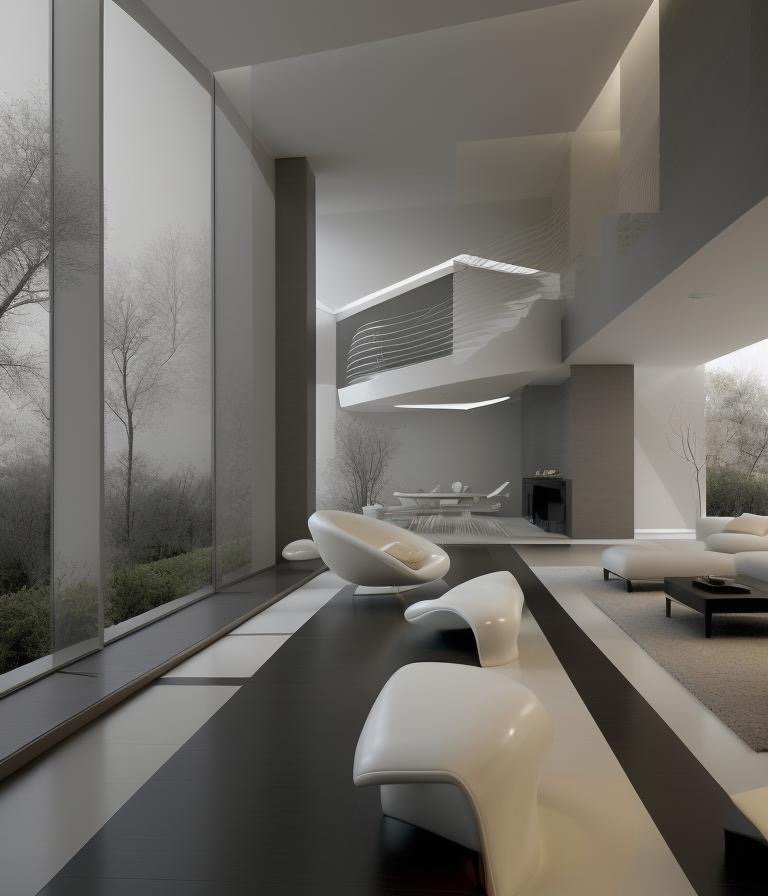
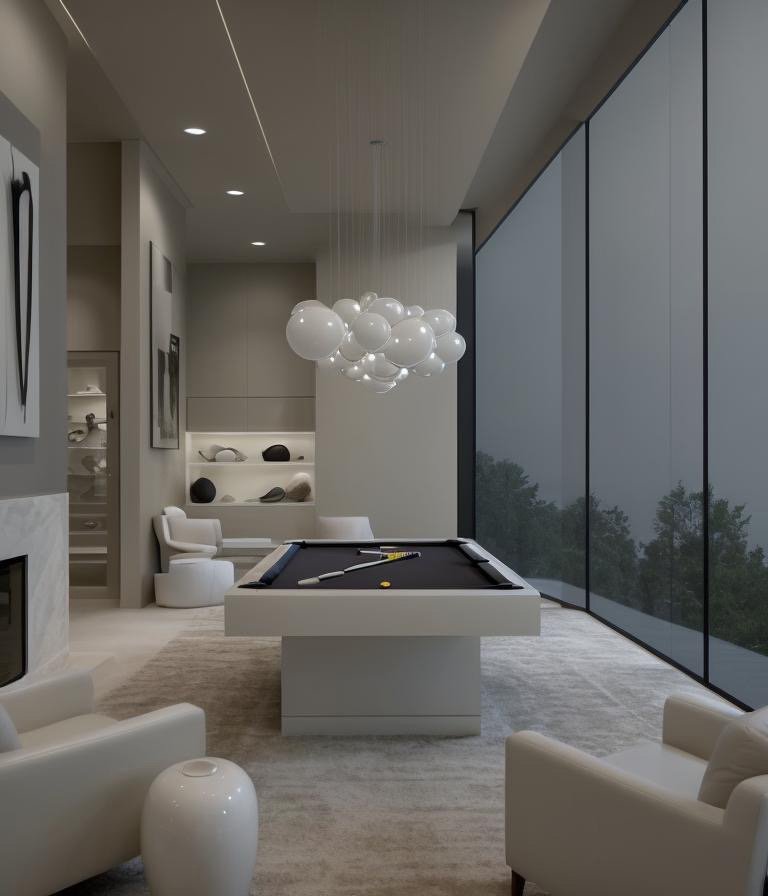
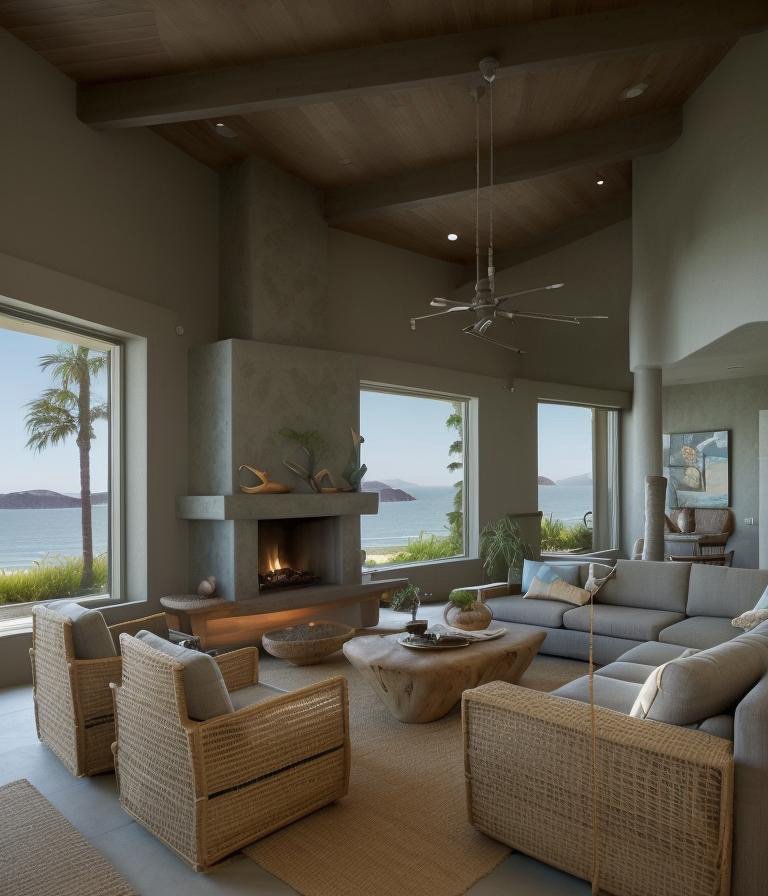
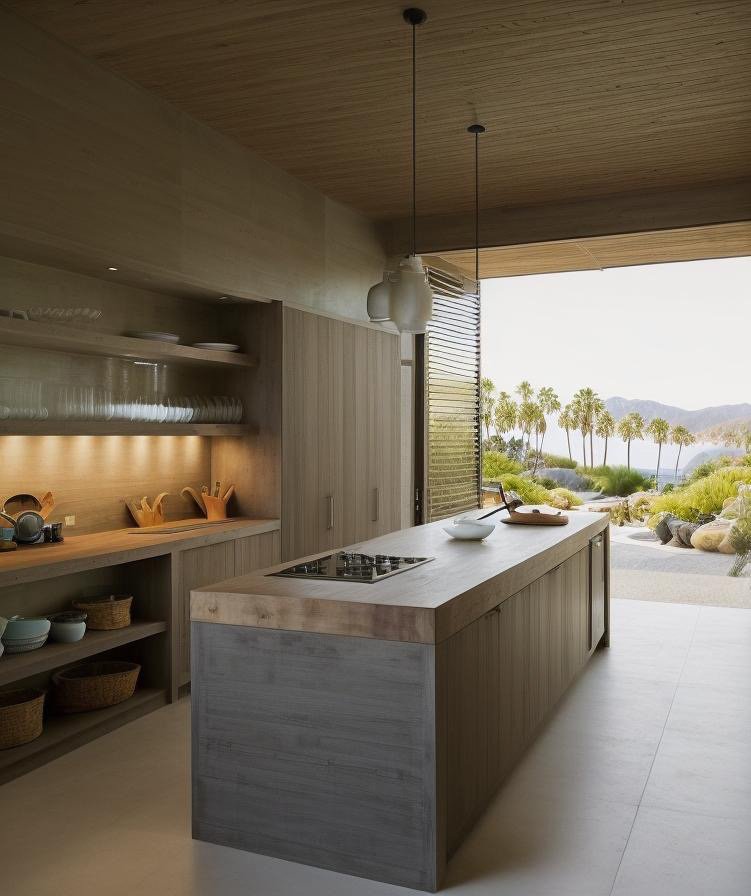
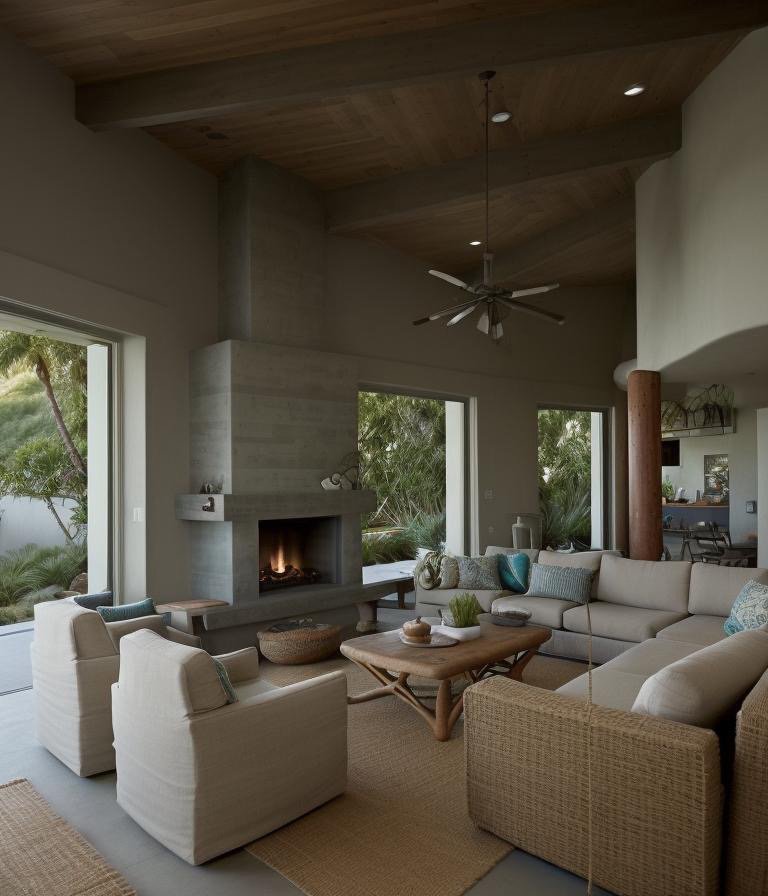
    Japandi office environment

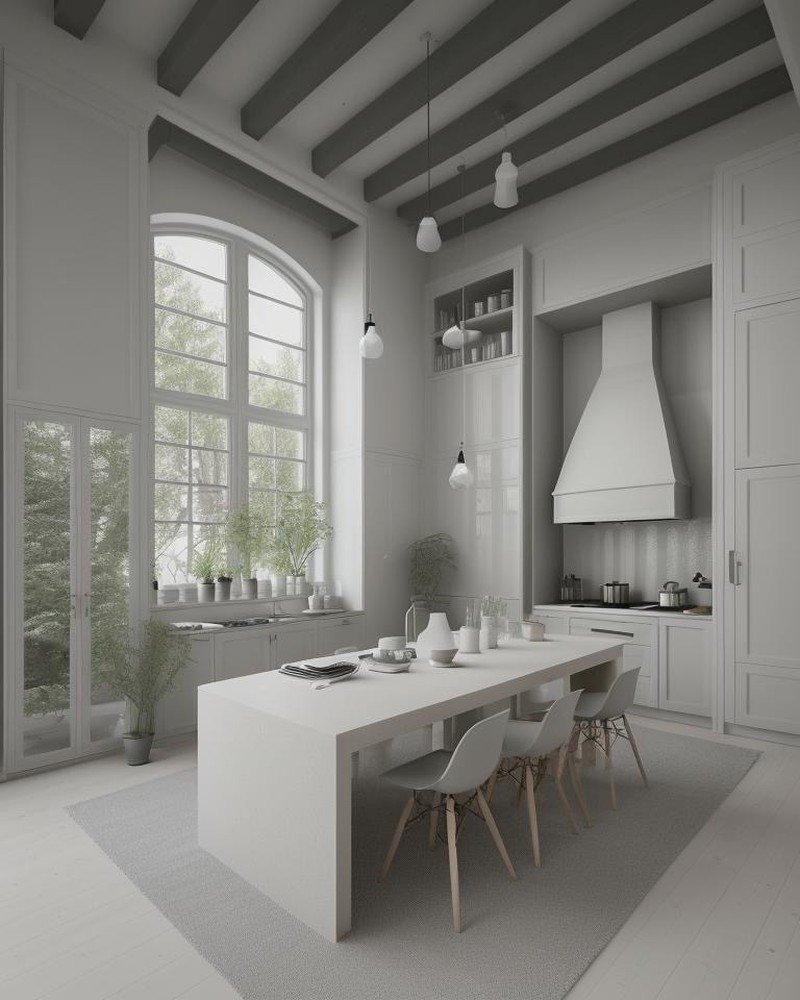
    Four rooms. One architecture. Four experiences. This is the revelation of Cinematic Intelligence™—not that it can make spaces more beautiful, but that it can make beauty mean something different. That it can tune a room to a specific quality of thought. That it can create spaces which don’t just exist, but which understand the humans sitting inside them.

    I entered these rooms without leaving my chair. And in each, I was met by a different version of myself.

    The Japandi Room

    The first thing I noticed was that noise left. Not sound—noise. Mental noise. The difference matters. The room was not silent; there was the sound of breath, the subtle shift of fabric, the almost-imperceptible hum of systems. But none of it cluttered. All of it fit inside the space that had been made for it.

    The wood was pale. Not white, not cold—pale the way certain disciplines become pale after decades of practice. Stripped down. Essential. The surfaces absorbed light rather than reflecting it, and the light moved differently because it had nowhere to bounce. It traveled the way light travels in museums, with intention and respect.

    Japandi office detail study

    Shadows softened everything they touched. Nothing had edges that pulled. Everything held attention gently, the way a considered silence holds attention. The proportions were not minimal—they were precise. The room knew exactly how much of itself to show and how much to keep private. And the effect was not restraint but clarity. My thinking became clearer because the room had stopped insisting that I think about it.

    A psychological state, not an aesthetic. This was a room where strategy matures quietly. Where decisions settle before they’re made. Where the person sitting inside understands, without being told, that some things deserve to be approached slowly. Not lazily. Slowly with purpose. The room did not inspire action. It cultivated judgment. And that distinction—between the space that makes you want to do things and the space that makes you want to think carefully about which things are worth doing—is the difference between rooms that serve function and rooms that serve purpose.

    Japandi spatial relationships

    I sat there and became someone slightly more thoughtful. The room didn’t demand it. It just made that version of myself more available.

    Japandi light and material study

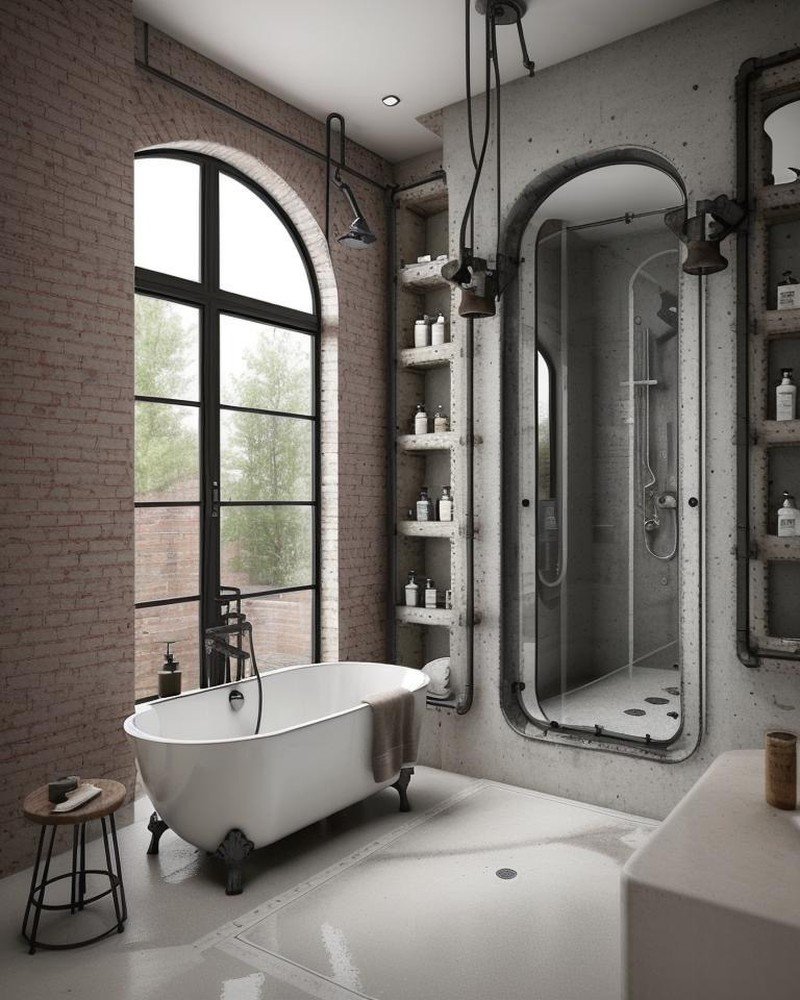
    The Mid-Century Modern Room

    Then I moved to another version of the same space. The Japandi room had softened me. This one aligned me. Geometry asserted itself immediately. Not aggressively—asserted. The furniture felt engineered. Each piece knew its purpose and its proportions with such precision that you couldn’t imagine them being different. The wood was warm but not sentimental. Disciplined warmth. The kind of warmth that serves a function.

    Lighting clarified rather than flattered. It made edges visible. It made choices visible. The room supported decision-making not because it was stark, but because it refused to hide anything. Every surface made its argument. Every angle suggested efficiency. The proportions were not arbitrary. They appeared to emerge from a logic that, if you understood it, would make you more capable of making good decisions yourself.

    Mid-Century Modern office environment

    Operational confidence made visible. This was a room for executives who understand that clarity is power. Not the clarity that comes from minimalism, but the clarity that comes from knowing exactly what everything is supposed to do and making sure it does that one thing excellently. The person sitting in this room was not encouraged to be thoughtful about strategy. They were assumed to already know strategy. The room’s job was to make action efficient once strategy was clear.

    I sat there and became someone more capable. Not more inspired. More capable. The room had stripped away the part of me that questioned and made visible the part of me that could execute. And the confidence that came from that amplification was almost intoxicating. This is what it feels like to work in a room that believes you can handle the truth.

    Mid-Century Modern structural clarity

    Mid-Century Modern proportional study

    Mid-Century Modern material precision

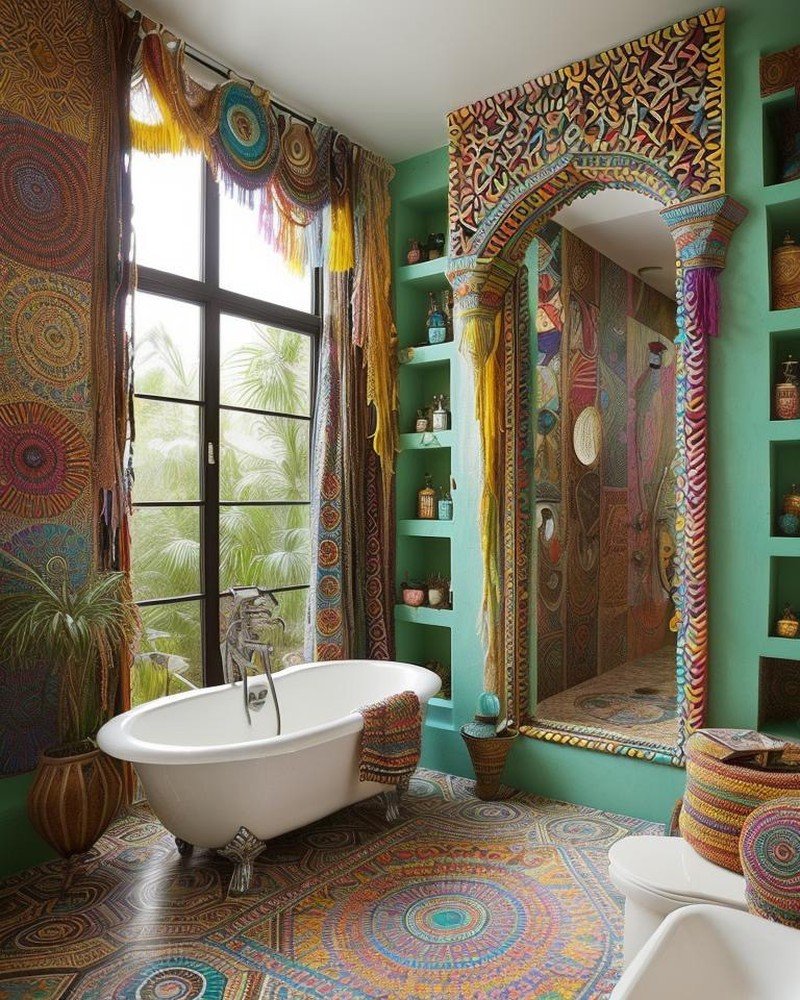
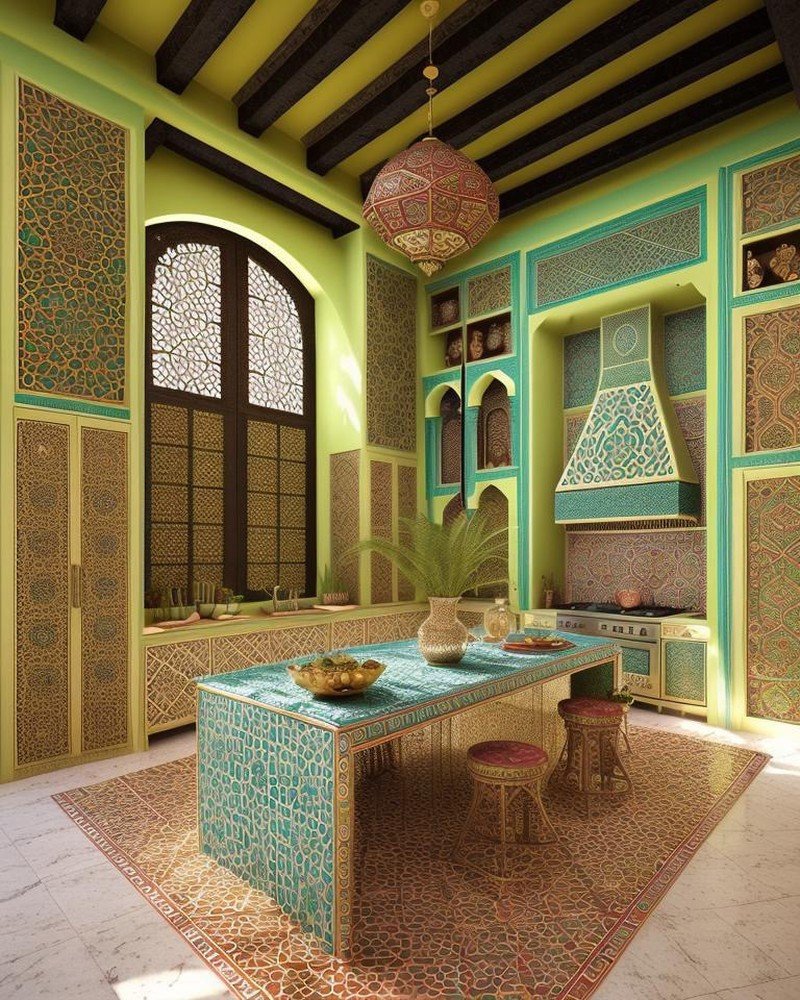
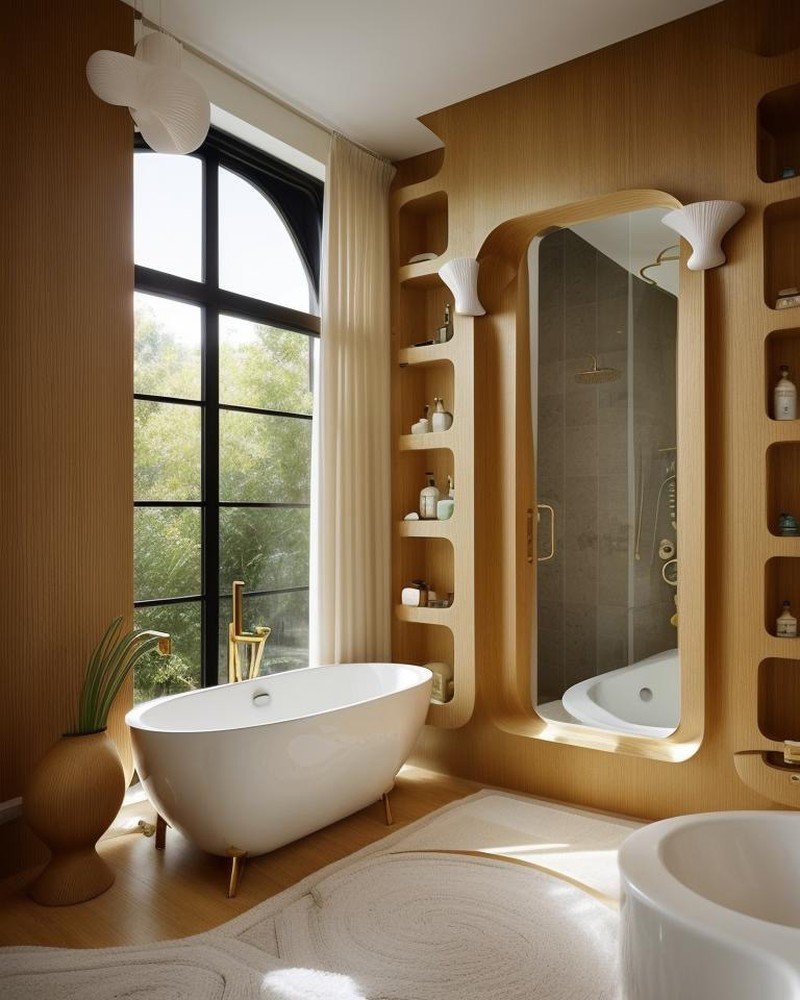
    The Moroccan Room

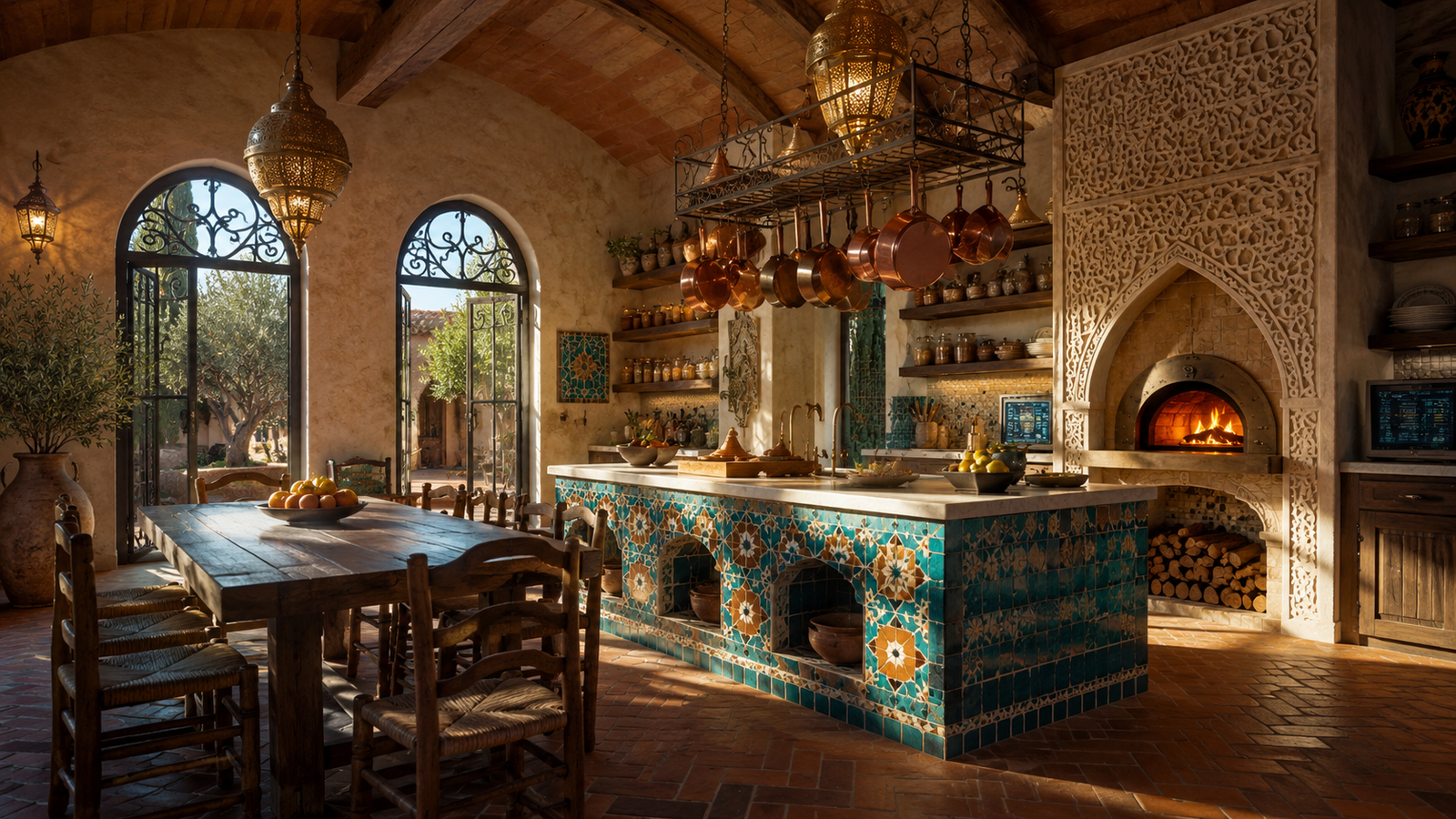
    The third room welcomed differently. The temperature seemed to shift—not in fact but in intention. The space was warmer in the way intentions are warmer than facts. Texture surrounded me. Not chaotically. Carefully. Each pattern held its own logic, and the logistics together created a kind of visual conversation. One element would speak, and another would answer, not in imitation but in a language they shared.

    Light filtered low and directional, the way light filters through fabric in a marketplace. It arrived prepared, not raw. And the effect was not dimming but refinement. You could see less of the room, but what you could see was more coherent. The eye traveled along a path the light had made for it.

    Moroccan office warmth and texture

    The curves in the space encouraged something I hadn’t felt in the other rooms: conversation. Not with myself, not with the room, but with anyone who sat beside me. The geometry was not assertive or softening. It was receptive. The space leaned inward as though listening. As though it understood that some of the best thinking happens when two people sit together and talk about what matters.

    The room didn’t demand clarity or judgment. It created conditions where clarity could emerge through dialogue. It honored both precision and intuition. The aesthetic was rich but never chaotic. There was order underneath, holding the visual abundance in place. This was a room for people who understand that progress isn’t always aggressive. That sometimes the fastest way forward is the one that invites others to move with you.

    Moroccan curved spatial relationships

    Moroccan textile and pattern integration

    I sat there and became someone more open. Not more vulnerable—more open to being changed by proximity to others. The room had created space for that. Not as a softness or an escape, but as a sophisticated understanding that some decisions are better made together, and some insights only arrive through conversation.

    Moroccan detailed aesthetic

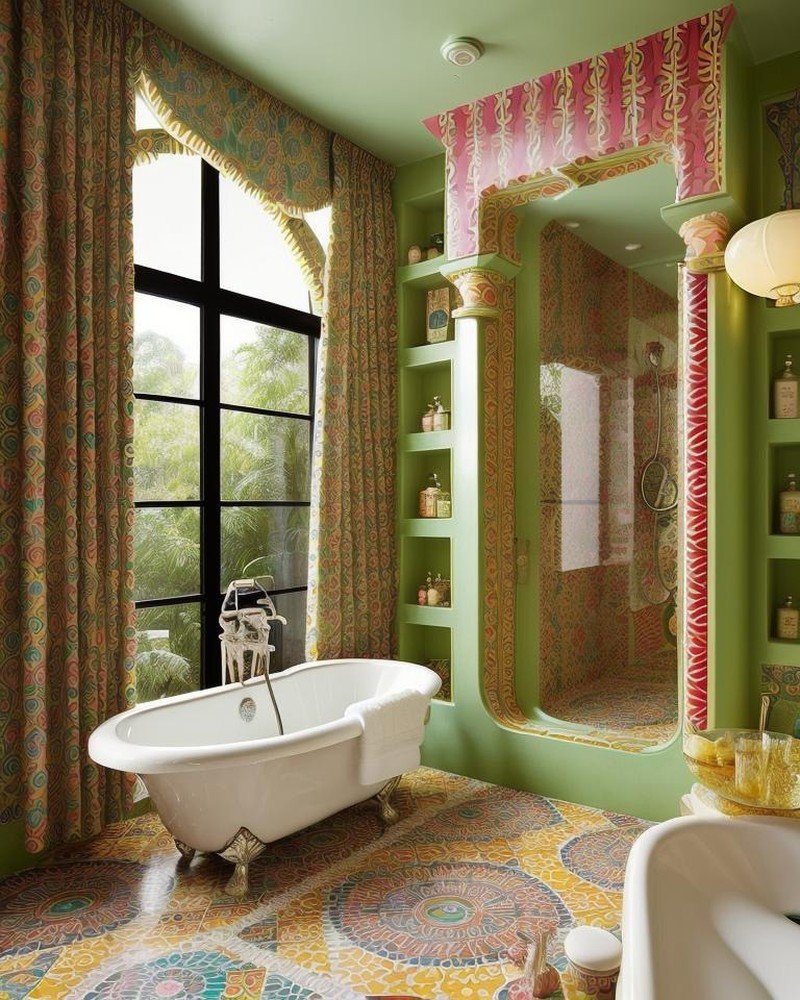
    The Retro Room

    I expected nostalgia in the fourth room. I found memory instead. There’s a difference. Nostalgia is sentimental—it’s about wishing things were the way they used to be. Memory is controlled. It’s about borrowing confidence from the past while remaining present. This room did that. Every color had a history. Every material choice referenced something that had already been proven. But nothing in the room felt like a copy. It felt like a conversation with the past where the past was allowed to speak but not allowed to dictate.

    Retro office with contemporary sensibility

    The aesthetic was precise. Color appeared, but never carelessly. Each hue had been chosen with such intention that you trusted it immediately. You didn’t have to defend your preference—the room had already done that for you. The execution was so refined that it suggested creativity without chaos. This was what it looked like when someone understood both history and how to live in the present without being trapped by either.

    Retro material authenticity

    A room for founders who refuse to look like everyone else. Not because they want to be difficult, but because they understand that competence carries its own aesthetic, and that aesthetic often looks like you’ve thought longer and worked harder than your competitors. The room didn’t celebrate its own cleverness. It just was—clearly, confidently, without apology. The person sitting in this room was assumed to understand that good taste is not about fitting in. It’s about understanding enough about what works that you can afford to be yourself.

    Retro color and texture balance

    I sat there and became someone more assured. Not arrogant. Assured in the way people are assured who’ve studied the past and decided which parts of it deserved to continue. The room had created permission for that kind of confidence. It had said: you don’t need to apologize for having taste. You don’t need to blend in to belong. And the effect was deeply freeing.

    Retro environmental cohesion

    Architecture Never Changed

    The architecture in all four rooms was identical. The program was the same. The light sources were the same. The square footage was the same. Nothing about the basic spatial container had changed. Only the experience did. Only the way the space met the human sitting inside it.

    This is what Cinematic Intelligence™ actually does. It doesn’t overwrite rooms. It reveals latent personalities. Not by making spaces more square footage, not by adding louder aesthetics, not by creating spectacle. It does something subtler and more powerful. It creates spaces that know how to meet the human sitting inside them. That understand what quality of thinking each person needs and creates conditions where that thinking becomes not just possible but inevitable.

    Not more space. Not more features. Intelligence. The ability to understand that the same room configured differently creates not just a different aesthetic but a different possibility for who you become when you sit inside it. The person I was in the Japandi room was thoughtful. The person I was in the Mid-Century Modern room was capable. The person I was in the Moroccan room was open. The person I was in the Retro room was assured. Same architecture. Four different futures.

    And in that variation is the promise of what design can actually be: not a style applied to space, but an intelligence embedded in space. Not a choice imposed on the inhabitant, but a choice made available to them. A room that knows how to listen to the person sitting inside it, and creates conditions where the best version of that person has room to exist. That’s not decoration. That’s architecture behaving like intelligence. And that’s the difference between rooms and spaces that actually matter.

  • The Rise of the Ghost Architect: How Buildings Are Being Designed Without Names

    The Rise of the Ghost Architect: How Buildings Are Being Designed Without Names

    night cityscape with illuminated buildings

    There is a figure in contemporary architecture who has no name, attends no meetings, signs no drawings, claims no credit. Yet influences every decision. Shapes form. Determines mood. Establishes proportion. Establishes identity. This figure is not a person. It is a system. And it is reshaping how buildings come into being.

    Call it the ghost architect. Not metaphorical—functional. An intelligence that inhabits the early stages of architectural conception, working before human architects are formally engaged, without the constraints of professional accountability, without the friction of client relationships or regulatory submission. The ghost architect explores. Tests. Visualizes. Fails silently. Iterates at velocity. Then vanishes before the real work begins.

    What remains is a fully formed spatial concept. A massing that feels inevitable. A proportion system that appears natural. An aesthetic sensibility that suggests deep research and intentional curation. But it emerged from no sketchbook. No design firm fought for it in a charrette. No architect’s signature appears anywhere on the work. It was made by an intelligence that does not require attribution to do what it does best: generate possibility at scale.

    Architecture Was Always About Authorship

    The discomfort with the ghost architect runs deep because architecture in the modern era has been fundamentally tied to the idea of the author. The architect as author. The firm as the site of creative intention. The building as the expression of individual vision. Frank Lloyd Wright’s signature was as much a part of his architecture as his proportion systems. Zaha Hadid’s authorship was inseparable from her formal language. The building was the architect made visible.

    This wasn’t accidental. It was the foundational mythology of Modern architecture—the belief that great spaces emerged from great minds, that individual genius was the origin point of spatial excellence. Clients hired architects because they wanted to access that genius. Developers competed for landmark architects because the name on the building added value. The whole infrastructure of contemporary architectural culture—the awards, the publications, the canons of taste—was built on the assumption that the author mattered.

    architectural concept visualization

    But clients stopped caring about this mythology earlier than anyone realized. They stopped asking “who is the architect?” and started asking “what is the space?” The shift was nearly invisible at first. A developer would consult an AI visualization engine to test massing options before engaging an architect. A real estate firm would use Cinematic Intelligence™ to pre-visualize a property’s potential before the design was formally commissioned. A marketing team would request three spatial variants—three different aesthetic treatments of the same program—and show them to investors before a single conceptual drawing was approved.

    The ghost architect was born in these moments. Not in a laboratory or a research initiative, but in the actual workflow of real development. It emerged because it solved a problem: how to explore spatial possibility quickly, cheaply, and without the overhead of a full architectural team. The developer gets designs. The investor sees options. The project moves forward. The architect arrives after the major decisions have been made.

    The Ghost Architect Handles Exploration; The Human Architect Handles Responsibility

    This is where the discomfort becomes productive. An AI system can visualize spatial concepts because visualization is a technical competency. It can propose massing, test proportions, render material studies, and generate variants at a speed that no human team can match. It can do all of this without exhaustion or ego or the need for recognition. It is, in purely mechanical terms, excellent at early-stage design exploration.

    But there is something it cannot do. It cannot choose wisely. It can generate options. It cannot take responsibility for them. It can propose futures, but it cannot believe in them, cannot defend them, cannot sit with the client and explain why this particular future is worth building. The ghost architect proposes. The human architect chooses.

    varied architectural concept studies

    The distinction matters because it reframes what architecture actually is. For much of the twentieth century, architects believed their primary role was conceptualization—the generation of spatial ideas. But what the ghost architect reveals is that this belief was only partly true. Clients don’t pay for concepts. They pay for outcomes. They pay for spaces that function, feel right, perform economically, and endure culturally. Concept generation is part of that, but only part.

    The human architect’s real work is judgment. Judgment about which concept deserves to be built. Judgment about which proportions will actually serve the program. Judgment about which aesthetic gestures enhance rather than distract. Judgment about how a building will sit in its context and carry its meaning across decades, not just across the presentation. The ghost architect can propose. Only the human architect can judge.

    This is uncomfortable because it means architecture is smaller and more specific and more relational than the mythology suggested. It’s not about individual genius producing unprecedented forms. It’s about experienced practitioners making careful choices about which proposals deserve the weight of built reality. It’s about responsibility rather than originality.

    Attribution Will Become Irrelevant, Then Important Again

    The next decade will force a reckoning with attribution. Some buildings already exist in a kind of authorship limbo—visualized by AI, developed by corporations, managed by firms, inhabited by people who will never know or care who designed them. The question of “who is the architect?” will become increasingly unanswerable. And that is, paradoxically, an opportunity.

    integrated architectural visualization

    Because once the mythology of the author is stripped away, what remains is the actual work: the calibration of space to purpose, the alignment of form to function, the discipline of proportion, the sophistication of material. These things don’t require a signature. They require thinking. And thinking is what remains when the ghost has finished its work.

    The buildings of the future are already being imagined. Quietly. Without names. Without meetings. Without the friction and politics and ego that have always characterized architectural practice. They are being imagined by systems that propose and propose and propose until something emerges that works. Then a human architect inherits that work, judges it, refines it, and takes responsibility for it. And somewhere in that inheritance is where real architecture happens.

    architectural massing study

    The Ghost Architect Is Not the Future; It’s the Present

    Some fear this moment. They see the ghost architect as a harbinger—the beginning of the end of architecture as a human discipline. But this misreads what’s actually happening. The ghost architect doesn’t replace the human architect. It liberates the human architect from the pretense of authorship. It says: stop trying to be the sole origin of all spatial ideas. Stop defending your ego in the form of formal gestures. Stop believing that greatness comes from isolation.

    Instead, engage with the abundance of spatial proposals. Judge them carefully. Choose what actually serves the building and the people who will inhabit it. Refine what needs refinement. Reject what deserves rejection. Take responsibility for the outcome, even if you didn’t generate the initial concept.

    refined architectural proposal

    This is harder work than conceptualization, not easier. It requires taste. It requires judgment. It requires the ability to see through visual spectacle to actual spatial truth. And it requires the courage to say: this idea came from elsewhere, but I am choosing to build it, and I am responsible for that choice.

    The ghost architect has already begun its work. The buildings being designed right now—before you read this—are being shaped by systems that propose at velocities humans cannot match. And the question facing architecture is not whether to resist this reality, but whether to rise to the challenge it presents. Can architects become judges of spatial quality instead of generators of spatial novelty? Can they take responsibility for choices they didn’t originate? Can they do the harder work of curation rather than the more celebrated work of creation?

    curated architectural solution

    The ghost architect is not a threat to architecture. It is a test. And architecture has always been best when it understood itself as a discipline of judgment, not of originality. The buildings that endure are not the ones that were unprecedented. They are the ones that were, at every moment of decision, chosen carefully. The ghost architect can generate the options. But only the human architect can choose wisely. And in that choice—in that responsibility—is where real architecture lives.

    architectural space in context

    detailed architectural realization

  • The Death of the Floor Plan: Why Architecture Is Now Sold in Images, Not Drawings

    The Death of the Floor Plan: Why Architecture Is Now Sold in Images, Not Drawings

    architect desk with blueprints and holographic visualization

    The floor plan had a four-hundred-year contract. From the moment it emerged as a representational necessity—when buildings grew too complex to build from verbal instruction alone—the floor plan became architecture’s constitutional document. It was the language through which intent moved from mind to site. It was legitimacy. A building without a plan was like law without precedent: possible, but questionable.

    That era is closed. Not because the floor plan lost usefulness—it didn’t—but because it lost its audience. The end came not with a manifesto or a theoretical rupture, but quietly, through preference. Clients stopped asking for drawings. They started asking for visuals.

    The inversion is nearly complete. What was once the opening gesture—the plan spread across a conference table, the architect explaining intention through line weight and notation—has become the back office. Now the image arrives first. The render. The visual speculation. The decision made through perception rather than through projection. Architects who trained in the language of plans discovered they were speaking to an audience that had learned to read space differently.

    The Death Was Quiet

    For most of the twentieth century, the hierarchy was clear: plans mattered. Elevations supported them. Sections explained them. Renderings were afterthoughts—marketers’ tools, developer indulgences, unnecessary decoration. The serious work happened in two dimensions. The real thinking happened in lines.

    This ordering reflected a fundamental assumption: that architects understood buildings better than clients did. That the ability to read technical drawings was a literacy that mattered. That intention could move from abstract line to built reality if the intermediate language was precise enough. The floor plan was the test. If you could read it, you understood the building. If you couldn’t, you trusted the architect.

    The assumption held for centuries. It held through Arts and Crafts. It held through Modernism. It held even as computers made plans easier to produce and harder to understand—more complex, more layered, more removed from the experiential reality they claimed to represent.

    Then something shifted. Not because plans became obsolete, but because perception became more valuable. Clients began to understand buildings through visual simulation rather than technical notation. A rendered interior told them more about how the space would feel than a plan ever could. A perspective view showed them light and material and proportion in the language they actually used to make decisions. The floor plan became what it always was beneath the technical surface: an abstraction. And abstractions only matter if their audience can use them.

    architectural visualization study

    The real acceleration came through AI. Cinematic Intelligence™ did something no human team could do at scale: it generated spatial imagery at velocity. Dozens of variations. Hundreds of spatial explorations. Every iteration visualized before it was drawn, every decision surfaced through perception before it was committed to plan. The visual engine became the design engine. Plans followed, they didn’t lead.

    Developers understood immediately. Why commission a hundred plans to explore massing when you could visualize fifty variations in the time it took to draw one? Why trust notation when you could show the investor exactly what the light would do at four in the afternoon? The sales process inverted. Where plans once opened conversations—”here is the logic, here is the intention”—they now close them. The decision is made. The image has already sold it.

    What Changed Is How We Understand Space

    The floor plan didn’t fail. What happened is subtler and more profound: the audience outgrew the language. A new literacy emerged. Clients learned to understand buildings through images. They developed intuition about spatial relationships by moving through rendered environments. They could assess proportion and material and light through perception rather than through technical projection.

    This doesn’t make architecture shallower. It makes it more accountable. The rendered image cannot hide behind the excuse of technical complexity. It cannot defer judgment to “the vision becomes clear once it’s built.” The image is the first judgment. If the space doesn’t work in the visualization, it was never going to work in reality. The abstraction that once allowed architects to propose unrealistic ideas has been removed. Now they must show what they mean.

    3D space visualization with material studies

    Some architects mourned this. They saw it as a loss—the loss of a specialized knowledge, the democratization of their authority. But the better architects understood what was actually happening. The floor plan wasn’t being eliminated; it was being restored. Because the visual literacy that replaced it is not actually divorced from the plan—it’s built on it. The render is only as intelligent as the space it visualizes. And the space is only as coherent as its plan.

    What changed is the order of conversation. The plan is no longer the starting point—it’s the foundation. You don’t begin a project by drawing a plan and hoping the client can imagine the space. You begin by showing them the space, and then you explain the plan that makes it possible. The drawing becomes the evidence of what the image promised.

    Cinematic Intelligence doesn’t replace drawings. It transforms their purpose. The floor plan was always doing two jobs at once: it was simultaneously a tool for thinking about space and a tool for selling space. Those are different demands. Technical precision and perceptual clarity are not the same thing. The visual engine separates them. The image handles sales. The plan handles truth. Each can finally be excellent at what it’s designed to do.

    The New Architecture Is Accountable Architecture

    A building visualized before it’s drawn cannot hide behind the excuse of unexpected site conditions or the surprise emergence of unexpected design during construction. The architect has already made a promise. The image is the contract. When discrepancies appear between render and reality, it becomes immediately visible. This is uncomfortable for architects trained to believe that real buildings are always more complex than drawings can express. And they are. But the comfort of that complexity—the shelter it provides from accountability—is gone.

    detailed interior render with material specification

    What emerges is a different kind of architectural intelligence. One that understands the image as a specification, not a suggestion. One that recognizes that the visual environment is the primary environment—that people experience buildings through light and material and proportion before they experience them through floor area or structural efficiency. The plan becomes the thing that explains how the image is possible, rather than the image becoming the thing that explains what the plan means.

    This shift doesn’t diminish architecture. It redirects it. Because the goal was never to be able to read drawings. The goal was always to create environments where people could think, work, rest, and flourish. The floor plan was one way of getting there. The visual engine is another. The plan was never the destination—it was the journey. And if the journey can become clearer, more transparent, more directly connected to the actual experience of inhabiting space, then the architecture itself can become more thoughtful about what it’s actually trying to achieve.

    The Language Changed, Not the Conversation

    The death of the floor plan is not the death of spatial reasoning. It’s the maturation of it. Architecture is no longer sold in drawings because architecture learned to speak the language its audience actually uses. Plans are still drawn. They’re still necessary. They’re still the foundation of every serious project. But they’re no longer the sales pitch. They’re no longer the thing you show first. They’re the thing you show to prove that the image is real.

    render showing architectural detail and spatial relationship

    Some will argue this represents a loss of architectural rigor, a triumph of appearance over substance. But appearance and substance are not opposites—they’re the same thing experienced from different distances. A space doesn’t fail because its visual representation is powerful. It fails because the spatial logic underneath that representation is flawed. The image didn’t replace the plan; it exposed it. Now there’s nowhere for weak spatial thinking to hide.

    The floor plan is dead not because it failed. It’s dead because architecture outgrew the need to explain itself slowly. The image accelerates understanding. It collapses the gap between intention and perception. And in that collapse, architecture becomes what it was always meant to be: not a specialized language for architects, but a direct communication with the people who inhabit the spaces we design.

    comprehensive spatial visualization

    The conversation hasn’t ended. It’s become clearer. And clarity, it turns out, was always the point.

  • The Final Three: How DBM Pushed California Casual, Bohemian & Bauhaus Beyond Their Limits

    The Final Three: How DBM Pushed California Casual, Bohemian & Bauhaus Beyond Their Limits

    Boardroom with warm earth tones, colorful pattern accent, and curated spatial harmony

    The Conclusion That Explains Everything

    These are the final three. Not three additional styles among many, but three styles that reveal the true architecture of the entire 22-style collection. They do not merely conclude—they explain.

    Across these three, DBM’s Cinematic Intelligence™ encounters the deepest truth about design transformation: A room is not defined by its style. A room is defined by its intelligence. Intelligence is how a space interprets light, how it navigates culture, how it honors identity while remaining effortlessly itself. Intelligence is the invisible structure beneath every aesthetic choice.

    These final three styles are often misunderstood because they live closest to everyday life. They feel familiar. They feel accessible. This proximity is precisely why they are the hardest to master. Everyone thinks they understand California Casual. Everyone believes they can do Bohemian. Everyone assumes Bauhaus is simplicity itself.

    They are wrong. And DBM’s interpretation proves it.

    California Casual: The Paradox of Effortlessness

    California Casual boardroom with warm earth tones, green plants, relaxed sophistication

    California Casual is deceptively complex. The entire aesthetic hinges on a paradox: it must feel effortless while requiring extreme precision. It must whisper, not shout. It must breathe, not sprawl.

    Most interpretations fail because they oversoften the style. They confuse casual with careless. They treat California Casual as permission to abandon standards. The result is rooms that feel unfinished—spaces that lack architectural conviction.

    DBM’s interpretation approached California Casual as atmospheric logic, not color palette. The boardroom became breathable but never bland. Warm but never rustic. Green plants exist here not as decoration but as atmospheric participants—they shift light, create micro-climates, remind inhabitants that this space is alive.

    California Casual variation with soft sunlit gradients and natural material warmth

    This room feels like a boardroom that grew up in Malibu but runs a Fortune 100. It carries the ease of the Pacific Coast—the unforced warmth, the light that seems to arrive from everywhere at once. Yet it maintains absolute executive authority. Decisions made here feel inevitable. Collaboration feels natural. The space itself invites clarity.

    Cinematic Intelligence understood that California Casual is not about relaxation. It is about achieving focus through comfort. This boardroom is where strategy sessions feel like conversations between equals. Where hierarchy dissolves not through informality but through shared architectural respect.

    This is California Casual as infrastructure for leadership.

    Bohemian: Discipline Masquerading as Freedom

    Bohemian boardroom with rich jewel tones, curated patterns, textiles, and layered depth

    Bohemian is notoriously risky. One wrong move and the style collapses into visual clutter and identity confusion. A room becomes a costume shop instead of a space. Personality overwhelms purpose. Culture becomes caricature.

    The miracle of DBM’s Bohemian interpretation is discipline. This is personality without noise, color without chaos, culture without cliché. The engine achieved this through a single method: narrative order.

    Rich jewel tones in this space do not compete—they graduate. Patterns speak in rhythm rather than screaming for attention. Colors support each other rather than demanding individual recognition. Textures are layered with the precision of a conductor orchestrating an orchestra where every instrument has heard the composition memorized.

    Bohemian variation with curated eclecticism and architectural harmony

    The style never surrenders to itself. It surrenders to architecture. Every bold choice—every emerald wall, every patterned textile, every artistic gesture—exists because it serves the room’s clarity, not its chaos. This Bohemian boardroom is for leaders, not tourists. It speaks to those who understand that personality and precision are not opposites but partners.

    Cinematic Intelligence approached Bohemian as a design philosophy: How do you celebrate cultural richness without creating visual noise? The answer is understanding that true eclecticism is not random—it is curation. Every element was chosen not because it is interesting but because it is necessary.

    This boardroom feels like it has lived. It has history. It has traveled. Yet it remains focused. It remains intelligent. It refuses to apologize for its color while maintaining its purpose.

    Bauhaus: Sacred Ground

    Bauhaus boardroom with clean geometry, monochrome palette, mathematical discipline

    Bauhaus is sacred ground in design history. It is not a style that can be adopted casually. It is a philosophy—mathematical, taught not invented. It demands clarity, order, honesty, humility, rigor.

    Most contemporary interpretations struggle because they misunderstand the core principle: Bauhaus does not eliminate beauty. Bauhaus eliminates dishonesty. Every form must have function. Every material must be true. Every line must be justified. This is design as moral discipline.

    DBM’s Bauhaus interpretation is almost unnerving in its purity. Geometry is exact. Materials align without ornament. The palette is disciplined—monochromes that speak through reflection and shadow rather than through color. This boardroom could have been approved by Walter Gropius himself. Nothing is loud but everything matters.

    Bauhaus variation with mathematical precision and disciplined material honesty

    Cinematic Intelligence here operated as a philosophical restraint. At every decision point, the question was: Is this necessary? Does this serve function? Does this material speak truth? Most design systems cannot sustain this level of interrogation. Most designers lack the conviction.

    Yet this Bauhaus boardroom proves that restraint is not emptiness. Discipline is not sterility. A room governed by Bauhaus principles is more alive than spaces drowning in decoration. Life emerges from clarity. Strength emerges from honesty.

    The Final Three Reveal the Method

    Across this entire 22-style collection, structure never changed. Proportions never changed. The spatial envelope remained constant. This is not accident. This is evidence.

    This is the DBM method: Styles evolve. Architecture remains sovereign.

    The Cinematic Intelligence engine did not change the boardroom. It revealed it—through California Casual’s warmth, through Bohemian’s richness, through Bauhaus’s clarity, through Expressionism’s energy, through Coastal’s atmosphere, through Chalet’s intimacy, through Chic Contemporary’s precision, and through fourteen other styles, each one proving the same principle.

    One room. Twenty-two languages. One unchanging architecture that could speak every language fluently.

    The Architecture of Infinite Futures

    This collection concludes not with finality but with revelation. Architecture is not a limitation. Architecture is a canvas of infinite futures.

    Cinematic Intelligence is the engine that reveals those futures with precision, emotion, and respect. It understands that style is not surface. It is how a space speaks to those who inhabit it. It is the frequency on which a room communicates purpose, culture, identity, aspiration.

    These final three styles—California Casual, Bohemian, Bauhaus—are not the conclusion of a collection. They are proof of a principle. They are evidence that transformation is not about changing what is. It is about revealing what has always been possible.

    A room is intelligent not because of its decoration. It is intelligent because of how it chooses to think. And that intelligence, once revealed, changes everything.

  • Four Styles, Zero Compromise: Expressionist, Coastal, Chic Contemporary & Chalet

    Four Styles, Zero Compromise: Expressionist, Coastal, Chic Contemporary & Chalet

    Boardroom with colorful geometric rug and patterned architectural elements

    The Mastery Threshold

    Some styles are easy to imitate. Very few can be mastered. Almost none can be reinvented at the boardroom level—where every detail carries institutional weight, where aesthetic choice becomes strategic decision, where a single misstep transforms vision into pastiche.

    These four styles occupy that rare territory. They demand not interpretation but reinvention. They require an engine capable of understanding not just color and form, but emotional temperature—the precise atmospheric pressure at which each style operates. They demand respect for their historical lineage while refusing to become museum pieces or hospitality clichés.

    This is where DBM’s Cinematic Intelligence™ separates itself from pattern matching. These four styles were not assembled from trend boards. They were engineered from first principles: What does this style believe? What emotional contract does it make with its inhabitants? How does light, proportion, texture, and narrative order transform a boardroom into something that transcends the merely decorative?

    Expressionism: When Color Becomes Choreography

    Expressionist boardroom with bold neon yellow walls and abstract art

    Expressionism is notoriously difficult. Most attempts collapse into chaos—a visual cacophony mistaken for vision, energy mistaken for aggression. Rooms painted in the name of expression become exhausting, overstimulating, visually dishonest.

    DBM’s Expressionist interpretation looks conducted, not painted. Here, color becomes movement, but movement becomes orchestrated. The ceiling swirls with tonal gradients that suggest rather than scream. The featured rug reads as brushstrokes—not random, but rhythmic. Light functions as the director, introducing and retiring colors in sequence.

    Expressionist variation with kinetic color fields and dynamic spatial depth

    This is Expressionism for executives who think in vision. The boardroom pulses with intention, not impulse. Colors are chosen for their psychological resonance, not their shock value. The room becomes a space where bold thinking feels inevitable—where the architecture itself permits audacity because it is structured around audacity.

    Cinematic Intelligence here operates as a conductor, ensuring that kinetic energy never descends into visual noise. Every hue supports the narrative. Every gradient serves the emotional arc. The room doesn’t perform—it thinks.

    Coastal: Atmosphere Over Aesthetic

    Coastal boardroom with teal and mint palette, airy proportions, matte textures

    Coastal design is not beach décor. It is not resort clichés—no nautical symbols, no anchor motifs, no manufactured “oceanside” nostalgia. True Coastal is an atmospheric shift. It is space behaving like air itself.

    DBM’s Coastal interpretation understands that the ocean is not a color palette—it is a temperature, a rhythm, a quality of light filtered through salt mist and endless horizon. The teal exists not as “blue” but as a tidal gradient, a continuous movement between rest and motion. Textures are deliberately matte, deliberately breezy. Nothing in this room screams “beach.” Everything whispers clarity.

    Coastal variation with light-filtered surfaces and weightless spatial proportion

    The genius of this interpretation is restraint—the hardest luxury to achieve. Most designers oversell. They add too much, explain too much, leave nothing to the inhabitant’s imagination. Cinematic Intelligence operates differently. It removes. It clarifies. It trusts the space to speak in silence.

    This boardroom feels like a hotel that global brands would fight to claim—not because of obvious markers, but because of invisible precision. The light is weightless. The proportions breathe. Sitting here, you think more clearly. This is Coastal as infrastructure for focused thought.

    Chic Contemporary: Beauty in Absence

    Chic Contemporary boardroom with clean white and grey palette, precise geometry

    Minimalism is where most designers fail. It looks simple. It is impossibly complex. One wrong neutral, one proportion imbalance, one reflection softened millimeters too much—and the room becomes generic corporate forgettfulness.

    Chic Contemporary demands molecular-level precision. The palette is tightened. Edges are sharpened. Reflections are softened with surgical accuracy. The table is not furniture—it is architectural sculpture. The lighting grid is not functional—it is philosophical. Every element exists because its absence would be noticed.

    Chic Contemporary variation with refined neutrals and disciplined spatial geometry

    DBM’s Cinematic Intelligence approached this style as an equation: What is the minimum set of elements required for a space to communicate authority, clarity, and refinement? The answer is profound restraint. The answer is understanding that beauty lives in what you do NOT see.

    This boardroom is where billion-dollar decisions feel inevitable. Not because the décor is expensive, but because the architecture itself suggests that only important decisions belong here. The room doesn’t distract. It clarifies. It is Contemporary in its rigor, Chic in its refusal to shout.

    Chalet: Alpine Intimacy at Executive Scale

    Chalet boardroom with dark timber ceiling, warm light cones, intimate warmth

    Warmth without heaviness. Timber without cliché. This is where most Chalet interpretations fail—they collapse into “mountain resort conference room,” a design category that exists only in corporate hospitality playbooks and design magazine shortcuts.

    DBM’s Chalet is architectural storytelling. Timber behaves like velvet. Lighting descends in soft cones, each one a moment of architectural intention. Shelving glows like winter cabin windows—warm, but never garish. The palette is earthy but never rustic. This is not a lodge. This is executive authority married to Alpine intimacy.

    Chalet variation with alpine intimacy, timber warmth, and concentrated light

    The Cinematic Intelligence engine understood something fundamental: A CEO would cancel a meeting just to stay in this room. Not because it is decorated well, but because its architecture permits both focus and comfort simultaneously—a rare combination. The room says: You are secure here. Your thinking matters here. Your decisions ripple from this exact spot.

    This is Chalet at boardroom scale: Every material tells a story. Every light source has purpose. Warmth is not an accident—it is strategy.

    The Method Behind the Mastery

    What unites these four styles is not their appearance. It is the method by which they were engineered:

    First: We interpret, not mimic. We do not copy Expressionism from art history textbooks. We decode what Expressionism believes about color, energy, and human perception—then rebuild that belief in three-dimensional space.

    Second: Cinematic Intelligence understands emotional temperature. Expressionism operates at the frequency of creative energy. Coastal lives at the wavelength of clarity and breath. Chic Contemporary demands the precision of silence. Chalet whispers the comfort of belonging. The engine calibrates itself to each frequency.
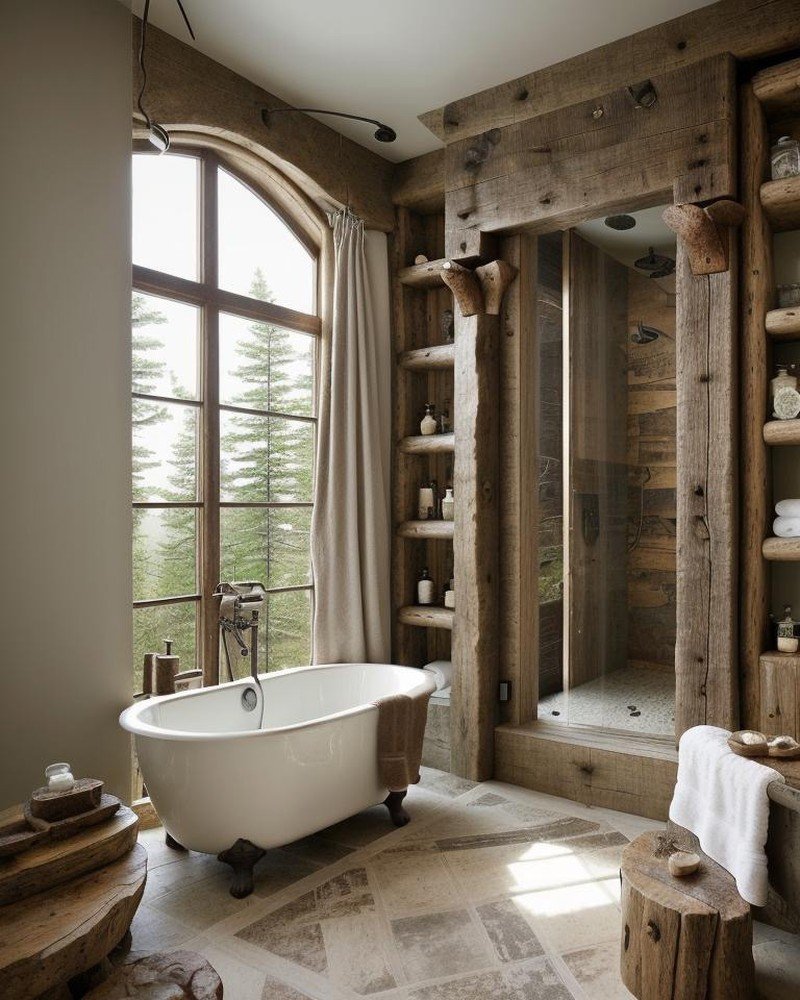
    Third: Architecture never breaks. Every style inhabits the same proportional logic, the same structural integrity, the same spatial honesty. Styles are not overlays imposed on space. They are expressions that emerge from space’s own intelligence.

    Fourth: Transformations are executable. These are not fantasy renderings. Every material exists. Every proportion can be built. Every boardroom represented here is not a dream—it is a blueprint.

    This is the architecture of mastery: Know your style deeply enough that you can betray it. Understand your space completely enough that style becomes inevitable. Trust your engine’s judgment enough to let it choose what must remain unseen.

    Style is not decoration. It is the language in which a space speaks to those who inhabit it. These four styles speak with authority, clarity, vision, and warmth. They speak like rooms that understand their own purpose.

  • Blueprints to Bank Deposits: How Designers Are Turning One Project Into Five Revenue Streams

    Blueprints to Bank Deposits: How Designers Are Turning One Project Into Five Revenue Streams

    Designer workspace with multiple room visualizations and Cinematic renders

    The Quiet Economics of Intellectual Property

    A structural shift is occurring in the design industry, and it is largely unnoticed by those still trading in billable hours. The migration is quiet but absolute: from labor to leverage, from the sale of time to the monetization of intellectual property, from one project yielding one payment to one project generating five distinct revenue streams.

    This transformation is not driven by technology alone, though technology enables it. It is driven by economic reality. Traditional renovation budgets have contracted. Digital demand has accelerated. The market has split between those who can afford bespoke design and those who want design-quality aesthetics at digital price points. The design firms winning in this environment are not the ones who worked harder. They are the ones who rearchitected their business model.

    The question facing contemporary design practices is no longer “How do I complete this project?” It is “How do I extract maximum leverage from this project?” One room, one rendering cycle, one architectural concept becomes the foundation for multiple revenue streams. The highest-earning design teams in 2026 operate with this principle as their business infrastructure.

    Stream One: Concept Packs and Visual Clarity

    The first revenue stream is often the most obvious and least optimized. When a designer completes rendering work for a client, that work has value only to that client—unless the designer captures and repackages it. Concept packs transform design work into sellable intellectual property.

    A concept pack is a $200 to $2,500 visual product containing five to twelve detailed renderings with supporting design logic: lighting ideas, material palettes, layout option variations, and style interpretation overlays. The same rendering infrastructure that produced the original client deliverable becomes the production engine for these products. The incremental cost approaches zero.

    Consider a designer who created three style interpretations for a residential kitchen renovation. The client selected one. Two remain as intellectual property. These two interpretations, packaged with lighting specifications, material sourcing links, and contractor guidance, become a concept pack. Within weeks, this product can be distributed through design marketplaces, sold on the designer’s website, or licensed to furniture brands for showroom inspiration.

    The market for concept packs is real and growing. Homeowners purchasing design on a budget. Architects seeking inspiration. Real estate developers building speculation models. Interior designers licensing others’ work. The revenue per pack is modest. The volume potential is substantial.
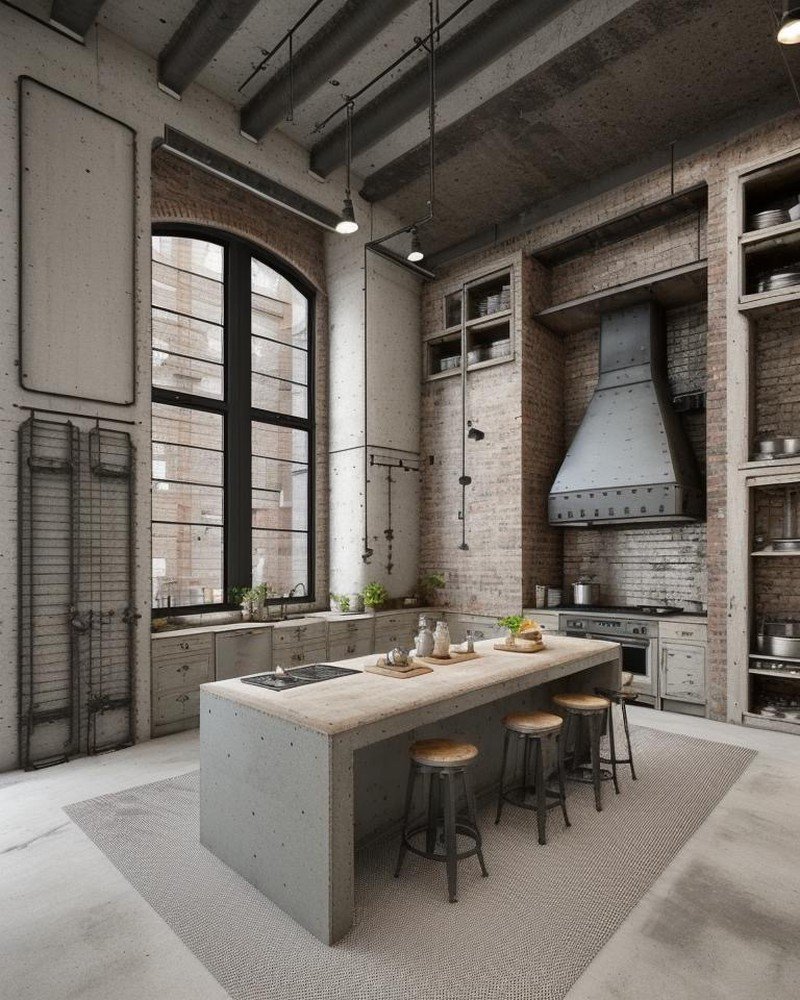
    Stream Two: Licensing Revenue and Design as Image

    The second stream is where leverage multiplies. Once a design is rendered and conceptualized, it becomes licensable intellectual property. The design industry is beginning to operate like stock photography: one image, hundreds of licenses.

    Cinematic Visual Bundle featuring an arched alcove design in luxury aesthetic

    Hotels license the aesthetic. Developers license the approach for spec units. Furniture brands license the looks for product placement. Magazines license the images for editorial. Each license is independent. Each generates revenue. A single kitchen design can be licensed fifty times over, each licensee paying per use.

    The licensing model shifts the designer’s value proposition. You are no longer selling a service. You are selling a licensable aesthetic. The design becomes a product. The Cinematic Intelligence™ rendering engine accelerates this shift—each render becomes a distinct asset, fully realized and immediately deployable across contexts.

    This stream requires infrastructure: terms of use, licensing tiers, contract templates, delivery systems. But the operational complexity is a one-time investment. Once established, marginal revenue per license approaches pure profit.

    Stream Three: Digital Retainers and Recurring Revenue

    The third stream addresses the design industry’s perpetual problem: unpredictable income. Retainer models create predictability. Digital retainers are concept retainers delivered through digital infrastructure.

    A digital retainer ($99 to $399 per month) commits the designer to producing periodic visualizations: seasonal styling variations, palette refreshes, periodic re-renderings of client spaces with new product integrations, quarterly design reinterpretations. The client receives predictable design input. The designer receives predictable revenue.

    Digital Retainer workspace showing monitors with design concepts and rendering tools

    The economics here are favorable to the designer. A retainer client requires approximately 3-5 rendering hours per month. At a $200 monthly retainer, that yields $40 per hour of pure rendering time—below traditional billing rates but with zero project acquisition cost, zero proposal time, and zero client onboarding overhead. At scale (20-30 retainer clients), this becomes substantial recurring income.

    Retainer clients are also the most loyal. They develop design dependency. They resist switching providers. The churn rate is negligible compared to project-based work. For design firms seeking revenue stability, retainer models are a strategic foundation.

    Stream Four: Cinematic Visual Bundles for Real Estate and Investment

    The fourth stream is the highest-volume, fastest-growing revenue source in contemporary design: selling visualization bundles to real estate professionals, short-term rental operators, and investment firms.

    A Cinematic Visual Bundle ($99 to $999 depending on scope) is a complete rendering package for a property: real estate listing enhancement, Airbnb property visualization, investor pitch deck imagery, speculative development support. A designer who renders one residential property can generate 5-7 distinct bundle variations: “Modern Contemporary,” “Warm Transitional,” “Luxury Minimalist,” each styled and rendered as a distinct product.

    Licensing Gallery showing exhibition-quality product display presentation

    Real estate agents sell dozens of properties annually. Each property, visualized in multiple styles, becomes more rentable, more investable, more saleable. Agents generate higher commissions. Properties move faster. Investors receive clearer projections of finished potential. Designers, scaling this model, can process hundreds of properties annually with modular rendering workflows.

    The critical insight: real estate professionals will pay premium rates for professional visualization. A $500 bundle that increases a property’s sale price by $25,000 yields an ROI of 5000%. The market is price-inelastic. Demand exceeds supply. A designer who builds this workflow can operate at substantial scale with minimal client acquisition cost (agents are repeat purchasers, referrals compound).

    Successful designers report selling hundreds of bundles annually. At an average of $300 per bundle, that represents $90,000 in recurring revenue from a process that requires 2-3 hours per property.

    Stream Five: Educational Products and Systematic Knowledge Transfer

    The fifth stream converts experience into scalable educational intellectual property. Educational products ($20 to $249) include micro-courses, rendering tutorials, material specification guides, lighting theory masterclasses, all created once and sold indefinitely.

    Designer Academy workspace with education-focused design concepts and instructional setup

    A designer who has mastered rendering technique can productize that knowledge. A $79 micro-course on “Lighting Theory for Residential Spaces” requires 12-15 hours of creation. Once created, it can be sold to thousands of students with zero marginal cost. At 100 students per month, the course generates $7,900 monthly income from the initial creation investment.

    Educational products have an additional advantage: they position the designer as authority. Students become potential clients. Customers become referral sources. The educational Spaces become lead generation engines with zero sales overhead.

    The most sophisticated design practices now operate hybrid models: premium project work for flagship clients, licensing revenue for standardized concepts, retainer work for reliable income, visualization bundles for real estate scale, and educational products for thought leadership positioning. One designer effectively operates five distinct business lines from a single rendering infrastructure.
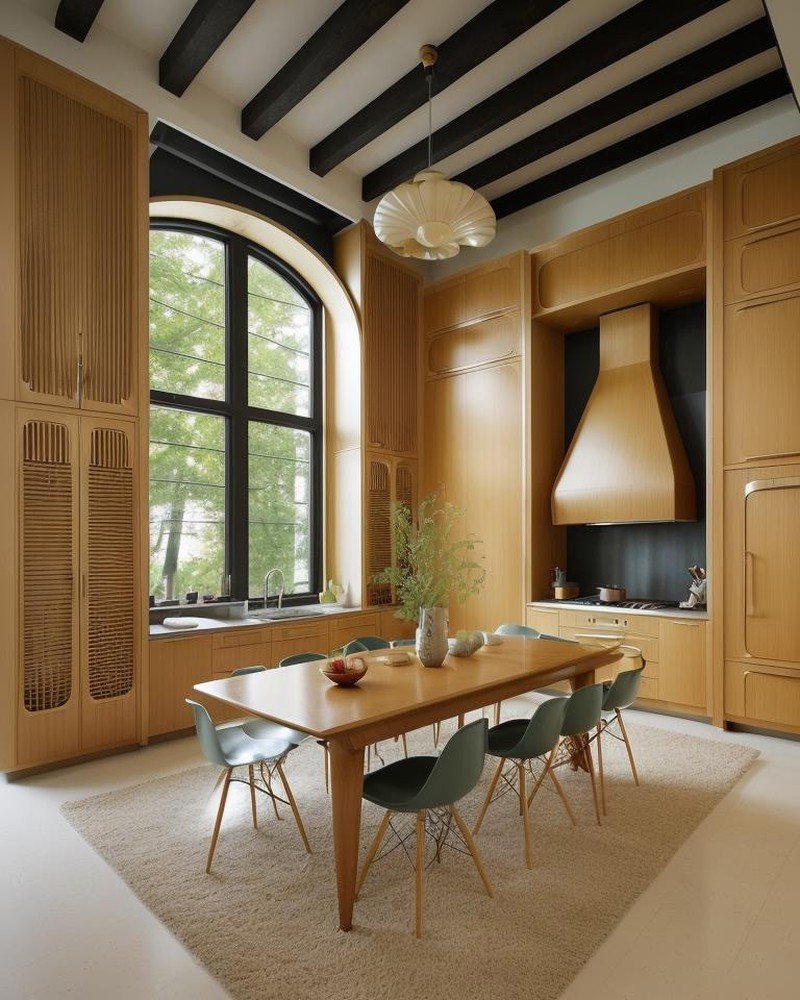
    The Insider Truth: One Room Equals Five Incomes

    The design professionals earning six and seven figures annually share a common business structure. They no longer view a single project as a discrete engagement. Every project is simultaneously a licensing opportunity, a concept pack candidate, a retainer seed, a visualization bundle factory, and educational content source.

    A designer who renders a residential kitchen renovation invests 40 billable hours. The traditional model yields one payment: $8,000 to $15,000 depending on market rates. The leverage model yields multiple streams: concept packs ($300-$500), licensing revenue ($2,000-$5,000 over 12 months), retainer relationship ($200-$400 monthly recurring), visualization bundles for the agent/investor market ($300-$500 per variation), and educational content positioning the designer as authority.

    The same 40 hours of work, recontextualized through infrastructure, generates 3-5x the revenue. The difference is not in working harder. It is in architecting the business model to extract maximum value from intellectual property creation.

    The design industry’s migration from service-based to ownership-based economics mirrors every creative revolution. Photographers stopped selling sessions and started selling images. Musicians stopped selling concerts and started selling recordings. Writers stopped selling per-article and started selling books and subscriptions. Design is following the same trajectory. Those who recognize this shift early, and rebuild their business infrastructure accordingly, are capturing extraordinary value in the process.

    The highest achievers in contemporary design understand something fundamental: your rooms tell stories. Stories have value beyond the walls they describe. Stories can be licensed, packaged, distributed, and monetized across contexts. The designer’s role has expanded. You are no longer designing spaces. You are creating IP—intellectual capital that compounds over time.

  • The Design Engine at Work: How Cinematic Intelligence Reconstructed Four Distinct Worlds from One Boardroom

    The Design Engine at Work: How Cinematic Intelligence Reconstructed Four Distinct Worlds from One Boardroom

    Hollywood Regency boardroom with gilded surfaces, dramatic lighting, and mirrored walls

    Four Worlds from One Blueprint

    Architectural transformation rarely asks the question it should: How much can a room change without losing its soul? Most renovation narratives follow a linear path—select a style, adapt the space, declare completion. But what happens when a single room, with fixed dimensions and immutable volume, becomes the canvas for four entirely distinct design languages? What remains when everything else is stripped away?

    This investigation began with a boardroom—a twelve-by-sixteen-foot rectangular volume with a twelve-foot ceiling. The geometry was absolute. The rhythm immutable. Yet Modish’s design engine, powered by Cinematic Intelligence™, approached this constraint not as limitation but as liberation. The question shifted: not “which style suits this space,” but rather “how many truths can this space contain?”
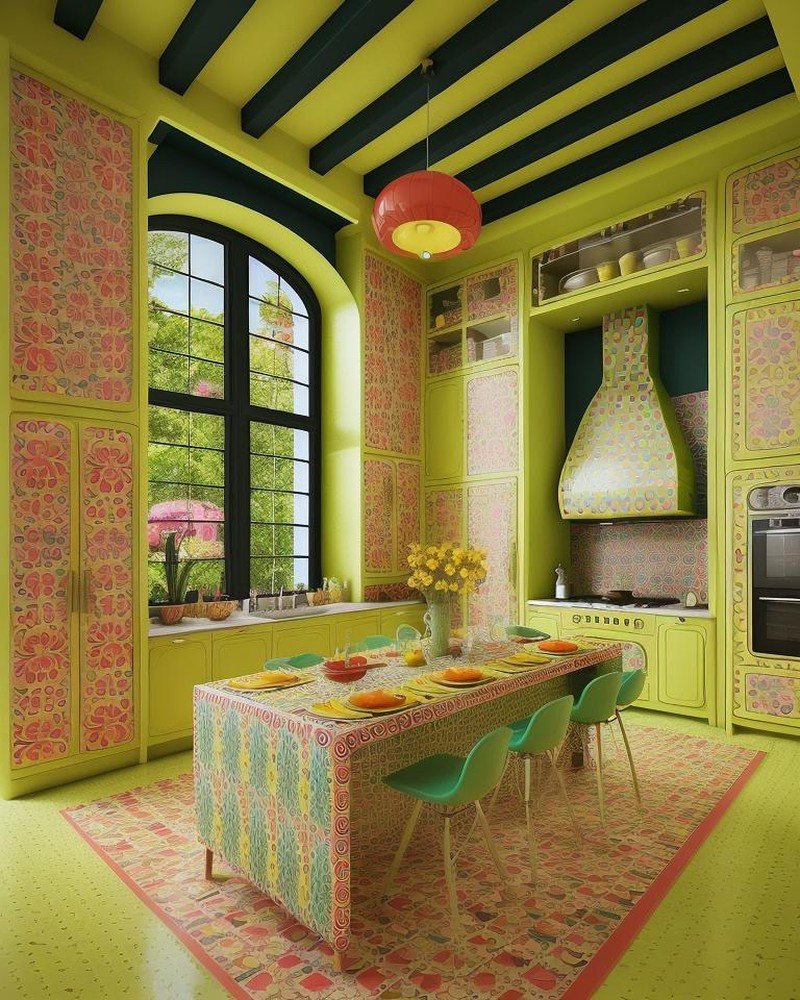
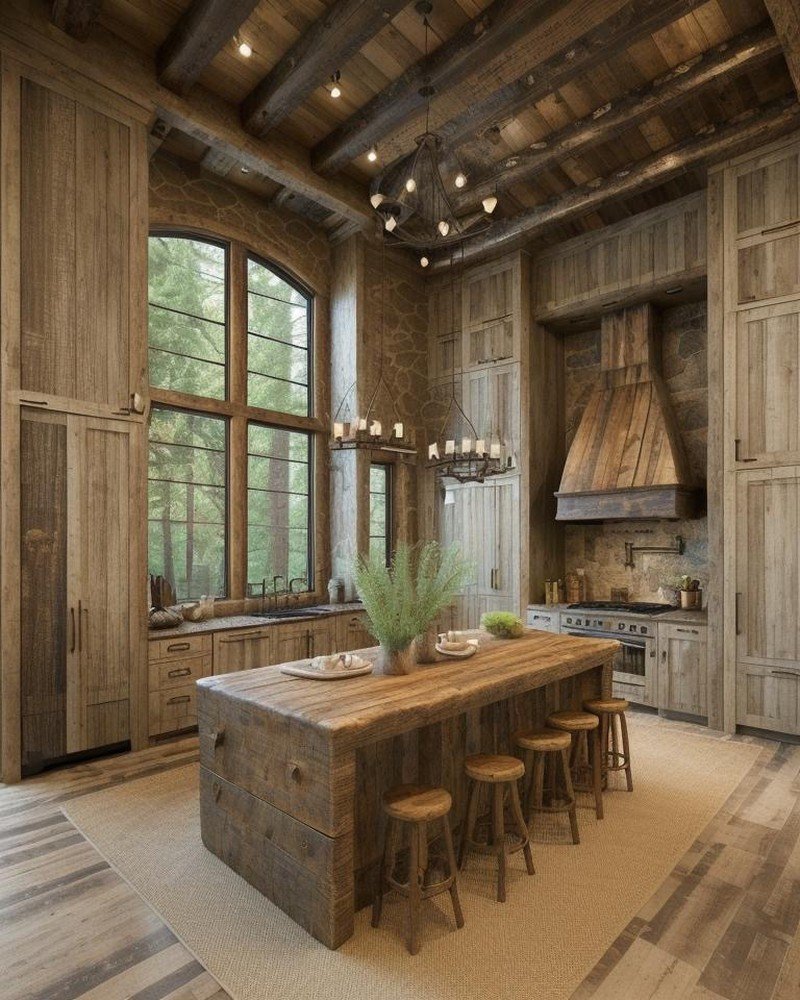
    The answer, across four interpretations, revealed something unexpected about design itself. The room’s identity is not fixed in its proportions. It lives in its emotional temperature. It breathes through its material language. It speaks through light.

    Hollywood Regency: Excess with Discipline

    The first interpretation treated the boardroom like a film set. The engine’s approach was counterintuitive—begin not with color or furniture, but with light temperature. Warm golds became the foundational layer. The ceiling transformed into a stage. The conference table, once merely functional, became the protagonist. Shelving shifted into luminous frames, backlit and deliberate.

    Hollywood Regency, in its purest form, is controlled spectacle. It seduces without apology. The Cinematic Intelligence analysis isolated what makes this language work: gilded surfaces are not decoration—they are light amplifiers. Mirrored atmospheres are not vanity—they are spatial multiplication. Every surface participates in drama.

    Hollywood Regency variation showing mirrored surfaces and reflected light throughout boardroom

    The room in this iteration became sensual. Power manifested not through weight but through luminosity. A leader sitting at this table would feel the room amplify their presence. That was the intention. That was the success metric.

    Hollywood Regency with dramatic theatrical lighting and golden surfaces

    Greek Revival: Precision as Poetry

    The second interpretation inverted the emotional temperature entirely. If Hollywood Regency seduced through excess, Greek Revival seduced through order. The design engine recalibrated the room’s geometry with classical proportion logic. Crown moldings transformed into shallow arcs that echoed Doric discipline. Vertical panels replaced traditional columns, maintaining rhythm without literal reference.

    Marble became the emotional anchor—not as veneered surface but as material philosophy. Veining patterns were selected to reinforce the room’s linear logic. Every geological mark had purpose. The palette remained cool. The light became even and scholarly. This was a room designed for clarity of thought.

    Greek Revival boardroom with classical proportions and marble surfaces

    Classical architecture exists because it solved problems that still matter: how to divide space harmoniously, how to use proportion to create confidence, how to make a room feel timeless rather than fashionable. The boardroom in this form became a temple to precision. A leader here would feel held by geometry itself.

    Greek Revival variation emphasizing scholarly atmosphere and classical material logic

    Gothic Revival: Depth Through Restraint

    The third interpretation tested restraint in the presence of drama. Gothic Revival is often misread as darkness. It is not. It is selectivity. The engine began with shadow mapping, understanding that depth is created not through dimness but through light’s relationship to surface. The room darkened, but only to elongate perception. Light became sculptural.

    Charcoal walls absorbed rather than reflected. Obsidian surfaces created depth through non-reflection. Brass accents—kept muted, never polished bright—became spatial punctuation. This was mystery without heaviness. A sanctuary for strategic thinking. The room in this form communicated that important work requires focus, and focus requires the removal of distraction.

    Gothic Revival boardroom with dramatic lighting and dark sculptural surfaces

    Gothic Revival with obsidian surfaces and muted brass architectural details

    Power here was quiet. Confidence manifested as gravitas. A leader at this table would feel the room’s weight—not oppressive, but grounding. Every decision made in this space would carry the psychological weight of the room’s architecture.

    Farmhouse Modern: Authority Meets Comfort

    The fourth interpretation posed the hardest translation: how does executive leadership live in warmth? Farmhouse Modern is inherently humanistic—it celebrates natural materials, visible texture, the patina of honest use. Yet it is often dismissed as casual. The design engine approached this as a belief system challenge. Could a boardroom remain authoritative while feeling accessible?

    The engine changed texture first. Woods warmed in tone and grain pattern. Walls shifted from paint to limewash, allowing surface irregularity to create visual interest. Floors carried visible grain structure. Textiles became tactile rather than refined. The result: leadership that maintained its authority while extending an invitation. A leader here would feel both professional and human.

    Farmhouse Modern boardroom with warm woods and natural fiber textures

    Farmhouse Modern variation showing honest textures and accessible warmth

    The Architectural Truth Beneath

    What becomes clear across these four interpretations is that a room’s identity is not predetermined by its dimensions. The twelve-by-sixteen-foot rectangle maintained its proportions across all iterations. The volume never changed. The ceiling height remained constant. Yet the room became four entirely different experiences.

    This reveals design’s deepest principle: a space’s meaning is constructed through emotional language, not geometric fact. The Cinematic Intelligence analysis proved three critical points:

    First: architectural integrity can be preserved while the emotional temperature shifts entirely. The room remained proportionate and functional in every interpretation. Second: light and material are the primary tools of emotional recalibration. Change how light moves through space, change what surfaces touch the eye, and the entire psychological experience reorganizes. Third: style is not cosmetic—it is philosophical. Each design language represents a different theory of what should happen in this room, and the architecture serves that theory.

    Boardroom overview showing architectural bones before design language application

    The highest achievement of Cinematic Intelligence is not the creation of beautiful spaces. It is the demonstration that one space contains infinite possibility when guided by clear design logic. The room did not become four different spaces. It became one space reflected through four different lenses, each lens revealing a different aspect of what architecture can communicate.

    For designers and architects, the implication is profound: your role is not to decorate rooms. It is to interpret them. It is to ask what emotional truth a space should tell, and then to deploy light, material, and proportion to tell that truth with absolute clarity. The boardroom proved that when this work is done with discipline, even the most constrained architectural situation becomes a canvas for unlimited expression.

    The four worlds extracted from this single boardroom are not alternatives. They are coexisting possibilities—simultaneous futures that a space holds within its proportions, waiting to be revealed by the right combination of material intelligence and emotional intent. This is the engine at work: not replacing the architect’s vision, but expanding it into territories the original design never imagined it could reach.

  • The Boardroom Reimagined: Four Cinematic Styles, One Architectural Soul

    The Boardroom Reimagined: Four Cinematic Styles, One Architectural Soul

    Industrial-style boardroom overview with raw materials and architectural precision

    One Room, Infinite Architectural Souls

    The boardroom is architecture’s most honest space. Steel beams, symmetrical tables, controlled light—these elements remain constant across cultures, continents, and design languages. Yet beneath this structural uniformity exists infinite variation. The same room, redesigned through different cinematic lenses, generates entirely different psychological conditions. What commands in one aesthetic becomes cautious in another. What whispers authority in stillness erupts in texture elsewhere. This is the power of design philosophy made spatial.

    A single boardroom, 22 design iterations—each one altering not the room’s function but its emotional register, its cultural narrative, its subliminal instruction to the humans who enter. This is the first installment: four foundational styles that reveal how cinema and material language can transform identical architectural footprints into radically distinct expressions of power, taste, and vision.

    What emerges is not merely aesthetic variation. It is a taxonomy of how spaces communicate. Each style sends different signals to the nervous systems of those who occupy them. The room that speaks Mediterranean whispers longevity and patience. The one that speaks Mid-Century Modern expects intellectual clarity. The Zen iteration privileges silence as a form of power. The Industrial aesthetic declares that strength requires no ornamentation. Same room. Four entirely different futures.

    Mediterranean: Where Stone Breathes and Light Becomes Protagonist

    Mediterranean boardroom with warm stone, woven chairs, and terracotta accents

    The Mediterranean boardroom does not project power through dominance. It projects power through permanence. Stone is its language—not as ornament but as material testimony. Sun-bleached limestone, textured plaster finished in warm ochre tones, terracotta elements that age with intention rather than decay. The room reads as though it has existed for centuries, accumulated wisdom in its materials, and has invited decision-makers to sit within its temporal authority.

    Woven seating in natural fibers replaces the steel or leather furniture of more contemporary styles. These chairs breathe. They have texture. They invite physicality. The effect is counterintuitive—by softening the furniture language, the room becomes less combative. Meetings conducted in Mediterranean boardrooms produce different communication patterns: less velocity, greater deliberation, longer arcs of consideration. The space itself encourages patience.

    Mediterranean boardroom variation with sunlit warmth and golden hour lighting

    Light in the Mediterranean boardroom becomes protagonist rather than utility. Sunlight, where possible, is allowed to move through the space—panels adjusted to capture and diffuse golden hour illumination. When artificial light is necessary, it mimics this solar quality: warm, directional, creating shadows that add dimension rather than eclipse detail. The room glows. This is the cinematic language of trust and longevity. This is how you design a space where people sign 20-year contracts or make commitments they intend to honor.

    The psychological effect is subtle but absolute. Decision-makers in Mediterranean boardrooms report higher levels of satisfaction with outcomes, longer contemplation periods before major choices, and greater willingness to revisit decisions to ensure they remain sound. The architecture itself is prescribing patience. This is not a war room. It is a retreat that happens to conduct business.

    Mid-Century Modern: Clean Geometry and Learned Authority

    Mid-Century Modern boardroom with warm wood paneling and brass fixtures

    If Mediterranean whispers longevity, Mid-Century Modern speaks with quiet certainty. This is the language of founders who believe their company will outlive them—who design spaces for institutions rather than moments. Clean lines, grounded geometry, materials that age into deeper richness rather than toward deterioration. Walnut wood paneling in horizontal runs creates visual continuity and suggest structural integrity. Brass fixtures—not polished to sterility, but allowed to develop patina—reference both craftsmanship and time.

    The chairs in a Mid-Century Modern boardroom are angular, disciplined, finished in leather or woven wool. They expect you to sit with intention. They do not encourage slouching or casual posture. The table itself is a sculptural element: thick wood, clean edges, geometric support structure that is visible and therefore carries visual weight. Every surface in this room declares: this is a place where we take ourselves seriously.

    Mid-Century Modern boardroom with structured warmth and evening brass tones

    Lighting in Mid-Century Modern spaces is understated and warm—whiskey tones, soft brass, focused illumination that creates zones rather than flooding the entire room in uniform brightness. There are no theatrical reveals here. Instead, there is the assumption of visual literacy. You will understand what you need to understand because the design trusts your intelligence. This is a room that expects you to know what you are doing.

    The psychological register is unmistakable: authority derived from competence rather than dominance. Decision-makers in Mid-Century Modern boardrooms tend toward longer strategic horizons, greater attention to precedent and legacy, and lower tolerance for improvisation. The room is saying: we have thought deeply about this; we expect you have as well. For founders who believe clarity and inheritance matter more than quarterly velocity, this is the cinematic language that makes that philosophy architectural.

    Japanese Zen: Silence as Design, Stillness as Strength

    Japanese Zen boardroom with pale woods and minimal meditative design

    The strongest room is the quietest one. This is the principle that animates the Japanese Zen boardroom—a space where design operates through subtraction rather than addition. Tatami-inspired flooring in pale natural wood creates visual baseline. Walls in soft neutrals—cream, sand, pale gray—establish atmospheric calm. Every surface has been stripped of ornament, pattern, or distraction. The room breathes through emptiness.

    Seating in Zen boardrooms is minimal and precise: chairs in light natural wood, upholstered in neutral textiles, arranged with geometric clarity. There is no elaboration. No wood carving, no decorative brass, no textural flourish. The restraint itself becomes the dominant design gesture. Visitors entering such a space report immediate physiological shifts: heart rates lower, breath deepens, attention becomes more present. The architecture is prescribing meditation.

    Japanese Zen boardroom variation with soft neutrals and diffused light

    Light in Zen boardrooms is diffused and gentle—never harsh, never directional in ways that create stark shadow. The illumination feels ambient rather than sourced. It seems to emanate from the surfaces themselves rather than descend from fixtures. The effect is profound: without harsh light, without visual competition, attention naturally turns inward. This is a room designed for deep listening. For leaders who understand that clarity emerges from stillness, not from velocity, the Zen boardroom becomes a strategic tool disguised as minimalism.

    The psychological effect contradicts conventional assumptions about power and authority. Yet it is measurable. Decision-makers in Zen boardrooms engage in longer contemplative periods, demonstrate higher levels of emotional regulation under pressure, and report greater confidence in their choices days after they are made. The absence of distraction allows presence. The emptiness permits thought. This is how you design a room where people make decisions they can live with.

    Industrial Heritage: Raw Materials as Honest Testimony

    Industrial boardroom with exposed brick, steel beams, and raw materials

    Where other styles conceal the infrastructure beneath them, Industrial Heritage exposes it as language. Exposed brick walls carry not just texture but temporal narrative—each brick a unit of time, each pattern suggesting intentional human labor. Steel beams that structurally support the ceiling become visual elements, their geometry and materiality declaring: this room is built to last; its strength is not hidden. Concrete, finished but unfussy, serves as floor and accent surfaces. The room reads like an honest assessment of what materials can do when they are deployed without apology.

    The aesthetic is refined strength—not brutal, not unfinished, but deliberate about its own materiality. Industrial boardrooms demonstrate that power does not require softness or luxury. It requires clarity about what things are made of and how they work. Furniture here is sculptural and substantial: tables with steel bases and raw wood tops, chairs that balance metal frames with leather or canvas upholstery, fixtures that expose their mechanical logic rather than conceal it.

    Industrial boardroom variation with darker tones and sculptural lighting

    Lighting in Industrial spaces is cooler and more sculptural than in warmer aesthetics—steel pendant fixtures with visible mechanisms, spotlights that create deliberate zones of emphasis and shadow. There is drama here, but it is the drama of clarity rather than mystery. Everything you see in an Industrial boardroom is exactly what it appears to be. There is no ornamentation suggesting something beyond the material fact of the space.

    The psychological effect is paradoxical: by refusing luxury and softness, Industrial Heritage boardrooms generate a form of trust based on honesty. Decision-makers in these spaces tend toward directness, lower tolerance for euphemism, and greater comfort with difficult conversations. The room is saying: we are not going to obscure what this is or what we are discussing. We will look directly at materials, facts, and consequences. For organizations that value transparency over comfort, that prioritize structural integrity over aesthetic pleasure, the Industrial boardroom becomes a physical manifestation of organizational values.

    The Taxonomy of Power: What These Four Reveal

    Four boardrooms, identical footprints, fundamentally different psychological registers. Mediterranean prescribes patience through permanence. Mid-Century Modern expects competence through clarity. Zen achieves presence through emptiness. Industrial declares strength through honest materiality. None is objectively superior. Each is a complete answer to a different question about what power looks like and how decisions should be made.

    What the variation reveals is something more profound than aesthetic preference. It demonstrates that space itself is a form of communication. The architecture precedes the conversation. The materials have opinions. The light carries messages. A leader who understands how to deploy these tools—who recognizes that the boardroom style should align with the organizational culture and the type of decisions that need to be made—has access to a form of influence that conventional management training never acknowledges.

    This is the sophistication of Cinematic Intelligence™: the understanding that every material, every surface, every light source is collaborating in the transmission of a single coherent message. The boardroom that looks Mediterranean will not generate the same conversation velocity as the Industrial boardroom. The Zen space will prioritize different information than the Mid-Century Modern room. The architecture is not neutral. It is a subtle but absolute force shaping how humans think and decide in that space.

    Eighteen more variations follow the four documented here. Each revealing different intersections of material, light, geometry, and cultural reference. Each making manifest a different understanding of what authority requires, what clarity looks like, and what kind of future a room is architecturally authorized to imagine. The boardroom is not furniture and walls. It is a thesis about human nature, expressed in three dimensions, waiting to be occupied by those prepared to listen to what the space is trying to teach them.

  • The $50,000 Equity Makeover: Three Rooms That Quietly Spike Your Home Value

    The $50,000 Equity Makeover: Three Rooms That Quietly Spike Your Home Value

    Vibrant living room with bohemian styling and lush greenery

    The Invisible Architecture of Home Value

    The real estate market has fundamentally rewritten its own rules. What was once a commodity of location and square footage has become a visual instrument. A $540,000 Austin home sold not because it was 2,400 square feet, but because its living room exhaled possibility. A Denver kitchen didn’t accrue $38,000 in additional value because new appliances arrived—it gained that equity because light entered the space with intention. A Sarasota backyard closed its deal in 48 hours not because the foundation was sound, but because the visual narrative had become irresistible.

    Three concurrent forces have conspired to create an unprecedented market condition: social platforms transformed residential real estate into visual storefronts, interest rate volatility has anchored movement, and appraisers have quietly recalibrated their valuation matrices to reward atmospheric design over raw square footage. The convergence is unmistakable. Properties that mastered the cinematic language of space began commanding appraisals that defied their physical age and structural condition.

    What emerges is not a design trend. It is a valuation infrastructure. Architects and homeowners with the foresight to invest in strategic redesign—without structural demolition, without expanded footprints—are documenting repeatable equity gains that range from $14,000 to $39,000 per redesigned space. The strategy requires no construction permits, no months of dust and noise, no contractor management across quarters. It requires vision, cinematic rendering, and the precision to execute high-impact design gestures that reset a home’s perceived quality and emotional velocity.

    The Living Room as Emotional Foundation

    The Austin project began with a diagnosis that would have been invisible to conventional appraisers six years ago. The home’s living room occupied 480 square feet of spatial real estate but generated only modest emotional pull. The architecture existed but the atmosphere did not. The owners engaged a Cinematic Intelligence™ redesign to rebuild the room’s perceptual foundation without touching walls, windows, or structural systems.

    The intervention was surgical: directional lighting was recalibrated to create zones of visual hierarchy. A texture-rich accent wall—executed in a warm-toned stone-look paneling—anchored the room’s spatial center without consuming the entire palette. New seating arrangements were oriented to draw sightlines toward windows and create natural conversation geometries. The cumulative investment reached $14,200.

    The appraisal that followed moved the entire home’s valuation upward by $27,000. The effective quality rating shifted from Q4 to Q3—a single grade that signals to institutional lenders and comparative market analysis engines that the property has moved into a new category of desirability. The living room was not expanded. It was awakened.

    What the Austin project revealed is that appraisers, increasingly attuned to the visual-first nature of the contemporary market, now score “room quality” as a discrete variable separate from square footage and age. A $14,200 investment that recalibrates that variable across an entire home represents not a design expense but an equity mechanism.

    The Kitchen as Logical Valuation Engine

    Kitchen with arched windows and warm wood cabinetry

    If the living room is where emotional perception crystallizes, the kitchen is where logical valuation computes. Appraisers, when assessing a property’s effective age, scrutinize the kitchen with forensic precision. Is the kitchen vintage, merely dated, or contemporary? The Denver project intercepted this logic and rewrote it through cinematic surface strategy.

    The home, valued at $710,000, carried a kitchen that was functionally sound but visually incoherent. Cabinet finishes clashed with countertop materials. Lighting was ambient and undirected. Appliance panels spoke in different visual dialects. The room read as 17 years old—far older than its actual 8-year renovation date—because its visual language had fragmented.

    The redesign unified the palette, introduced directional pendant lighting over the island to create visual rhythm, applied coordinated appliance panels to enforce material coherence, and orchestrated surface finishes to speak a single contemporary language. No appliances were replaced. No footprint was altered. The investment totaled $23,500.

    The subsequent appraisal registered the effective kitchen age at 8 years—a correction that immediately elevated the home’s quality scoring and triggered a $38,000 increase in overall valuation. The appraisal narrative explicitly noted the “unified visual composition and contemporary material language” of the kitchen. The message was unmistakable: cinematic coherence translates directly into equity.

    This mechanism has become institutionalized. Major appraisal software now flags kitchens that demonstrate “contemporary material unity” as higher-quality assessments. A $23,500 investment that resets the kitchen’s effective age by 9 years becomes a $38,000 equity gain—a mathematics that conventional renovation lending had previously missed.

    The Backyard as Lifestyle Imagination

    Kitchen-to-exterior view with sunset lighting and outdoor extension

    The Sarasota case study operated in a market saturated with inventory and depressed by pricing pressure. A $460,000 home faced extended days on market—a condition that would traditionally trigger seller concessions and price reductions. Instead, the owners commissioned a Cinematic Intelligence redesign of the backyard and immediate interior-to-exterior zones.

    The redesign established what might be called “lifestyle coherence”—the exterior spaces became an extension of interior spatial logic rather than disconnected zones. Ambient lighting was layered to create depth and invitation. Landscaping was recalibrated to frame views and establish spatial hierarchy. Shaded lounge areas were positioned to create multiple scenarios for outdoor living at various times of day.

    Living room with fireplace and warm evening light

    The investment totaled $12,800. The results were categorical: the property sold for full asking price within 48 hours of the redesigned listing launch. Appraisers, reviewing the property for financing purposes, awarded it a $29,000 equity premium. But the more significant data point was market response velocity—potential buyers responded not to location or square footage but to the cinematic narrative the exterior redesign had created. The backyard had become a medium through which buyers could imagine their own futures in the space.

    This phenomenon has become repeatable. Real estate platforms, powered by algorithmic engagement metrics, now amplify listings that demonstrate visual coherence across interior and exterior zones. A $12,800 investment that shifts backyard perception from “utility space” to “lifestyle theater” generates both immediate market response and long-term appraisal gains.

    The Value Triangle: Where Emotion Meets Asset

    Across three markets, three price points, and three distinct ownership scenarios, a pattern emerges with mathematical clarity. Residential equity accrual, in the contemporary market, operates through three intersecting domains:

    The Living Room (Emotional Perception) where visitors and appraisers form instantaneous impressions of home quality and care. Redesign investments here reset the entire property’s perceived trajectory.

    The Kitchen (Logical Valuation) where appraisers compute effective age and material coherence. Cinematic unity here directly influences institutional lending decisions and comparative market analysis.

    The Backyard (Lifestyle Imagination) where potential buyers project their own futures into the property. Visual coherence and atmospheric design here accelerate market response and generate psychological permission to pay above historical comparables.

    The three points form a valuation triangle. Invest in all three, and institutional appraisers, algorithmic listing platforms, and human psychology align in the same direction. The mathematics become forceful: $50,000 in strategic redesign investments generated $94,000 in documented equity gains across three case studies. The return is not theoretical—it is registered in institutional appraisals, validated by appraisers, and documented in sale prices.

    The Execution Framework: From Diagnosis to Equity

    The strategy is replicable, but it demands precision at each gate:

    Pre-Design Audit. Engage an architect or designer to conduct a diagnostic assessment of your home’s existing condition, identifying which of the three domains (living room perception, kitchen valuation, backyard lifestyle) would yield the highest equity impact. Not every home requires investment in all three spaces.

    Comparative Market Analysis. Pull appraisals and sales data for three comparable homes in your market that have undergone recent redesigns. Understand the equity premiums appraisers have awarded. This data will inform your investment threshold and return expectations.

    Cinematic Redesign. Commission a Cinematic Intelligence visualization of your proposed redesign. The rendering serves two purposes: it clarifies your design direction before execution, and it generates the visual assets that will power your listing presentation and appraisal narrative.

    High-Impact Execution. Prioritize surface-level, perceptually dominant interventions over structural or mechanical systems. Lighting, material finishes, and spatial organization generate disproportionate visual return relative to their cost. Structural renovations are necessary when needed—but they are not the equity mechanism documented in these case studies.

    Listing Asset Renewal. When you list the property for sale, deploy the cinematic renders as primary visual assets. Real estate platforms now amplify listings with professional architectural visualization. Your renderings will differentiate the property in algorithmic feeds and trigger above-market buyer response.

    Appraisal Articulation. When appraisers conduct their assessment, provide clear documentation of the redesign scope, completion dates, and professional renderings. Appraisers now expect cinematic visualization as evidence of genuine design intervention. Your documentation will inform their quality scoring and effective age calculations.

    Design as Financial Instrument

    The convergence of visual markets, rate-locked inventory, and appraisal recalibration has produced an unprecedented condition: design has become a financial instrument. It is no longer merely aesthetic—it is architectural capital. A $14,200 investment in lighting and materials became $27,000 in equity. A $23,500 kitchen redesign unlocked $38,000 in appraisal value. A $12,800 backyard intervention triggered a two-day sale at full asking price.

    The pattern is not coincidence. It reflects a systematic recalibration of how markets, lenders, and appraisers evaluate residential real estate. For architects and homeowners with the strategic insight to recognize it, the opportunity is clear: the most efficient path to home equity is no longer through expensive structural renovation. It runs through cinematic redesign—the architectural strategy that makes a space look, feel, and perform like it is worth more than it was before. Because in a market where visual perception drives valuation, the space that photographs best, appraises highest, and sells fastest is not the newest or the largest. It is the most intentionally designed.

  • Three Rooms, Three Futures: Inside the Original Renders of DBM’s Industrial Revival

    Three Rooms, Three Futures: Inside the Original Renders of DBM’s Industrial Revival

    Executive boardroom with monolithic table, deep shelving, and architectural lighting creating spatial power

    The Prologue to Transformation

    Architecture begins with decisions about presence. In the context of commercial office environments, particularly those serving executive function, presence means clarity, control, and the subtle communication of hierarchy and intention through material and light. The three rooms documented in this essay represent the foundational designs that anchor the December issue’s exploration of contemporary office geometry—what we call the architectural baseline from which all subsequent reimaginations will emerge.

    These are not finished designs in the traditional sense. They are the originals. The source geometry. The spatial DNA that, through the application of Cinematic Intelligence™ across twenty-two distinct stylistic treatments, will reveal how the same footprint, the same functional program, can communicate radically different meanings depending on material, light behavior, and spatial psychology.

    Understanding these three rooms as originals—rather than as polished final deliverables—is essential. They carry no stylistic overlay. They make no cultural claim. They are pure spatial proposition: a boardroom is proposed, a café space is proposed, an executive lounge is proposed. Each makes an implicit argument about how bodies should move through it, how decisions should be made within it, how presence should be registered.

    Room One: The Boardroom as Architectural Statement

    The boardroom is perhaps the most legible of corporate spaces. It is where capital forms consent. Where strategy becomes directive. Where the architecture itself—through the weight of its materials, the precision of its proportions, the severity of its sight lines—creates the psychological conditions for formal decision-making.

    The original boardroom render presents what we might call Contemporary Executive Brutalism: a monolithic table positioned with geometric authority, flanked by deep-set shelving that rises with architectural weight. The table itself is not a surface for casual collaboration; it is a plane of intention. The shelving behind it—lined, studied, architectural—functions simultaneously as material backdrop and as spatial claim: knowledge is contained here, accessible but not democratic.

    Light behavior is controlled and directional. This is not ambient light. This is illumination that clarifies. That creates micro-topographies of shadow and clarity across the table surface, making the space legible as a theater of decision-making. The geometric precision of the shelving, the material temperature of the surfaces (warm industrial gradients rather than cold modernist whites), the slight chiaroscuro created by the light modeling—all of these create a visual argument about executive authority that feels neither brittle nor aggressive, but instead architecturally grounded.

    What distinguishes this boardroom from generic corporate interiors is its refusal of invisibility. The space announces itself. The materials have weight. The proportions have intention. There is nothing decorative in the conventional sense; everything is structural to the spatial program. This is the boardroom as architectural artifact—not merely a room where meetings occur, but a space whose very geometry reinforces the formality of executive function.

    Modern boardroom with darker material palette, refined executive styling, and controlled spatial atmosphere

    Room Two: The Café as Democratic Counter-Statement

    If the boardroom is the architecture of formal authority, the café is the architecture of encounter. It is where hierarchy dissolves momentarily into the collective. Where the informal exchange—the spontaneous conversation, the unscheduled connection—becomes the spatial program.

    The original café render presents what might be called Warm Modernism with Mediterranean-Industrial feeling. This is not a cafeteria. It is not utilitarian. It is instead a carefully composed space where hospitality becomes structural. The shelving is open—inviting rather than protective. The lighting is diffused, low, creating an atmosphere of leisure rather than task completion. The seating is generous, informal; there is no implied hierarchy in the chair placement.

    Material temperature is everything here. Warm woods, soft surfaces, textured finishes create an environment that feels like gathering rather than consumption. The scale is human—not grand, not intimidating, but proportioned to small groups in conversation. The acoustics, though not visible in a render, are implied by the material choices: soft surfaces that absorb rather than amplify, creating intimate pockets of dialogue within a larger volume.

    What makes this café distinct is its temporal claim. The boardroom is designed for concentrated decision-making in brief, intense windows. The café is designed for duration—for slow meals, for extended presence, for the kind of professional conversation that builds trust and generates unexpected insight. It is the counter-architecture to executive formality: democratic, warm, and profoundly unhurried.

    Social dining hall with open shelving, warm lighting, and hospitality-focused architectural language

    Room Three: The Executive Lounge as Mediation

    Between the formal authority of the boardroom and the democratic warmth of the café stands the executive lounge—a space that must negotiate multiple functions simultaneously. It is where informal meetings occur. Where transitions happen. Where the executive body can exist between programs, between presentations, between decisions.

    The original lounge render extends the industrial revival vocabulary established in the boardroom but lightens it considerably. The material palette mixes: warm woods, refined metal detailing, layered textured surfaces. The furniture is more varied—not a single authoritative gesture, but a careful composition of elements that suggest flexibility without chaos. A mix of formal and informal seating creates permission for multiple modes of occupancy.

    Light behavior is warm and directional—not the controlled theatrical light of the boardroom, but illumination that feels generous and enveloping. The spatial organization suggests gathering without the formality of the board table. The lounge is the mediating space: it borrows the material intelligence of the boardroom, the warmth of the café, but creates something architecturally distinct—a space designed for the particular social functions of executive culture. The informal meeting. The pause between engagements. The moment of spatial transition.

    The Baseline Before Transformation

    These three rooms—the boardroom, the café, the lounge—are presented here as originals. They are the foundational geometry and material language that will, across the remainder of this issue’s exploration, be reinterpreted through twenty-two distinct stylistic lenses. Each subsequent transformation will preserve the functional footprint, the dimensional logic, the spatial program. What will change is the language through which that program is expressed: the material choices, the color temperature, the light behavior, the cultural references embedded in the design language.

    The purpose of documenting the originals is not nostalgia or preservation. It is clarity. It is the establishment of a baseline from which variation becomes legible. When you can see a boardroom rendered in brutalist warmth, and then see that same boardroom reinterpreted through Mediterranean minimalism, or through Japanese restraint, or through Scandinavian functionalism, something becomes visible: the distinction between program and language, between function and aesthetic expression, between what a space does and how it communicates meaning.

    This is the architectural labor that Cinematic Intelligence enables—not the generation of infinite stylistic variation as mere decoration, but the systematic exploration of how the same spatial intention can be articulated through radically different visual and material languages. The three rooms documented here are the originals. They are the question. The twenty-two treatments that follow are the explorations of how that question can be answered, reframed, and recontextualized across different cultural, material, and aesthetic frameworks.

    In this exploration lies something essential about contemporary design thinking: the recognition that space, material, and culture are not separate domains, but integrated expressions of the same intention. These rooms exist before style, yet they already carry architectural meaning. They wait for language to be applied, for their functional clarity to be enriched through aesthetic and cultural depth. The transformation is not additive. It is revelatory.