
The Mastery Threshold
Some styles are easy to imitate. Very few can be mastered. Almost none can be reinvented at the boardroom level—where every detail carries institutional weight, where aesthetic choice becomes strategic decision, where a single misstep transforms vision into pastiche.
These four styles occupy that rare territory. They demand not interpretation but reinvention. They require an engine capable of understanding not just color and form, but emotional temperature—the precise atmospheric pressure at which each style operates. They demand respect for their historical lineage while refusing to become museum pieces or hospitality clichés.
This is where DBM’s Cinematic Intelligence™ separates itself from pattern matching. These four styles were not assembled from trend boards. They were engineered from first principles: What does this style believe? What emotional contract does it make with its inhabitants? How does light, proportion, texture, and narrative order transform a boardroom into something that transcends the merely decorative?
Expressionism: When Color Becomes Choreography
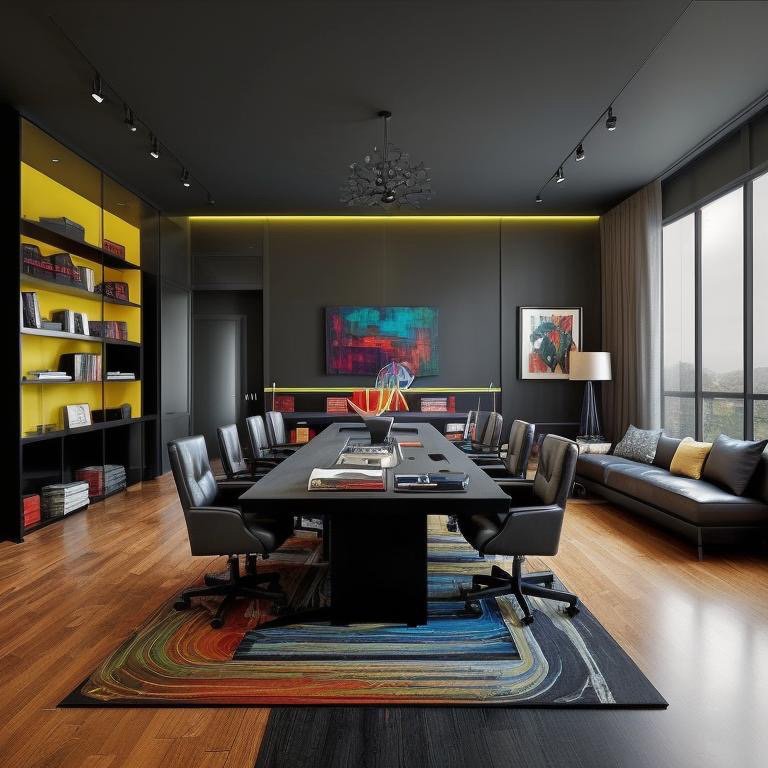
Expressionism is notoriously difficult. Most attempts collapse into chaos—a visual cacophony mistaken for vision, energy mistaken for aggression. Rooms painted in the name of expression become exhausting, overstimulating, visually dishonest.
DBM’s Expressionist interpretation looks conducted, not painted. Here, color becomes movement, but movement becomes orchestrated. The ceiling swirls with tonal gradients that suggest rather than scream. The featured rug reads as brushstrokes—not random, but rhythmic. Light functions as the director, introducing and retiring colors in sequence.
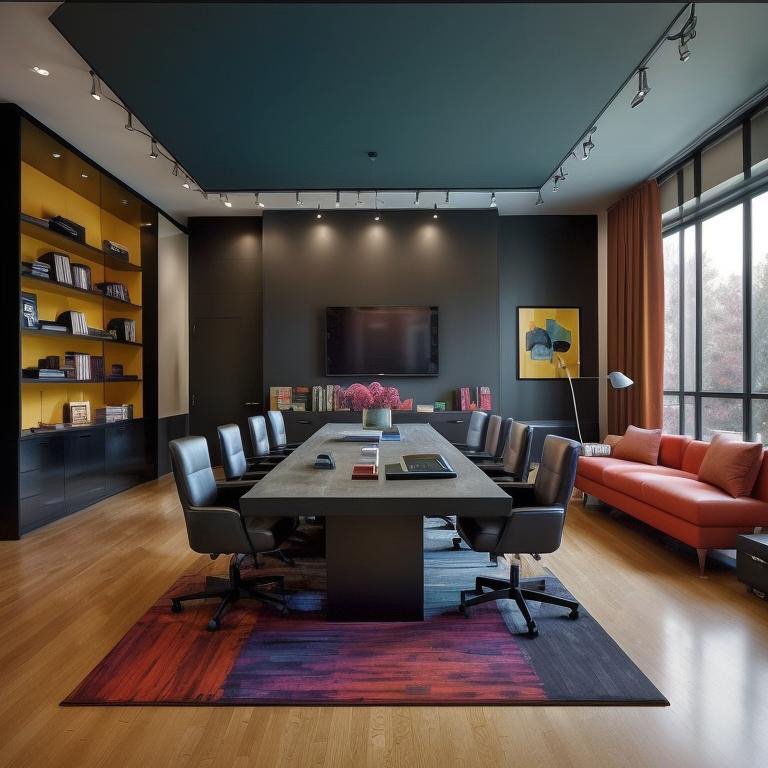
This is Expressionism for executives who think in vision. The boardroom pulses with intention, not impulse. Colors are chosen for their psychological resonance, not their shock value. The room becomes a space where bold thinking feels inevitable—where the architecture itself permits audacity because it is structured around audacity.
Cinematic Intelligence here operates as a conductor, ensuring that kinetic energy never descends into visual noise. Every hue supports the narrative. Every gradient serves the emotional arc. The room doesn’t perform—it thinks.
Coastal: Atmosphere Over Aesthetic
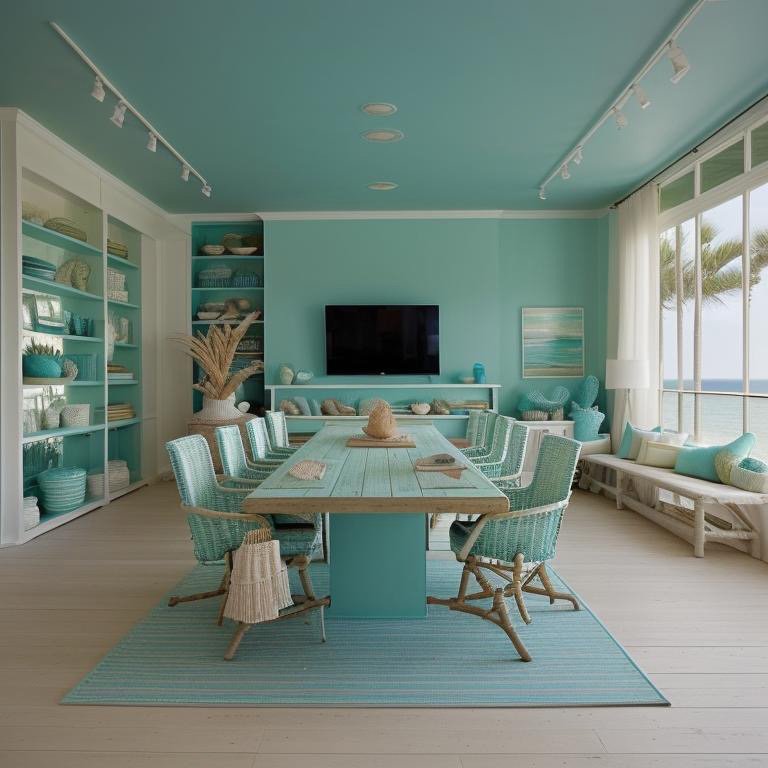
Coastal design is not beach décor. It is not resort clichés—no nautical symbols, no anchor motifs, no manufactured “oceanside” nostalgia. True Coastal is an atmospheric shift. It is space behaving like air itself.
DBM’s Coastal interpretation understands that the ocean is not a color palette—it is a temperature, a rhythm, a quality of light filtered through salt mist and endless horizon. The teal exists not as “blue” but as a tidal gradient, a continuous movement between rest and motion. Textures are deliberately matte, deliberately breezy. Nothing in this room screams “beach.” Everything whispers clarity.

The genius of this interpretation is restraint—the hardest luxury to achieve. Most designers oversell. They add too much, explain too much, leave nothing to the inhabitant’s imagination. Cinematic Intelligence operates differently. It removes. It clarifies. It trusts the space to speak in silence.
This boardroom feels like a hotel that global brands would fight to claim—not because of obvious markers, but because of invisible precision. The light is weightless. The proportions breathe. Sitting here, you think more clearly. This is Coastal as infrastructure for focused thought.
Chic Contemporary: Beauty in Absence
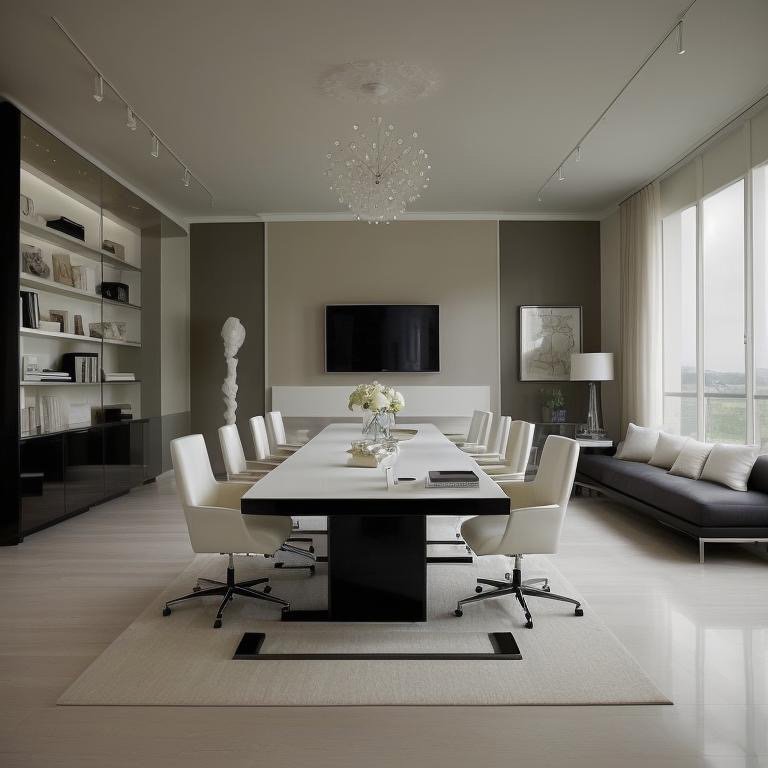
Minimalism is where most designers fail. It looks simple. It is impossibly complex. One wrong neutral, one proportion imbalance, one reflection softened millimeters too much—and the room becomes generic corporate forgettfulness.
Chic Contemporary demands molecular-level precision. The palette is tightened. Edges are sharpened. Reflections are softened with surgical accuracy. The table is not furniture—it is architectural sculpture. The lighting grid is not functional—it is philosophical. Every element exists because its absence would be noticed.
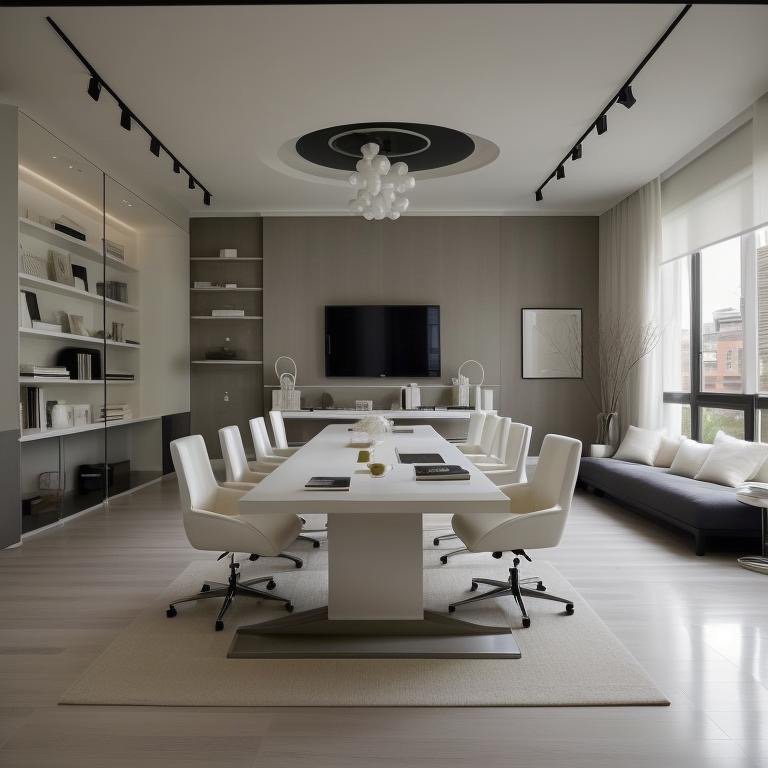
DBM’s Cinematic Intelligence approached this style as an equation: What is the minimum set of elements required for a space to communicate authority, clarity, and refinement? The answer is profound restraint. The answer is understanding that beauty lives in what you do NOT see.
This boardroom is where billion-dollar decisions feel inevitable. Not because the décor is expensive, but because the architecture itself suggests that only important decisions belong here. The room doesn’t distract. It clarifies. It is Contemporary in its rigor, Chic in its refusal to shout.
Chalet: Alpine Intimacy at Executive Scale
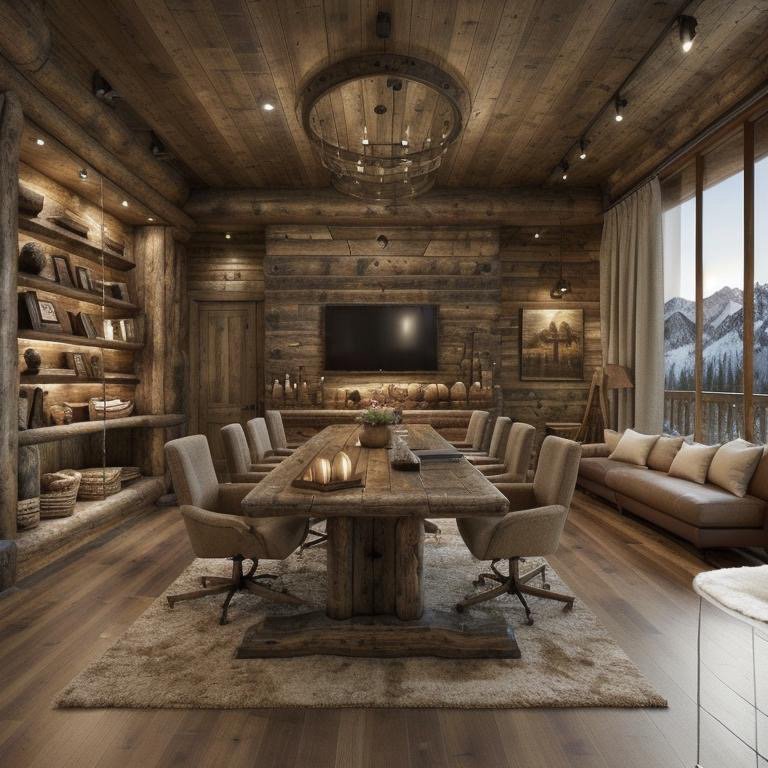
Warmth without heaviness. Timber without cliché. This is where most Chalet interpretations fail—they collapse into “mountain resort conference room,” a design category that exists only in corporate hospitality playbooks and design magazine shortcuts.
DBM’s Chalet is architectural storytelling. Timber behaves like velvet. Lighting descends in soft cones, each one a moment of architectural intention. Shelving glows like winter cabin windows—warm, but never garish. The palette is earthy but never rustic. This is not a lodge. This is executive authority married to Alpine intimacy.

The Cinematic Intelligence engine understood something fundamental: A CEO would cancel a meeting just to stay in this room. Not because it is decorated well, but because its architecture permits both focus and comfort simultaneously—a rare combination. The room says: You are secure here. Your thinking matters here. Your decisions ripple from this exact spot.
This is Chalet at boardroom scale: Every material tells a story. Every light source has purpose. Warmth is not an accident—it is strategy.
The Method Behind the Mastery
What unites these four styles is not their appearance. It is the method by which they were engineered:
First: We interpret, not mimic. We do not copy Expressionism from art history textbooks. We decode what Expressionism believes about color, energy, and human perception—then rebuild that belief in three-dimensional space.
Second: Cinematic Intelligence understands emotional temperature. Expressionism operates at the frequency of creative energy. Coastal lives at the wavelength of clarity and breath. Chic Contemporary demands the precision of silence. Chalet whispers the comfort of belonging. The engine calibrates itself to each frequency.
Third: Architecture never breaks. Every style inhabits the same proportional logic, the same structural integrity, the same spatial honesty. Styles are not overlays imposed on space. They are expressions that emerge from space’s own intelligence.
Fourth: Transformations are executable. These are not fantasy renderings. Every material exists. Every proportion can be built. Every boardroom represented here is not a dream—it is a blueprint.
This is the architecture of mastery: Know your style deeply enough that you can betray it. Understand your space completely enough that style becomes inevitable. Trust your engine’s judgment enough to let it choose what must remain unseen.
Style is not decoration. It is the language in which a space speaks to those who inhabit it. These four styles speak with authority, clarity, vision, and warmth. They speak like rooms that understand their own purpose.
Leave a Reply