3D Transformative Digest | Designs by Modish
A Test Is a Question with a Setup
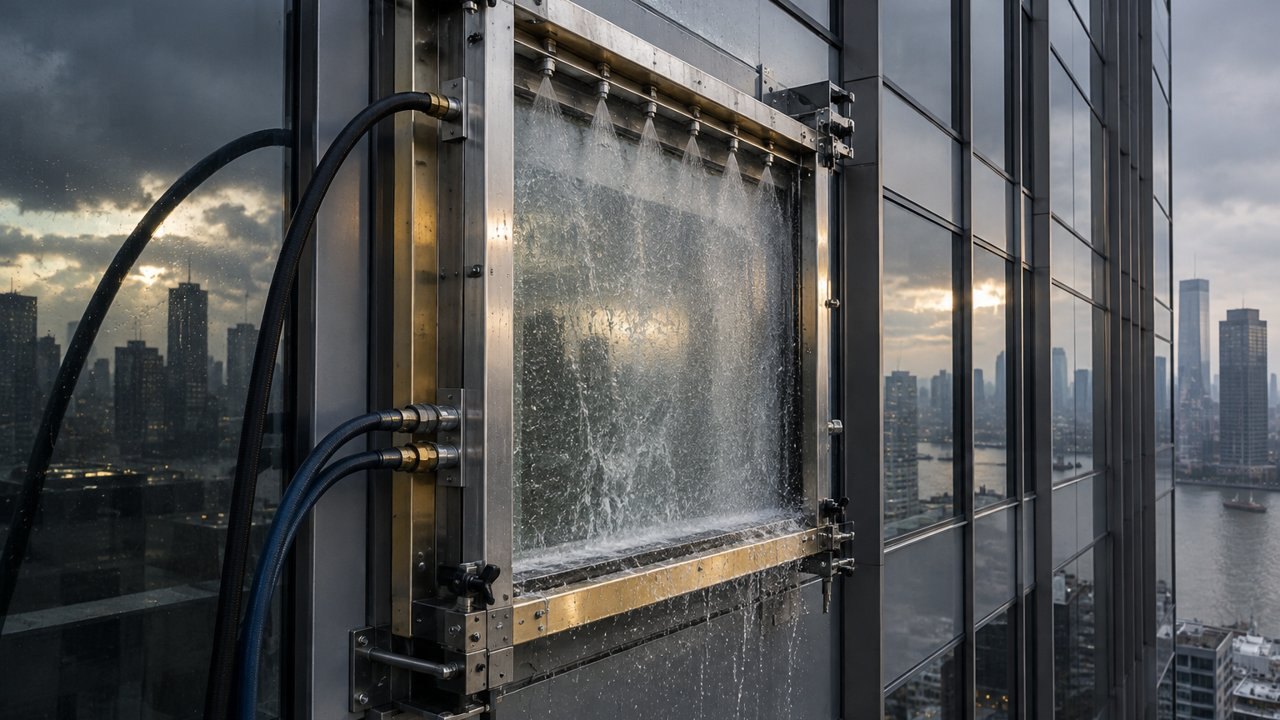
A curtain wall leaks at a corner after a week of wind-driven rain. The building team wants to know whether the water came through the window assembly, traveled from a slab edge, or entered somewhere above and moved within the wall. A field test is proposed. The first question should not be "Will it pass?" It should be "What question are we asking the test to answer?" ASTM E1105 is a field method for determining water penetration of installed exterior windows, skylights, doors, and curtain walls under uniform or cyclic static air-pressure differences. It provides a controlled procedure. The result applies to the area and setup tested; it is not a universal certificate that every similar-looking bay in the building is watertight. A test plan needs to define the specimen, pressure, water application, observation points, preparation, and what counts as water penetration for the purpose of the investigation. The pressure difference should reflect the question and the conditions being considered. A test that is poorly scoped can produce an ambiguous result even when the equipment works correctly.
Choose the Test Location Deliberately
Before testing, review the drawings, installation details, leak history, orientation, access, and maintenance record. Map reported water locations against the facade. A corner bay may experience different conditions from a sheltered central bay; a repaired section may differ from original construction. If the concern is recurrent at multiple locations, sampling one convenient window may not represent the pattern. A qualified building-envelope professional should identify the test area and any nearby conditions that could confound results. Was a sealant joint replaced last week? Has an interior finish concealed the point of entry? Does water reach the test chamber from an adjacent assembly? Are drainage paths blocked? The investigation should record these conditions before the test begins. The team should also agree how water inside the assembly will be interpreted. Some systems are designed to admit water into a drained cavity and direct it back outside. The question is not simply whether any water appears behind an exterior surface; it is whether water penetrates the defined plane or reaches a location that the test criteria treat as failure. The test report should state the relevant boundary and acceptance criteria, rather than relying on a vague phrase like "it leaked."
A Field Test Does Not Reveal Every Cause
A test can help localize a water pathway under specified conditions. It cannot automatically establish why the condition developed, when it began, or who is responsible. A result may lead to additional tests, exploratory openings, review of adjacent transitions, or a repair mock-up. The investigator should distinguish direct observation during the test from later interpretation about the cause. Testing has limits. The outcome can depend on preparation, pressure, duration, spray pattern, equipment calibration, the condition of the test chamber, and whether the assembly is representative. A negative result at one bay does not prove that no other bay leaks. A positive result does not necessarily establish the full extent of damage behind the wall. If the building's leak only occurs under a particular wind direction or after prolonged exposure, a static field test may not reproduce every condition.
That is why the report should preserve the procedure, instrumentation, photos, location, pressure, duration, water application, observed entry points, and any deviations. It should include an overview photo and detail views. If there were limitations or a result that cannot be interpreted confidently, say so. A careful report is more valuable than a definitive-sounding sentence unsupported by the test scope.
Plan the Repair Around the Finding
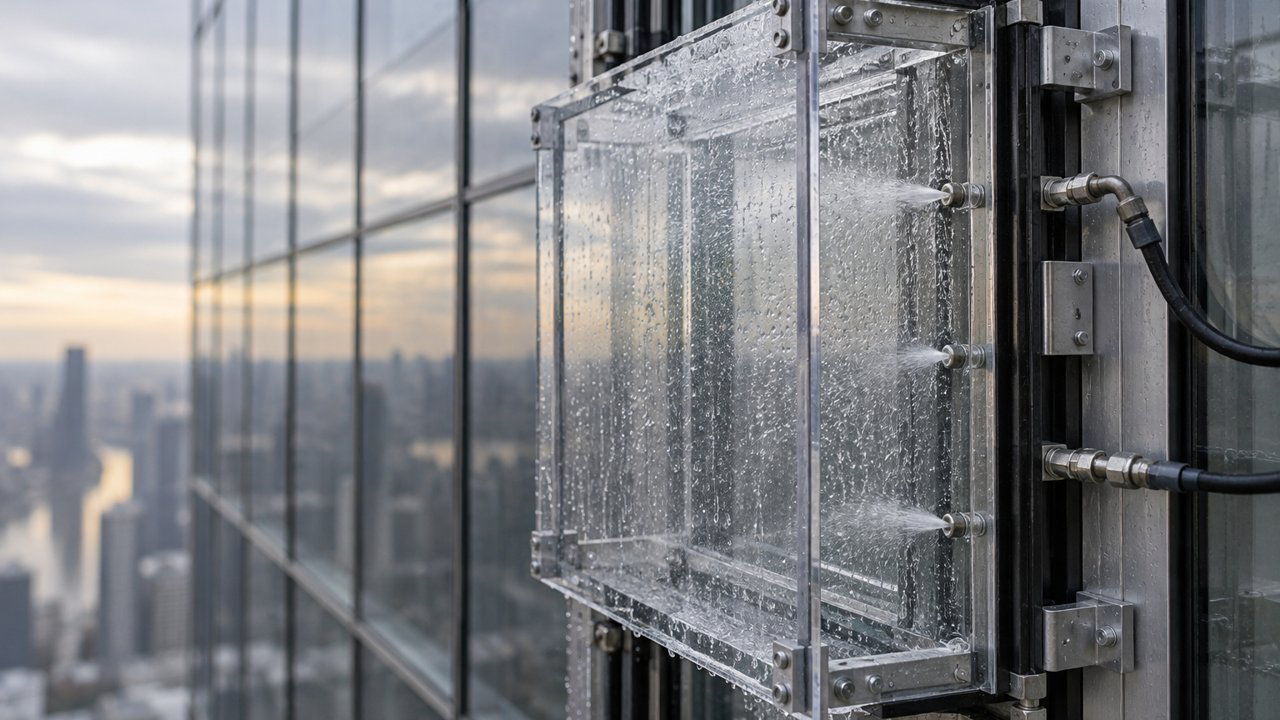
Once a pathway is reasonably identified, the repair should address the relevant assembly and transition, not merely the visible interior stain. The design may require review of sealant compatibility, flashing, drainage, gaskets, anchors, or adjacent materials. A local patch can be appropriate for an isolated condition; a repeated pattern may call for a broader assessment. The professional should make that distinction explicit. Before repeating the test, agree whether the purpose is to verify a specific repair, compare a mock-up, or investigate a different area. Keep the pre-repair and post-repair photos tied to the same grid or bay identifier. Record materials, installer, cure time, and weather conditions where relevant. A successful test is evidence about the tested area under the test conditions; it should not be expanded into a guarantee about all elevations or future storms. For property teams, this is a sequence of decision gates: locate the complaint, map the pattern, select a test question, define a method, document the result, choose a repair, and verify the work as appropriate. A broker or underwriter may value a concise summary, but the underlying technical report belongs in the building record. Do not substitute an insurance form for the testing professional's report.
Avoid Testing a Symptom Without a Baseline
Before applying water or pressure, document the condition in its current state. Record recent rainfall, wind direction if known, prior maintenance, interior moisture, and any temporary sealing. Photograph the test area and nearby conditions before the chamber is installed. If there is a known leak report, compare its exact location to the proposed test boundary; a test several bays away may not address the original complaint. The consultant should explain how the chosen sample relates to the broader facade. Is it the reported bay, a representative installation, a suspected weak detail, or a repaired mock-up? If it is only one sample, state that limitation in the report. The owner can then decide whether additional bays need testing based on the result and evidence pattern. A well-planned test may still produce an inconclusive result. Water can appear outside the chamber boundary, the pressure may not reproduce the field event, or a concealed pathway may route moisture elsewhere. Agree in advance how such cases will be described and what follow-up is available. This avoids forcing a clean pass/fail label onto a complicated building condition.
A Word From the Scaffold
Anyone who has stood on a swing stage with a calibrated spray rack knows the moment. The water has been running for eight minutes, the interior observer is quiet on the radio, and then a single bead appears at the sill. Everybody wants a verdict right there. Resist it. That bead tells you water found a route under those conditions at that bay. It does not yet tell you whether the route runs through a failed gasket, a stack joint, an anchor penetration, or the perimeter sealant three inches away. Good testers slow down at exactly this point. They isolate, they mask adjacent joints, they rerun, and they write down what they did before they write down what they think. It is patient, slightly tedious work, and it is the reason a repair budget gets spent on the leak rather than on the guess.
What the Report Should Include
A field report should identify the standard and edition used, apparatus, calibration status where applicable, location, specimen boundaries, preparation, pressure sequence, water application, duration, observation method, and acceptance criteria. Include photographs before, during, and after the test, plus any deviations from the planned procedure. If the test stopped early or the chamber could not maintain the intended condition, describe that limitation plainly.
The owner should be able to connect the report to the facade. Include a drawing or elevation with the tested bay marked, a consistent grid reference, and images that show the chamber and surrounding assembly. If the contractor changed sealant or other components before testing, record that change. The tested condition should be clear to anyone reviewing the report later. A concise summary can state the outcome in ordinary language, but point to the technical record. "No water penetration observed at the tested bay under the stated conditions" is more accurate than "the curtain wall passed." The latter may imply the whole facade or every possible storm condition, neither of which follows from one field test.
From Leak Response to Repeatable Evidence
The next time a tenant reports water, the building should not have to reconstruct the last investigation from memory. Keep the report, repair drawings, test results, invoices, and follow-up observation under the property and elevation record. If a later event produces a similar complaint, the team can compare locations and determine whether the issue recurred, moved, or appears unrelated. A test does not make a curtain wall perfect. It makes a specific question more answerable. That is enough to improve a repair decision, provided everyone respects what the result covers and what it leaves open. The most useful outcome is not a dramatic label. It is a repeatable record that lets the owner decide whether to monitor, repair, expand the sample, or investigate another pathway. Keep that decision tied to the actual tested location and conditions. A test result is a snapshot, not a warranty. Treat it that way, and the next report someone pulls from the file will still mean something years from now.
Leave a Reply