3D Transformative Digest | Designs by Modish
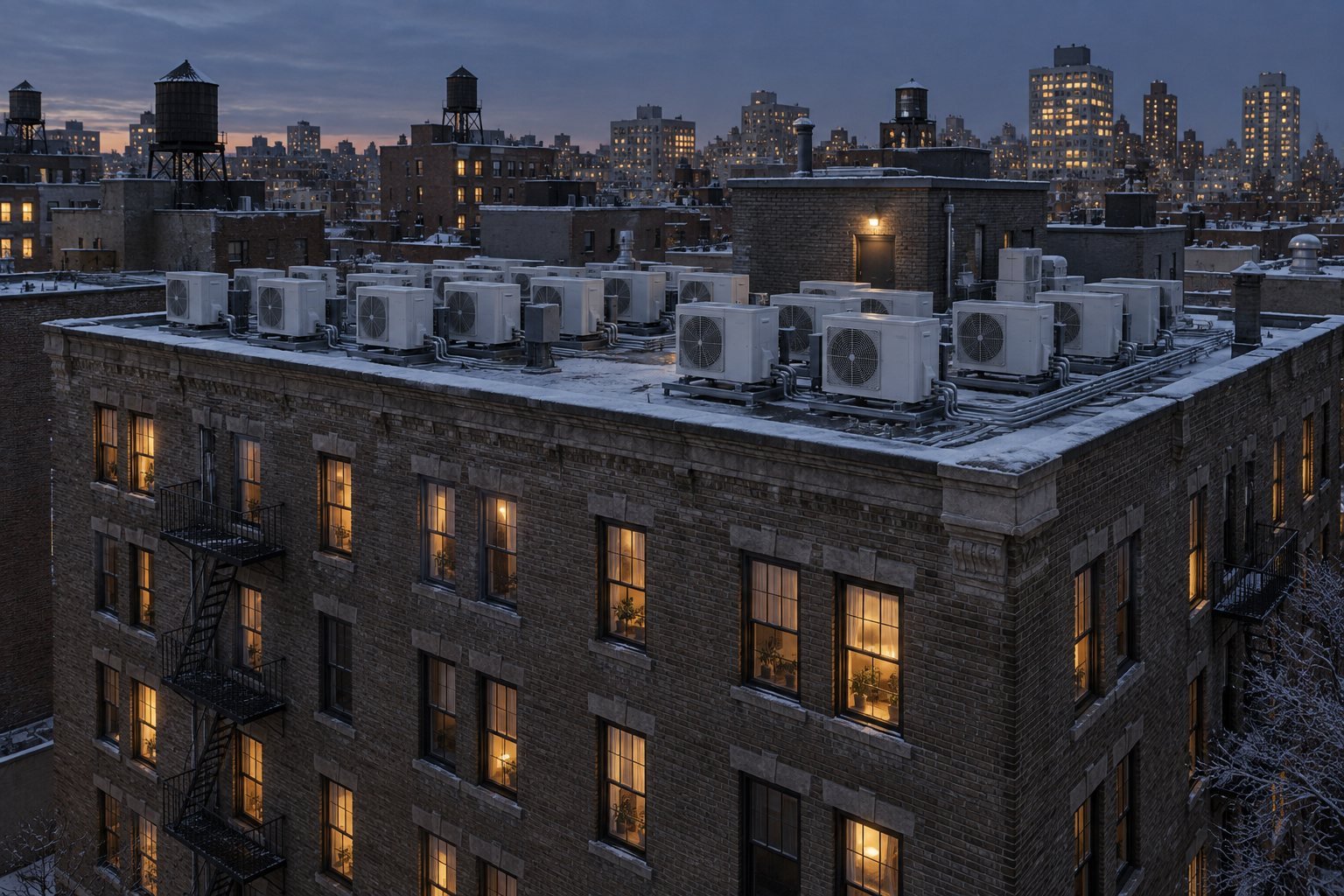
The Rooftop Looks Great
Picture the roof first, because that is where everybody looks. Rows of crisp new condensers, lined up like a fresh set of veneers. Clean conduit. A board member snapping photos for the newsletter. The gas boiler in the basement, the old brute that clanked every October, is getting hauled out on a dolly. The building is going electric, and it wants you to know.
Now walk downstairs. Past the laundry room, past the bikes, to the door with the faded sticker that says nobody goes in here without a reason. Open the panel. That is where this story actually lives.
Because the heat pumps moved in, and nobody told the electrical panel.
A Move Everyone Is Making
Let me say up front that I am a fan. Heat pumps are the real thing. They move heat instead of making it, which is why a good one can deliver more heating energy than it uses in electricity. They cool in summer. They take combustion out of the building. Cities are writing them into codes, utilities are paying people to install them, and owners who switched early are telling everyone at the dinner party.
So the momentum is not the problem. The problem is that the momentum is moving faster than the paperwork, and much faster than the copper.
Most older buildings were wired for a different life. Gas did the heavy lifting: the heat, the hot water, the cooking, sometimes the dryers. The electrical service was sized for lights, outlets, a refrigerator per unit and maybe a window air conditioner or two. Plenty of older houses still run on 100 amps, and some on less. Plenty of older multifamily buildings have a main service that was perfectly respectable for the building they used to be.
Then the wish list arrives all at once. Heat pumps for space heating. A heat pump water heater. Induction ranges, because the gas line is going. A couple of chargers in the lot because tenants asked nicely. Each item makes sense on its own. Stack them, and the panel starts to look like the friend who agreed to host the whole family for the holidays without checking how many beds there are.
The Coldest Morning Is the Audition
Here is the part that catches people. A heat pump on a mild afternoon is a quiet, polite houseguest. The audition happens on the coldest morning of the year.
That is when the outdoor temperature drops, the system works hardest, and in many installations the electric resistance backup strips switch on to help. Those strips are simple, reliable and hungry. At the same moment, people are waking up, showers are running, coffee is brewing and somebody is plugging in a car. Every load in the building shows up for the same hour.
If the service and the feeders were sized with that morning in mind, it is a non-event. If they were sized by somebody who glanced at the nameplates and said it should be fine, you start hearing about it. Breakers trip. Lights dim when a compressor kicks on. A tenant calls about the burning smell near the meter room, which, for the record, is a call you want to take seriously and immediately.
The electrical code has a method for this. It is called a load calculation, and it exists precisely so nobody has to guess. The trouble is that in a rush to electrify, the calculation sometimes gets done on the new equipment and not on the building as it will actually live, with everything running at once on the worst day.
What Happens Behind the Panel Door
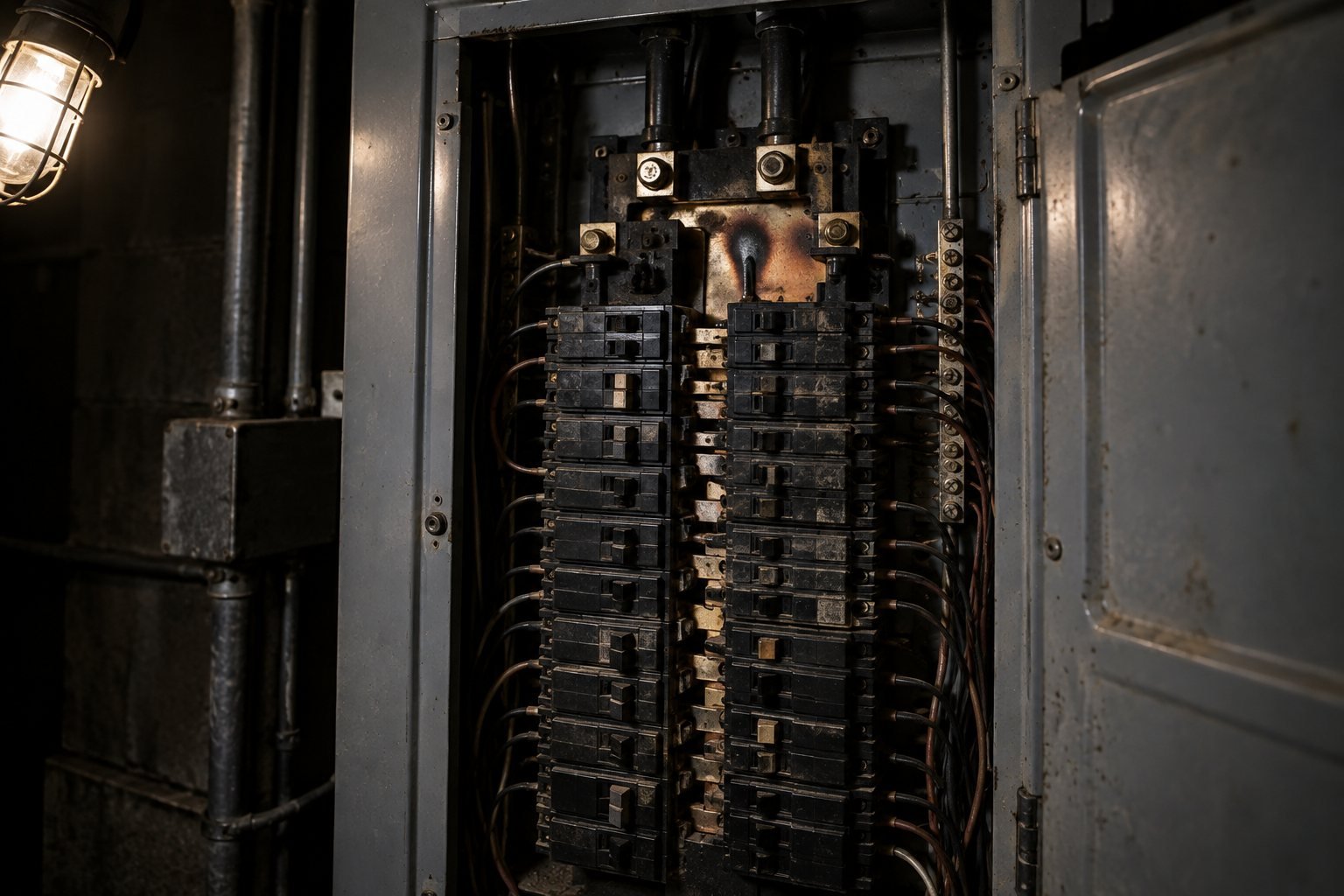
Let me tell you what a thermal camera tends to find in a building that took on load without a real plan, because it is never one dramatic thing. It is a collection of small confessions.
A lug that was torqued correctly thirty years ago and has loosened a little with every heating season since. A breaker that runs noticeably warmer than its neighbors because it is carrying more than it was ever asked to carry. A bus bar with a faint brown halo. Old wiring that was fine for the original loads and is now doing a job it never auditioned for. None of these announce themselves. A panel can look tidy and still be running hot.
And here is where the real risk lives. Electrical heat is not a comfort problem. It is a fire and insurance problem. An overloaded connection does not fail politely. It degrades, it gets warmer, and it degrades faster. An owner who learns about it from a scan gets a repair. An owner who learns about it from a fire marshal gets a very different week.
The Service Upgrade Nobody Budgeted
Sometimes the panel is the whole story, and a new panel or a few new feeders sorts it out. Sometimes the conversation goes past the property line.
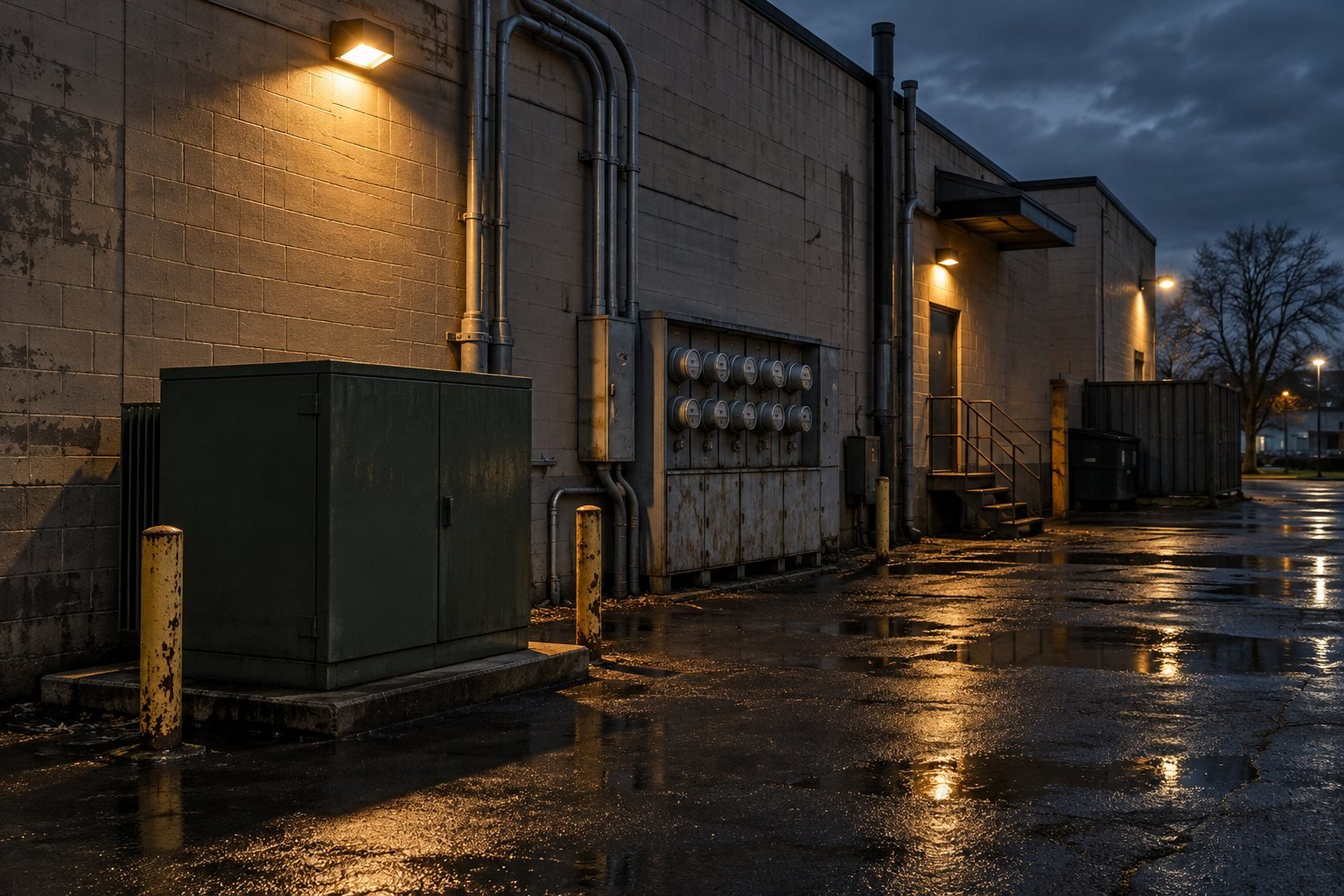
When a building needs more capacity than its service can deliver, the utility gets involved. Maybe the transformer serving the block needs to be larger. Maybe the service entrance has to be rebuilt. That means applications, engineering reviews, scheduling and, lately, long waits for equipment. Lead times for transformers and switchgear have been long enough to wreck a project calendar on their own.
This is how a tidy electrification project turns into a saga. The heat pumps are delivered. The roof curb is ready. The contractor is waiting. And the building cannot energize the new system at full load because the service upgrade is months out. Meanwhile the gas boiler is already in a dumpster, because somebody was excited.
And the bill for that wait rarely lands where people expect. The contractor wants to be paid for a crew that stood around. The tenants who were promised air conditioning by July are now asking, reasonably, about July. The lender who financed the retrofit on the strength of lower operating costs would like to see those lower operating costs. Nobody in that room is the villain. They are all just discovering, at the same time and at full price, a fact about the building that was sitting in the basement the whole time.
There are smart workarounds. Load management controls that keep the big appliances from all pulling at once. Smart panels that can shed a charger when the heat calls hard. Cold-climate heat pumps sized so the backup strips rarely need to fire. Phasing the work so the building does not try to change its entire personality in one season. These are good tools. They are not substitutes for knowing what the building can actually carry.
Reading the Building Before the Glow-Up
This is the kind of situation our work was built for, and I will admit it is one of my favorites, because the answer is almost always knowable before anyone spends real money.
With 192 points, we look at the building as one system instead of a stack of separate trades. The service size and its condition. The panels, the feeders and how warm they run under load. The heating and hot water equipment, what is coming out and what is going in. The envelope, too, because a leaky building asks a heat pump to work much harder, and a tighter building can sometimes avoid a service upgrade entirely. Each point is a question with evidence behind it. Put together, they give an owner one verdict: ready, ready with conditions, or not yet, and here is why.
Then Cinematic Intelligence turns the findings into renders a board can actually follow. Instead of a twenty-page electrical memo, they see the basement room with the hot connections glowing where the scan found them, and the rooftop plan showing which units can go in now and which have to wait on the service. People make better decisions about things they can see.
DesignVault 3D keeps the record: what was found, what was changed, what capacity the building has left after the work. And the Morning Brief keeps the building honest afterward, with a plain daily read on whether anything is drifting, rather than a dashboard nobody opens.
Ready, Or Just Excited
I talk to owners who want to electrify yesterday, and I love the energy. The buildings that do it well are not the ones that moved fastest. They are the ones that asked the panel first.
They found out whether the service could carry the coldest morning. They tightened the envelope where it was cheap to do so. They fixed the warm connections before adding load to them. They sequenced the work so the boiler stayed until the new system could stand on its own. And they kept a record so the next owner, insurer or engineer does not have to rediscover the whole thing from a dusty one-line drawing.
The rooftop will always get the photos. That is fine. Let it have its moment.
Just make sure somebody went downstairs first and opened the door.
Leave a Reply