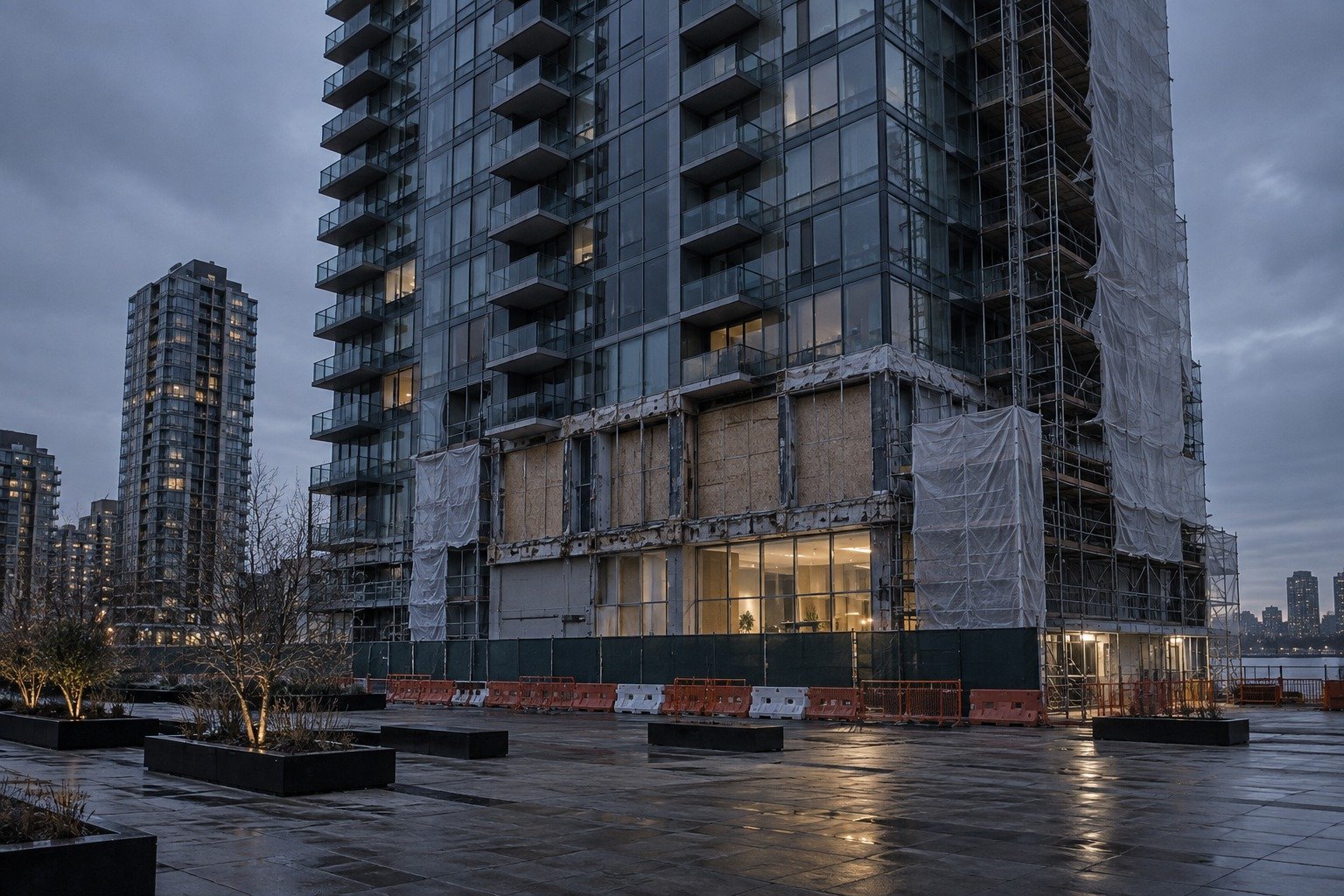
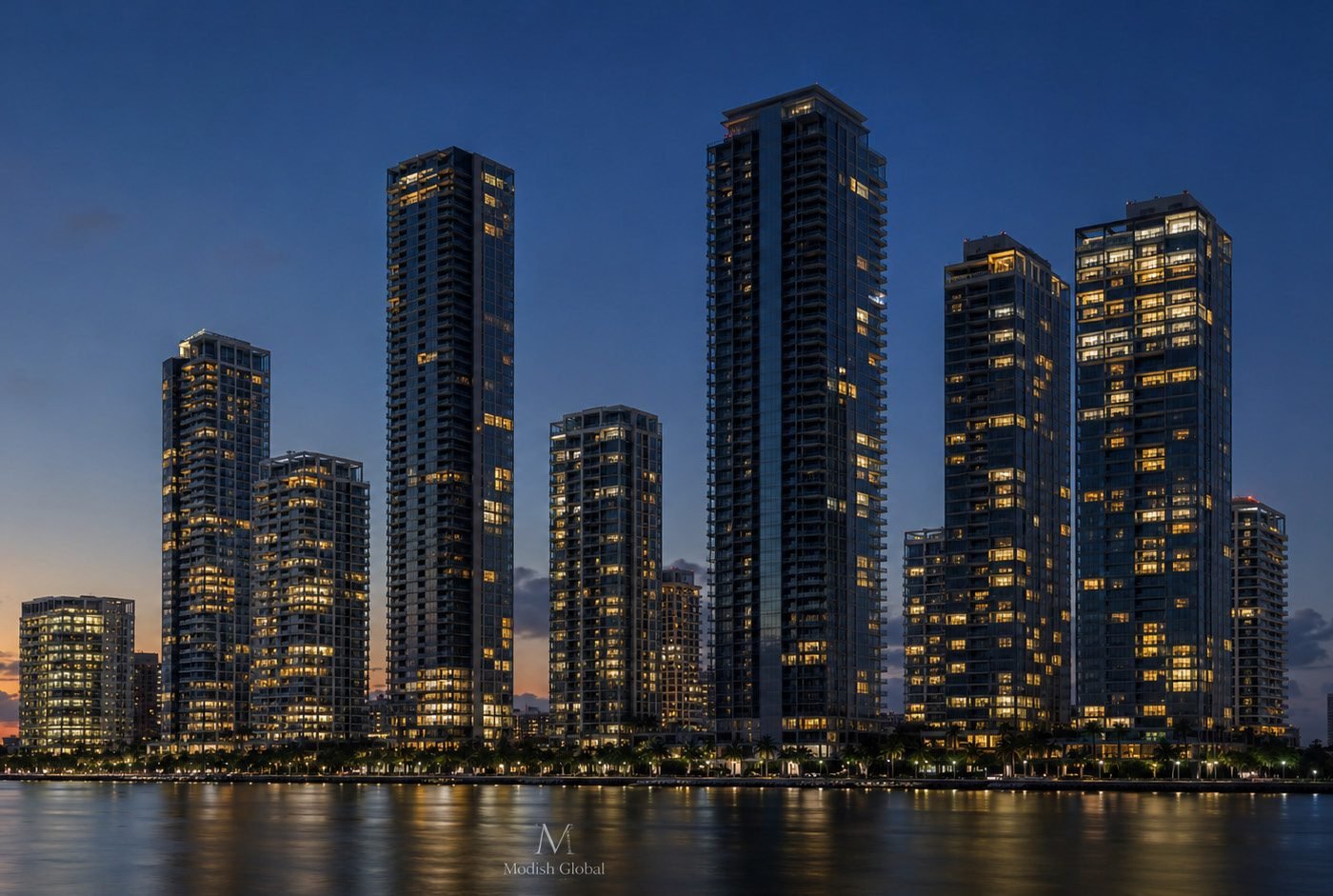
There is a number that actuaries use when they want to describe the moment an insurance market breaks. They call it the attachment point. When it rises high enough that primary carriers can no longer afford to cede risk upward to their reinsurers, the entire chain fractures, and coverage becomes unavailable at any price. This is not an abstraction to the people who live inside the buildings in question. An uninsurable building is a building that cannot be mortgaged. A building that cannot be mortgaged has a buyer pool that shrinks by roughly eighty-five percent. And a building whose buyer pool has shrunk by eighty-five percent is being repriced by the most fundamental force in economics, the absence of demand. That repricing is underway. It is happening now, and it is happening to a class of towers that were, until recently, considered the safest assets on the coast.
The Loss Landscape
The global insurance industry absorbed 137 billion dollars in weather-related natural catastrophe losses in 2024, the fourth consecutive year exceeding one hundred billion. The Los Angeles fires in early 2025, the most expensive non-hurricane natural disaster in American history, sent reinsurance pricing into what Lloyd’s syndicates privately describe as uncharted territory. I spent eleven years building catastrophe models at Lloyd’s. I have watched markets tighten and loosen, absorb shocks and recover, price a bad decade and move on. What I have not seen, until now, is a simultaneous withdrawal from an entire building typology.
Glass-curtain-wall residential towers in hurricane-exposed coastal zones are being un-underwritten at a pace the real estate industry has not yet absorbed. This is the part that should command attention. Carriers are not merely raising premiums on individual structures with poor records. They are stepping back from a whole category of building at once, treating the type itself as a concentration of risk. When underwriters begin to reason by typology rather than by property, they are telling you something about the future they expect. They are telling you that the exception has become the rule.
It is worth being precise about why this typology, in particular, unsettles the people who price risk for a living. A glass curtain wall is a system of relatively fragile panels held to a structure by sealants and fasteners that degrade on a known schedule, exposed on every elevation to wind-borne debris, pressure differentials, and salt. In a benign climate these are manageable engineering problems. In a climate producing stronger and more frequent coastal storms, they become correlated failure modes, the kind of exposure that a reinsurer cannot diversify away because every insured building in the region faces the same weather on the same afternoon. Diversification is the entire premise of insurance. Correlated catastrophe is the one thing the model cannot absorb, and a warming coastline manufactures correlation at scale.
The Mechanism of Contagion
Fannie Mae and Freddie Mac require adequate hazard insurance on any property securing a conforming loan. When a condo building’s master policy lapses or falls below replacement cost, every mortgage in the building is technically in default. Servicers then force-place insurance at rates five to ten times higher than the market. Defaults follow, and because the trigger is shared across the structure, those defaults are correlated and building-wide rather than scattered and individual. Foreclosures depress comparable sales, which triggers appraisal write-downs in adjacent buildings, which restricts refinancing, which increases still more defaults.
This is contagion. It is the same mechanism that drove the 2008 financial crisis, one distressed asset infecting the valuation of the next, but the trigger is not subprime lending. The trigger is atmospheric physics. In 2008 the poison was written into the loan documents. This time it is written into the sky, into the warming water and the intensifying storm season, and no amount of financial engineering can restructure the weather. The contagion spreads building to building, block to block, along exactly the pathways that once made these neighborhoods desirable, the density and the proximity to the water now functioning as vectors rather than amenities.
The Data Counter-Narrative
Against this landscape, a counter-narrative is emerging, and it is built on data. Cape Analytics uses computer vision and machine learning to analyze aerial imagery, extracting building-specific attributes that generate property-level risk scores. This allows underwriters to differentiate between buildings that look identical under classification codes but carry fundamentally different risk profiles. Nearmap provides high-resolution aerial surveys updated multiple times per year, creating longitudinal records of property condition that show not just how a building looks today but how it has changed over time.
Carriers adopting AI-driven analytics can identify buildings whose owners have invested in resilience, and offer policies that reflect actual risk rather than ZIP code averages. This is the opening, the narrow door through which a well-maintained tower can still walk. Buildings that cannot demonstrate maintenance will find themselves on the wrong side of an increasingly sharp actuarial divide. The line is no longer drawn around a region or a flood map. It is drawn around the individual structure, and it separates the buildings that can prove their condition from the buildings that can only assert it.
This changes the incentive structure of ownership in a way that is easy to underestimate. For decades, the maintenance of a coastal tower was a discretionary cost, a line item that a condo board could defer without any immediate consequence to the building’s value or its ability to be sold. Underwriting by ZIP code average meant that the diligent building and the neglected building paid nearly the same premium, so diligence went unrewarded. Property-level analytics reverse that logic. When a carrier can see the difference between a resealed facade and a failing one, resilience acquires a market price, and neglect acquires a penalty that arrives on schedule, in the renewal quote. The insurance market is quietly becoming the enforcement mechanism that the building codes never were.
Showing the Building
Diagnostic visualization, the detailed three-dimensional modeling of a building’s envelope and its degradation pathways, is now being submitted directly to underwriting teams. Instead of trusting a written report, an owner can show them the building itself: a navigable, annotated, dimensionally accurate model that maps every deficiency and every upgrade. The distinction matters more than it may first appear. A report describes. A model demonstrates. An underwriter can interrogate a model, rotate it, follow a crack from the facade into the structure and back out again, and arrive at conviction rather than assumption.
The buildings that produce this documentation will remain insurable. The buildings that cannot will join the growing inventory of stranded glass, structures technically standing but financially inert, unmortgageable and therefore unsellable, beautiful and worthless at once. The instrument that saves a tower is no longer only concrete and sealant. It is evidence, rendered legibly enough that the people pricing the risk can see exactly what they are being asked to insure.
The Price of Transparency
The insurance industry does not create risk. It prices risk. The impulse to blame the carriers is understandable, but it is misplaced. They are the thermometer, not the fever. When the reading climbs, the instinct is to distrust the instrument, to accuse it of alarmism, to demand that it report a more comfortable number. But the thermometer has no stake in the temperature. It only tells you what is already true.
The fever is the gap between what we have built and what the atmosphere is becoming. We raised a generation of towers designed for a climate that is receding into memory, and now the climate and the buildings have fallen out of agreement. The only buildings that will survive this transition are the buildings that can prove they deserve to survive it, that can document their resilience in terms an actuary will accept. The glass is beautiful. I have never disputed that. But beauty is not a risk category, and the actuarial tables do not grade on aesthetics. They grade on evidence, and in the end so will the market, and so, eventually, will the sea.
3D Transformative Digest — ISSN 3067-5510. Published by Modish Global Inc. © 2026 Modish Global Inc. All rights reserved. Licensed distribution only.
Leave a Reply