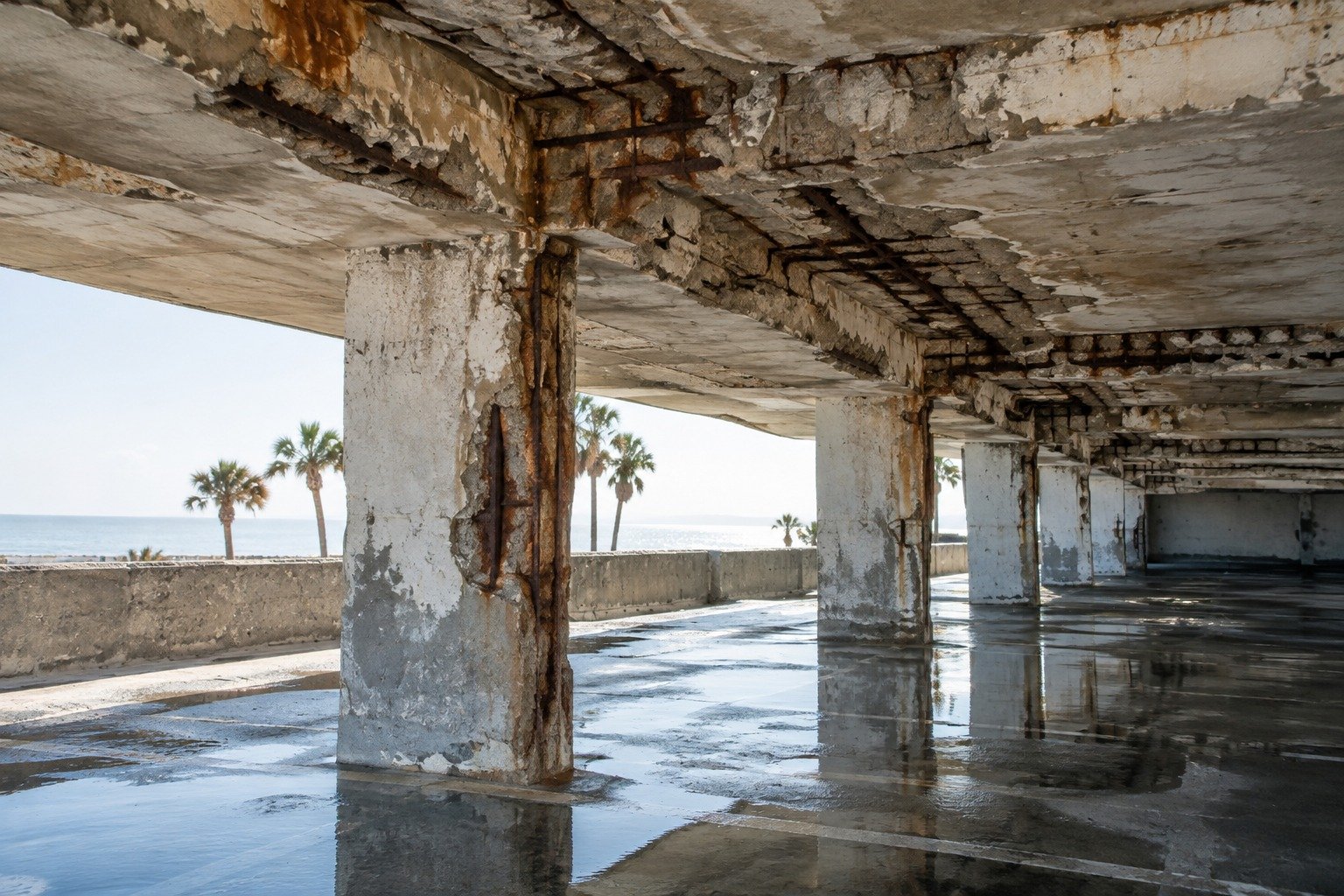
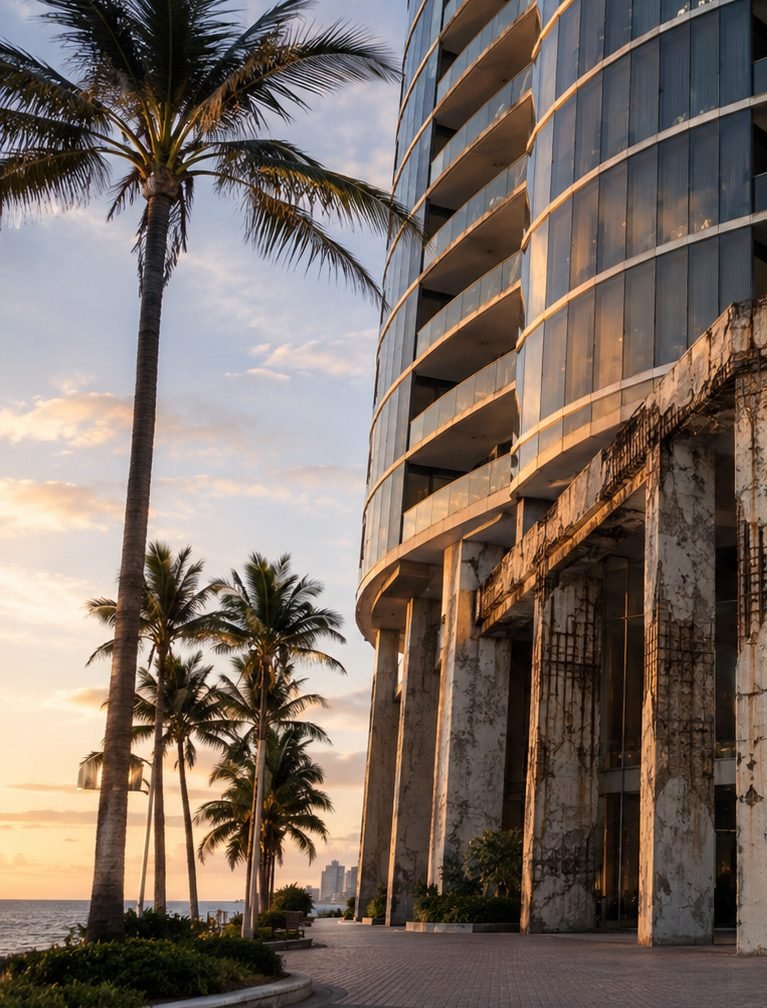
I have stood inside the cavity where Champlain Towers South used to be. Not in the days after the collapse, when the cameras were running and the world was watching, but months later, when the site was quiet. I photographed rebar cross-sections so corroded they crumbled between my fingers like charcoal. That number, ninety-eight people, never becomes routine. It is the number I carry into every inspection, and it is the number I want every reader to carry into the rest of this essay. Because what I have to say to every owner of a unit in a glass-curtain high-rise in Florida is simple and unwelcome: you are running out of time.
The Clock Florida Built
In the aftermath of Surfside, the Florida legislature did something unusual. It acted. Senate Bill 4-D and its successor, SB 154, created the most aggressive structural inspection and reserve-funding regime in American history, targeting every structure exceeding three stories. The core mandate is milestone recertification at twenty-five years, reduced to twenty years within three miles of the coast, followed by inspections every ten years thereafter. But the provision with the sharpest teeth is the Structural Integrity Reserve Study, known as the SIRS. Every qualifying condo association must have a completed SIRS by December 31, 2026, and must begin funding the reserves that study identifies. No more waivers. No more member votes to defer maintenance.
The legislature closed that loophole deliberately, because the association at Champlain Towers South had repeatedly voted to delay critical concrete restoration. The residents, in effect, democratically chose to postpone the spending that engineers had flagged. That is the hard lesson embedded in the law: democracy is not an engineering methodology. A building does not hold a vote before it fails. The physics proceeds on its own schedule, indifferent to consensus, and the new statute is an attempt to force human decision-making back into alignment with that schedule before another cavity opens in the sand.
The Mathematics of Deferred Reality
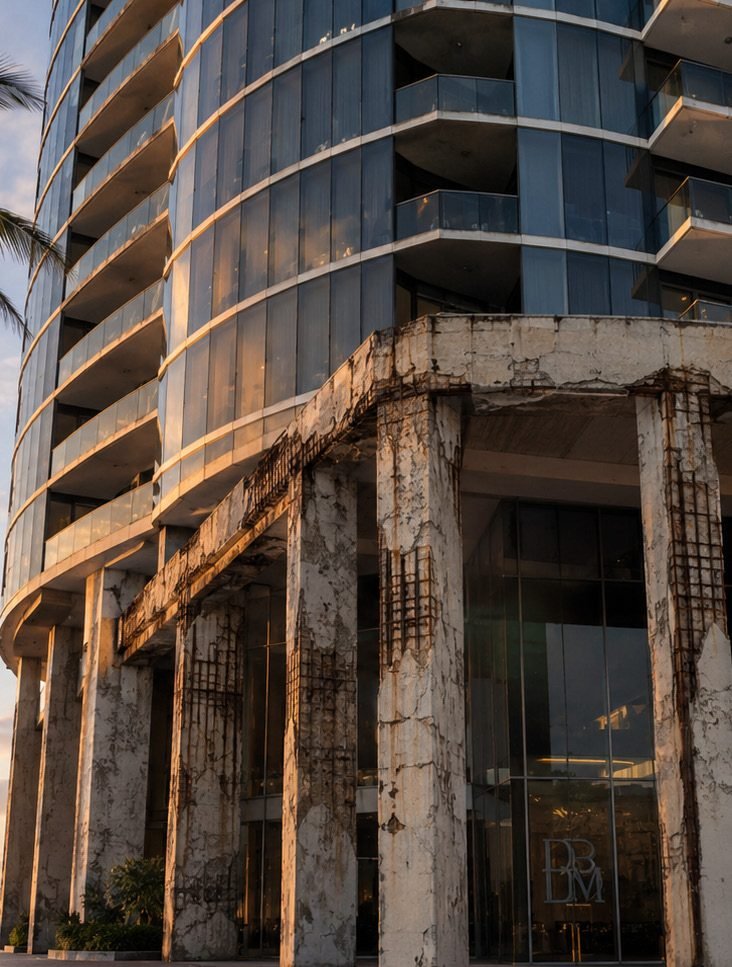
A SIRS forces an engineer to calculate the remaining useful life of every major structural and life-safety component, and the annual contribution each owner must make so that money is available when the work needs to happen. For a well-maintained thirty-story tower, reserve requirements might reach eight to fifteen million dollars. For buildings that have deferred maintenance for decades, a staggering proportion of South Florida’s housing stock, the number reaches thirty to fifty million dollars or more.
I reviewed the SIRS for a 196-unit oceanfront tower in Sunny Isles Beach. The study identified forty-two million dollars in unfunded reserve obligations, translating to special assessments ranging from eighty-five thousand dollars for a small two-bedroom to three hundred and ten thousand for a penthouse. The penthouse owner had purchased eighteen months earlier for 4.2 million dollars. Comparable units were listing, and not selling, at 2.8 million. The sequence from there is painfully predictable. The SIRS is completed. The reserves are identified. The special assessment is levied. Owners revolt. Property values collapse. The building enters a death spiral. And the cruelest arithmetic of all reveals itself: the buildings that need the most maintenance are precisely the buildings least able to pay for it.
What makes the coastal figures so severe is not accounting. It is chemistry. Salt-laden air drives chloride into concrete, and chloride is the enemy of the steel reinforcement buried inside it. When the steel begins to corrode, it expands, and that expansion cracks the concrete from within, opening new pathways for moisture and salt to reach still more steel. The process feeds on itself, accelerating precisely where it is least visible. This is why a building can appear sound from the sidewalk while its structural core is quietly losing capacity, and it is why deferral is so dangerous. The years of postponed maintenance are not neutral years. They are years in which the deterioration compounds, so that the same repair costs more, and buys less, with every season the association waits.
The Inspection Gap
Florida’s new legislation requires inspections by engineers with experience in threshold buildings of similar scope and complexity. South Florida has approximately 1.2 million qualifying condo units. The number of licensed engineers with genuine expertise in high-rise concrete assessment is, by the most generous estimate, in the low hundreds. The mismatch is not a bureaucratic inconvenience. It is a structural feature of the crisis itself.
Inspection timelines have stretched from weeks to months. Some associations that began the SIRS process in early 2025 are being told their reports will not complete until mid-2027, six months past the deadline. This is where technology must close the gap. Companies like Gecko Robotics deploy wall-climbing robots to survey concrete surfaces with ultrasonic sensors, reducing manual labor by orders of magnitude. DroneDeploy’s aerial photogrammetry generates millimeter-accurate three-dimensional models that identify facade cracks a human crew would take weeks to catalog. AI-powered thermal imaging can trace moisture intrusion paths and delamination zones from a single drone flight. The bottleneck is no longer what we can measure. It is how quickly we can look, and how honestly we are willing to interpret what we find.
When the Building Becomes Visible
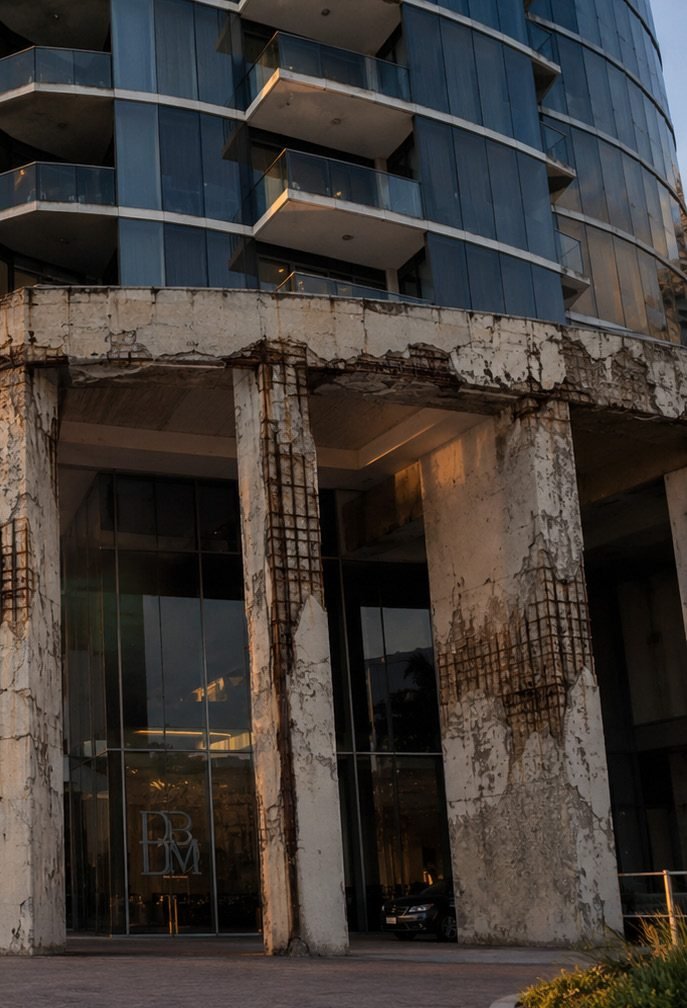
I recently observed a diagnostic visualization process, cinematic-grade AI rendering applied to structural survey data, that translated an inspection report into a three-dimensional model showing precisely where deterioration existed and how it was progressing. The effect on the people in the room was immediate. A condo board that had been arguing about assessments for eight months approved the full restoration budget within two weeks of seeing that model. Nothing about the physical building had changed. What changed was that the owners could finally see it. A written report can be doubted, tabled, and re-litigated. A rendered structure that shows corrosion advancing through a column ends the argument, because it converts an abstraction into something the eye refuses to ignore.
Three Scenarios After the Deadline
For buildings that fail to comply by December 31, 2026, three scenarios emerge. The first is enforcement. Local officials could issue violations and order evacuations. This is legally available but politically catastrophic, and I expect selective enforcement against the worst cases rather than any broad sweep. The second is legislative extension. There is already lobbying pressure to push the deadline to 2028 or 2030. I testified against this in Tallahassee. Extensions are how we arrived at Surfside in the first place. Every year of delay is a year of additional deterioration, and I told the committee plainly that ninety-eight people are dead because of exactly that pattern of delay. The room was quiet.
The third scenario is market segmentation, and it is the one already underway. The Florida condo market will bifurcate into compliant and non-compliant buildings. Compliant buildings will command premiums, sold as safe harbors backed by funded reserves and current inspections. Non-compliant buildings will become distressed assets entering an irreversible decline, their values eroding faster than any assessment can hope to arrest. The market, in other words, is beginning to price the physics that the statute was written to enforce.
The Obligation of Sight
Florida’s glass towers are extraordinary achievements. They are monuments to ambition, to engineering, and to a certain vision of coastal life lived above the waterline. They are also, in many cases, aging structures whose maintenance has been subordinated to short-term financial interests. Both truths hold at once. The deadline is real. The money is real. The physics is real, and the physics does not adjourn to await a more convenient vote. I have seen what happens when physics wins the argument. I have stood in the cavity and held the crumbled rebar in my hand. You do not want to see what I have seen. Every day, in every one of these buildings, is a structural decision, whether or not anyone chooses to recognize it as one. Choose wisely, and choose while there is still a choice to make.
3D Transformative Digest — ISSN 3067-5510. Published by Modish Global Inc. © 2026 Modish Global Inc. All rights reserved. Licensed distribution only.
Leave a Reply