
The Weight of Dormancy
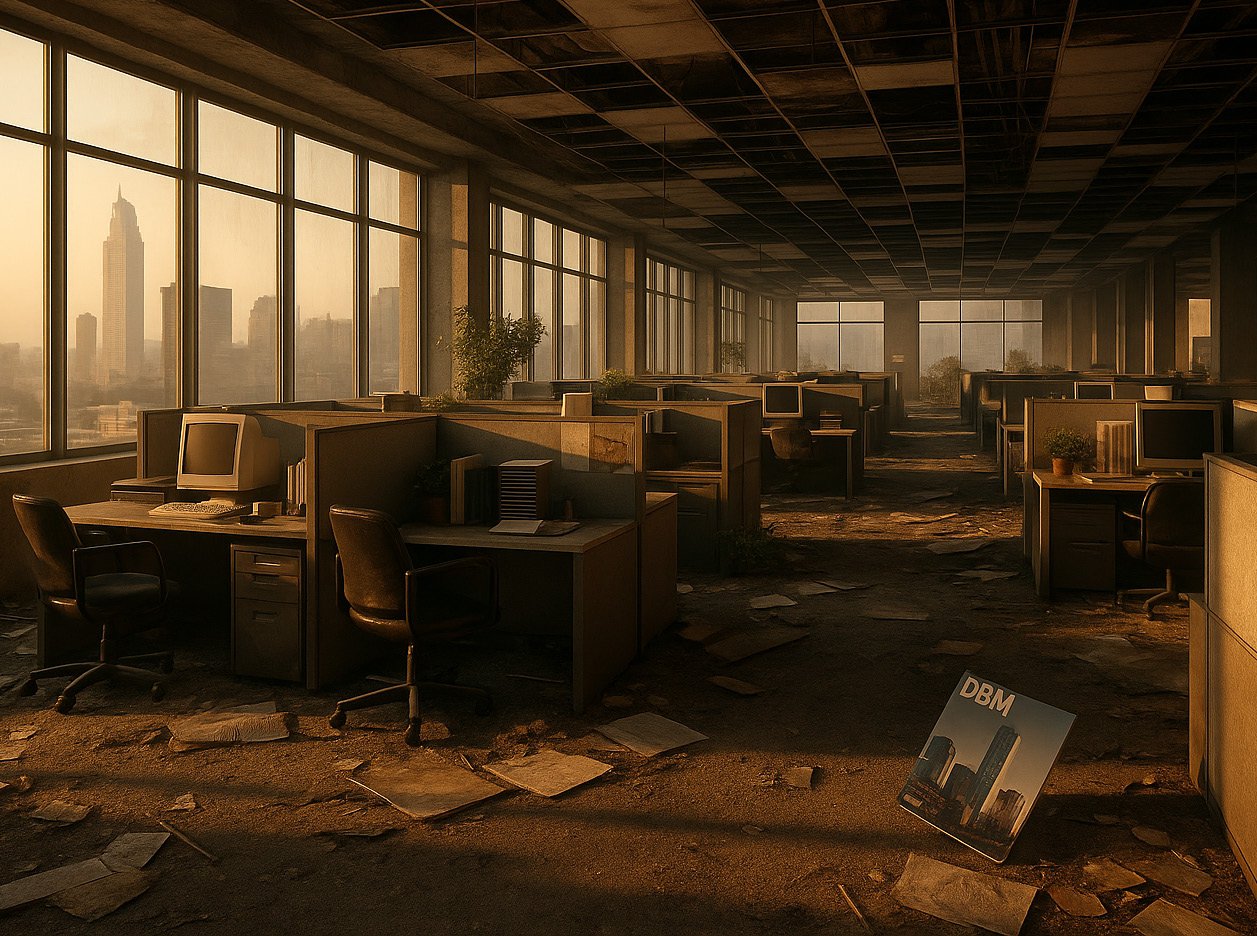
Across North America, something quietly catastrophic is unfolding. Approximately one in five commercial office buildings stands functionally empty—a vacancy rate that represents not merely underutilized square footage, but the architectural manifestation of a massive economic inflection point. These buildings are not new buildings awaiting tenants. They are mature assets—products of the 1990s and 2000s—designed for a world that no longer exists.
The financial mechanics are now inescapable. Commercial real estate loans originated between 2015 and 2017, when interest rates hovered near 3 percent, are hitting their maturity walls in 2025, 2026, and 2027. Refinancing is no longer a formality. At current rates between 7 and 8 percent—more than double the original cost of capital—thousands of properties can no longer service their debt. Covenants break. Values collapse. And the buildings themselves, once considered stable income-producing assets, become financial liabilities.
But the financial story masks a deeper architectural reckoning. These offices were not designed for flexibility. They were designed for density, for the meeting, for the command-and-control structure that dominated corporate culture two decades ago. Their floor plates are deep and inflexible. Their mechanical systems were built for the assumption of full occupancy, full-time. Their spatial hierarchies—the executive suite on the corner, the open bullpen in the core, the conference rooms distributed as controlled access points—all of it reflected a workplace philosophy that hybrid work has made obsolete.
The Moral Depreciation of Space
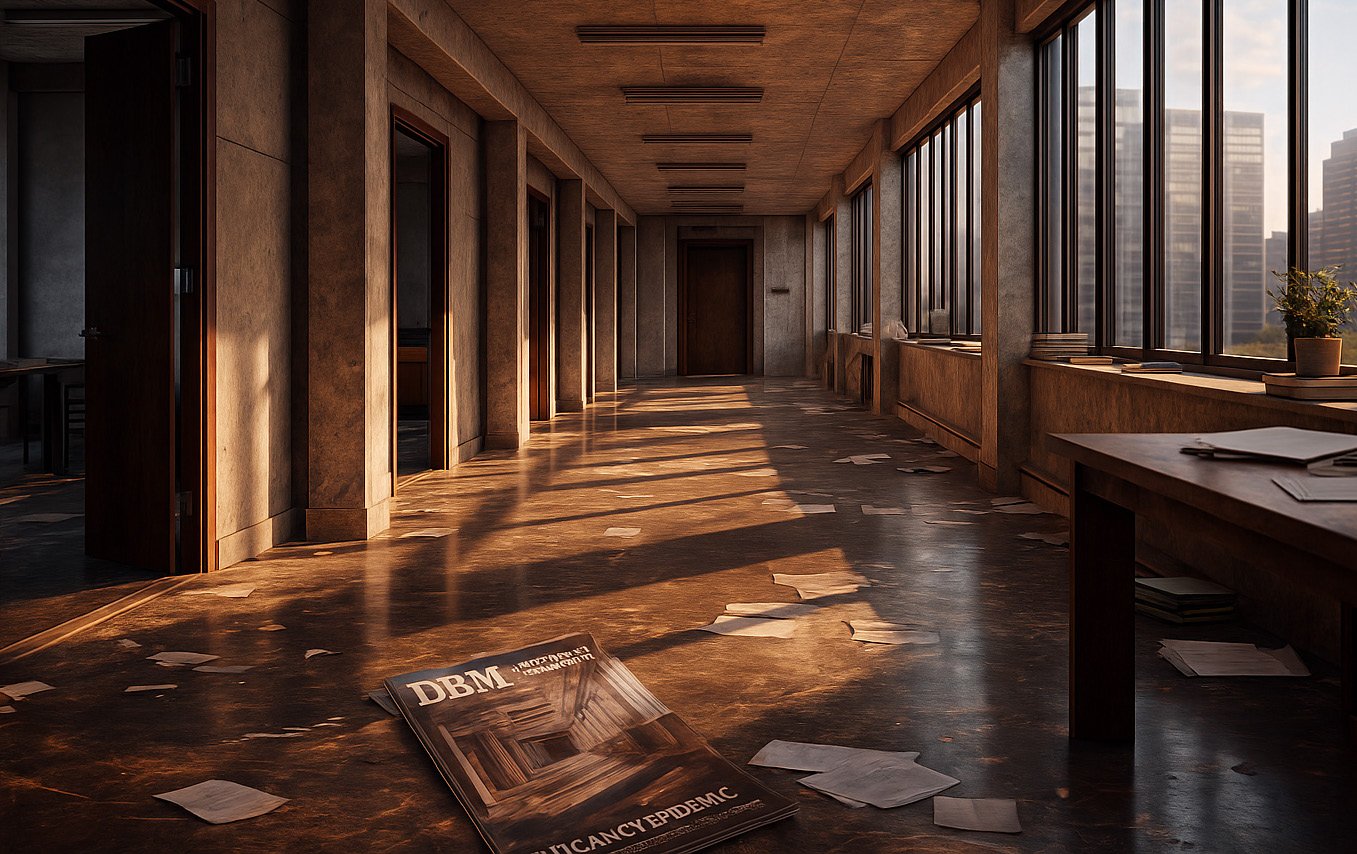
When a building sits empty, it does not simply stop generating revenue. It begins to decay, both materially and psychologically. Corridors empty of human presence become eerie. Lighting systems, originally calibrated for dense occupancy, now illuminate absence. The spatial hierarchies that once conveyed power and organization now read as abandonment. For any organization considering these spaces—even temporarily—the psychological weight is immense. You are not simply renting floor footage. You are inheriting the spatial signature of a world that failed to adapt.
This is not a problem that market correction alone will solve. The market is already correcting, brutally. Class B and Class C office properties across secondary and tertiary markets are experiencing unprecedented pressure. Owners face a choice: invest heavily in repositioning, or accept that the asset has reached the end of its productive life as configured.
What is remarkable—and what architecture must reckon with—is how quickly these buildings become invisible. Not physically invisible, but socially and economically invisible. The buildings that remain viable are those that acted decisively: premium properties in primary markets that invested in amenitization, in light, in flexibility. These properties—often rechristened, aesthetically reimagined—continue to command premium rents from companies that can justify the investment. Below them, the bifurcation deepens. Between the tier-one transformed properties and the tier-three warehouses, middle-market office space has become genuinely troubled.
Conversion, Not Preservation
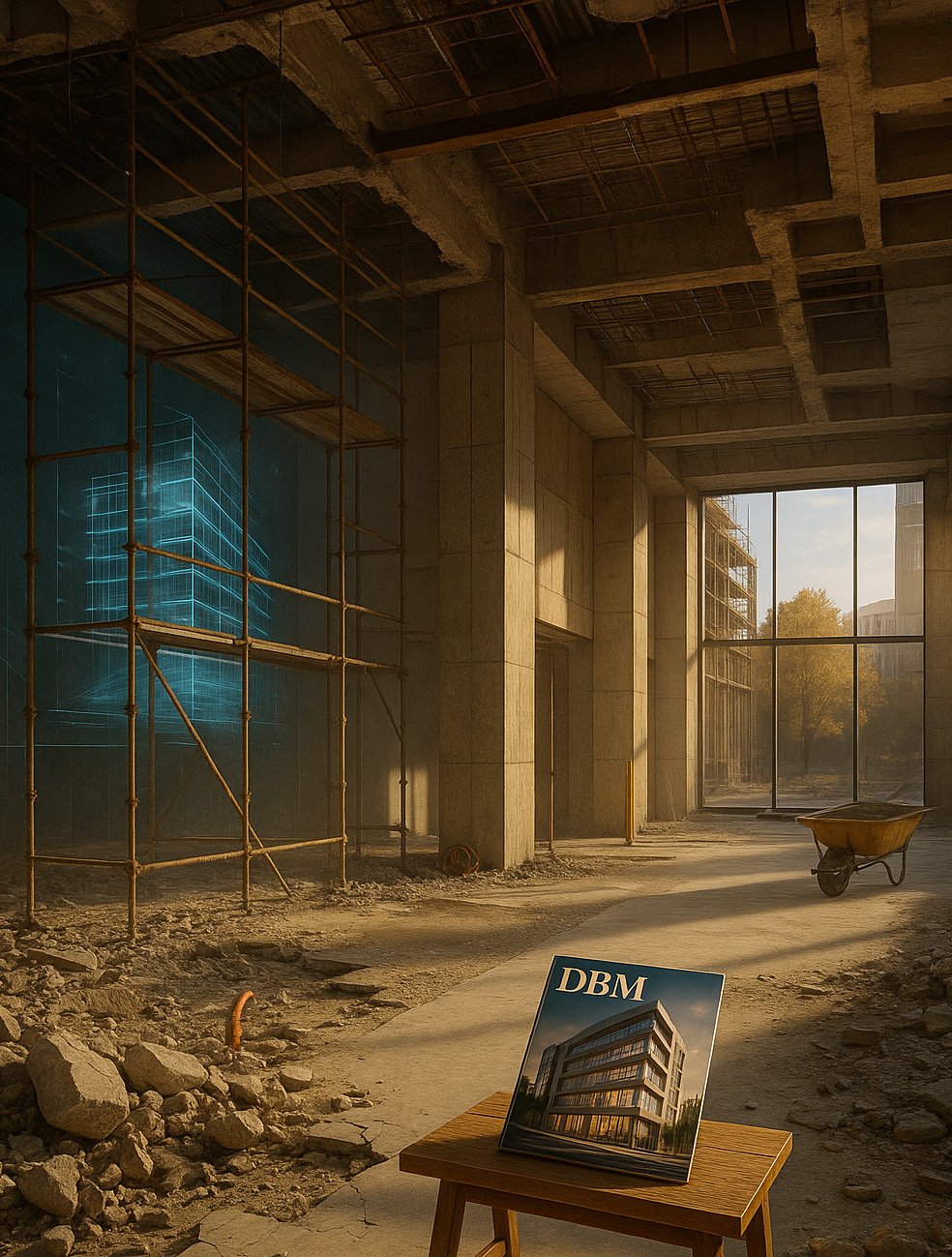
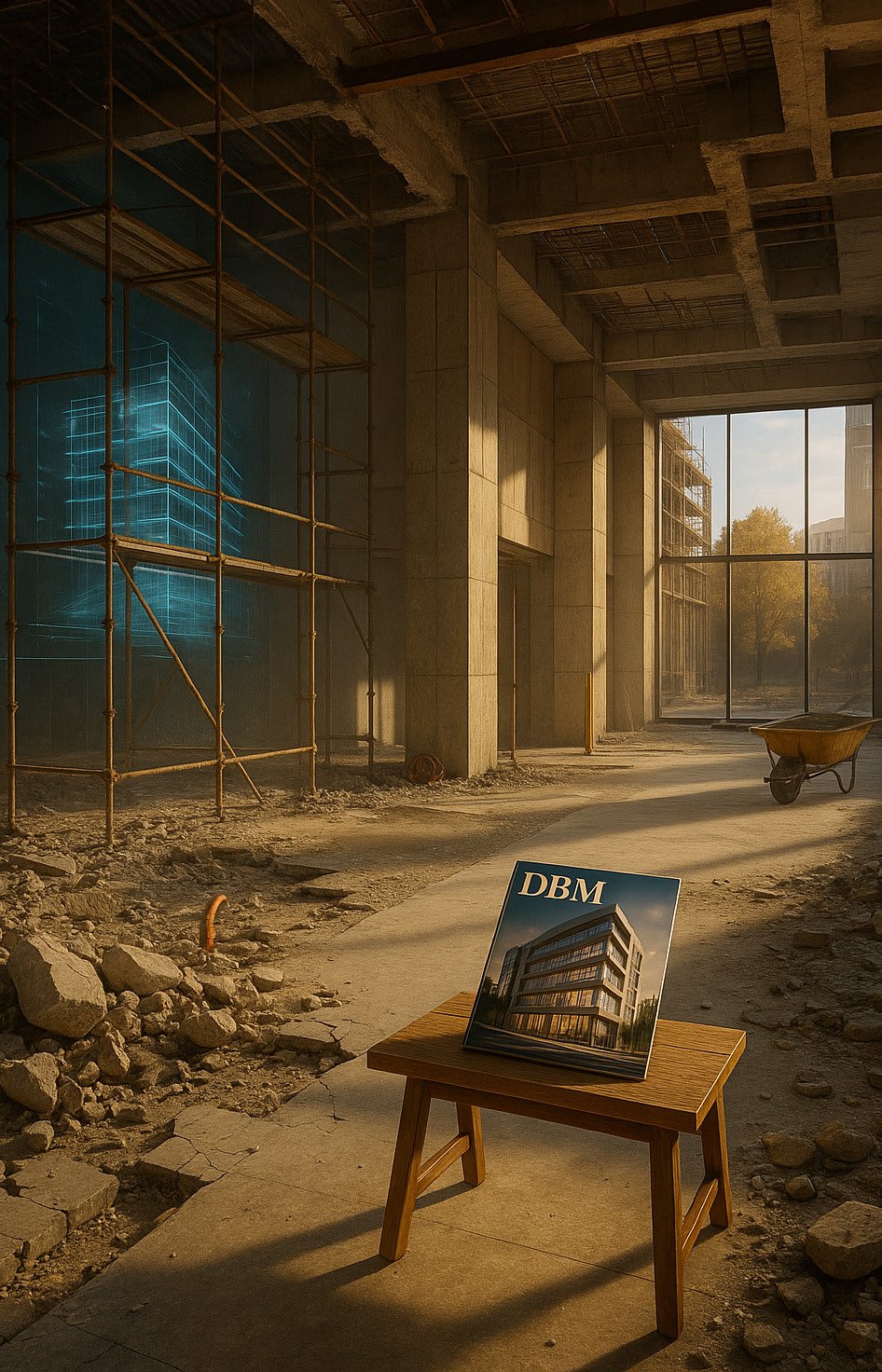
The capital that once built new offices is now redeploying toward conversion. Across major metropolitan areas, industrial office buildings are being reimagined as residential lofts, logistics hubs, light manufacturing spaces, and mixed-use developments. The economic calculus has shifted: preservation of the original program is no longer viable; transformation is the only path forward.
This matters at the civic level in ways that pure finance cannot capture. When large office buildings in secondary downtowns go dormant, the entire sub-market destabilizes. Ground-floor retail loses foot traffic. Adjacent parking structures become liabilities. The density that once animated an address evaporates. Entire blocks that were designed around the presence of working professionals now register as precarious, available, but untouched.
The visible cost is real estate depreciation. The hidden cost is a form of urban erosion—the slow collapse of the economic infrastructure that sustains neighborhoods. This is why conversion strategies matter. They force a reckoning with spatial purpose. A building that cannot be occupied as originally designed must be radically reimagined for a different program, a different density, a different relationship to its context. This is not merely real estate optimization. This is the reassignment of civic function.
Architecture at the Inflection Point
The buildings that will survive the maturity wall—not merely financially, but as relevant spatial experiences—are those designed with what might be called radical flexibility. Not the false flexibility of demountable partitions and generic finishes, but genuine spatial intelligence: the ability to function at multiple occupancy levels, the capacity to shift between intensive and sparse use, the design language that does not depend on density to carry meaning.
This is the inflection point for architecture. The buildings that do nothing—that are preserved as originally designed, that attempt to maintain their 2005 spatial logic in a 2026 market—will depreciate silently, efficiently, almost invisibly to those outside the real estate industry. The buildings that act—that are gutted and reimagined, that have their material language rewritten, that are converted to new programs with spatial intention—will transform visibly. They will become case studies. They will anchor neighborhoods. They will demonstrate that architecture remains a tool for recalibration, not merely preservation.
The reckoning underway is not a crisis of real estate alone. It is a crisis of spatial purpose. Billions in industrial office stock designed for a specific moment in corporate culture now face the question every building eventually must confront: What are you for now? The answer will be written in concrete, glass, and the bodies that move through these spaces once more.
What distinguishes this moment from previous downturns is the permanence of the structural shift. Previous recessions compressed occupancy temporarily; tenants returned when conditions improved. This time, the tenants have not merely departed—they have reorganized the fundamental relationship between work and space. The remote and hybrid configurations that accelerated during the pandemic have crystallized into permanent operating models. The demand that once filled these buildings is not delayed. It has been redistributed, dispersed across home offices, coworking spaces, and smaller satellite locations that bear no resemblance to the industrial office campuses of the prior era.
For architecture, the lesson is as old as the discipline itself: a building that cannot adapt to its moment becomes a monument to the moment it was designed for. The industrial offices now facing their hidden reckoning were monuments to confidence, scale, and permanence. They must now become something else entirely—or accept that their silence will speak louder than their steel.
Leave a Reply