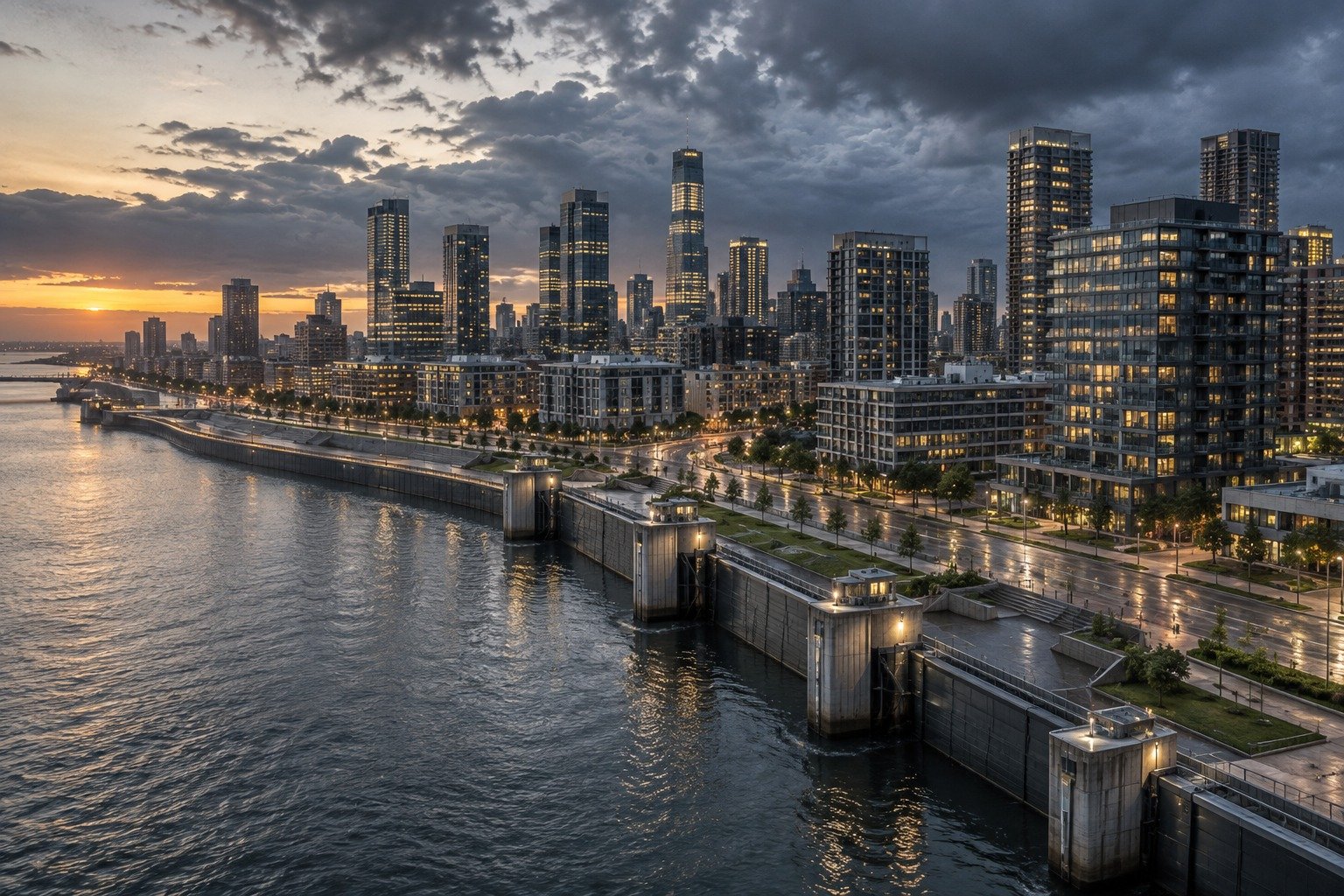
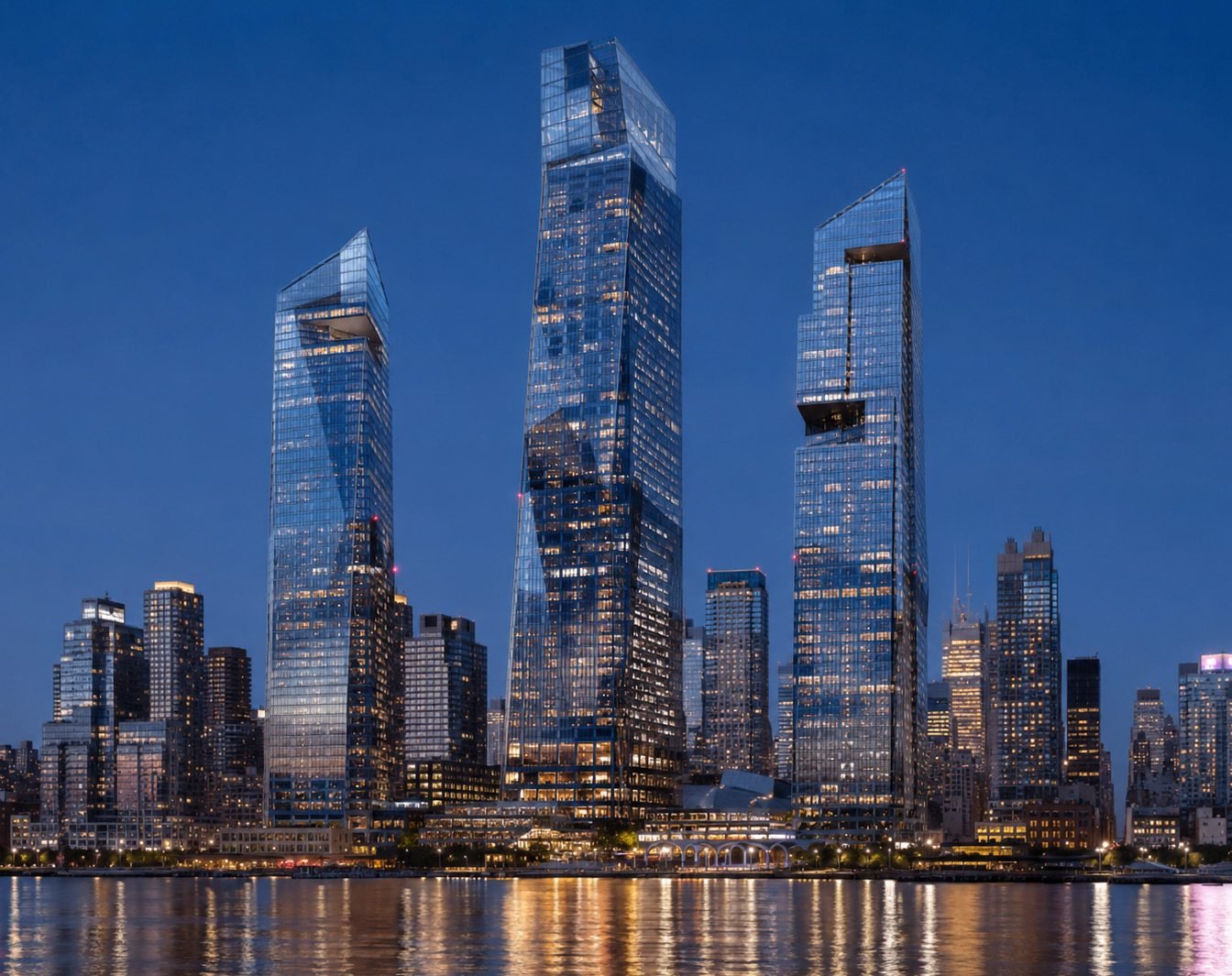
I did not come to Chicago to work. I came to look. When you spend your days in the architecture of federal visualization, translating built environments into computational intelligence, you learn to separate the two modes. Looking at a city to solve a problem is one discipline. Looking at a city to understand it is another entirely. Chicago required the second. I stayed at The Level on Superior Street, a real kitchen, room to live in, windows that face the city at a height where the skyline becomes the whole conversation. From that elevation, River North unfolds in layers, modern glass towers rising above streets still lined with original 1880s brick warehouses. The city does not present itself all at once. It reveals itself in strata, one era standing on the shoulders of the one before, none of them willing to disappear.
The Native Instinct for Density of Purpose
Chicago pioneered the green roof movement in America. In 2001, Mayor Daley installed a 20,300-square-foot living roof on City Hall, not for show, but because urban heat islands were measurable, expensive, and solvable. Looking down at them from above, those roofs read less like environmental policy and more like the city’s native instinct to add density of purpose to every available surface. Chicago does not leave things empty. It fills space with function the way other cities fill it with ornament.
The air off Lake Michigan is specific: sharp, directional, carrying a weight that reminds you the city was built at the edge of something enormous and geologically indifferent. Standing at the lakefront and looking back, you understand why Chicago’s architects built the way they did. They were not decorating a place. They were making an argument to a horizon. Every tall thing here is a sentence addressed to the lake and the flat land, a claim staked against a landscape that offered no natural drama of its own and therefore demanded that the drama be built.
The Conversation on West Ohio Street
West Ohio Street tells the whole story in a single frame. On both sides stand Chicago brick from the 1880s, two and three-story commercial buildings with corbeled cornices and arched windows. Behind those storefronts, filling the sky, rises a tower of dark glass and steel. The contrast is not jarring. It is the whole point. Mies van der Rohe arrived in 1938 as a refugee from Nazi Germany, took the chair of architecture at IIT, and rewrote the visual grammar of the American city. The dark glass tower behind those nineteenth-century storefronts is the conversation those two traditions have been having for over a century, and neither is finished talking.
At the base of the Marina City towers, I found myself reading the load path. Bertrand Goldberg’s cantilevered balconies create a shadow rhythm at height that modulates the entire visual field, a depth-of-field effect no flat facade produces. Goldberg designed Marina City in 1959 as a city within a city, and its circular floor plates were structural necessities that became the building’s identity. That is what the best architecture does. It solves a problem so specifically that the solution becomes the beauty, until you can no longer tell whether the form was chosen for how it works or for how it looks, because the two have fused into a single fact.
Designing for the Approach
The Tribune Tower makes a different argument. Howells and Hood won the 1922 international competition with a Gothic tower, and they understood something their competitors did not. They were designing for a specific viewing geometry. The Gothic crown is not legible at street level. It was built for the approach across the Michigan Avenue Bridge, framed and revealed at exactly the distance from which a person first sees it. It was a cinematic decision, made decades before the vocabulary of cinema entered architecture, and a century later the tower still commands that approach with the same authority its architects intended.
Away from the Loop, Chicago becomes a city of horizontal accumulation. The flat prairie grid, the two-and-three-flat residential buildings, the neighborhood water towers rising like quiet sentinels. Those towers, brick and stone pressure vessels built after the fire of 1871, predate the modern infrastructure that made them obsolete. The city kept them anyway, not out of sentiment but because removing them cost more than letting them stand. It is a pragmatic city’s version of preservation, and it may be the most honest kind. What survives here survives because it earned its keep, not because anyone declared it precious.
There is a philosophy of endurance buried in that pragmatism, and it is worth naming. Cities that preserve only what they consider beautiful end up curating themselves into museums, freezing a single chosen era while the living fabric decays around it. Chicago did something more durable. It let usefulness and cost decide, and in doing so it accumulated a genuine cross-section of its own history, the 1880s warehouse standing beside the 1959 tower standing beside the supertall, each retained because tearing it down was never worth the trouble. The result is a city that carries its whole past forward as working infrastructure rather than as heritage under glass. Resilience, it turns out, is less a matter of protecting the old than of never quite finding a reason to erase it.
As Many Cities as There Are Hours
At magic hour, those brick industrial buildings catch the light in a way no glass tower can match. Chicago common brick holds the last light longer, glowing from the inside the way fired earth does. Below the modern towers, the old loft buildings of the warehouse districts stand in their amber warmth, four and five stories of 1890s commercial brick that have outlasted every function they were designed to serve. Then, at blue hour, the city shifts registers entirely. The pre-war residential towers of the Gold Coast go warm from within, every window a rectangle of domestic light against carved stone. Next to them, the modern glass towers go electric blue. The city does not have one version of itself. It has as many as there are hours in the day.
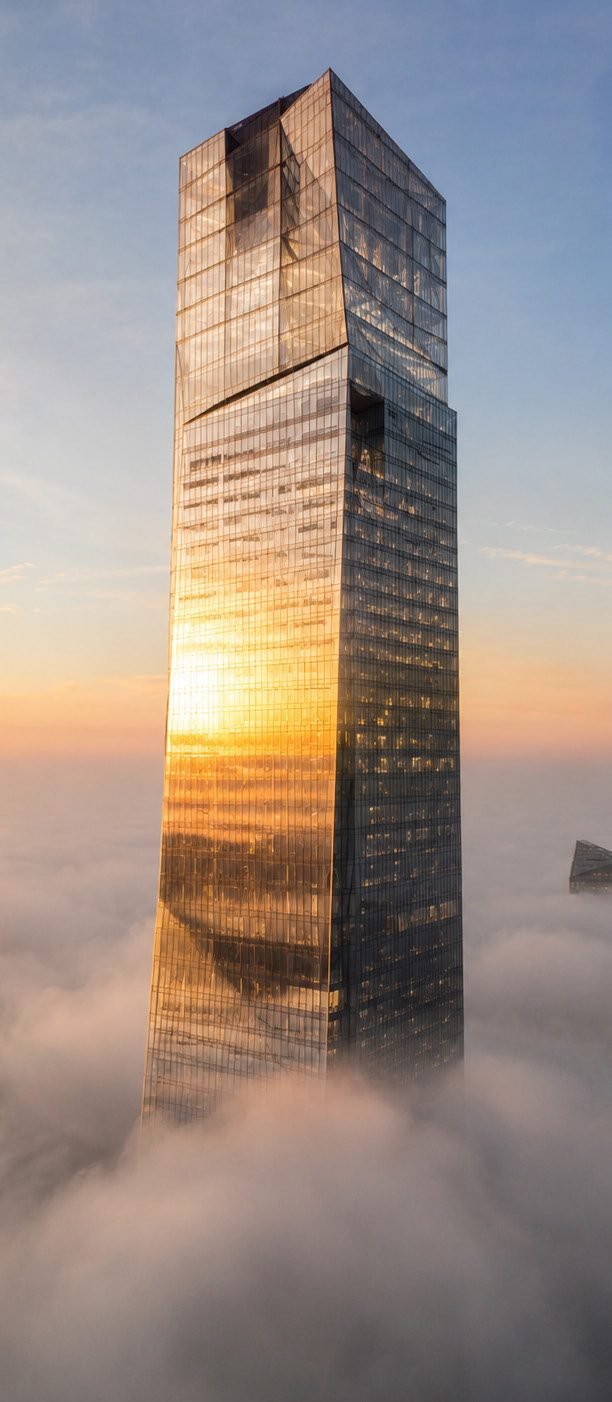
Willis Tower holds the skyline at every one of those hours. Twenty-five years as the tallest building in the world is not an accident. It is the result of a city that decided, after the fire, to build at the edge of what was structurally possible and then keep building until the possible became ordinary. That trajectory, from catastrophe to audacity to routine, is the whole biography of the place compressed into a single silhouette against the lake. And it is a biography written in structure rather than in slogan. The tower did not become tall by wishing to be admired. It became tall because engineers solved, one floor at a time, the problems that height imposes, and the admiration followed the solution rather than preceding it. In Chicago the sequence is always that way around. First the problem, then the answer, then, almost incidentally, the beauty.
Holding Its Ground
Chicago does not perform for you. It does not require your attention to feel real. It just stands there, having survived fire and economic collapse and every version of itself it had to outgrow, holding its ground the way people hold their character. Not by announcing it. By not letting it go. There is a lesson in that for every city now confronting a future that will test what it is made of, a lesson about the difference between the architecture that seeks to be noticed and the architecture that simply intends to endure. The most resilient cities are not the ones that shout. They are the ones that persist, layer upon layer, refusing to surrender any era to the next. I owe Chicago a proper return. This time, I stay longer, and I look harder, because a city that has held its ground for a century and a half has more to teach than a single visit can hold.
3D Transformative Digest — ISSN 3067-5510. Published by Modish Global Inc. © 2026 Modish Global Inc. All rights reserved. Licensed distribution only.
Leave a Reply