The Philosophy of Responsive Space
For centuries, the kitchen and bathroom remained fundamentally static. They were boxes optimized for task completion—efficient, rational, often soulless. The bath was a room where you washed. The kitchen was where you cooked. But this binary thinking obscured a deeper truth: these are spaces where the rhythms of domestic life unfold. Where rituals are performed. Where meaning accumulates.
Artificial intelligence is fundamentally rewriting this equation. Not through gimmickry or superficial automation, but through a deeper understanding of how humans inhabit space. The emerging paradigm positions kitchens and bathrooms as responsive environments—spaces that learn, adapt, and ultimately serve not just functional efficiency but emotional and psychological wellness.
This represents a seismic shift in how we conceive of domestic architecture. The kitchen and bath are no longer inert containers for activity. They are becoming intelligent partners in the rituals we perform within them.
Behavioral Optimization and the Grammar of Space
Computational design has enabled architects and designers to model not just physical space but behavioral flow. Through multiplicity modeling—the simultaneous iteration of dozens of spatial configurations against real human movement patterns—AI systems can now predict where friction occurs in kitchen workflows, where the bath’s user pauses for reflection, where ambient conditions need to shift to support different ritualistic moments.
Consider the kitchen island. Traditionally it was positioned for visibility and ergonomic convenience. But behavioral optimization reveals something deeper: the island is not merely functional. It is psychological. It is where family members gather. It is where conversation happens. Where meal preparation becomes performance. Computational analysis of how light falls across the island, how proximity to appliances affects workflow, how thermal comfort shifts throughout the day—these inputs allow AI-assisted design to configure spaces that anticipate human need before that need is consciously registered.
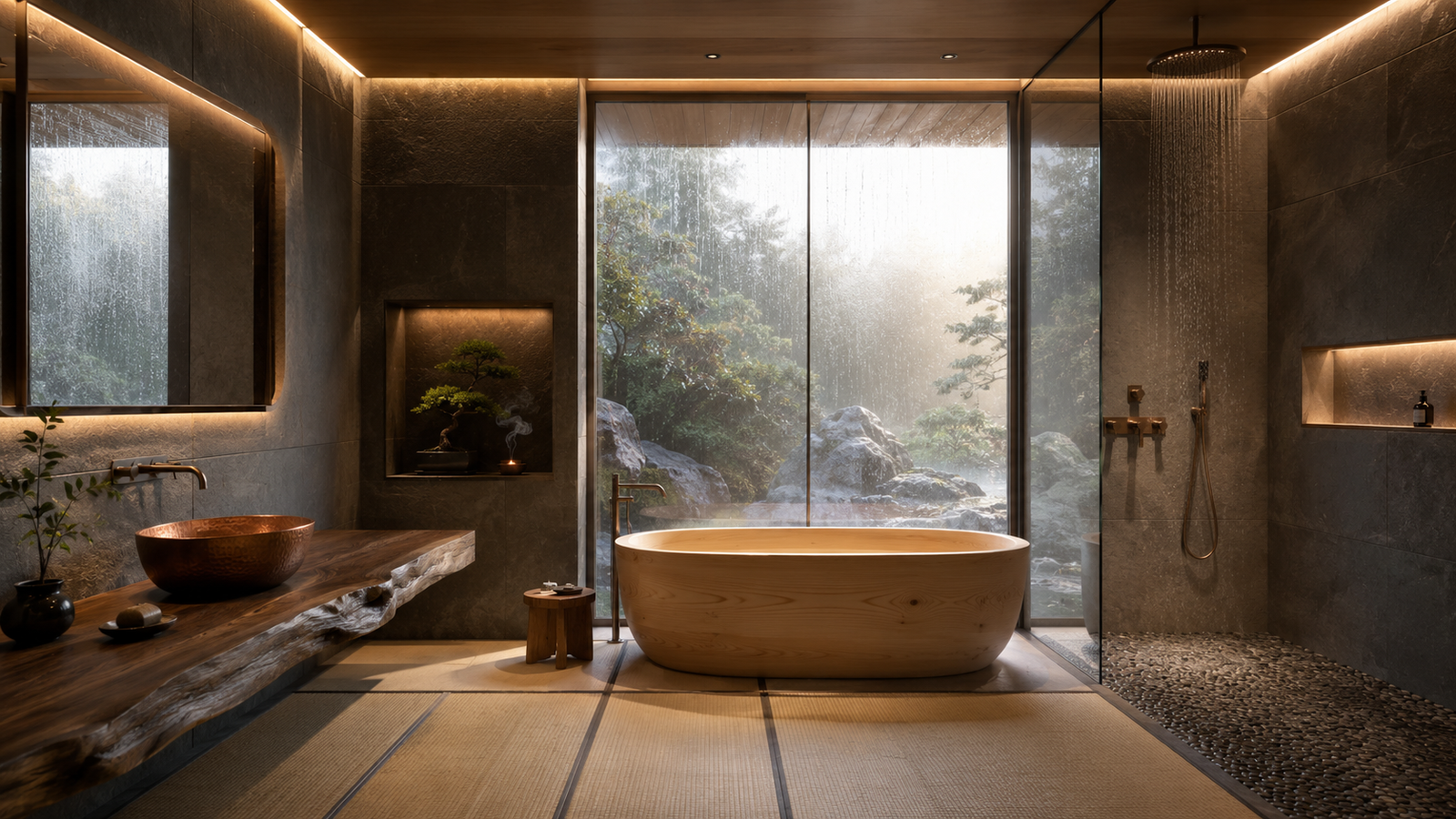
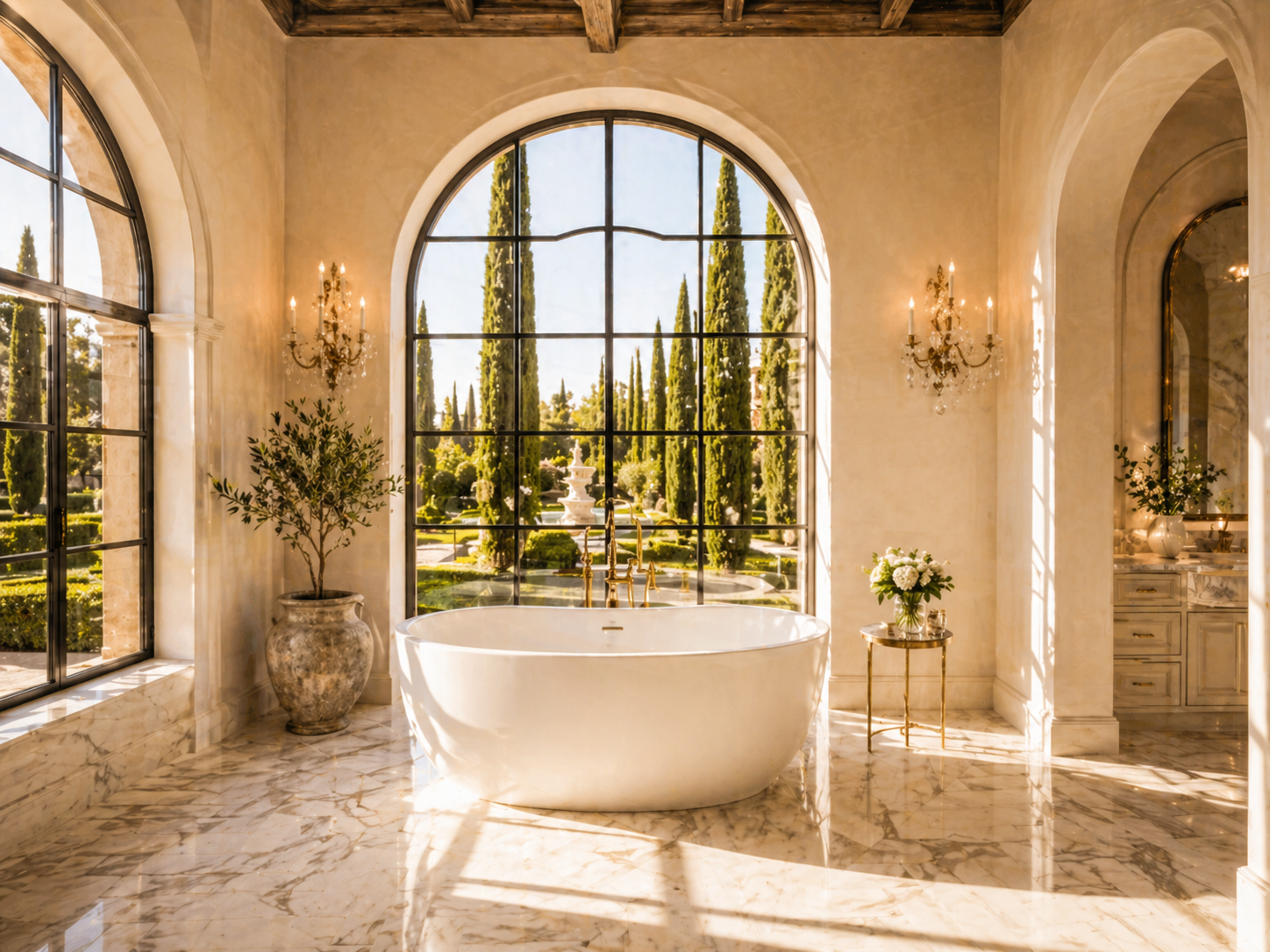
The same principle applies to the bathroom. For millennia, bathing has been understood as ritual—from Japanese onsen ceremonies to Roman spa culture to contemporary wellness practices. Yet most bathrooms are designed without regard to the psychological or ritualistic dimensions of bathing itself. Behavioral optimization changes this. AI systems can model optimal water temperature exposure, ideal humidity gradients, light patterns that support circadian alignment, even acoustic properties that create meditative silence or supportive ambience.
Cultural Identity as Infrastructure
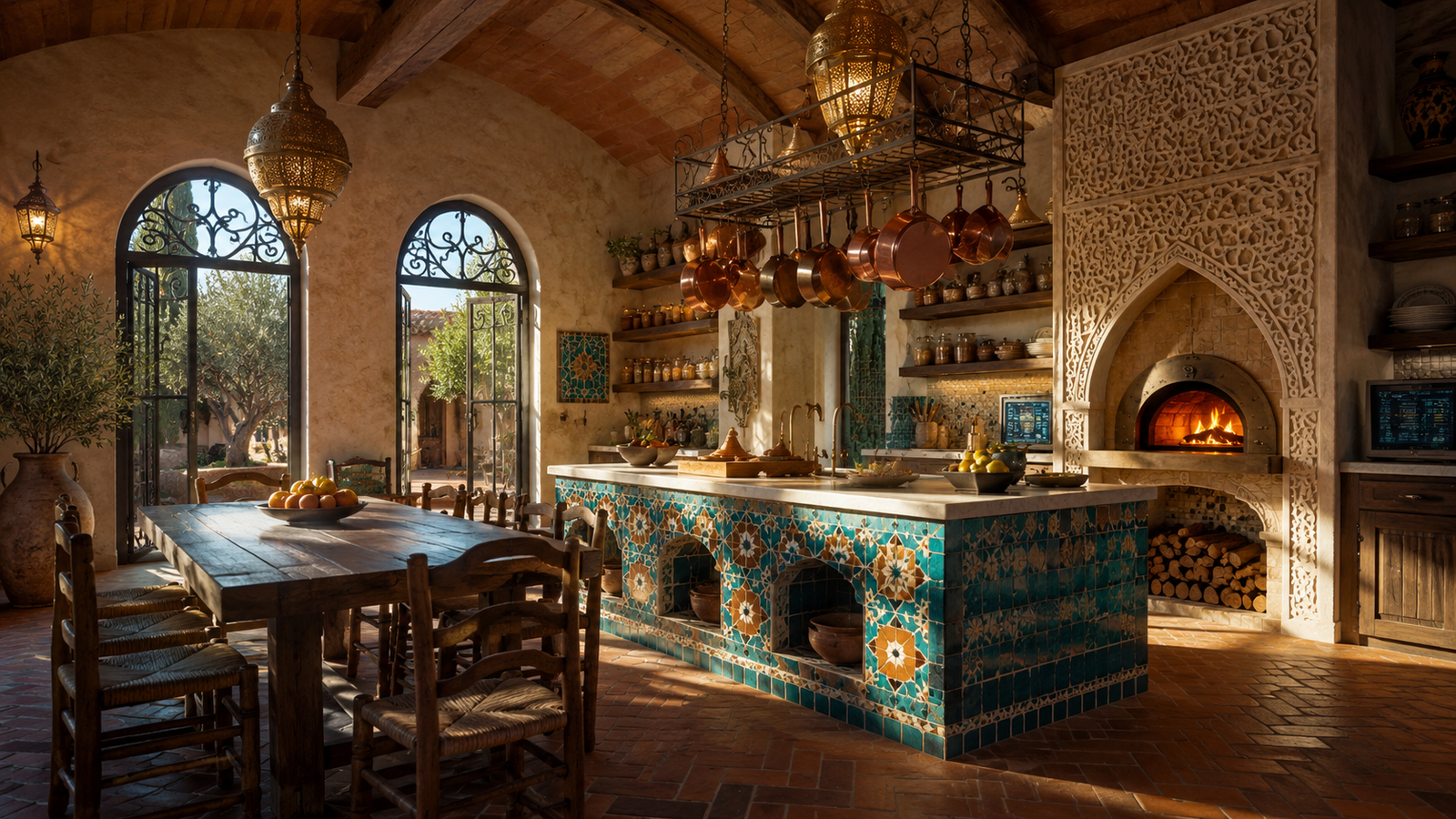
The second vector of transformation is cultural. Kitchens and bathrooms are not culturally neutral. They are repositories of identity, tradition, and collective memory. A Japanese kitchen embodies different spatial hierarchies, different relationships to appliances, different understandings of what “efficient” means compared to a Moroccan riad kitchen or a Scandinavian design ethos.
Traditional design practice often flattened these differences into superficial aesthetic choices—a tile color, a cabinet style, perhaps a cultural reference in decor. But generative AI enables something far more sophisticated: the translation of cultural design languages into spatial logic. An algorithm trained on Japanese kitchen traditions doesn’t merely apply Japanese aesthetics to a Western kitchen box. It understands the underlying spatial principles that govern Japanese domestic space—the relationships between preparation, cooking, and service; the integration of nature through materials and light; the philosophical relationship to utility itself.
This capacity for cultural translation is transformative. It means that a kitchen or bath can authentically express cultural identity while adapting to contemporary life, local building codes, and modern appliance technology. The cultural and the contemporary are no longer in tension. They merge through computational mediation.
Wellness as Architectural Infrastructure
The third dimension is wellness. The kitchen and bathroom have been recognized as wellness spaces—places where health and well-being are cultivated. But this has traditionally been understood narrowly: good ventilation for air quality, or a soaking tub for relaxation. AI-assisted design expands wellness into a comprehensive architectural infrastructure.
Consider light. For the kitchen, Cinematic Intelligence™ modeling allows designers to compute optimal light conditions for different times of day, different tasks, different psychological states. Morning light for activation and clarity. Midday light for performance and focus. Evening light that shifts toward warmer frequencies to support circadian alignment and the psychological transition from work to domestic rest. The same precision applies to the bathroom—light modeled not just for functional visibility but for the restorative qualities needed in a bathing space, the psychological signaling required for morning activation or evening unwinding.
Thermal comfort becomes similarly granular. Air movement patterns can be computed to eliminate hot spots and cold pockets. Humidity can be managed to support both respiratory health and the sensory qualities of the bathing experience. Even sound—traditionally an afterthought in domestic spaces—can be modeled as a component of wellness. AI systems can predict acoustic properties and recommend interventions that create either focused silence or supportive ambient sound depending on the room’s primary ritual.
The Bath as Algorithmically Personalized Sanctuary
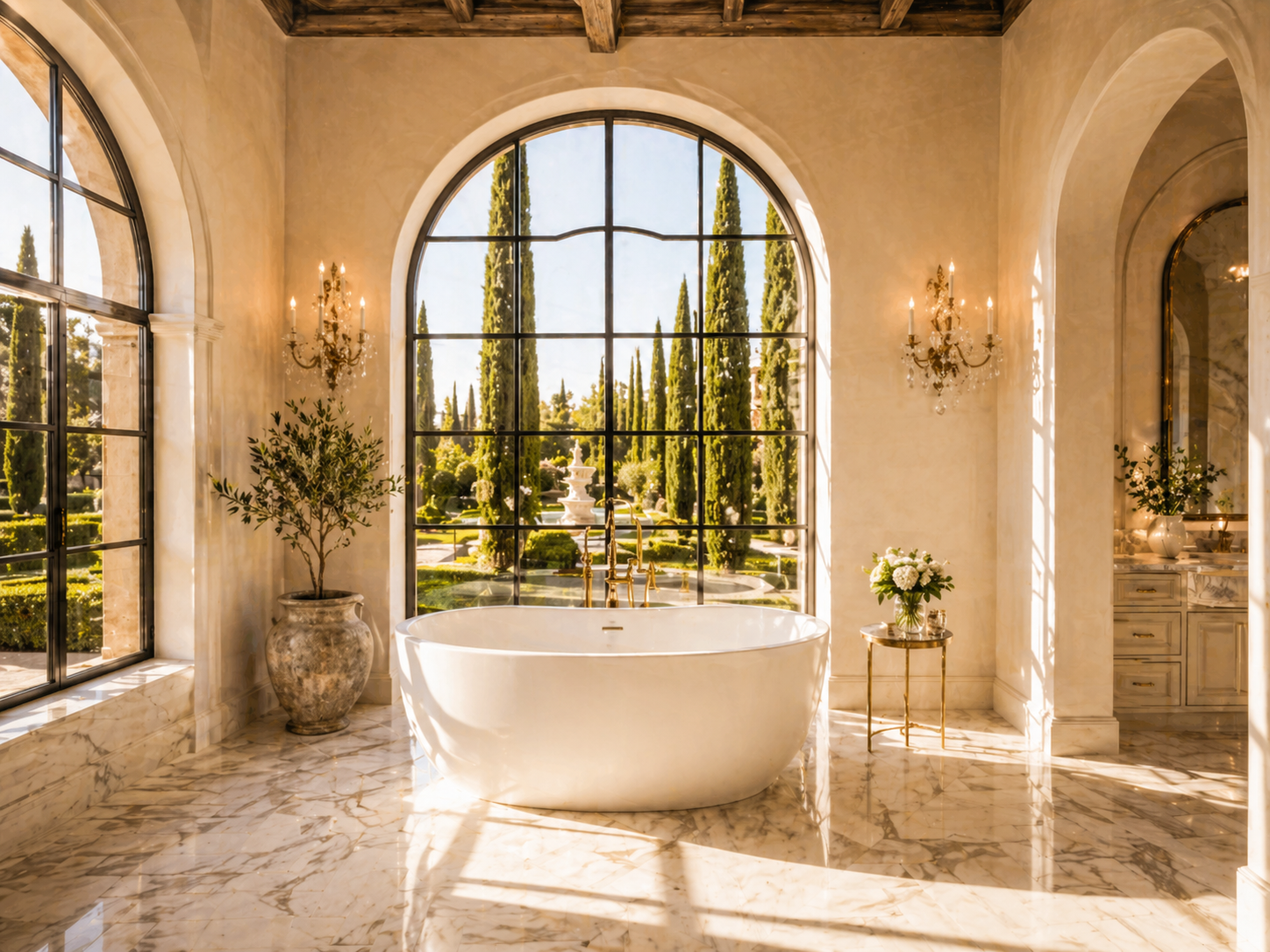
In the most sophisticated implementations, the bathroom becomes a personalized sanctuary—a space that adapts not just to activity but to individual psychological and physiological states. Smart BIM integration allows real-time adjustment: water temperature optimized for the user’s circadian position; lighting responsive to the user’s stress biomarkers; material selection chosen for its therapeutic acoustic and thermal properties.
This is not futurism. Adaptive visualization engines are already capable of rendering these scenarios, of showing designers and clients how a bathroom might respond across different use cases, different times of day, different physiological states. The infrastructure is emerging. The philosophy is crystallizing.
Toward Emotionally Intelligent Domestic Space
The deeper significance of AI in kitchens and bathrooms is not technological but philosophical. It represents a shift from seeing domestic space as static container to seeing it as a partner in human flourishing. The kitchen is no longer merely where food is prepared—it is where family rituals unfold, where cultural identity is performed, where the everyday becomes ceremonial. The bathroom is no longer merely hygienic—it is a sanctuary where the day is ritually shed, where the body is cared for with intention, where restoration occurs.
AI-assisted design, working through multiplicity modeling and adaptive visualization, enables architects to honor these deeper dimensions. Not through superficial added features, but through fundamental reimagining of how space can be organized, how light and material and thermal condition and acoustic properties can be orchestrated to support the psychological and ritualistic dimensions of domestic life.
The Vervaine Estate transformations demonstrate this principle across twenty-two design languages. Whether the kitchen expresses Brutalist severity or Spanish Colonial warmth, whether the bath embodies Japanese Zen restraint or Moroccan sensuality, the underlying logic is the same: space as a responsive, intelligent partner in the rituals that constitute home.
This is the future of domestic architecture. Not smarter kitchens. Not more connected bathrooms. But spaces that recognize what they have always been meant to be: sacred rooms where the rhythms of life are performed, ritually, with intention, supported by infrastructure that understands that human flourishing requires more than efficiency. It requires beauty, ritual, cultural authenticity, and spaces that respond to our deepest needs without us having to ask.
Leave a Reply