Water, Ritual, and the Grammar of Stillness
The bathing room occupies a unique position in domestic architecture. It is perhaps the only space explicitly dedicated to solitude, to the transition between states, to the body’s meeting with water. Across centuries and cultures, bathing has been understood not merely as hygiene but as ritual—a structured encounter with elemental forces that transforms the bather psychologically, spiritually, and physically.
The Vervaine Estate’s ten bathroom transformations begin from this recognition: the bath is a ritualistic space. The design brief is therefore not merely functional but ceremonial. How does a bathing room invite stillness? How does it honor the particular cultural understanding of what bathing means? How can architectural form amplify the psychological and sensory dimensions of the bathing ritual?
Across ten distinct design languages, the Vervaine bathrooms demonstrate that the answer to these questions shifts radically depending on cultural context. Water means different things in different traditions. Ritual takes different forms. Stillness is cultivated through different architectural logics.
Traditional: Restraint and Formality
The Traditional bathroom embraces historical protocols of formal domestic space. Fixtures are classical in proportion—pedestal sinks, freestanding bathtubs with period-appropriate hardware, mirror frames in wood or brass. Walls feature wainscoting or tile work in conservative patterns. Lighting is soft and diffused, often via sconces flanking the mirror. The material palette is restrained: white or cream tile, polished wood, brass accents. The overall impression is of sanctuary—a room of stillness and order, where the body’s privacy is respected through architectural formality and careful material curation. The ritual here is one of restraint, of private ceremony within a formal envelope.
Spanish Colonial: Warmth and Earthiness
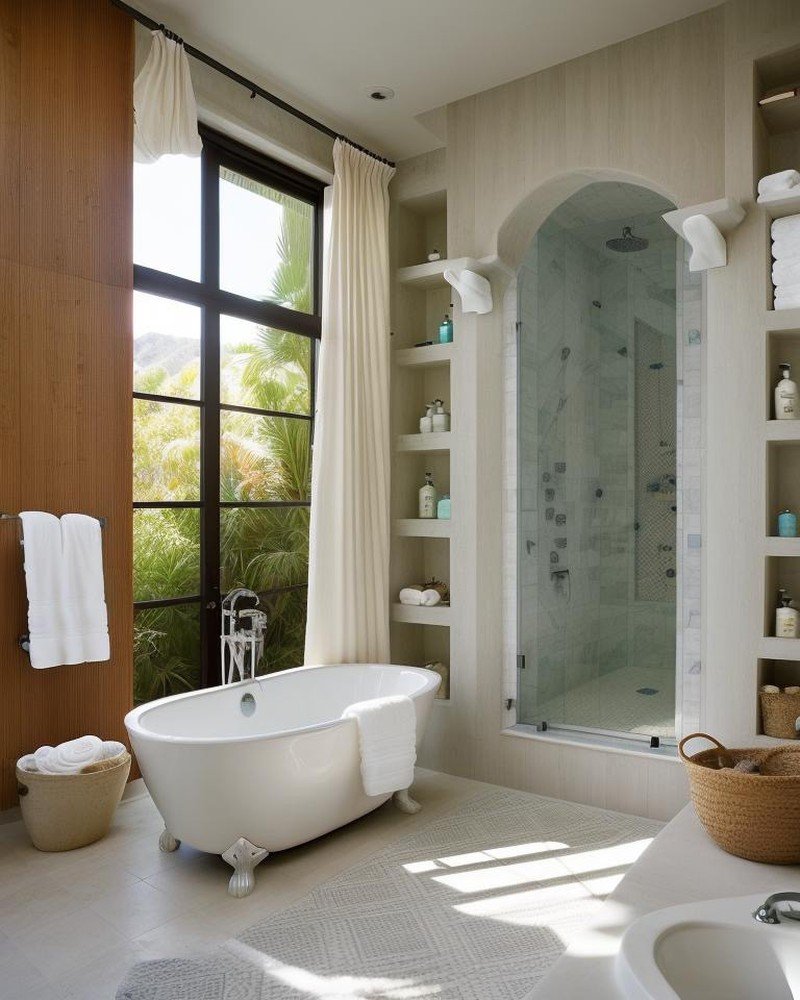
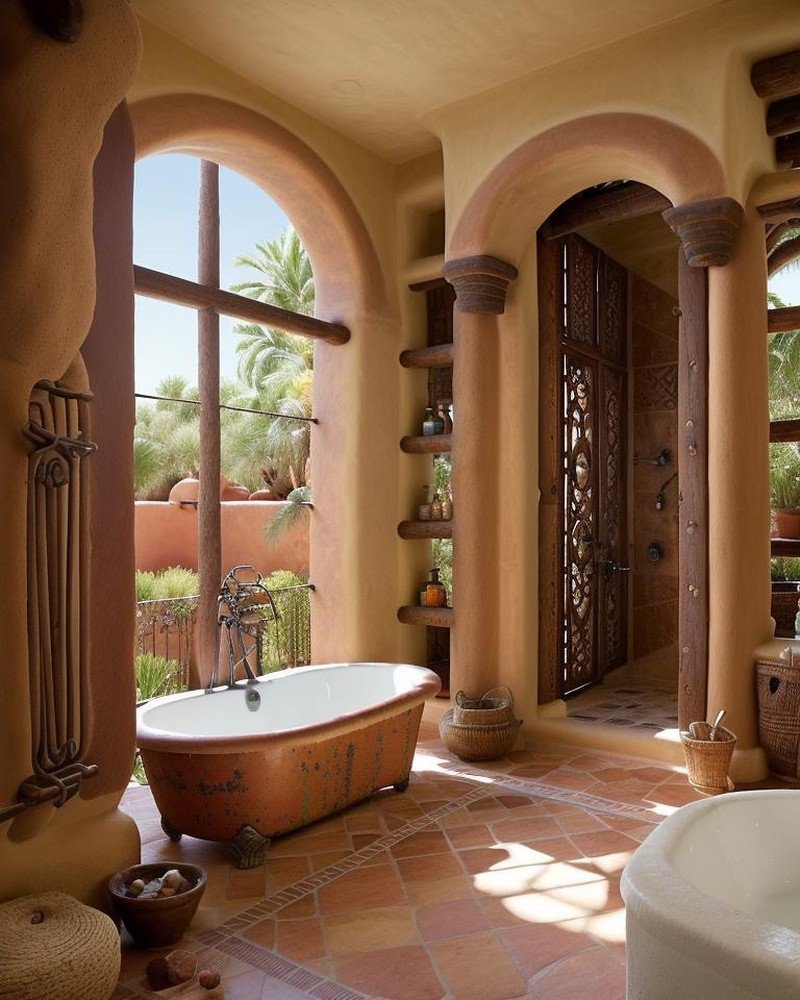
Spanish Colonial introduces material warmth and the sensory language of Mediterranean tradition. Expect hand-glazed tile work, possibly in ochre, terracotta, or deep blue tones. The bathtub may be a custom form, possibly sunken, carved from stone or tiled. Walls showcase terracotta or rustic plaster finishes. Copper fixtures, patinated or bright, introduce gleaming warmth. Arched niches carved into walls create places for candles, ritual objects, or purely compositional purposes. Flooring is likely saltillo tile or similarly textured material. The lighting is warm and layered—perhaps candle sconces alongside subtle electric light. The ritual here is one of sensory immersion—water, warmth, the texture of earthen materials, the scent of copper and clay.
Rustic: Elemental Authenticity
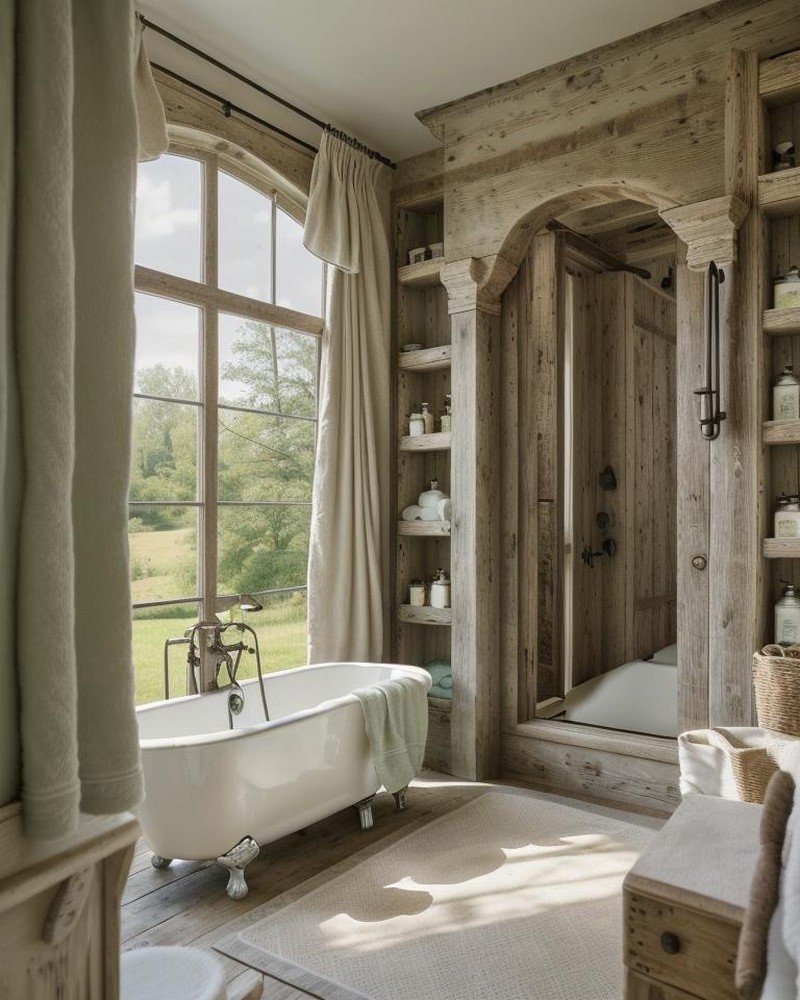
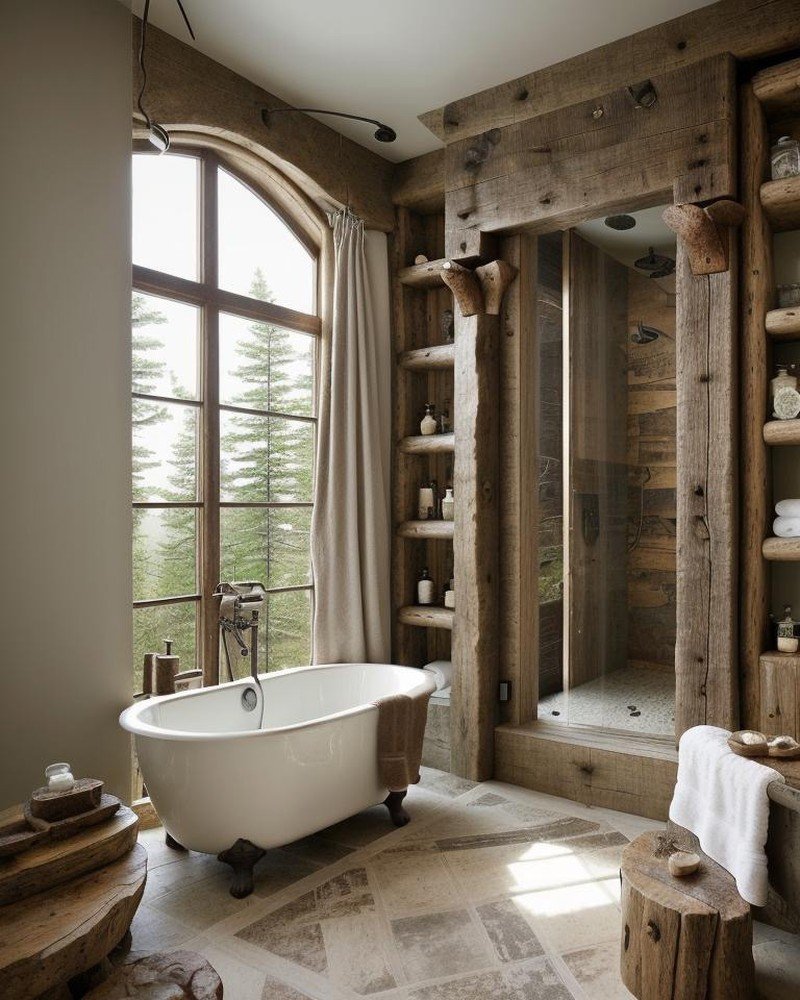
Rustic strips away formality in favor of elemental honesty. Stone walls, possibly rough-hewn or left in natural state, become primary architectural elements. The bathtub may be a simple form, possibly carved from a single piece of stone, or lined with slate. Fixtures are minimal, possibly visible pipes and simple valve mechanisms. Flooring is likely large-format natural stone, possibly unpolished or only lightly finished. Lighting is minimal—perhaps simple sconces or openings to allow natural light. There is deliberate primitivism here: the ritual is reduced to its essence. The encounter is with water, stone, and elemental form. Comfort is present but secondary to authenticity of material and form.
Japanese Zen: The Philosophy of Emptiness
Japanese Zen introduces a fundamentally different spatial logic. The bathroom becomes a meditation space. The soaking tub is central—often a small, deep form carved from hinoki wood, positioned to command spatial focus. Materials are natural and restrained: wood, stone, possibly ceramic or concrete. The color palette is monochromatic or near-monochromatic: grays, blacks, warm taupes. Lighting is carefully controlled, possibly featuring shoji screens or adjustable diffusion that allows the quality of light to shift. The ritual here is one of deliberate slowness, of water temperature as meditation, of the body’s immersion as a transition into stillness. Every element serves the purpose of cultivating what Zen philosophy calls “emptiness”—the removal of distraction, the achievement of presence.
Chic Contemporary: Purity and Geometry
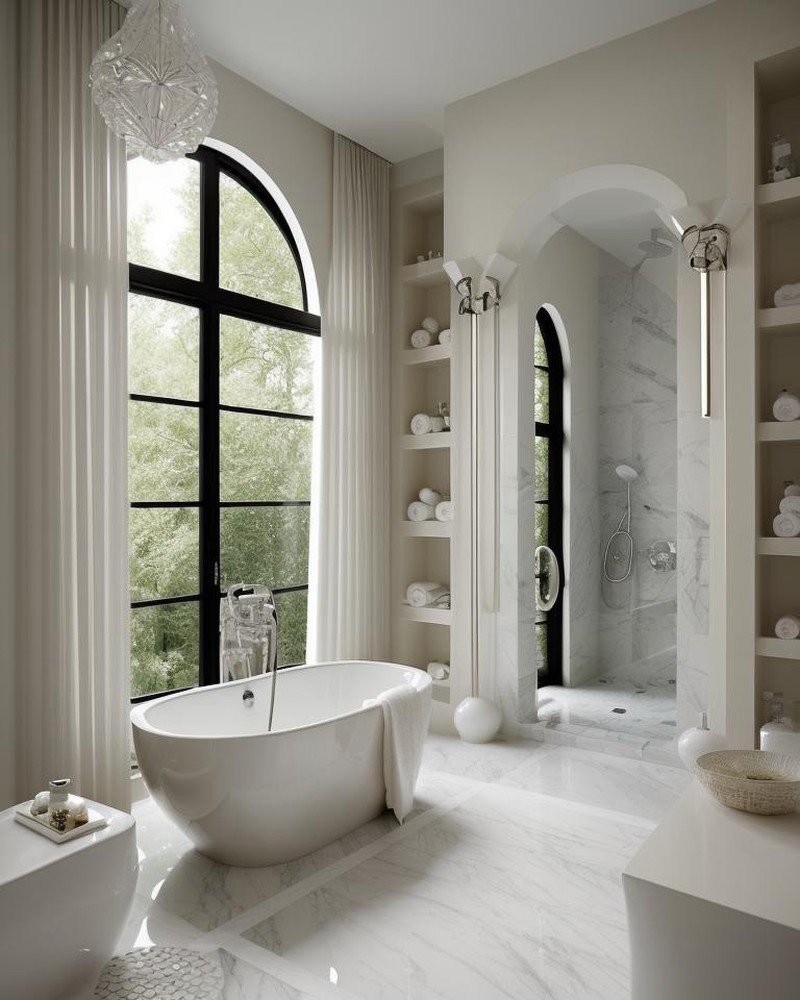
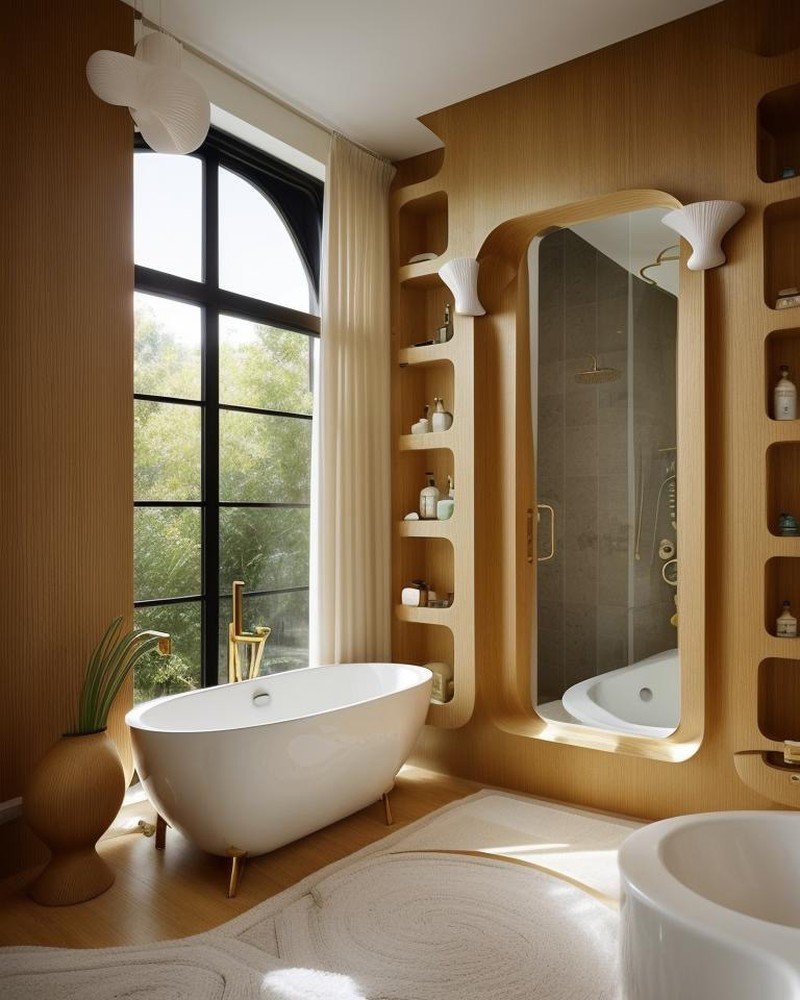
Chic Contemporary abandons historical reference for precision and material purity. The bathtub is likely a sculptural form—possibly a custom rectangular soaking bath in white lacquer or matte finish. Walls are probably finished in polished plaster or seamless concrete. The vanity is minimal, possibly a single slab of white oak or light marble. Fixtures are contemporary in proportion—often handles-free, integrated into the wall, geometric in form. Lighting is integrated—possibly LED strips or recessed fixtures that disappear into the architecture. The material palette is restrained: whites, grays, natural wood tones. The ritual here is one of clean lines and visual clarity—the room itself becomes meditative through its purity of form and restraint from decoration.
Brutalist: Monumental Materiality
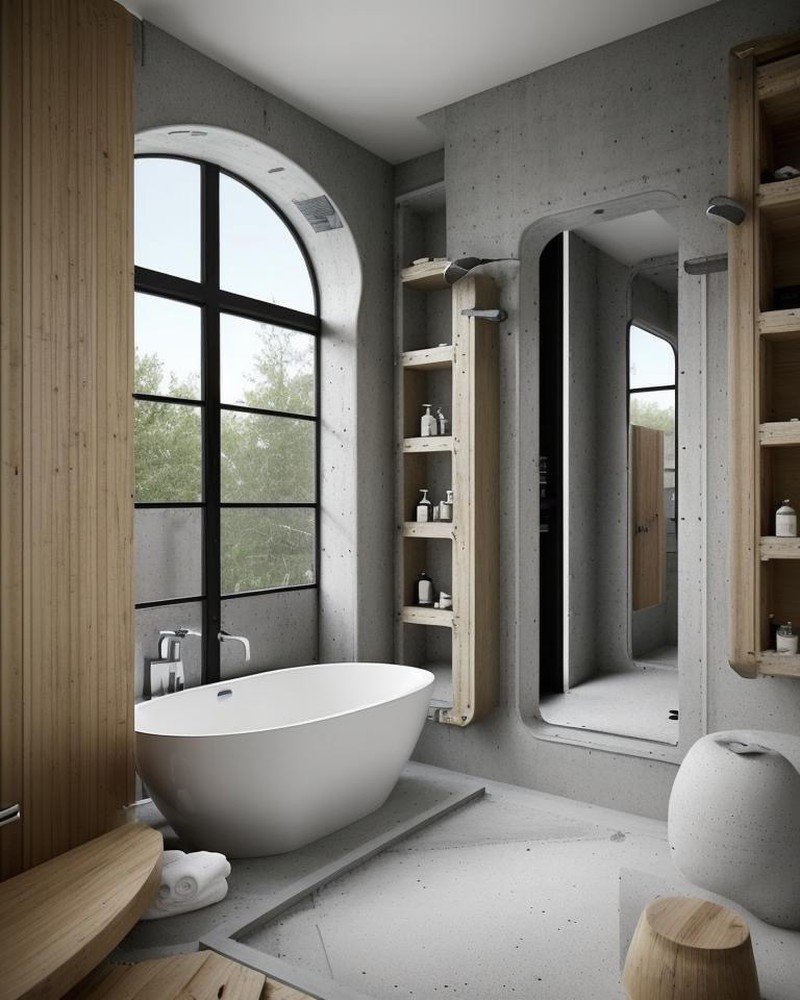
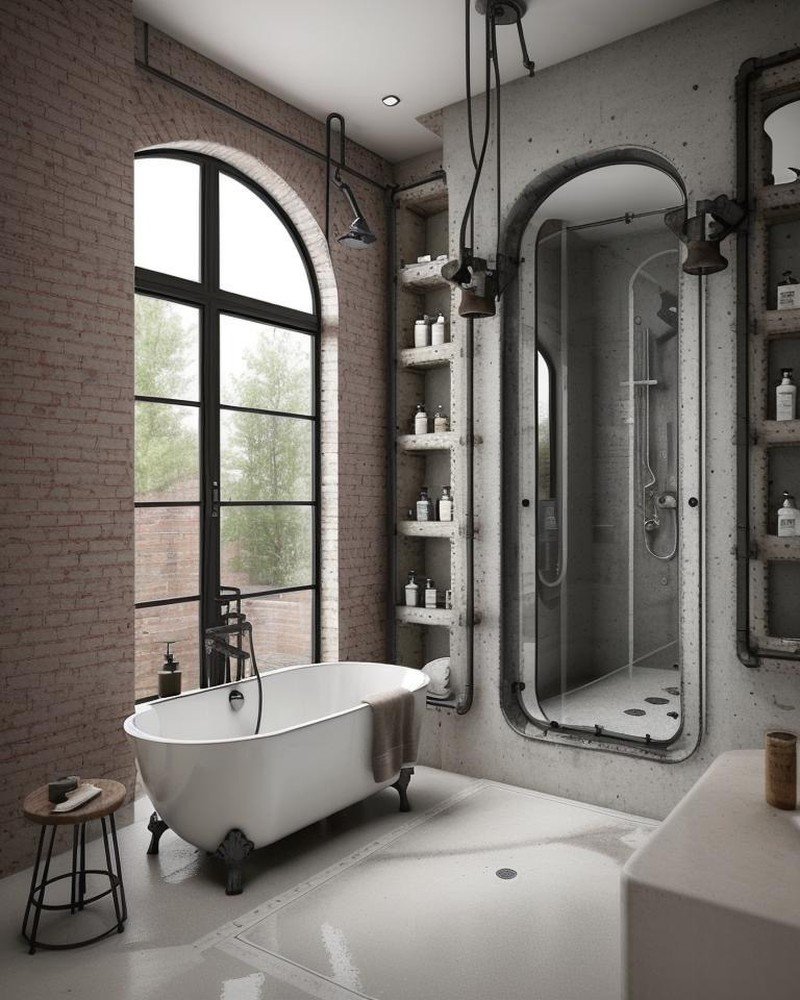
Brutalism positions the bathroom as sculptural statement. Concrete walls, possibly exposed aggregate or finished in a way that celebrates the material’s weight, form the primary surface. The bathtub may be carved from or built atop a concrete mass, creating an integrated monumental form. Fixtures are minimal—possibly just visible pipes and simple hardware, leaving functional systems exposed. Flooring is polished concrete. Lighting is deliberately minimal, positioned to emphasize shadow and form. The ritual here is not comfort but confrontation—the bather is immersed in a space that asserts its own materiality, that positions the body within a larger architectural presence. Comfort is subordinate to the space’s formal authority.
Moroccan: Sensory Abundance and Water Play
Moroccan design language embraces ornamental richness and the sensory celebration of water. Tiled surfaces feature intricate geometric or floral patterns, often hand-glazed in jewel tones—deep blues, teals, warm ochres. The bathing room becomes a riad—a central space from which water flows, where multiple bathing zones exist in proximity. Carved plaster details, possibly incorporating zellige tilework, create visual richness. Brass or copper fixtures are ornate, catching and reflecting light. Lighting is layered and warm—possibly including arched niches where candles can be positioned. The floor may feature a floor drain allowing water to move throughout the space. The ritual here is one of sensory immersion and abundance—water not confined to the tub but celebrated throughout the space, tiles and surfaces creating an environment that delights the eye while supporting the body’s encounter with water.
Bohemian: Eclecticism and Layered Meaning
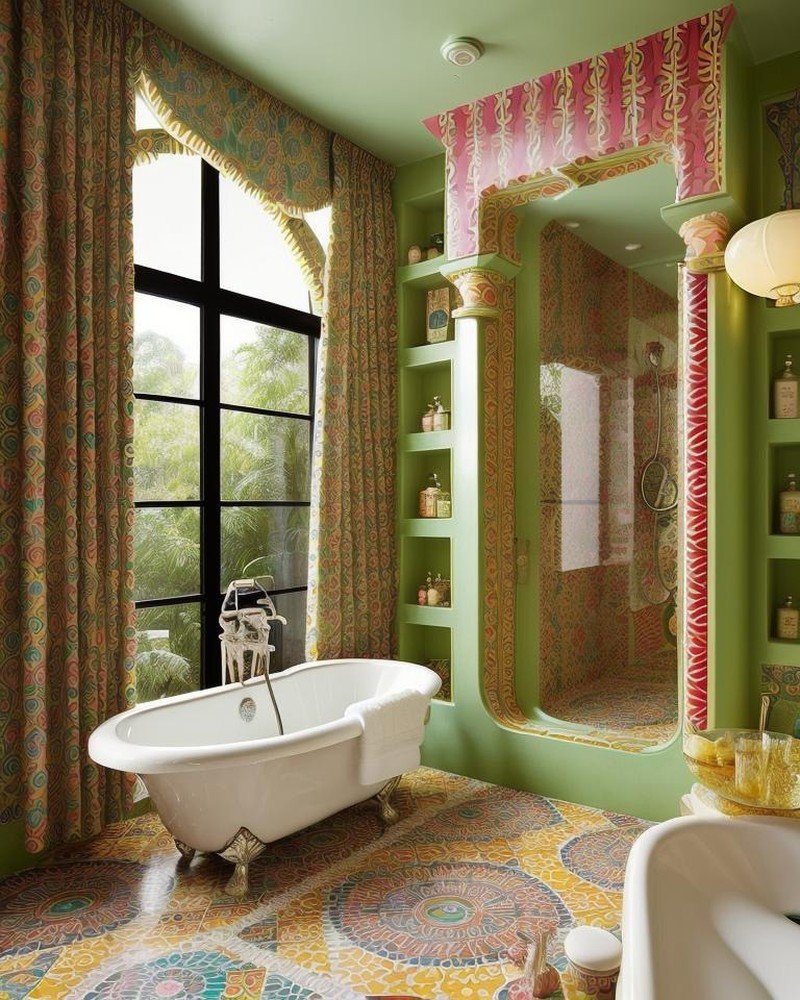
Bohemian abandons stylistic purity for eclectic layering. Expect a mix of vintage and contemporary elements, possibly a vintage claw-foot tub alongside modern fixtures, textiles introducing color and warmth, mirrors in varied frames, shelving displaying collected objects. Walls might feature wallpaper, paint in unexpected colors, or mixed materials. Lighting is non-uniform—perhaps a statement chandelier, vintage sconces, and diffused natural light. The color palette is rich and varied: jewel tones, metallics, earth tones in close proximity. The ritual here is one of personal expression and comfort—the space is filled with meaning-bearing objects, with colors and forms chosen for their emotional resonance rather than stylistic coherence. The bath becomes a room of personal sanctuary, reflecting the inhabitant’s aesthetics and values.
Rococo: Ornamental Opulence
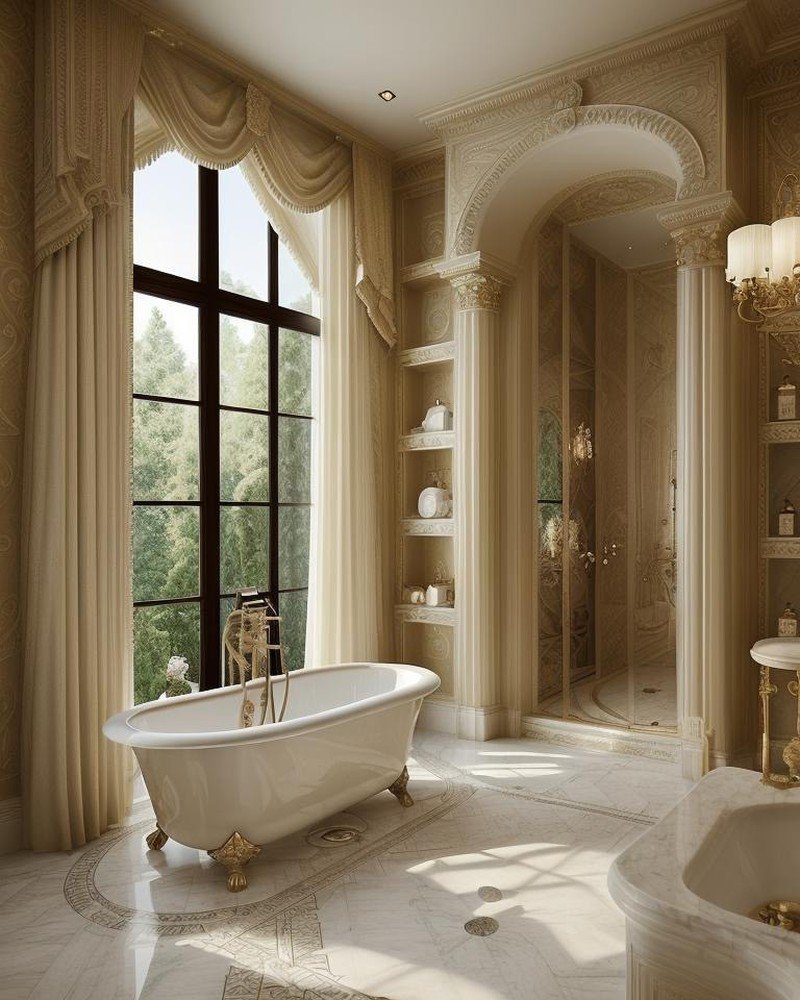
Rococo celebrates ornamental abundance and curved forms. The bathroom features elaborate mirror frames, possibly gilded or decorated with carved details. The bathtub is a sculptural form, possibly featuring curved pedestal supports or integrated within a tiled surround with curved contours. Walls showcase wallpaper with delicate patterns, or tiled surfaces featuring rococo-inspired curves and flourishes. Lighting arrives via ornate fixtures—possibly a statement chandelier, wall sconces with decorative elements. The color palette is soft and warm: creams, pale blues, rose tones, gold accents. Details matter: possibly marble surfaces, delicate hardware, carefully curated accessories. The ritual here is one of luxurious indulgence—the space asserts that bathing is an occasion, that the body’s comfort and the eye’s pleasure are valid architectural concerns worthy of ornamental expression.
Scandinavian: Light and Minimalist Warmth
Scandinavian design language combines minimalism with warmth and accessibility. The bathroom features clean lines, minimal ornamentation, and a restrained material palette: white, light grays, warm wood tones. The bathtub is likely a simple, functional form. Fixtures are contemporary and minimal. Walls are probably painted white or finished in light plaster. The critical element is light—the space is designed to maximize natural light, with generous windows or skylights, or carefully designed artificial lighting that mimics natural illumination. Wood elements introduce warmth without ornament. The ritual here is one of sustainable clarity—the space is legible, honest, and welcoming. Comfort is present but achieved through proportion and light rather than ornamental richness.
Water as Cultural Expression
What these ten bathrooms reveal is that water, ritual, and the bathing body are not culturally neutral. The Japanese Zen bath speaks to meditation and self-cultivation. The Moroccan bath celebrates sensory abundance. The Scandinavian bath prioritizes clarity and light. The Rococo bath indulges in ornamental opulence.
Each design language articulates a different philosophy about what the bathing ritual means, what the body requires, what the architectural environment should provide. Through Cinematic Intelligence™ modeling, these distinct cultural languages were rendered with sufficient fidelity that the spatial logic of each becomes legible—not as aesthetic choices applied to neutral space, but as coherent systems that honor the cultural meanings embedded in bathing traditions.
Toward Ritualistic Domesticity
The Vervaine Estate bathrooms demonstrate that architectural design can honor the deeper dimensions of domestic ritual. The bathing room need not be merely functional. It can be a space of cultural expression, of wellness cultivation, of transition and transformation. When design methodology honors the ritualistic dimensions of bathing—the encounter with water, the cultivation of stillness, the expression of cultural identity—the result is a domestic space that supports human flourishing in ways that pure functionality cannot achieve.
Leave a Reply